Cheyenne (June 6, 1947)

Cheyenne
Cheyenne (1947)
Directed by Raoul Walsh
Warner Bros.

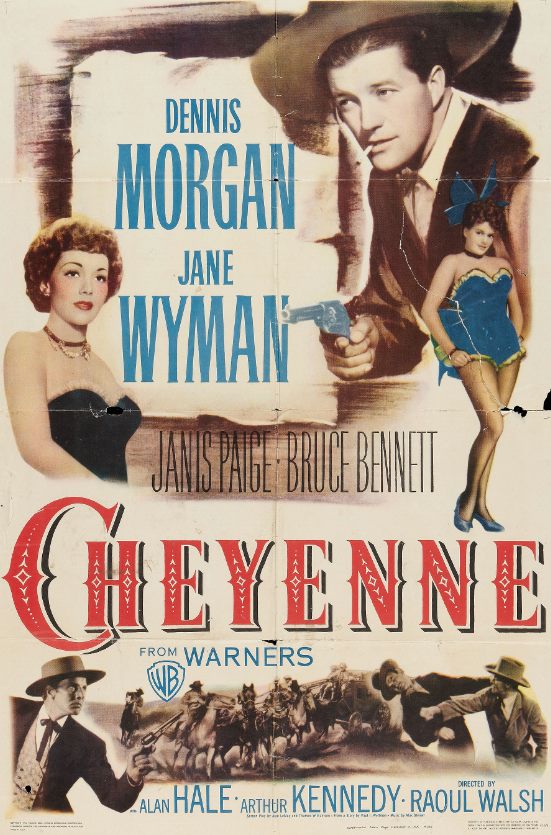
Most of the time, when people say “adult western,” they’re talking about the more psychologically realistic western dramas that stood apart from the fray of Saturday matinee singing cowboys. They’re talking about the films of John Ford and Anthony Mann, and TV series like Gunsmoke (1955-1975). Raoul Walsh’s Cheyenne is a different kind of adult western.

While tame by the standards of today’s R-rated movies and cable TV, Cheyenne is a feast of double entendres and sexually suggestive scenes and dialogue. The film stars Dennis Morgan — doing his best impression of George Sanders — as James Wylie, a gentleman gambler who’s impressed into the service of the law by private detective Webb Yancey (Barton MacLane).

Yancey offers to cut Wylie in on the $20,000 reward being offered for “The Poet,” who’s responsible for a series of stagecoach robberies along the Wells Fargo line. Wherever the Poet strikes, he leaves a piece of paper with a few lines of verse, such as “I’m happy the frontier is settling down / With a thriving bank in every town / Let the riders and nesters deposit their pay / So I and my gun can take it away.”

Cheyenne co-stars Jane Wyman (back when she was still Mrs. Ronald Reagan) as a woman named Ann Kincaid. Ann is married to a Wells Fargo banker named Ed Landers (Bruce Bennett), but their marriage is on the rocks, and she’s clearly attracted to the dashing and roguish Wylie. Of course, for the sake of propriety (and the Hays Code), she acts as though she can’t stand Wylie.

There’s plenty of lighthearted, sexy banter, and great lines like, “How did I know she was the sheriff’s daughter? I couldn’t find a badge.” Or my personal favorite, “You know how women are. Like bears. They never get enough honey.”

Ann and Wylie’s situation is complicated when they fall in with a gang led by the Sundance Kid (Arthur Kennedy). Kennedy plays his role with brio. Sundance is a snarling badass who shoots first and thinks later. When a young punk in his gang stands up to him, and says that the Sundance Kid may have all the other members of his gang buffaloed but he doesn’t fool him, Sundance kicks him to the ground and shoots him dead.

Wylie tells Sundance that he is in fact the Poet, and offers to cut him in on the take from his robberies. He also claims that Ann is his wife, which leads to some sexy playacting. Maybe too sexy. As one of Sundance’s gang says, “He kissed the gal like he liked it. That ain’t like no husband.”

When they go to bed in the same room because some of Sundance’s gang are outside watching, Wylie says, “I’ll sleep with one eye open.” Ann responds, “What do you think I’m gonna do?”

The sexual suggestions aren’t limited to the dialogue. The old spinster housekeeper’s look of regret when Ann says “You know how men are” is priceless. And even I couldn’t believe the scene in which Ann complains about back pain after the night she spends with Wylie.

Janis Paige

The sexiness doesn’t stop with Jane Wyman. Janis Paige gives a good performance as a voluptuous saloon singer named Emily Carson. The two songs she performs in a black bustier, dark stockings, and high heels — M.K. Jerome & Ted Koehler’s “I’m So in Love” and Max Steiner & Ted Koehler’s “Going Back to Old Cheyenne” — were a high point of the picture for me.

I enjoyed Cheyenne quite a bit, but it’s not as interesting as Raoul Walsh’s previous western, Pursued (1947), and it suffers from wild shifts in tone. Most of the film is sexy and playful, but the action scenes are surprisingly dark and violent.

Cheyenne is definitely worth seeing for fans of westerns and aficionados of its prolific and talented director. The actors are all fun to watch, especially Arthur Kennedy, and Max Steiner’s bombastic score does a nice job of propelling the action during the film’s shootouts and chase scenes.
Saddle Pals (June 6, 1947)

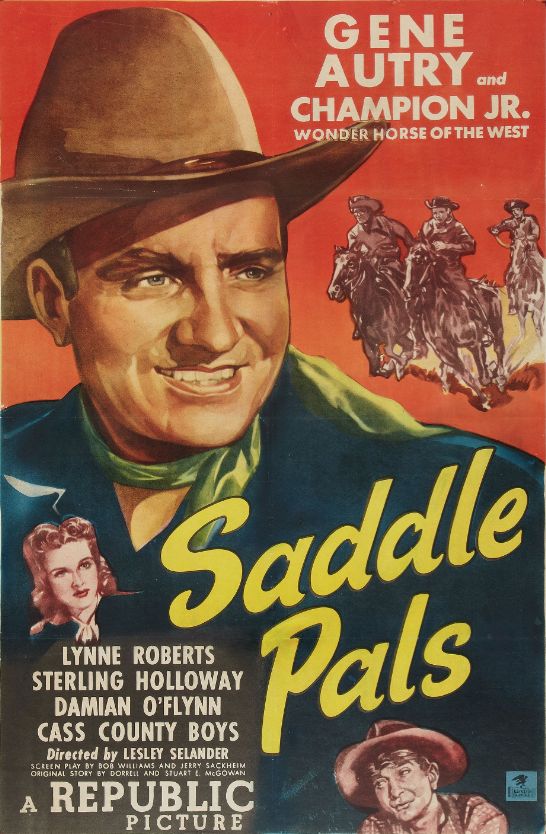
Of the movies Gene Autry made after serving in the Army Air Corps during World War II, Saddle Pals is my favorite so far.

That’s not to say that I loved the picture. I think Gene Autry is a great country singer, but as a leading man, I find him flat. But Saddle Pals is funnier and generally more entertaining than the last few Autry pictures I’ve seen, and it wasn’t a chore to sit through.

The picture begins when the beautiful, wealthy, and devil-may-care Shelly Brooks (Lynne Roberts) buzzes Gene, his boys, and their cows with her brand-new Lincoln. Of course, she blows a tire not long after, and Gene’s such a gentleman that he doesn’t hold her bad behavior against her, and changes the tire for her.

Shelly’s brother Waldo T. Brooks Jr. is raising rents on all the ranches in the valley so his wealthy family can be even wealthier. Not only is it unfair, it’s downright illegal, says attorney Thaddeus Bellweather (Irving Bacon), and he’ll handle the case for Gene just as soon as he gets back from trout season … which is going to last a long time.

So Gene and the Cass County boys (his backup band/ranch hands) head to the Brooks ranch to talk to Waldo, who turns out to be an effeminate, hysterical, rubber-faced hypochondriac played by Sterling Holloway. It turns out that Waldo is barely in control. It’s the Brooks Land Corporation that’s raising rents, under the direction of their evil leader Bradford Collins (Damian O’Flynn).

Waldo gives Gene control of his money. Gene tells Collins that he wants to buy into the corporation. Gene is then forced to come up with $50,000 in 30 days. He comes up with most of the money by selling off the Brooks’s show horses, and then decides to throw a rodeo to raise the rest of the money.

Shelly and Waldo have an adorable little sister, Robin (Jean Van), who wants desperately to be a cowgirl. She’s got the skills to pay the bills, so Gene puts her in the rodeo, but Collins uses the fact that she’s a minor to get Gene in trouble with the law.

Collins doesn’t stop there. If you’ve ever seen a B western from the ’30s or ’40s before, you know those greedy land-grabbing real estate barons never stop at legal malarkey, and sure enough, by the end of the picture there’s an out-of-control wagon on fire with Robin inside, and Gene and his horse Champion Jr. in hot pursuit.

The songs in Saddle Pals are generally good, even though there’s no single stand-out number. The songs include “You Stole My Heart,” “Which Way’d They Go,” “The Covered Wagon Rolled Right Along,” “Amapola,” and “I Wish I Never Had Met Sunshine.” Also, Sterling Holloway, who’s sort of like a less-funny, more-irritating version of Jim Carrey, is used judiciously in the picture, and most of his scenes are humorous, if not exactly hilarious.

The Unfaithful (June 5, 1947)

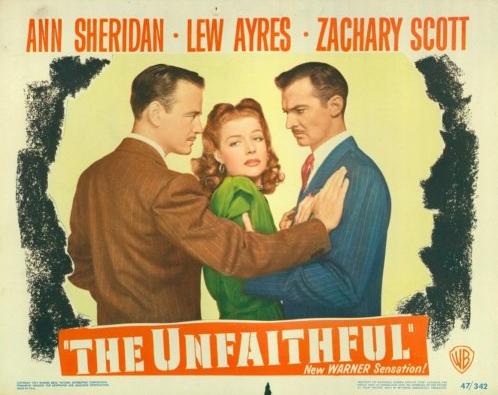
The opening narration of The Unfaithful informs us that while the film takes place in Southern California, it deals not with a problem of a particular place, but with a problem of our times. At first, this problem seems to be rampant divorce, but it ends up being more about wartime infidelity (or possibly the widespread problem of married women committing murder in self-defense and then having to lie about it to cover up an affair).

It’s hard not to compare The Unfaithful with Nora Prentiss, which was released earlier the same year. Both were directed by Vincent Sherman, both star the beautiful Ann Sheridan, and both have infidelity as their subject. But while Nora Prentiss indulged in some truly outré and baroque excesses by the time the credits rolled, The Unfaithful goes in the opposite direction, and slowly peters out to an anticlimax. It’s a good film — well-acted and directed with assurance — but when it was over, I couldn’t help feeling as if the filmmakers wanted to make a melodrama about an “issue of the day,” but weren’t sure how to fold it into the murder investigation and blackmail story that dominate the film.

The picture opens with a party being thrown by a character named Paula (played by Eve Arden) to celebrate her divorce. (Interestingly, Arden herself divorced her husband — Ned Bergen — in 1947 after eight years of marriage. Her next marriage would be more successful. She married actor Brooks West in 1952, and they stayed married until his death in 1984 from a heart ailment. She and West had four children together.)

In attendance at the party is Paula’s friend Christine “Chris” Hunter (played by Ann Sheridan, who was also no stranger to divorce. She and her second husband, George Brent, divorced in 1943 on their one-year anniversary.) After the party, a mysterious figure attacks Chris as she unlocks the front door of her home. He pushes her inside and a struggle ensues, which we see play out through the living room windows of the Hunters’ suburban home as two silhouettes locked in a life-or-death struggle.

Chris’s husband, Robert “Bob” Hunter (Zachary Scott), a big-time house builder and real-estate developer, arrives home and comforts his wife, who’s understandably shaken up after killing the intruder in self-defense. The couple’s friend and lawyer Larry Hannaford (Lew Ayres) is also on hand to comfort Chris.

Det. Lt. Reynolds (John Hoyt) questions Chris, and doesn’t seem to really believe her story of a stranger attacking her in her home and demanding jewels, but he doesn’t accuse her of anything … yet. The detective also questions Hannaford about the couple, and Hannaford tells him he’d be hard pressed to find a couple as happy as the Hunters.

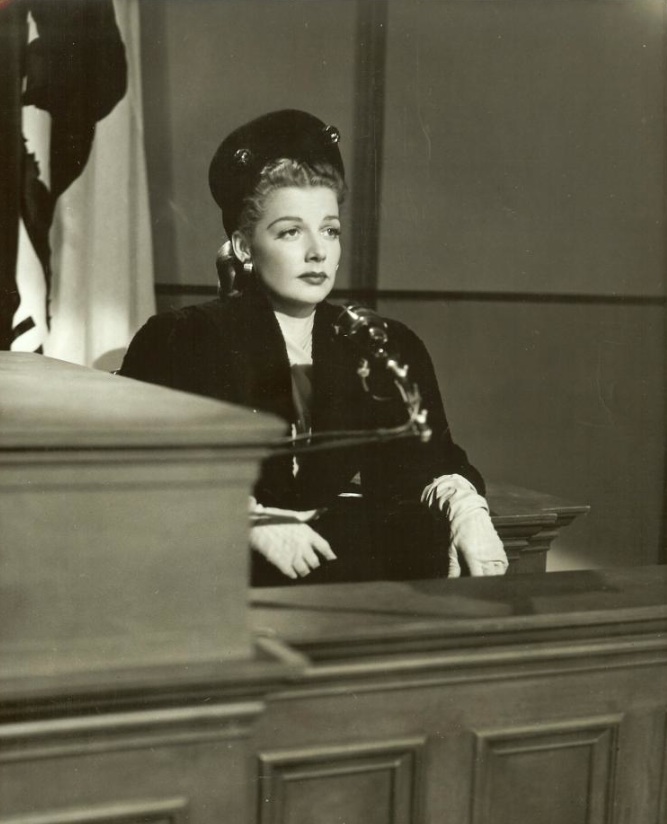
To summarize the plot any further would be to give away too much. It should suffice to say that there’s more to the story than Chris originally reveals to the police, and the film ends with a sensational trial and plenty of wagging tongues.

The Unfaithful takes place mostly indoors, but there are a lot of great Los Angeles exteriors, too. If you’re a fan of vintage street cars, this movie is worth checking out just for them.

Ernest Haller’s cinematography is especially memorable. I really liked the dark, low-angle shot of Zachary Scott parking his car in his driveway and striding along the front walk of his home after receiving some terrible news. And during the trial, there’s a wonderful shot of a bloody knife being held over the murder photograph, then quickly moved to the left as an exhibit — but for just a moment it seems as if we are seeing a gruesome murder scene with a bloody knife poised over a corpse.

The screenplay of The Unfaithful, by James Gunn and crime novelist David Goodis, is excellently written, with realistic dialogue and characterizations, especially in Ann Sheridan’s scenes with Zachary Scott. As I said, it’s a bit anticlimactic, but the journey is worth it, and The Unfaithful is worth seeing despite a weak final reel. Incidentally, it’s an uncredited remake of William Wyler’s The Letter (1940), which was based on the 1927 play of the same name by W. Somerset Maugham.

The Woman on the Beach (June 2, 1947)

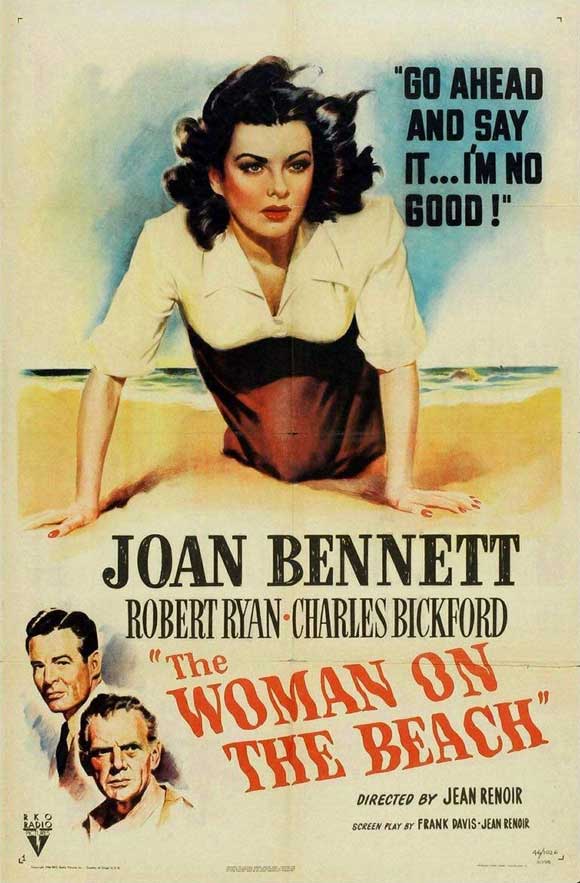
Jean Renoir’s last Hollywood film, The Woman on the Beach, which is based on Mitchell Wilson’s 1945 novel None So Blind, is one of the oddest and most intriguing American films I’ve seen from the ’40s.

On paper, the plot sounds like a perfect vehicle for RKO star Joan Bennett, who was coming off the success of two wonderful noirs that she made with Fritz Lang, The Woman in the Window (1944) and Scarlet Street (1945). Like both of those films, Bennett’s character in The Woman on the Beach is a seductive and alluring woman who may not be what she seems. And paintings — a major theme of both The Woman in the Window and Scarlet Street — figure prominently in The Woman on the Beach.

But the similarities end there. The Woman on the Beach is a film that confounds expectations. It’s sometimes surreal, sometimes suspenseful, and never went in the direction I was expecting. Some of this could be due to studio interference. After a disastrous advance screening in Santa Barbara, the studio forced Renoir to reshoot and recut the film. The final cut is just 71 minutes long. There are numerous plot strands that seem to be left dangling by the end of the film. But overall, it’s still well-made and involving enough for me to recommend it.

Lt. Scott Burnett (Robert Ryan) is a haunted man. He’s sound of body, but he’s plagued by nightmares of the wreck he survived while serving in the Pacific. One of his nightmares opens the film, and it’s a brilliant and surreal juxtaposition of watery peace and fiery, swirling violence.

Scott is grinding through his last week at the U.S. Coast Guard Mounted Patrol Station. (He’s terrified of the ocean, so it makes sense that he’s serving in a Coast Guard station with no ships, just horses.) He’s engaged to be married to a pretty local girl named Eve (Nan Leslie), but as soon as Scott meets the dark and mysterious Peggy Butler (Joan Bennett) while she’s gathering driftwood on the beach, any film noir aficionado can tell you that things aren’t going to go the way Scott and Eve have been planning them.

Peggy instinctively understands Scott’s loneliness and fear. She invites him home to meet her husband, the blind painter Tod Butler (Charles Bickford). Bickford’s performance is masterful, and a key to the success of the film. At first I thought that Bickford was really bad at playing a blind man. He moves about effortlessly, seems to know where everything is, and it frequently seems as if he is making eye contact with the other characters. But it’s hard to tell for certain.

And sure enough, his blindness is called into question before too long. Peggy reveals to Scott that she severed Tod’s optic nerves during a drunken argument, but that sometimes she suspects he has just been feigning blindness ever since. Scott can’t believe that a man whose whole life was devoted to art would just give it up out of spite. Peggy tells Scott that he doesn’t know her husband.

In an unguarded moment when Peggy and Tod are alone, we hear them lay out their entire relationship in a classic exchange: Tod looks at her and says, “So beautiful outside, so rotten inside.” Peggy responds, “You’re no angel,” and Tod says, “No, I guess we’re two of a kind. That’s why we’re so right for each other.”

Scott is drawn into Peggy and Tod’s bitter little world, and begins secretly making love to Peggy while having increasingly tense get-togethers with Tod. In one remarkable scene, Scott walks Tod closer and closer to a cliff edge, trying to make him give himself away and reveal that he can really see.

The presence of Scott’s fiancée Eve seems almost like an afterthought, especially during the second half of the picture, and the way the story ends isn’t completely satisfying. But these are minor quibbles. The Woman on the Beach is a beautifully made film with very interesting performances from its three leads.

High Barbaree (May 1947)

High Barbaree

High Barbaree (1947)
Directed by Jack Conway
Metro-Goldwyn-Mayer

Jack Conway’s High Barbaree pairs America’s boy next door, Van Johnson, with America’s girl next door, June Allyson.

It wasn’t the first time they appeared in a film together. In Two Girls and a Sailor (1944), Johnson played the sailor of the title and Allyson played one of the pair of sisters who were in love with him. (They also both appeared in the 1946 Jerome Kern biopic Till the Clouds Roll By. I haven’t seen it, but I know that it features a cast of thousands, and I’m not sure if they shared any scenes.)

High Barbaree puts the two of them front and center. Their characters’ romance is unencumbered by comedy or contrived stumbling blocks. The title of the film and the poster art imply an exotic tale set in the South Seas, and the tagline of the poster — He wanted to stay in the arms of his first true love — but another woman claimed him! — implies that the film will be about a torrid love triangle. It’s neither of these things. It’s a sweet, earnest love story about two childhood sweethearts.

It’s a story told mostly in flashback. It’s WWII, and Lt. Alec Brooke (Johnson) and Lt. Joe Moore (Cameron Mitchell) are drifting in the Pacific, their plane shot down during a bombing run. Every other man in the crew is dead, and Alec and Joe will soon join them if they’re not picked up.

Their water supply dwindling and their bodies weakening, Alec reminisces with Joe about his childhood. Alec is a corn-fed all-American type from Iowa, and Joe ribs him about it, since he’s a typical cynical kid from Brooklyn. Alec recalls the girl he loved when he was little, Nancy Frazer (played by Gigi Perreau as a child, and by Joan Wells as a young girl). She fearlessly climbed the water tower with him when they were children, and later ran away with him to the circus, and witnessed his brief career as a bicycle-riding daredevil. (Alec is played as a child by Jimmy Hunt, and as a 14-year-old by Claude Jarman Jr., fresh off his success as the lead in The Yearling.)

By time passed, as it must, and Nancy and Alec lost touch. He abandoned his plans to become a doctor like his father, Dr. William G. Brooke (Henry Hull), and went into aviation. He got engaged to the wealthy blond heiress Diana Case (Marilyn Maxwell) and went to work for her father’s airplane manufacturing company. Everything seemed to be going his way until Nancy (played as an adult by June Allyson, natch) re-entered his life, and he realized how lost and unhappy he really was.

At some point in the midst of his recollections, Alec realizes that he and Joe and the wreckage of their PBY Catalina are drifting toward a spot marked on a map long ago by Alec’s vagabond uncle, Capt. Thad Vail (Thomas Mitchell). The spot marks a fabulous island called “High Barbaree.” Uncle Thad described it as a mysterious place that was always just over the horizon, but that was perfectly beautiful and serene. If only they can make it to High Barbaree, Alec says, they’ll be saved.

While the exotic island of High Barbaree gives the film its title, it’s not a central part of the story, the way Shangri-La is central to Lost Horizon. Most of the story takes place in Alec and Nancy’s hometown of Westview, Iowa, which is its own kind of dreamlike phantasmagoria. I’ve never been crazy about Van Johnson (I think his stage name really should have been Bland Johnson), but he and Allyson make an appealing couple, and his earnestness is hard to resist in this picture.

High Barbaree isn’t a great film, but it’s pretty good, and is recommended for anyone who’s craving an old-fashioned romance. It’s based on a novel by Charles Nordhoff and James Norman Hall. The review of the novel in the October 29, 1945, edition of Time magazine said that “It is plainly designed as a refuge for readers who have had enough of wartime realism.” The same can be said of the film.

Copacabana (May 30, 1947)

Hey there! Do you like the comedy of Groucho Marx? Do you like the music of Carmen Miranda? Do you like the sweet song stylings of Andy Russell? Do you like beautiful women with nice legs?

You do? Well then, brother, have I got a picture for you.

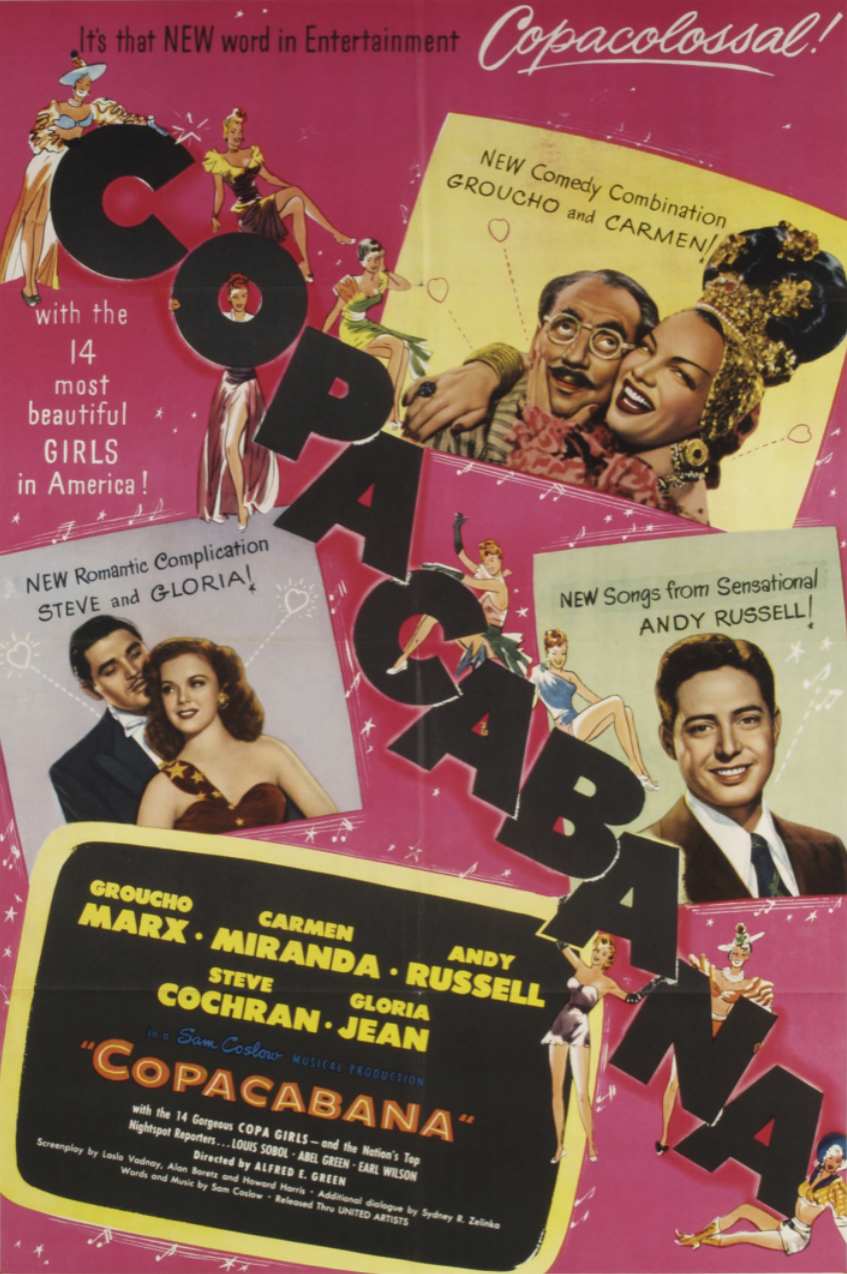
Alfred E. Green’s Copacabana is a classic example of a Hollywood product that is designed for only one purpose — to entertain.

The plot of the film is little more than an excuse to showcase Groucho Marx’s wordplay and fast-paced comedic line deliveries, Carmen Miranda’s mesmerizing vocal performances, big musical numbers featuring the 14 beautiful “Copa” girls, and Andy Russell’s syrupy, sentimental songs.

The plot, which can summarized on the back of a cocktail napkin, is this: wildly unsuccessful nightclub performer Lionel Q. Deveraux (Groucho Marx) and his fiancée of 10 years, equally unsuccessful nightclub singer Carmen Navarro (Carmen Miranda), decide that desperate measures are called for. Deveraux has been kicked out of more clubs than he can count, and threats like, “This is an outrage. You’ll hear from my lawyer, as soon as he gets a telephone,” clearly aren’t getting him anywhere.

So Deveraux decides to pass himself off as a top talent agent. He arranges for Carmen to perform for Steve Hunt (Steve Cochran), the owner of the most glamorous nightclub in Manhattan, the Copacabana. Without Deveraux onstage with her, Carmen makes a positive impression, but Steve wants to see more of Deveraux’s acts. Naturally, he has only one act — Carmen — but some quick thinking produces a second act, the beautiful and mysterious “Mademoiselle Fifi.”

Mlle. Fifi is of course just Carmen with a white costume straight out of the Arabian Nights, a blond wig piled atop her head, and a heavy veil to cover her face. Deveraux explains to Steve why she never takes the veil off. “No one but her lover is allowed to gaze upon her face,” he says. “Not even her husband.”

Meanwhile, the starry-eyed Anne Stuart (Gloria Jean) toils away in the office of the Copacabana as Steve Hunt’s gal Friday, unable to tell Steve how she really feels. Will she ever be able tell him? Will the wide-eyed, golly-gee naïveté of singer Andy Russell (played by singer Andy Russell) and his encouragement that she express herself through song help? Will that song be called “Stranger Things Have Happened”? You’ll just have to see Copacabana to find out.

I’m not the biggest fan of musicals, but I’m perfectly willing to sit back and be entertained by one if it’s well put together, and Copacabana features plenty of entertainment bang for your buck. It’s especially entertaining if you’re as much of a sucker for great gams as I am. The Copa girls are blessed with pretty faces, good singing voices (although I’m not sure if they were actually singing during their numbers), dancing ability, and — most of all — shapely getaway sticks, which are on display even when they’re in the background. When Mlle. Fifi sings her first number at the Copa, “Je Vous Aime,” the Copa girls are draped all over the place like leggy cats, listening in rapture.

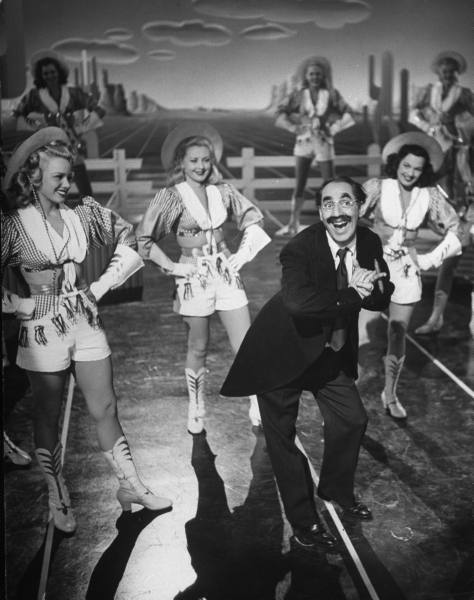
And speaking of perfect pins, I’d be remiss if I didn’t mention Gloria Jean’s final song and dance with Groucho Marx and Carmen Miranda, in which she wears a shorts and high heels outfit that might be the cutest thing I’ve seen in a movie from 1947 so far.

I believe this was the first film in which Groucho Marx appeared without his classic greasepaint mustache and thick glasses get-up. (His actual mustache and regular glasses aren’t wildly different, of course.) Also, his brothers, Harpo, Chico, and sometimes Zeppo, are nowhere to be seen in Copacabana, but it’s still worth seeing if you’re a Marx Brothers fan. It’s not as sublime as Duck Soup (1933) or A Night at the Opera (1935), but it’s still a funny, entertaining film, and offers the last chance to see Groucho in his classic get-up, when he performs Bert Kalmar and Harry Ruby’s song “Go West, Young Man” in a slightly surreal scene. (Click the name of the song to watch the performance.)

Most of the music in Copacabana is written by Sam Coslow. It’s uniformly good, but for my money, the best song in the picture is Carmen Miranda’s performance of “Tico Tico No Fubá,” which was written by Zequinha de Abreu and Aloysio de Oliveira.

Moss Rose (May 30, 1947)

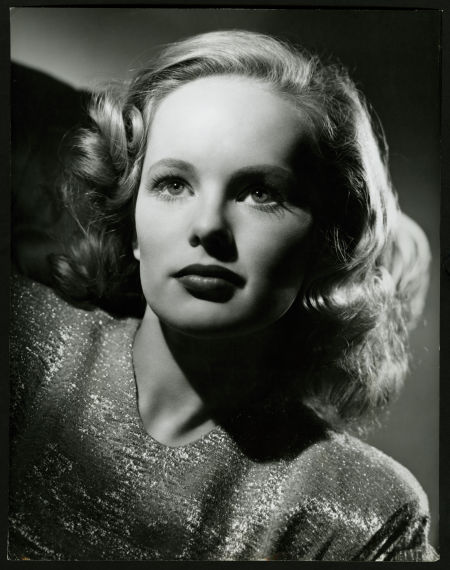
Gregory Ratoff’s Moss Rose is a murder mystery set in Victorian London. It stars Peggy Cummins — a beautiful blond actress who looks like a doll come to life — as Rose Lynton, a Cockney chorus girl. Rose works under the stage name “Belle Adair.” She may have grown up in Shoreditch, but she aspires to be a fine lady.

Margo Woode plays Rose’s friend Daisy Arrow, a fellow actress who has a mysterious boyfriend. He’s a handsome, well-dressed gentleman who Rose only catches glimpses of as he moves in and out of the shadows. Daisy only appears in a handful of scenes before Rose discovers her corpse in bed in the room they share, an open Bible lying on the bed next to her with a dried and pressed moss rose laid across its pages. Was it her suitor who killed her? Or someone else?

Vincent Price — always a welcome sight — plays Inspector Clinner, the Scotland Yard detective who investigates the case along with his lumpy little partner, Deputy Inspector Evans (Rhys Williams). Soon, the identity of Daisy’s suitor becomes clear. He’s a wealthy gentleman named Michael Drego, and he’s played by the always oily Victor Mature, whose lack of a British accent is explained away by the fact that his Canadian father took him away from England when he was very young.

Rose plays girl detective, and it’s not long before she seems to be two steps ahead of the police in identifying Michael as Daisy’s murderer. At first it’s unclear what she wants from him, or why she fails to identify him to the police. She initially blackmails him, but then gives the money back and tells him that all she wants is for him to take her with him to his home, Charmley Manor, for just two weeks. Michael denies that he is guilty of Daisy’s murder, but he tells Rose he’ll go along with her scheme because he’s desperate to keep his family’s name out of the spotlight.

Most of the film takes place at Charmley Manor, which is presided over by Michael’s mother, Lady Margaret (played by the grandest Hollywood dame of them all, Ethel Barrymore).

Lady Margaret keeps her son’s childhood room exactly as it was, because when he was taken away by his father, she knew it was the last time she’d ever see that little boy again. She doesn’t allow anyone in the room, not even the servants, but after her first flash of rage at Rose when she discovers her snooping around the room, she softens, and tells Rose that there’s nothing like a secret to bring two people together.

Complicating matters for Rose at Charmley Manor is the presence of Michael’s fiancée, the beautiful Audrey Ashton (Patricia Medina). Lady Margaret grows to accept Rose, even going so far as to tell people that she is her “companion,” but Audrey sees Rose as a threat to her impending nuptials, and rightly so.

Moss Rose is based on The Crime of Laura Saurelle, one of author Joseph Shearing’s many Gothic thrillers, which were quite popular at the time of the film’s release. (Shearing was one of several pseudonyms used by writer Marjorie Bowen.) It’s a decent whodunnit that will keep you guessing. Michael Drego is the prime suspect, but Inspector Clinner loves flowers — moss rose in particular — and he’s played by Vincent Price, so he always seems suspicious, especially when he’s cutting himself a piece of moss rose in Lady Margaret’s greenhouse and he has a maniacal gleam in his eye. There is also Lady Margaret’s intense-looking butler, Craxton (George Zucco), and as we all know, butlers are always under suspicion. The ladies aren’t exempt from suspicion, either. We learn that Audrey made a mysterious bulk purchase of three Bibles just like the one found next to Daisy Arrow’s corpse, and she’s obviously jealous of any woman in whom Michael shows an interest. And Lady Margaret is hard-headed and clear-eyed, but she seems like a different person whenever she speaks of her son.

Despite the wealth of suspects, Moss Rose turned out exactly how I thought it would, but it wasn’t a bad way to kill some time.

Dear Murderer (May 29, 1947)

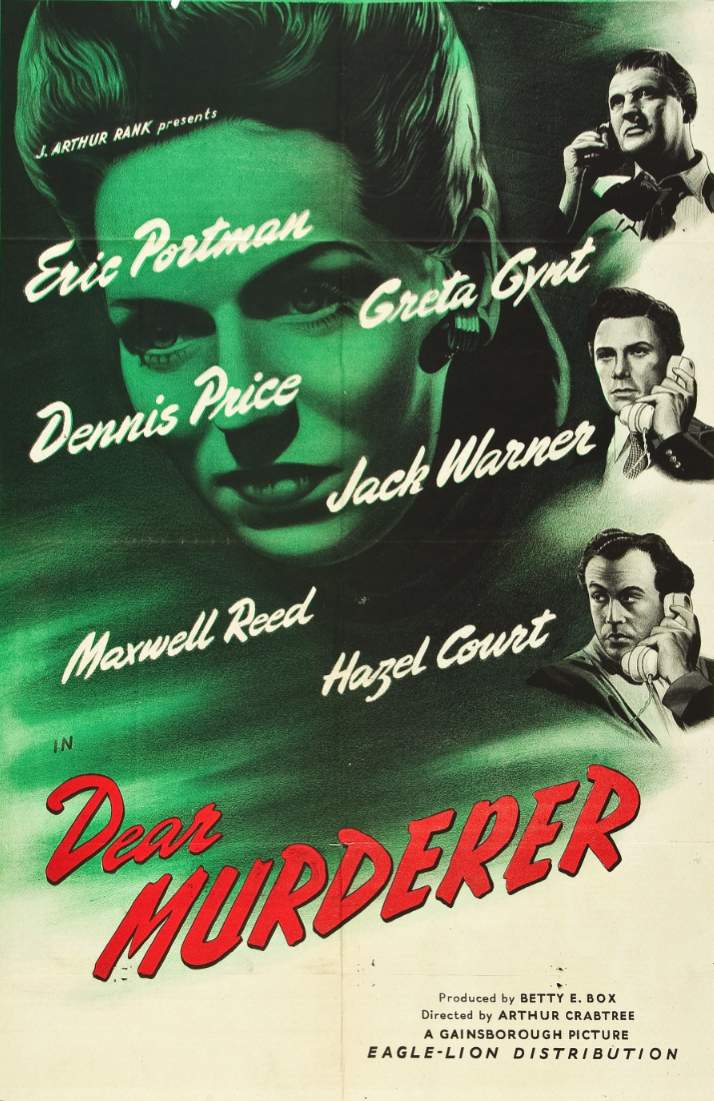
Arthur Crabtree’s Dear Murderer is a well-acted, competently directed British murder story that ultimately collapses under the weight of its own moving parts.

Successful businessman Lee Warren (Eric Portman) has just returned to England after a five-month assignment in New York, and he has murder on his mind. And not just any murder … the perfect murder.

But as any fan of murder mysteries knows, truly perfect murder schemes are rarely the subject of books and films, since the killer invariably does something to trip himself up.

Lee Warren alludes to this when he tells his victim, “The perfect murder is the one that nobody every hears about, because nobody thinks it is murder.”

Warren’s victim is a handsome young lawyer named Richard Fenton (Dennis Price), and Warren wants to kill him because he found out he was making love to his wife, Vivien, while Warren was living in New York.

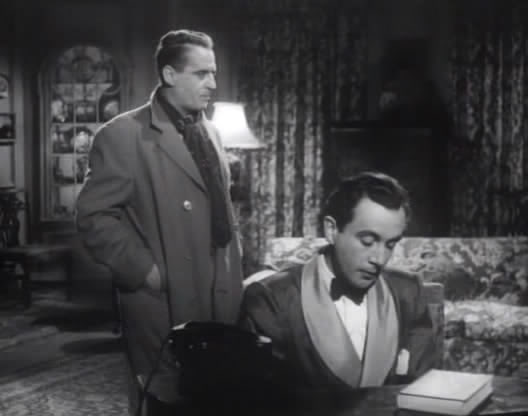
After convincing Fenton to write a letter breaking it off with Vivien, a letter which Warren partially dictates, Warren “accidentally” spills a drink on the letter. Then, after Fenton begins to rewrite the letter on a dry piece of paper, Warren stops him midway through by pulling a gun on him and tying his wrists behind his back with the silk cord of his dressing gown. Without the second half of the letter, it reads exactly like a suicide note.

Warren informs Fenton that he intends to commit “the perfect murder,” and he’ll be convinced not to go through with it only if Fenton can find a flaw in his plan.

He tells Fenton that he’s going to give him a little rap on the head, just enough to knock him out, then gas him with a pillowcase and tube contraption he’s come up with that will go over Fenton’s head.

He’ll attach the tube to the gas jet in the living room, then move Fenton’s unconscious body into the kitchen and stick his head in the oven, where he will lie until he dies. Since no man can be forced to stick his head in an oven until he dies of gas inhalation without marks of violence, it’ll look like suicide, and the note will clinch it with the authorities.

Fenton tells Warren that Vivien isn’t just interested in him, she’s interested in many men, and Warren can’t kill them all. Warren hits him in the face and then draws back, telling Fenton he’s just being clever and trying to get him to lose his temper. What about an alibi? Warren says he doesn’t need one. He arrived home by plane that night, ate dinner, and went home alone. What about motive? As far as the rest of the world knows, Warren doesn’t even know Fenton exists. Is that all? Fenton sputters, but can’t think of anything else.

“You’re a bit of a failure as a lawyer. I’m glad my life didn’t depend on your arguments,” Warren says, then proceeds to do his cruel work.

By the 30-minute mark, I realized the film must have been based on a play. My moment of realization came when the handsome Jimmy Martin (Maxwell Reed) and Warren’s wife Vivien (Greta Gynt) show up in Fenton’s flat thinking they are alone, and discuss their affair. Jimmy tells Vivien that he wishes she would divorce her husband and marry him. Warren hides around the corner, listening in horror as he realizes that he should have taken Fenton’s admonishment about Vivien’s other lovers more seriously.

These bizarre clown-car meetings of several characters in one place continue for the remainder of the film. I’m sure they made perfect sense in the original stage play by St. John Legh Clowes, but plays have different rules than films do, and the screenplay of Dear Murderer, by Muriel & Sydney Box with Peter Rogers, does nothing to alleviate the staginess of the proceedings.

The first half hour is the best part of the film. It’s clever, sardonic, and involving. By the end of the film, however, the contrivances have stacked up higher than a 4,000-deck house of cards. I didn’t hate Dear Murderer, and could imagine it working very well as a campy stage production full of clever twists and funny dialogue, but as a film, it was too hidebound and stodgy to keep me involved throughout the running time. (It also doesn’t help that Portman and Jack Warner, who plays Inspector Penbury, the police detective investigating the case, look so much alike that I was frequently confused when a new scene opened.)

Dear Murderer compares unfavorably with another British film I saw that starred Eric Portman, Lawrence Huntington’s Wanted for Murder (1946), in which Portman plays a more sinister and psychopathic murderer than the one he plays in Dear Murderer. Wanted for Murder was also based on a play, but I never suspected it while watching it. The direction was creative and the settings in the film were dark, creepy, and often out of doors.

The Millerson Case (May 29, 1947)

The Millerson Case
The Millerson Casee (1947)
Directed by George Archainbaud
Columbia Pictures

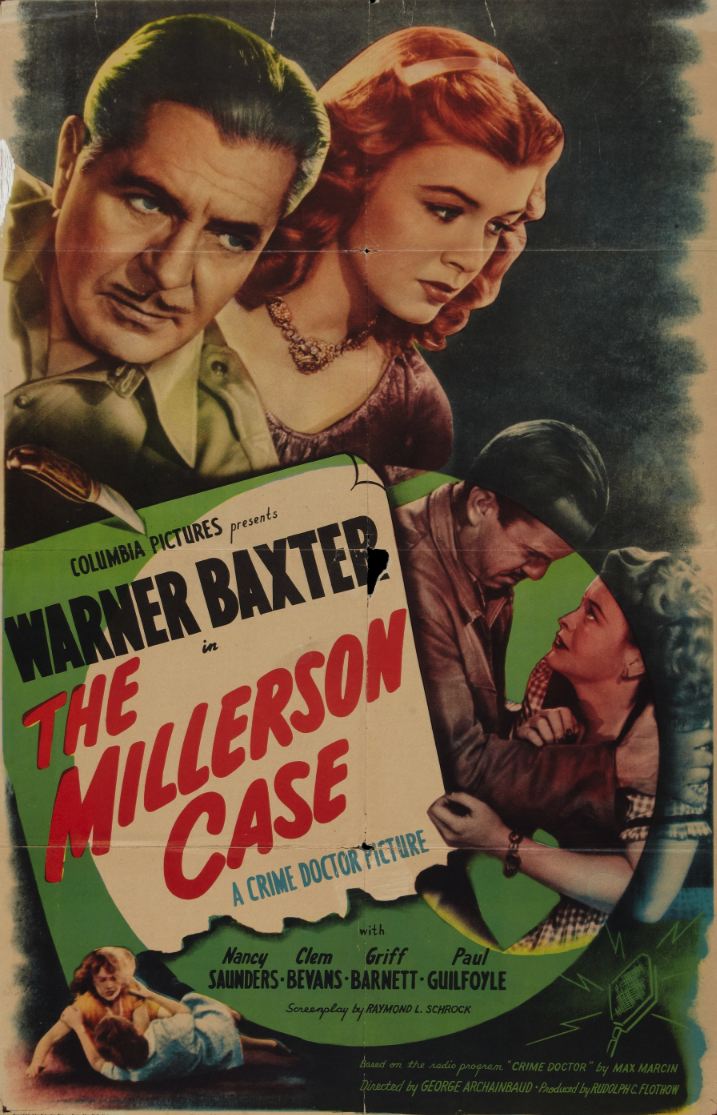
George Archainbaud’s The Millerson Case is the eighth film in the Crime Doctor series from Columbia Pictures and for my money, it’s easily the worst.

Produced by Rudolph C. Flothow, the picture finds Dr. Robert Ordway (Warner Baxter) leaving his Manhattan medical office in the incapable hands of his partner, Dr. Shaw (Walden Boyle), and taking a well-earned vacation in the country for some hunting and fishing.

I’m not sure exactly which remote rural area the film is supposed to depict. Dr. Ordway drives to it from New York City, but it looks suspiciously like California. All I can tell you for certain is that it’s a part of the country where people are always asking, “What fer?”

After a young man named Eben Tuttle (Elvin Field) is shot while carrying a deer on his back, Dr. Ordway comes face to face with the superstitious and uneducated ways of local physician Sam Millerson (Griff Barnett). When an epidemic of typhoid fever breaks out, Doc Millerson dismisses it as “summer complaint” and treats it with “complaint bitters.” He says that he’s been doctorin’ man and beast for 30 years in these parts and he’ll be damned before anyone else tells him what to do.

Three people in the rural community die during the outbreak of typhoid, but one of them, Ward Beechy (Trevor Bardette), has peculiar symptoms. One of the more sensible medical men in the area, Dr. Prescott (Robert Kellard), who’s sent in after the government quarantines the area, isn’t surprised to find evidence of perforated peritonitis in Beechy’s intestinal tract, but he’s never seen a typhoid case with perforations throughout the entire alimentary canal, such as might have been caused by a corrosive poison. Dr. Ordway is unsurprised, since he found no evidence of typhoid bacilli in Beechy’s blood sample and knew something was fishy.

We get a sense of Ward Beechy’s character as he lies dying on his sickbed and he amorously tells his wife’s sister, Belle Englehart (Nancy Saunders), “Sometimes I wish you wasn’t my sister-in-law, Belle.”

This turns out not to be just a typical piece of throwaway hillbilly humor (of which there’s plenty to go around in The Millerson Case). After his death, we learn that Beechy was the local Casanova and had made plenty of enemies — mostly cuckolded husbands and boyfriends who had access to poison. He’s also described as the handsomest man around, which, if you know what Trevor Bardette looks like, should give you some idea of how good-looking the average man in town is.

Doc Millerson, who claims he knows who the guilty party is, receives a note in a woman’s handwriting requesting a meeting at the river bank. He goes there and is killed in an ambush by a rifle shot. With only the note as a clue, Dr. Ordway sets out to find the murderer (or murderers) of Beechy and Millerson and set things right.

I generally like the Crime Doctor series, and while I didn’t hate The Millerson Case, it was the weakest entry yet. There was too much broad humor for my taste, and the mystery just wasn’t very compelling.

The Long Night (May 28, 1947)

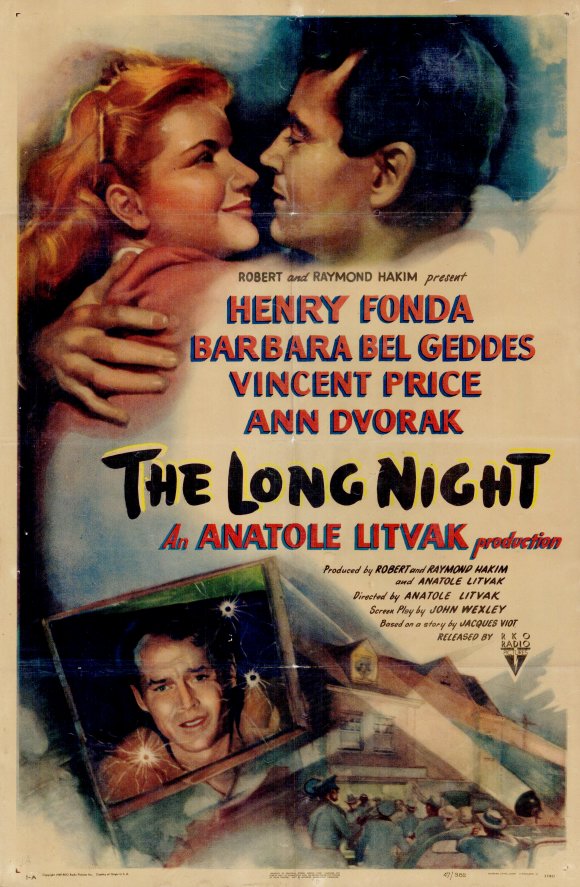
Anatole Litvak’s The Long Night is a remake of Marcel Carné’s 1939 drama Le Jour se lève. It stars Henry Fonda, Ann Dvorak, Vincent Price, and Barbara Bel Geddes in her screen debut.

Litvak, who was born in Kiev, worked in the Soviet cinema system in Leningrad, in the pre-war film industry of Berlin, in France after Hitler’s rise to power, and finally in Hollywood, where he became a contract director for Warner Bros. in 1937. Litvak became an American citizen in 1940, enlisted in the Army, and worked with Frank Capra on his Why We Fight series of short films. Litvak finished the war with the rank of colonel and returned to directing Hollywood features. Two of his most famous films would follow — Sorry, Wrong Number (1948) and The Snake Pit (1948).

The Long Night, his first post-war feature, is less well-known. For a long time, you’d be hard pressed to find anyone who remembered seeing it. But thanks to a pristine print on DVD from Kino Video (released in 2000 along with a VHS version), this flawed but worthwhile drama is now widely available. In the special features section of the Kino DVD, there are a couple of side-by-side comparisons with Le Jour se lève — a murder sequence in a darkened stairwell and the first meeting of the two lovers — that show how heavily Litvak borrowed from Carné’s film, at least stylistically. (The ending of The Long Night is radically different from the ending of Le Jour se lève, however, which is a standard practice in Hollywood remakes of depressing European art films.)

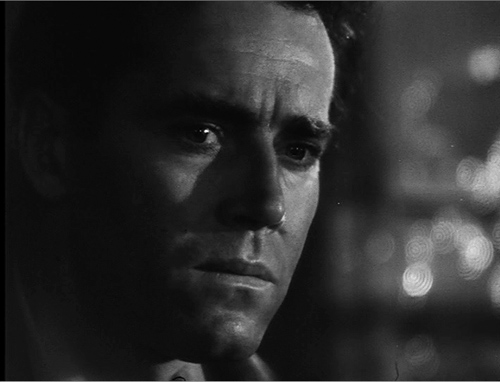
Despite the happy ending, Litvak infuses The Long Night with a pervasive sense of doom. After shooting a man in his apartment building in an unnamed steel town somewhere near the Pennsylvania-Ohio state line, Joe Adams (Henry Fonda) sits alone in his rented room, the door barricaded as police and onlookers swarm the street below his window. Accompanied by a refrain from Beethoven’s 7th Symphony, Joe tells his story through flashbacks, and we learn what brought him to this desperate place. “How can I explain when I don’t understand myself?” he thinks to himself.

Joe Adams grew up in an orphanage. “Class of ’34,” he tells the pretty young Jo Ann (Barbara Bel Geddes) when he meets her. (We must presume that Joe is younger than the man who plays him, since Fonda was 29 years old in 1934.) Jo Ann also came from the orphanage, and her romance with Joe is simple, childlike, and profound. Fonda plays Joe as a sweet-natured boy with no ability to plan long-term or handle disappointment or frustration. Bel Geddes plays Jo Ann in much the same way, but instead of being petulant she is naïve and unworldly, and open to the manipulation of a slimy magician named Maximilian the Great (Vincent Price).

Maximilian is a congenital liar. His relationship with Jo Ann is nebulous for some time in the film. He first tells Joe that Jo Ann is his daughter, but that he had to go on the road for 15 years and leave her in the company of strangers. After another series of flashbacks, however, it becomes clear that Maximilian and Jo Ann were romantically involved. He took her to see the Cleveland Symphony when she had never been as far west as Pittsburgh, and forced himself on her when she had never been kissed. Jo Ann was uncomfortable with Maximilian’s actions, but she was also lonely, and Maximilian offered her a world of excitement and glamor.

The visual style of The Long Night, its doomed protagonist buffeted by forces outside of his control, and its story told through flashbacks are all hallmarks of film noir, but it also has elements of social realism. For instance, Joe befriends Maximilian’s assistant Charlene (played by the always wonderful Ann Dvorak). He lies on her bed on a Sunday afternoon, reading the funnies, in her crummy room full of clutter, next to a couple of big bottles of beer and a bag of pretzels he brought for them to eat. She provides a stack of toast. She’s in the bath when he arrives, and throws on a slinky silk robe. It’s unclear how close Joe and Charlene really are, but the realism of the setting and the intimacy of the situation push the limits of Hays Code acceptability.

Along with the realism and intimacy of some of the interior settings, there’s plenty of artifice in The Long Night. Unlike the typical Hollywood production in which backdrops were either matte paintings or rear-projection film, production designer Eugène Lourié used elaborate sets with tricks of forced perspective in The Long Night. For example, a factory on a hillside in the distance is really a small model that could be lit in whichever way the filmmakers wanted. Lourié and Litvak intended to achieve a kind of “poetic reality,” and they succeeded. At the same time, the artifice sometimes clashes with the realism, and when it does the film feels aimless.

The Long Night was a commercial and critical failure, and lost approximately $1 million, but it was also the springboard for Barbara Bel Geddes’s long onscreen career. After seeing her performance in the film, RKO signed her to a seven-picture deal.