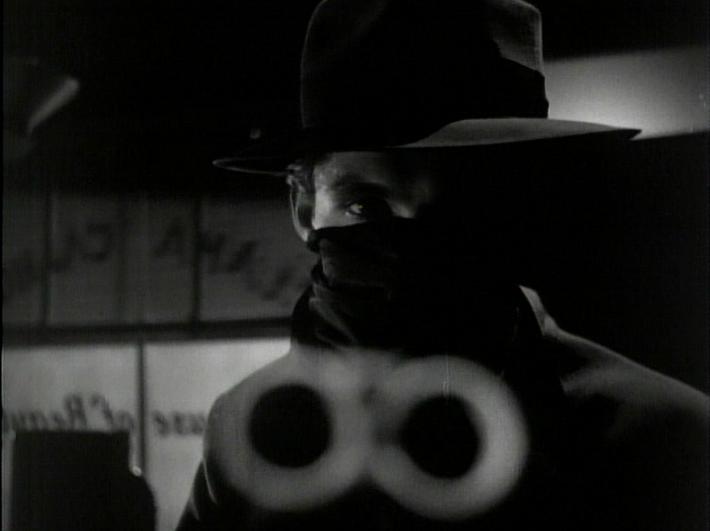
Dick Tracy Meets Gruesome (Sept. 26, 1947)

The last of RKO’s four Dick Tracy pictures employs horror icon Boris Karloff to tell a hard-boiled crime story with a sci-fi twist.

Directed by John Rawlins and produced by Herman Schlom, Dick Tracy Meets Gruesome gives top billing to Karloff, not Ralph Byrd, but it hits a lot of the same notes as the first three films.

I was sad to see the last of the Dick Tracy pictures. I thought they were some of the best programmers from the ’40s, second only to Columbia’s Whistler series. I preferred Morgan Conway — who starred in the first two movies — to Byrd, but all the films were action-packed, fast-paced police procedurals with lots of humor. In short, they were great adaptions of Chester Gould’s comic strip.

Dick Tracy Meets Gruesome begins with a dramatic shot of a noose silhouetted on a wall. But then the camera pans to the left and we see that it’s just part of the outdoor decor of a dive bar called “Hangman’s Knot.” (Not to be confused with “The Dripping Dagger,” the waterfront dive in Dick Tracy vs. Cueball.)

The hulking Karloff shambles into the bar, takes a shot without paying, and asks to talk to the disreputable-looking piano player, “Melody” Fiske (Tony Barrett).

Yes, Karloff’s character is really named “Gruesome,” and together with Melody and a Coke bottle glasses-wearing character named “X-Ray” (Skelton Knaggs), he robs banks using a unique nerve gas developed by Dr. A. Tomic (Milton Parsons) and his assistant, I.M. Learned (June Clayworth).

Gruesome learns about the nerve gas firsthand, when he accidentally doses himself and winds up with rigor mortis for about an hour. Gruesome’s “dead” body provides plenty of laughs, especially when Dick Tracy’s partner Pat Patton (Lyle Latell) tries pushing his stiff leg down, and the rest of his body rises up like a corpse rising from the grave.

“I tell you, if I didn’t know better, I’d swear we were doing business with Boris Karloff,” Pat says.

“Looks that way,” Dick Tracy responds.

Even though the gas causes temporary rigor mortis in anyone who breathes it, the scenes in which Gruesome and his crew release the gas into banks are more like one of those “stopping time” bits than anything else, since the body-freezing effect of the gas is achieved by slowing down and then stopping the film.

It’s silly, but so is a taxidermist named “Y. Stuffum” (a throwaway gag in Dick Tracy Meets Gruesome). Chester Gould always delighted in punctuating the violent goings-on in his strips with puns and silly humor, and the RKO Dick Tracy series did the same. While the series never used any of Gould’s original villains, they got the tone of the strip just right.

Railroaded (Sept. 25, 1947)

Anthony Mann’s Railroaded represents a number of missed opportunities and a few modest successes.

In 1947, Mann made his first really good film noir, Desperate, which was released by RKO Radio Pictures. It wasn’t a perfect film, but the actors were decent, the story was suspenseful, and many of the lighting setups by Mann and his cinematographer, George E. Diskant, were stunning.

Railroaded was the next film he made. While I was watching it, I found myself frequently saying “If only…”

If only the script was more focused. If only the music wasn’t so terrible. If only the actors were talented. If only the film featured more screen time for the interesting villains and less screen time for the uninteresting heroes. If only Mann had been given a larger budget. If only he had worked with cinematographer John Alton.

But if you want to watch that kind of movie, you have to dig into Mann’s later work; his six collaborations with Alton, made between 1947 and 1950, or the five westerns he made with James Stewart between 1950 and 1955. Railroaded is a modestly entertaining little picture if you have no expectations, but if you’re familiar with Mann’s later work, it’s bound to disappoint.

Mann made Railroaded for Producers Releasing Corporation (P.R.C.), a dependable old Poverty Row workhorse. It was the last really cut-rate movie that Mann would make. (P.R.C. was in the process of being bought by the powerful British film distributor J. Arthur Rank, and P.R.C.’s name would soon be changed to “Eagle-Lion International” to class it up a little. It was through Eagle-Lion that Mann’s excellent T-Men would be released later in 1947.) While Mann’s budgets were low, he was able to work with less studio control at Eagle-Lion International than he had been faced with at RKO, Universal, Paramount, and Republic.

In Jeanine Basinger’s book Anthony Mann (published in 1979; expanded and republished in 2007), she writes that Railroaded “is more unified than Desperate and points toward the coherence of Mann’s later works. It is perhaps his first really unified film, presenting the story of a young woman … and her attempts to clear her brother’s name of a murder charge.” I don’t agree with Basinger’s assessment, and find Railroaded an even more uneven film than Desperate.

Guy Roe was Mann’s cinematographer on Railroaded, and even though he’s not as good as Alton, there are still a number of impressive sequences, particularly the robbery that opens the picture.

John Ireland (the only actor in the film with any talent) plays a sneering criminal named Duke Martin who perfumes his bullets. (What’s a B-noir bad guy without a gimmick or two?)

The robbery is of a joint controlled by Jackland Ainsworth (Roy Gordon). It’s a numbers operation hidden in the back of a beauty shop run by Clara Calhoun (Jane Randolph). Clara is Duke’s girlfriend, and the inside job was supposed to be a cinch, but the cops show up, and Duke snuffs one of them, which sets the events of the film in motion.

Duke arranged everything to point in the direction of a patsy, Steve Ryan (Ed Kelly). Steve is a young guy who lives with his sister, Rosie Ryan (Sheila Ryan), and his mother, Mrs. Ryan (Hermine Sterler). At the breakfast table, Rosie talks about the movie she saw the night before, and how she cried at the end, when the police got their man. Even though he was a criminal, she felt bad for him. Steve is unsympathetic, and says “Maybe some guys need a goin’ over.” Minutes later the police bust in and arrest him for murder. (John C. Higgins’s screenplay, which is based on a story by Gertrude Walker, could have used more clever and ironic moments like this one.)

Things look bad for Steve. Duke used Steve’s scarf as a mask during the robbery. Steve’s car was stolen and used as the getaway vehicle. A paraffin test to see if Steve has recently fired a gun comes up negative, but that doesn’t mean much after Duke’s partner, Cowie Kowalski (Keefe Brasselle), who was shot during the robbery, gives a deathbed confession that implicates Steve.

Railroaded isn’t actually a very accurate title for the film, since the cops don’t railroad Steve. They work with the evidence they have. (Framed would have been a more accurate title.) Unlike Desperate, which followed an innocent man’s terrifying flight from both gangsters and the police, the unjustly accused protagonist of Railroaded pretty much disappears from the film as soon as he’s jailed. Enter Sgt. Mickey Ferguson (Hugh Beaumont), a police detective who grew up in the same neighborhood as the Ryans, and is still sweet on Rosie.

Rosie believes her brother is innocent, and eventually starts to convince Sgt. Ferguson. This is where the picture really took a nosedive for me. Sheila Ryan is nice to look at, but she’s a completely unconvincing actress. Beaumont is even worse. He brings the same gravitas to his role as Sgt. Ferguson that he did to the scenes on TV a decade later in which he punished Wally and The Beav. Watching his scenes is like watching grass grow, and he and Sheila Ryan are the protagonists of Railroaded, not bit players.

With no one to root for, the only enjoyment I got out of Railroaded was watching John Ireland’s scenes, especially the ones with Jane Randolph. With the heat on, Duke orders Clara to hole up and stay off the booze. He’s planning one last score — a robbery of the Club Bombay, where the vigorish from Ainsworth’s bookie shops goes. Duke figures he can get revenge on Ainsworth and make off with $30 to $40 grand, which he’ll use to finance his and Clara’s getaway to South America. Of course, he can’t keep Clara off the sauce, but things aren’t all bad, since occasionally something exciting happens, like a vicious catfight Clara gets into with Rosie that Duke impassively watches while hidden:

Railroaded is a pretty typical P.R.C. product. The sets look like they’re made out of cardboard, the dialogue is stilted, the music is awful, and actors who can carry a scene are in the minority. Stretches of the film are entertaining, and occasionally the cinematography and editing create suspense and some real excitement, but overall, this isn’t one of Mann’s better pictures. There are plenty of people who champion the film, but for me, if a picture doesn’t have decent actors and strong characterizations, it doesn’t hang together. A few great scenes do not a great film make.

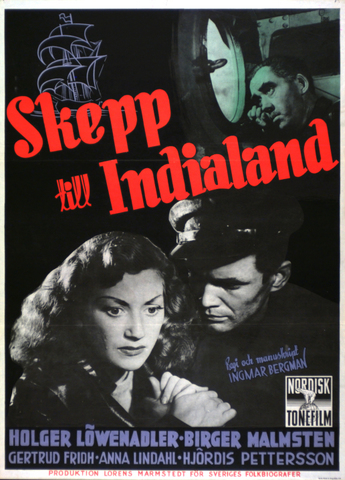
Skepp till India land (Sept. 22, 1947)

Ingmar Bergman’s third time in the director’s chair, Skepp till India land (A Ship to India), was released in Sweden in September 1947 and was shown at the 2nd Cannes Film Festival around the same time.

It was the first Bergman film to be shown in the United States, where it was released in 1949 as Frustration.

Frustration isn’t a bad title. It is a film about angry, trapped, and frustrated people, after all. But A Ship to India is such a beautifully understated title, and it has a touch of irony. It evokes exoticism and adventure, but for most of the film, the characters are stifled and miserable, and trapped in one dreary place.

The film, which is based on a play by Martin Söderhjelm, begins with a handsome young sea captain named Johannes Blom (Birger Malmsten) returning to Sweden after being away for eight years. He learns from an old friend, Sally (Gertrud Fridh), that his father died of pneumonia while he was away, but he seems strangely unmoved by the news. Sally has fallen on hard times, and seeing her upsets Johannes.

He walks down to the beach and falls asleep on the rocks, remembering his earlier life.

He was born with a hump on his back and his father beat him mercilessly when he was a child. His father, Alexander Blom (Holger Löwenadler), was the captain of a salvage vessel, and lived on it with his crew, as well as his son Johannes and his wife Alice (Anna Lindahl). Capt. Blom was an alcoholic who would disappear for days at a time, which threatened his salvage operation. With his crew doing nothing while he was away, the wreck they were working on was in danger of sinking forever.

The tensions simmering below the surface bubbled over when Capt. Blom brought his mistress, Sally, to live with him on the salvage ship.

Capt. Blom is one of the nastiest, most despicable film characters I’ve seen in a long time. The worst thing about him is that he never comes off as a monster. His cruelty to his wife and son is believable, and we see just enough of his internal life to understand him without ever sympathizing him. It helps that Löwenadler is a really fantastic actor.

Like Bergman’s first film, Kris (Crisis) (1946), Skepp till India land shows flashes of brilliance, but it’s not as masterful as a lot of his later work. Birger Malmsten, who plays Johannes, is easy to feel sorry for, but not always easy to understand.

But Bergman has a keen sense of why people do the things that they do, and the human drama in Skepp till India land is keenly observed, if rarely uplifting.

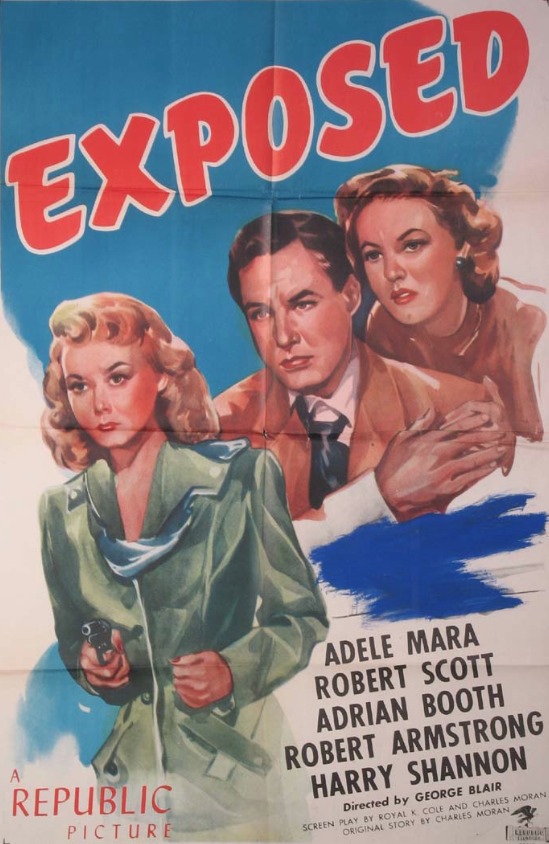
Exposed (Sept. 8, 1947)

Exposed
Exposed (1947)
Directed by George Blair
Republic Pictures

I wish that George Blair’s Exposed was a better movie, because it’s got a great setup. It’s one of those rare movies from the 1940s — like Crane Wilbur’s The Story of Molly X (1949) — that features a woman in a traditionally masculine role. In Molly X it was June Havoc as the leader of a heist crew (and later tough gal behind bars). In Exposed it’s cute-as-a-button Adela Mara as Los Angeles private eye Belinda Prentice.

Prentice is a stylishly dressed young woman who eats in the best restaurants and drives a Lincoln Continental Convertible. She has an office with marble walls and blond wood furniture. The door to her office has “B. Prentice” stenciled on pebbled glass. Her fee is $75 a day plus expenses.

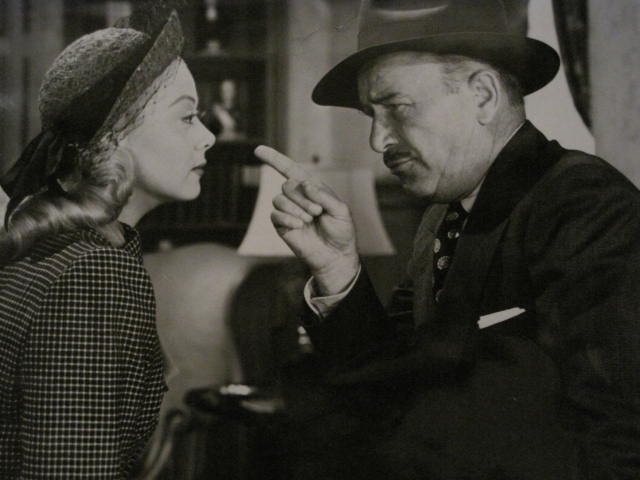
When a dignified gentleman, Col. Bentry (Russell Hicks), who is looking to engage the services of a private investigator is surprised to discover that B. Prentice is a woman, she responds, “You were expecting maybe Senator Claghorn?”

Prentice is full of quips like that. When a tough little gunsel named “Chicago” (Bob Steele) sits down at her table at the Deauville Restaurant and places his fedora down with a gun under it, she says, “Take your hat off the table. I’m allergic to dandruff.”

When a waitress at a cocktail lounge warns Prentice that the man she wants to talk to is a bad egg, she responds, “Don’t worry, I’ll scramble him.”

Her dialogue may be hard-boiled, but she always comes off as cute and impish, not like a bull dagger who talks out of the side of her mouth. She achieves this by backing up all of her wiseacre comments not with her fists or a pistol, but with her assistant, a hulking ex-Marine named Iggy (William Haade).

Like I said, Exposed has a great setup. The problem is its execution.

Exposed was a B feature from Republic Pictures, but it’s top-heavy with plot, which is tough to handle with a running time of only 59 minutes. Consequently, the dialogue is nearly all exposition. The shooting schedule was obviously tight, allowing for a limited number of takes, which results in the actors all being stiff, reciting their lines without flubbing any of them, but without injecting much life into them either. (Compare, for instance Bob Steele’s performance as a gunman in this film with his similar role in Howard Hawks’s The Big Sleep.)

The plot, in a nutshell, is that Col. Bentry’s stepson, William Foresman III (Mark Roberts), has been making very large withdrawals from the family business without telling anyone. The bluenosed Col. Bentry doesn’t want to ask him anything directly because he doesn’t want to seem like he’s prying.

So he employs the services of Belinda Prentice. But by the time she arrives at the Bentry estate, Col. Bentry is dead, seemingly stabbed with a letter opener. But there’s very little blood. Could it have been a heart attack — or poison — that caused him to collapse on the letter opener? The police are called in, including Inspector Prentice (Robert Armstrong), who’s Brenda’s father.

William Foresman III seems like a nice enough young man, but that never ruled anyone out as a suspect in a murder mystery. There are also all number of creeps crawling around in the woodwork, including Prof. Ordson (Paul E. Burns), Bentry’s physician, who’s working on a chemical cure for alcoholism.

If you can overlook the stilted dialogue and the overly involved mystery, Exposed is a fun second feature. Bob Steele’s fight scene with the much-larger William Haade is pretty good, and the film’s unpretentious shooting style is a great way to see what Los Angeles looked like circa 1947.

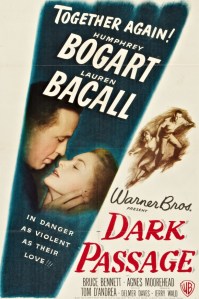
Dark Passage (Sept. 5, 1947)

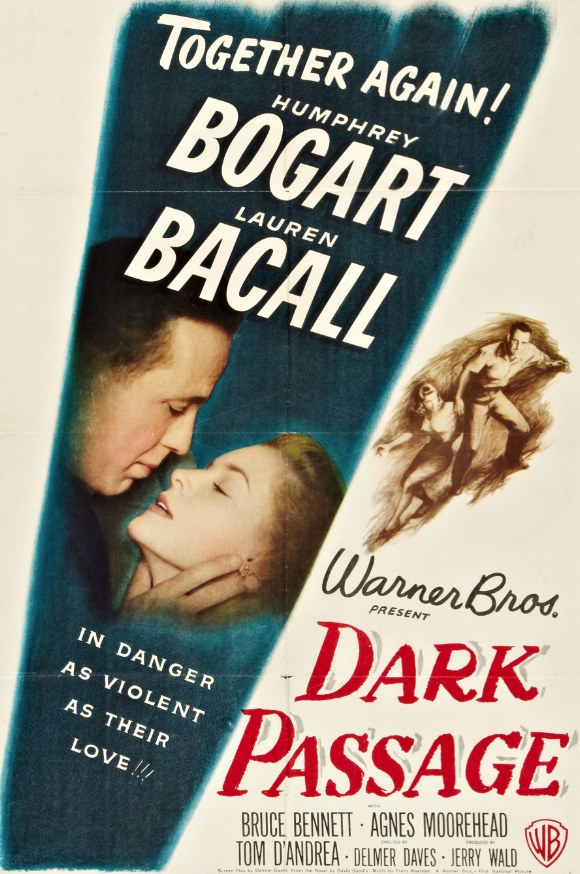
Delmer Daves’s Dark Passage is the red-headed stepchild of the Bogie-Bacall movies.

Humphrey Bogart and Lauren Bacall were married in 1945, and stayed married until Bogart’s death in 1957. They made four movies together — To Have and Have Not (1944), The Big Sleep (1946), Dark Passage, and Key Largo (1948). Of these four, Dark Passage is the strangest and the least widely acclaimed.

It was a bit of a critical and box office disappointment at the time of its release, possibly because Bogart’s face doesn’t actually appear on-screen until the picture is more than half over, and possibly because of Bogart’s involvement with the Committee for the First Amendment.

The Committee for the First Amendment was an organization that was formed to protest the treatment of Hollywood figures by the House Un-American Activities Committee. (Bogart later recanted his involvement with the organization in a letter published in the March 1948 issue of Photoplay entitled “I’m No Communist.”)

Dark Passage is based on a book by oddball crime novelist David Goodis. The film does a good job of bringing Goodis’s strong characterizations and nightmarish, occasionally surreal demimonde to the big screen.

For better or for worse, it also does a good job of bringing to life some of Goodis’s less powerful aspects, like his convoluted plots and his reliance on coincidence.

But just like the best of Goodis’s novels, the film version of Dark Passage doesn’t need to be plausible to work. It plays by its own rules, and when it works, boy does it work.

In Dark Passage, Bogart plays Vincent Parry, a man convicted of killing his wife who breaks out of San Quentin by hiding in a 55-gallon drum on the back of a flatbed truck. He manages to roll himself off the truck and into a ditch somewhere in Marin County. He strips down to his undershirt, buries his prison-issue shirt, and takes to the highway to thumb a ride. He’s picked up, first by a guy named Baker (Clifton Young), and then — when that little ride goes sour — by a beautiful artist named Irene Jansen (Lauren Bacall).

She hides him under her canvases and wet paint so they can make it through a roadblock at the entrance of the Golden Gate Bridge, then she takes him to her luxurious bachelorette pad in North Beach. Why is she helping him? Because her own father was unjustly imprisoned for a murder he didn’t commit, and because she followed Parry’s trial, even writing letters to the editor protesting his treatment by the press.

For the first 37 minutes of Dark Passage, Bogart’s face is never shown, for reasons we’ll get to in a moment. This P.O.V. style of filmmaking was pioneered by Robert Montgomery in his film Lady in the Lake (1947), but the technique works much better in Dark Passage, for a variety of reasons. First, the editing is more aggressive than in Lady in the Lake, which was essentially one long tracking shot designed to put the viewer in the shoes of the protagonist but that never quite worked. Second, there are third-person shots of Bogart in which his back is turned or his face is in shadows, which helps to break things up and make them more visually palatable.
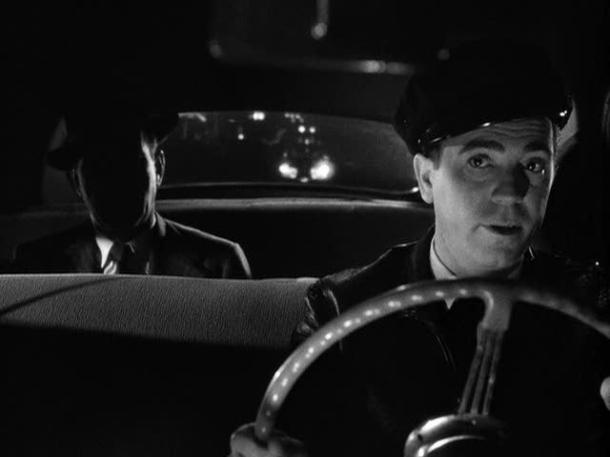
Once Parry makes it to San Francisco, Dark Passage gets really weird. Irene gives him $1,000, new clothes and a hat, and a place to stay, but if you thought that qualified Parry as the luckiest escaped convict in history, you ain’t seen nothing yet.

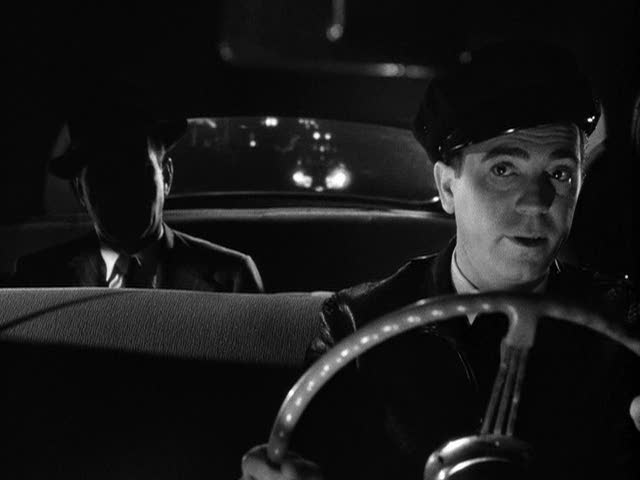
He’s picked up one night by a cabbie named Sam (Tom D’Andrea), who not only recognizes him but believes Parry got a raw deal from the court system, and hooks him up with his buddy, Dr. Walter Coley, a plastic surgeon who can change his face.

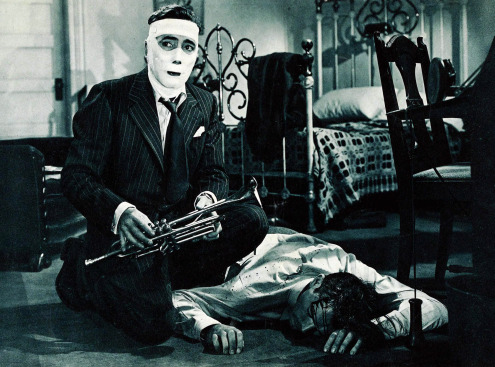
Nervous about staying with Irene, Parry goes to see his friend George Fellsinger (Rory Mallinson), a trumpet player who gives Parry a key to his place. Incidentally, we get our first shot of Parry’s “real” face on the front of a newspaper laid across his friend George’s chest as he lies in bed. The real Parry has a mustache, and doesn’t look much like Bogart.

But he looks exactly like Bogart after his trip to see Dr. Coley, who’s played by 67-year-old actor Houseley Stevenson. Dr. Coley is the most ghoulishly fun character in Dark Passage. Wrinkled, liver-spotted, and chain-smoking, Dr. Coley asks Vincent if he’s ever seen a botched plastic surgery job right before he puts him under, and the kaleidoscopic nightmare Parry has while undergoing plastic surgery is a real standout.
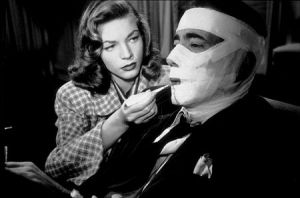
Even after the surgery, we don’t fully see Bogart’s face until more than an hour into the picture.

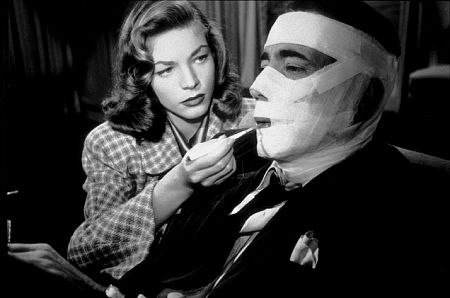
Until then, he’s covered with bandages, smoking cigarettes with long filters and communicating with Irene using pencil and paper. (Throw a pair of shades on him and he’d look like Claude Rains in The Invisible Man).

While the plot may be contrived and coincidence-laden, the characterizations are sharp, and the actors are all really good. Lauren Bacall has to carry the film for much of the first hour, and she delivers a really good performance. She’s much better at interacting with the camera than any of the actors in Lady in the Lake were. Consequently, the P.O.V. technique draws less attention to itself, and works fairly well.
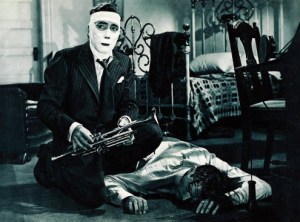
When the bandages finally come off, Parry looks at himself in the mirror and remarks, “Same eyes, same nose, same hair. Huh. Everything else seems to be in a different place. I sure look older. That’s all right, I’m not. And if it’s all right with me it oughtta be all right with you.”

The fact that Bogart and Bacall were married in real life gives this line a little humorous subtext.

Hidden behind his new face, Parry is faced with another murder to solve, cops on his tail, a chiseler who hopes to blackmail Irene after he finds out she’s been shielding Parry, the presence of Irene’s old beau Bob (Bruce Bennett), and her shrill friend Madge Rapf (Agnes Moorehead), who keeps dropping by and nosing around.

That Parry goes about solving his problems in a haphazard, roundabout way should come as a surprise to no one who’s familiar with the fiction of David Goodis.

Dark Passage may not be a perfect film, but it’s an intriguing and involving one. Sid Hickox’s cinematography is gorgeous, and the location shooting in San Francisco is really effective. It’s worth seeing at least once, and if you’re like me, you’ll probably want to see it again.

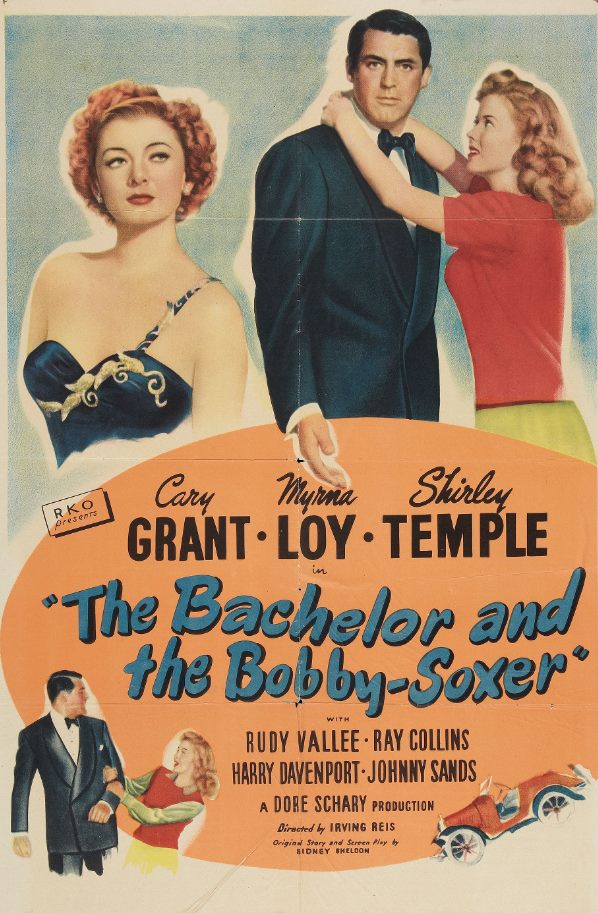
The Bachelor and the Bobby-Soxer (Sept. 1, 1947)

The Bachelor and the Bobby-Soxer was the surprise winner of the Oscar for best original screenplay at the 20th Academy Awards in 1948, beating out the scripts for more “serious” fare like Body and Soul, A Double Life, Monsieur Verdoux, and Sciuscià (Shoeshine).

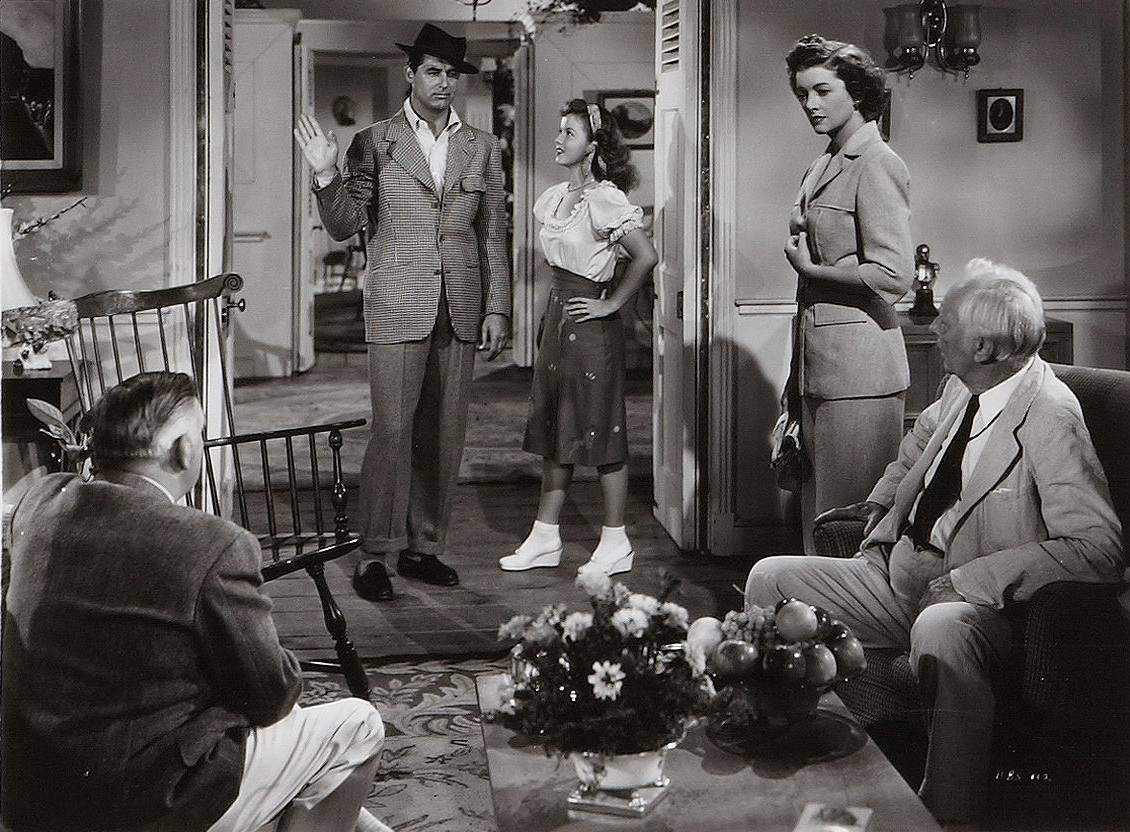
But just because its win was surprising doesn’t mean it didn’t deserve to win. The Bachelor and the Bobby-Soxer is a very funny film. It’s a latter-day screwball comedy about a handsome artist who is forced — by court order, no less — to date a teenage girl.

Sidney Sheldon’s screenplay treats those jumpin’ and jivin’ post-war kids with affection rather than bemusement or contempt, and he has a keen understanding of the ways teenagers try to act like adults, and how they unwittingly fail.

The dialogue might not be a completely accurate evocation of the way real bobby-soxers and their jalopy-driving boyfriends actually talked (did any kid before this movie came out actually say that they felt “sklonklish”?), but the characterizations all feel right.

Former child star Shirley Temple — all grown up (sort of) — plays the bobby-soxer of the title, a 17-year-old high school student named Susan who lives with her older sister. Her older sister just happens to be a judge, and when the film begins, the Honorable Margaret Turner (Myrna Loy) is presiding over a case involving a kerfuffle at a nightclub between a couple of brassy gals over the affections of charming artist Richard Nugent (Cary Grant).

Margaret and Susan’s parents are dead, so Margaret is as much of a mother to Susan as she is a big sister. After the initial courtroom scene, the stage is set for the sparks of disapproval to fly as soon as Margaret learns that the object of her little sister’s affection is the same Lothario she saw in court.

Most of the humor in The Bachelor and the Bobby-Soxer comes from the fact that Richard has absolutely no desire to be with Susan, but is ordered by the court, under the recommendation of a psychologist, to take her out on dates so his mature-man forbidden fruit will sooner wither and die, and she’ll go back to her sweet, somewhat dumb high school boyfriend, Jerry (Johnny Sands).

Susan is mature for her age, but she’s still a 17-year-old. Watching Cary Grant suffer through taking her to Sunset High School basketball games and dates at the ice cream shop are some of the funniest bits I’ve seen in a long time.

Cary Grant — no stranger to screwball comedies — has an arch, deadpan comic style that’s perfectly suited to the material. Temple is really great in this movie, too. Like Deanna Durbin, she was an impossibly cute child star who blossomed into an engaging adult performer without missing a beat. And Myrna Loy is wonderful to watch, as always. It doesn’t matter that she was old enough to be Temple’s mother when she made this movie. She barely looks a decade older, and she matches Cary Grant beat for beat in all their scenes together.

The Bachelor and the Bobby-Soxer is a great comedy that stands the test of time.

Lured (Aug. 28, 1947)

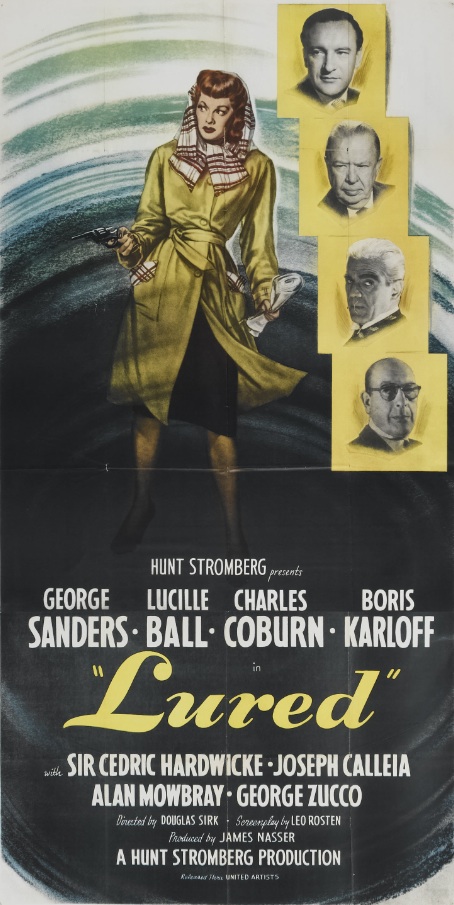
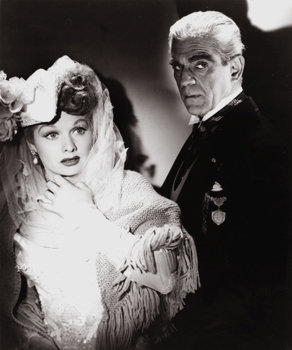
If you go solely by the current DVD cover art for Douglas Sirk’s Lured, you’ll come away thinking it’s a thriller starring Boris Karloff and Lucille Ball; possibly a Gothic melodrama in which her character marries his character and is then terrorized by him in a creepy old mansion.

Or you might not.

But in any case, that’s what I thought, so I was surprised when it turned out that Karloff’s character in Lured is essentially a throwaway, and all of his scenes could be excised from the film without affecting the plot.

Of course, excising Karloff from the film would excise much of the ghoulish fun, since the sequence in which he plays a thoroughly mad former fashion designer who forces Ball to model his “latest creations” is one of the best bits in the picture, but it ultimately has very little to do with the central mystery about a poetry-obsessed killer who places ads in the personal columns.

In Lured, Lucille Ball plays Sandra Carpenter, an American dancer and actress who came to London from New York with a show. It folded after four nights and she was broke. So now she works in a dance hall called the Broadway Palladium where “50 beautiful ravishing glamorous hostesses” dance with men off the street for six pence a twirl.

It’s no picnic. After one of Sandra’s co-workers mentions that there’s just two hours left to go in their shift, Sandra responds, “Two hours in this cement mixer’s longer than a six-day bike race.” (Incidentally, Ball played a similarly occupied character on the CBS radio show Suspense in the January 13, 1944, broadcast, “A Dime a Dance.”)

When Sandra is offered a tryout for a part in the new Fleming & Wilde show, she jumps at the chance, not so affectionately referring to her current place of employment as a “slaughterhouse.”

But just as she arranges a private audition with Mr. Fleming over the phone, she sees the headline of the London Courier. Her friend and fellow taxi dancer Lucy Barnard (Tanis Chandler) has just become the eighth victim of the “Poet Killer”!

So two very different men enter Sandra’s life, and things will never be the same for her.

One is the charming and insouciant Robert Fleming (played by the the charming and insouciant George Sanders), who initially wants to cast Sandra in his show, but soon wants her to play the leading lady in his own life, till death do them part.

The other is Inspector Harley Temple (Charles Coburn), who tests Sandra’s powers of observation and then enlists her in Scotland Yard after she passes with flying colors.

Their policewomen are very clever, he says, but the killer only places ads for young, beautiful women. (Sorry, ladies of Scotland Yard. No offense intended, I’m sure.)

Sandra then has to respond to every personal ad for young, unattached women. The police will write the responses, but Sandra will have to keep the appointments. A humorous montage follows, natch.

Lured is a mixed bag. Douglas Sirk is a great director, but Lured isn’t one of the films he’s remembered for. It’s well-done, and Sirk’s fascination with surface opulence masking (or possibly masking) darker forces is in full effect. The plot, however, twists and turns through so many contrivances that it’s hard to keep track of everything, let alone take any of it seriously.

It’s worth seeing, however, by anyone who’s a Sirk completist, or anyone who wants to see Lucille Ball in a glamorous leading role in a beautifully art-directed film. She didn’t have too many of those, you know, after I Love Lucy.

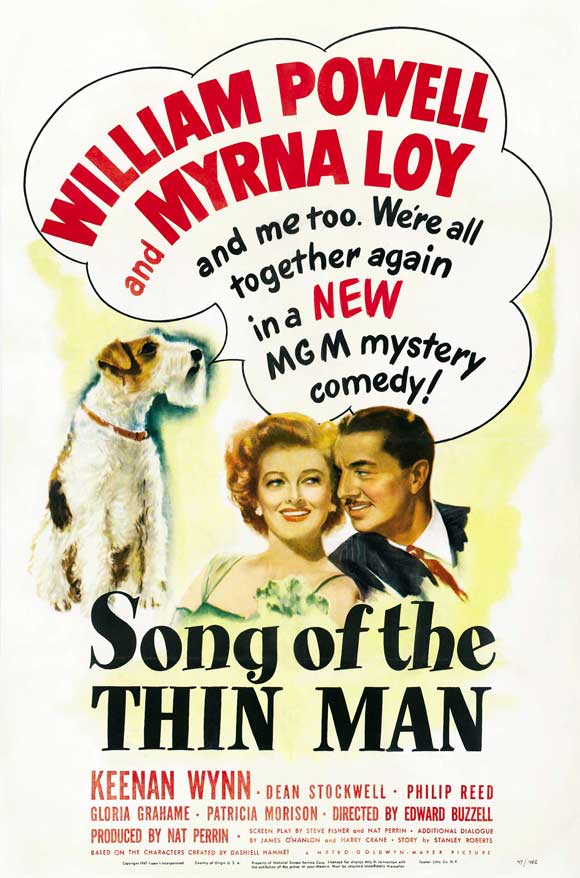
Song of the Thin Man (Aug. 28, 1947)

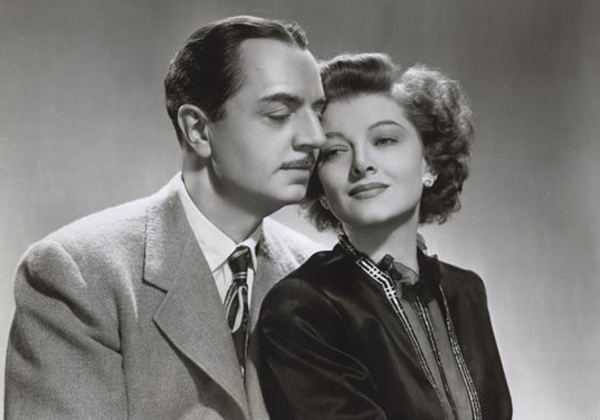
Edward Buzzell’s Song of the Thin Man was a bittersweet viewing experience for me. I’ve been a huge fan of the Thin Man series since the first film, The Thin Man (1934), so it was a little sad to know that Song of the Thin Man would be the last new film I’d see with William Powell and Myrna Loy as everyone’s favorite dipsomaniacal mystery-solving married couple, Nick and Nora Charles.

While some films in the Thin Man series are better than others, all of them are funny, well-made mysteries featuring two of the most appealing actors from Hollywood’s Golden Age.

As always, their little dog Asta is around for yuks, along with a brand new adorable little son, played by Dean Stockwell. (Yes, kids, Dean Stockwell was adorable once.)

But not to worry. Having a young son doesn’t stop Nick and Nora from continuing to booze it up and skulk around at night with flashlights, looking for clues.

The mystery they’re trying to solve this time around is the murder of a jazz band leader named Tommy Drake (Phillip Reed), who is shot aboard the S.S. Fortune, a gambling ship run by a man named Phil Brant (Bruce Cowling).

True to its title, Song of the Thin Man is all about music. Specifically jazz music, and the wacky nightclub performers who jam till dawn, like Drake’s former bandleader Buddy Hollis (Don Taylor) and his famous clarinet. Hollis is a talented musician, but he’s all whacked out from carrying a torch for the hot little cookie Fran Ledue Page (Gloria Grahame), a singer.

Keenan Wynn is also on hand as musician Clarence “Clinker” Krause, and he proves that his incredibly annoying character in The Hucksters (1947) wasn’t a case of lightning striking once.

The mystery in Song of the Thin Man isn’t that clever or involving. But as always with the Thin Man movies, the mystery and its solution is less important than all the fun Nick and Nora have carousing their way through it.

Powell and Loy were 41 years old and 28 years old, respectively, when the series began, so by the time they made Song of the Thin Man together they were starting to get on in years, but Loy looks just as beautiful as she did in 1934, and I don’t think anyone ever went to see the Thin Man movies for Powell’s looks.

All good things must come to an end, but I wish there could have been just a few more Thin Man movies with Powell and Loy.

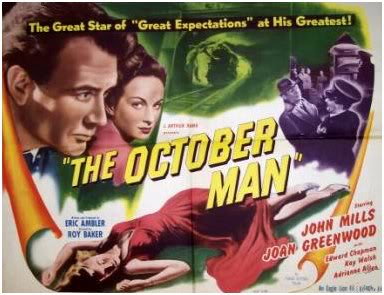
The October Man (Aug. 28, 1947)

The only problem with a really crackerjack opening is that sometimes it can make the rest of a film seem staid.

Roy Ward Baker’s The October Man, which was written and produced by spy novelist Eric Ambler, features a stunning, completely wordless opening sequence in which a bus full of passengers navigates twisting English country roads at night in the rain.

Jim Ackland (John Mills) sits next to a little girl. The two are friendly with each other, and he ties his handkerchief into a rabbit shape to amuse her. The film cuts from them to an axle under the bus with a loose screw, to the sleepy driver, and back to them. When disaster comes, it is swift.

Before the accident, Ackland had a good job as an industrial chemist and was quite sane. During the accident, however, he suffered a depressed fracture of the skull and multiple brain injuries.

The little girl on the bus next to him was the daughter of some of his friends, and he blames himself for her death, twice attempting suicide during his convalescence.

Eventually, though, Ackland starts to get his life back on track. He moves into a boarding house full of fusspots and weirdos and gets another job as a chemist. He meets a nice girl named Jenny Carden (Joan Greenwood) and starts seeing her regularly.

But when one of the other residents of Ackland’s boarding house — a woman named Molly Newman (Kay Walsh) — is murdered, suspicion falls on Ackland. The only person who should know beyond a shadow of a doubt whether he’s guilty or not — Ackland himself — isn’t even sure, since he’s a paranoiac who suffers from blackouts.

The October Man is a good film. It’s well acted and well shot, and the central mystery is intriguing, if not particularly difficult to unravel. My main problem with it is that nothing in the film is equal to the suspense and power of the first minute.

This was the first feature film that Roy Ward Baker directed. (He’s listed in the credits as “Roy Baker.”)

Baker was a prolific director of British film and television who worked into the 1990s, and who died last year at the age of 93. During World War II, Baker worked under Eric Ambler in the Army Kinematograph Unit, which eventually led to him directing The October Man. If you’re a fan of Hammer Studios’ horror films, you’ve doubtless seen films directed by Baker, but he worked in all manner of genres. His most enduring film is probably A Night to Remember (1958), about the sinking of the Titanic.

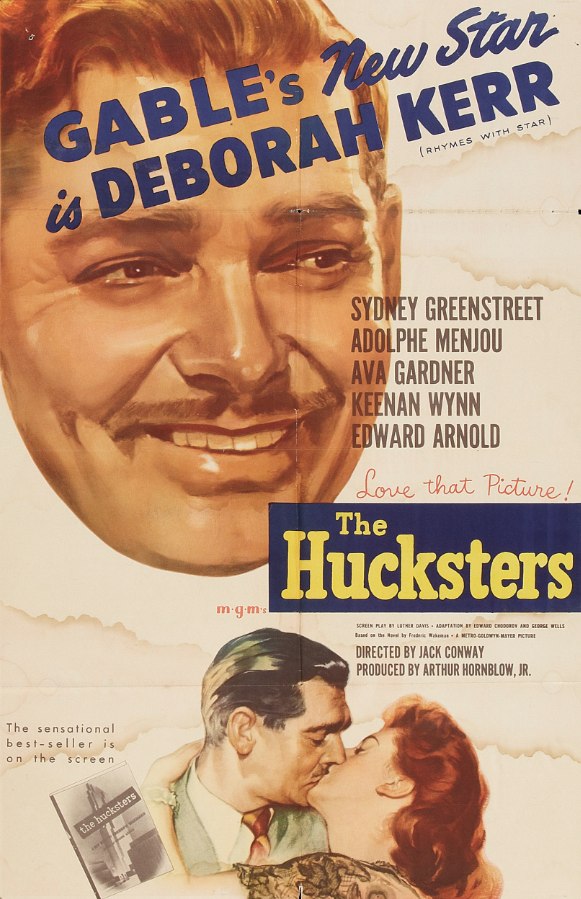
The Hucksters (Aug. 27, 1947)

It’s hard to watch Jack Conway’s The Hucksters today and not compare it with Mad Men.

While Mad Men is a TV series that began in 2007 and takes place in the early ’60s and The Hucksters takes place during the time it was filmed (the post-war ’40s), they share a number of similarities, and not just because they’re both about advertising agencies.

Both feature at their center a dashing leading man with rugged good looks as an advertising genius who must navigate the tricky waters of love, sex, and difficult clients. Jon Hamm was in his mid-30s when Mad Men began, while Clark Gable was in his mid-40s in 1947, but both of their characters are veterans of the most recent war and inveterate seducers of women.

The Hucksters is based on Frederic Wakeman’s 1946 novel of the same name, which spent a year at the top of the best-seller lists. Wakeman’s novel was based on a four-part exposé in The Saturday Evening Post, “The Star Spangled Octopus,” about talent and promotional agency MCA.

The novel’s racy subject matter was largely responsible for its success. Life magazine called it “Last year’s best-selling travesty on bigtime advertising.”

Metro-Goldwyn-Mayer paid nearly $200,000 for the rights to Wakeman’s novel in a pre-publication deal. Most of the salacious details, however, never made it into the final shooting script. (Clark Gable’s take on the first draft of the script was, “It’s filthy and it isn’t entertainment.”) For instance, in the novel, Gable’s character, Victor Albee Norman, has an affair with a married woman, but she was changed into a war widow for the film.

Consequently, The Hucksters never quite achieves the satirical bite of Mad Men, but there are number of bits that are funny, particularly if you’re familiar with radio advertising circa 1947.

There are plenty of reasons to see The Hucksters. It was the American film debut of Deborah Kerr, who plays Gable’s widowed love interest, Kay Dorrance, and it also features the beautiful Ava Gardner as a torch singer named Jean Ogilvie. Adolphe Menjou is wonderful as Mr. Kimberly, the head of the advertising agency, and Keenan Wynn is appropriately irritating as a third-rate radio comedian named Buddy Hare.

The most memorable actor in the film, however, is Sydney Greenstreet, who plays Evan Llewellyn Evans, the grotesque and demanding head of Beautee Soap. After Gable’s character, Victor Norman, rejects the more scandalous layout favored by Evans, Evans sits down at the head of the boardroom table, tilts his head back, hawks, and spits on the table. “Mr. Norman, you’ve just seen me do a disgusting thing,” he says. “But you’ll always remember what I just did. You see, Mr. Norman, if nobody remembers your brand, you aren’t gonna sell any soap.”

The Hucksters could have used more moments like that. It’s nearly two hours long, and Gable’s romance with Kerr takes up much of the running time. It’s perfectly well-handled and shot, but it’s a storyline one could see in any number of pictures, while the advertising angle of the story is unique, and the film could have gotten more mileage out of it.

The Hucksters earned a respectable $4.4 million during its domestic release, but was a complete flop overseas, since in those days no one outside the United States was in any way familiar with American advertising or commercial broadcasting.