Tag Archives: Film Noir

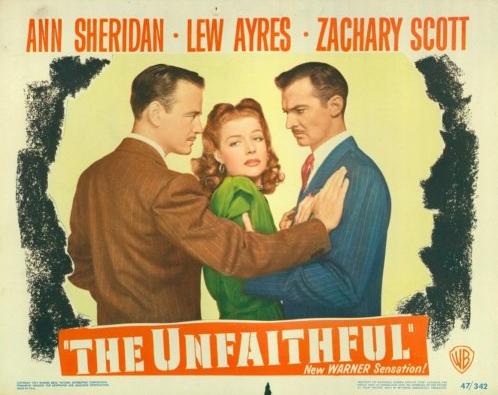
The Unfaithful (June 5, 1947)

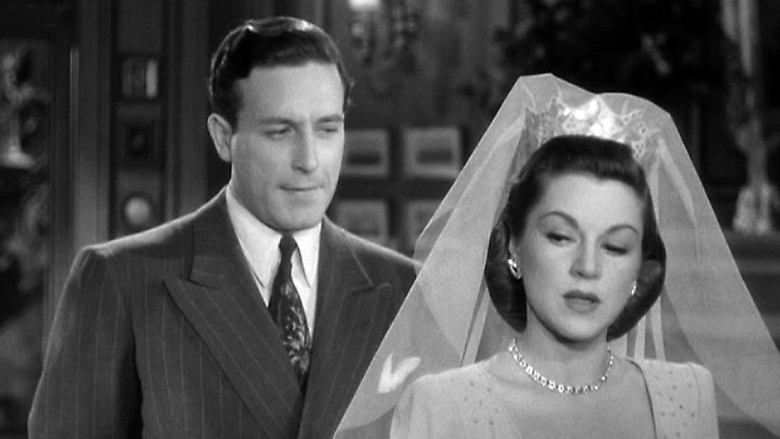
The opening narration of The Unfaithful informs us that while the film takes place in Southern California, it deals not with a problem of a particular place, but with a problem of our times. At first, this problem seems to be rampant divorce, but it ends up being more about wartime infidelity (or possibly the widespread problem of married women committing murder in self-defense and then having to lie about it to cover up an affair).

It’s hard not to compare The Unfaithful with Nora Prentiss, which was released earlier the same year. Both were directed by Vincent Sherman, both star the beautiful Ann Sheridan, and both have infidelity as their subject. But while Nora Prentiss indulged in some truly outré and baroque excesses by the time the credits rolled, The Unfaithful goes in the opposite direction, and slowly peters out to an anticlimax. It’s a good film — well-acted and directed with assurance — but when it was over, I couldn’t help feeling as if the filmmakers wanted to make a melodrama about an “issue of the day,” but weren’t sure how to fold it into the murder investigation and blackmail story that dominate the film.

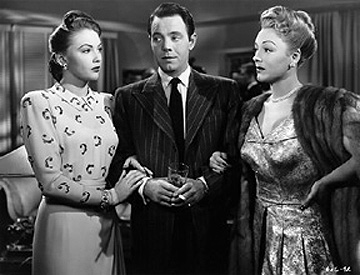
The picture opens with a party being thrown by a character named Paula (played by Eve Arden) to celebrate her divorce. (Interestingly, Arden herself divorced her husband — Ned Bergen — in 1947 after eight years of marriage. Her next marriage would be more successful. She married actor Brooks West in 1952, and they stayed married until his death in 1984 from a heart ailment. She and West had four children together.)

In attendance at the party is Paula’s friend Christine “Chris” Hunter (played by Ann Sheridan, who was also no stranger to divorce. She and her second husband, George Brent, divorced in 1943 on their one-year anniversary.) After the party, a mysterious figure attacks Chris as she unlocks the front door of her home. He pushes her inside and a struggle ensues, which we see play out through the living room windows of the Hunters’ suburban home as two silhouettes locked in a life-or-death struggle.

Chris’s husband, Robert “Bob” Hunter (Zachary Scott), a big-time house builder and real-estate developer, arrives home and comforts his wife, who’s understandably shaken up after killing the intruder in self-defense. The couple’s friend and lawyer Larry Hannaford (Lew Ayres) is also on hand to comfort Chris.
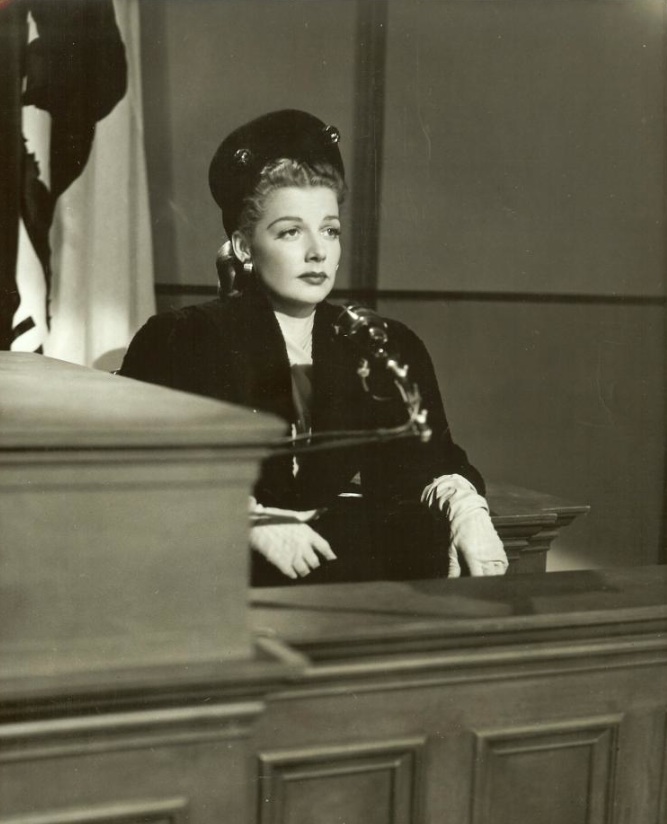
Det. Lt. Reynolds (John Hoyt) questions Chris, and doesn’t seem to really believe her story of a stranger attacking her in her home and demanding jewels, but he doesn’t accuse her of anything … yet. The detective also questions Hannaford about the couple, and Hannaford tells him he’d be hard pressed to find a couple as happy as the Hunters.

To summarize the plot any further would be to give away too much. It should suffice to say that there’s more to the story than Chris originally reveals to the police, and the film ends with a sensational trial and plenty of wagging tongues.

The Unfaithful takes place mostly indoors, but there are a lot of great Los Angeles exteriors, too. If you’re a fan of vintage street cars, this movie is worth checking out just for them.

Ernest Haller’s cinematography is especially memorable. I really liked the dark, low-angle shot of Zachary Scott parking his car in his driveway and striding along the front walk of his home after receiving some terrible news. And during the trial, there’s a wonderful shot of a bloody knife being held over the murder photograph, then quickly moved to the left as an exhibit — but for just a moment it seems as if we are seeing a gruesome murder scene with a bloody knife poised over a corpse.

The screenplay of The Unfaithful, by James Gunn and crime novelist David Goodis, is excellently written, with realistic dialogue and characterizations, especially in Ann Sheridan’s scenes with Zachary Scott. As I said, it’s a bit anticlimactic, but the journey is worth it, and The Unfaithful is worth seeing despite a weak final reel. Incidentally, it’s an uncredited remake of William Wyler’s The Letter (1940), which was based on the 1927 play of the same name by W. Somerset Maugham.
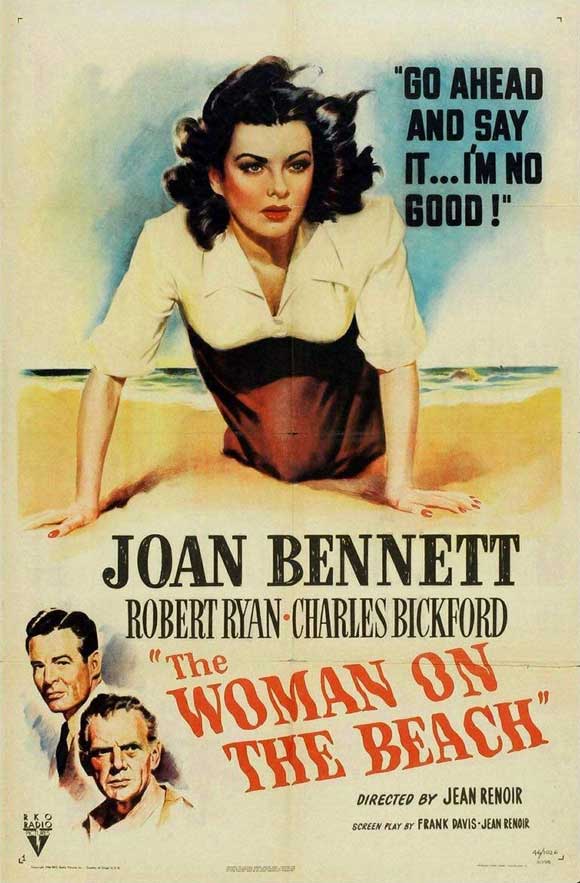
The Woman on the Beach (June 2, 1947)

Jean Renoir’s last Hollywood film, The Woman on the Beach, which is based on Mitchell Wilson’s 1945 novel None So Blind, is one of the oddest and most intriguing American films I’ve seen from the ’40s.

On paper, the plot sounds like a perfect vehicle for RKO star Joan Bennett, who was coming off the success of two wonderful noirs that she made with Fritz Lang, The Woman in the Window (1944) and Scarlet Street (1945). Like both of those films, Bennett’s character in The Woman on the Beach is a seductive and alluring woman who may not be what she seems. And paintings — a major theme of both The Woman in the Window and Scarlet Street — figure prominently in The Woman on the Beach.

But the similarities end there. The Woman on the Beach is a film that confounds expectations. It’s sometimes surreal, sometimes suspenseful, and never went in the direction I was expecting. Some of this could be due to studio interference. After a disastrous advance screening in Santa Barbara, the studio forced Renoir to reshoot and recut the film. The final cut is just 71 minutes long. There are numerous plot strands that seem to be left dangling by the end of the film. But overall, it’s still well-made and involving enough for me to recommend it.

Lt. Scott Burnett (Robert Ryan) is a haunted man. He’s sound of body, but he’s plagued by nightmares of the wreck he survived while serving in the Pacific. One of his nightmares opens the film, and it’s a brilliant and surreal juxtaposition of watery peace and fiery, swirling violence.

Scott is grinding through his last week at the U.S. Coast Guard Mounted Patrol Station. (He’s terrified of the ocean, so it makes sense that he’s serving in a Coast Guard station with no ships, just horses.) He’s engaged to be married to a pretty local girl named Eve (Nan Leslie), but as soon as Scott meets the dark and mysterious Peggy Butler (Joan Bennett) while she’s gathering driftwood on the beach, any film noir aficionado can tell you that things aren’t going to go the way Scott and Eve have been planning them.

Peggy instinctively understands Scott’s loneliness and fear. She invites him home to meet her husband, the blind painter Tod Butler (Charles Bickford). Bickford’s performance is masterful, and a key to the success of the film. At first I thought that Bickford was really bad at playing a blind man. He moves about effortlessly, seems to know where everything is, and it frequently seems as if he is making eye contact with the other characters. But it’s hard to tell for certain.

And sure enough, his blindness is called into question before too long. Peggy reveals to Scott that she severed Tod’s optic nerves during a drunken argument, but that sometimes she suspects he has just been feigning blindness ever since. Scott can’t believe that a man whose whole life was devoted to art would just give it up out of spite. Peggy tells Scott that he doesn’t know her husband.

In an unguarded moment when Peggy and Tod are alone, we hear them lay out their entire relationship in a classic exchange: Tod looks at her and says, “So beautiful outside, so rotten inside.” Peggy responds, “You’re no angel,” and Tod says, “No, I guess we’re two of a kind. That’s why we’re so right for each other.”

Scott is drawn into Peggy and Tod’s bitter little world, and begins secretly making love to Peggy while having increasingly tense get-togethers with Tod. In one remarkable scene, Scott walks Tod closer and closer to a cliff edge, trying to make him give himself away and reveal that he can really see.

The presence of Scott’s fiancée Eve seems almost like an afterthought, especially during the second half of the picture, and the way the story ends isn’t completely satisfying. But these are minor quibbles. The Woman on the Beach is a beautifully made film with very interesting performances from its three leads.

The Long Night (May 28, 1947)

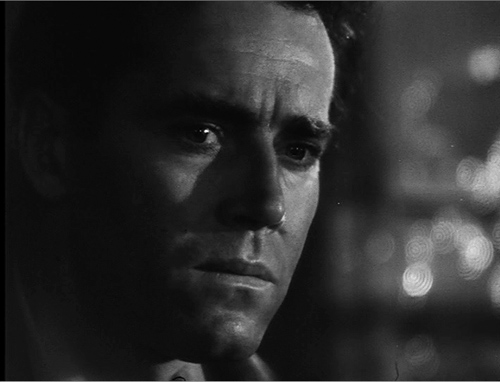
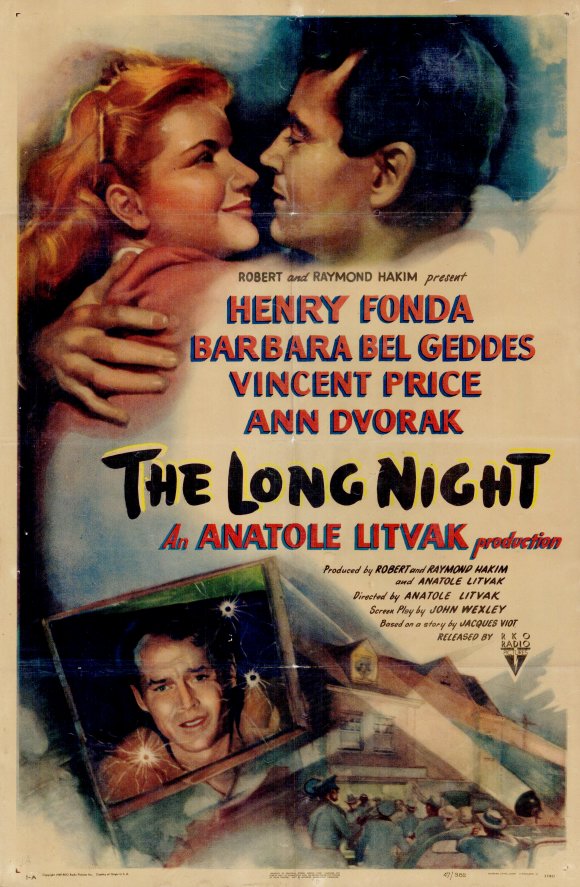
Anatole Litvak’s The Long Night is a remake of Marcel Carné’s 1939 drama Le Jour se lève. It stars Henry Fonda, Ann Dvorak, Vincent Price, and Barbara Bel Geddes in her screen debut.

Litvak, who was born in Kiev, worked in the Soviet cinema system in Leningrad, in the pre-war film industry of Berlin, in France after Hitler’s rise to power, and finally in Hollywood, where he became a contract director for Warner Bros. in 1937. Litvak became an American citizen in 1940, enlisted in the Army, and worked with Frank Capra on his Why We Fight series of short films. Litvak finished the war with the rank of colonel and returned to directing Hollywood features. Two of his most famous films would follow — Sorry, Wrong Number (1948) and The Snake Pit (1948).

The Long Night, his first post-war feature, is less well-known. For a long time, you’d be hard pressed to find anyone who remembered seeing it. But thanks to a pristine print on DVD from Kino Video (released in 2000 along with a VHS version), this flawed but worthwhile drama is now widely available. In the special features section of the Kino DVD, there are a couple of side-by-side comparisons with Le Jour se lève — a murder sequence in a darkened stairwell and the first meeting of the two lovers — that show how heavily Litvak borrowed from Carné’s film, at least stylistically. (The ending of The Long Night is radically different from the ending of Le Jour se lève, however, which is a standard practice in Hollywood remakes of depressing European art films.)

Despite the happy ending, Litvak infuses The Long Night with a pervasive sense of doom. After shooting a man in his apartment building in an unnamed steel town somewhere near the Pennsylvania-Ohio state line, Joe Adams (Henry Fonda) sits alone in his rented room, the door barricaded as police and onlookers swarm the street below his window. Accompanied by a refrain from Beethoven’s 7th Symphony, Joe tells his story through flashbacks, and we learn what brought him to this desperate place. “How can I explain when I don’t understand myself?” he thinks to himself.

Joe Adams grew up in an orphanage. “Class of ’34,” he tells the pretty young Jo Ann (Barbara Bel Geddes) when he meets her. (We must presume that Joe is younger than the man who plays him, since Fonda was 29 years old in 1934.) Jo Ann also came from the orphanage, and her romance with Joe is simple, childlike, and profound. Fonda plays Joe as a sweet-natured boy with no ability to plan long-term or handle disappointment or frustration. Bel Geddes plays Jo Ann in much the same way, but instead of being petulant she is naïve and unworldly, and open to the manipulation of a slimy magician named Maximilian the Great (Vincent Price).

Maximilian is a congenital liar. His relationship with Jo Ann is nebulous for some time in the film. He first tells Joe that Jo Ann is his daughter, but that he had to go on the road for 15 years and leave her in the company of strangers. After another series of flashbacks, however, it becomes clear that Maximilian and Jo Ann were romantically involved. He took her to see the Cleveland Symphony when she had never been as far west as Pittsburgh, and forced himself on her when she had never been kissed. Jo Ann was uncomfortable with Maximilian’s actions, but she was also lonely, and Maximilian offered her a world of excitement and glamor.

The visual style of The Long Night, its doomed protagonist buffeted by forces outside of his control, and its story told through flashbacks are all hallmarks of film noir, but it also has elements of social realism. For instance, Joe befriends Maximilian’s assistant Charlene (played by the always wonderful Ann Dvorak). He lies on her bed on a Sunday afternoon, reading the funnies, in her crummy room full of clutter, next to a couple of big bottles of beer and a bag of pretzels he brought for them to eat. She provides a stack of toast. She’s in the bath when he arrives, and throws on a slinky silk robe. It’s unclear how close Joe and Charlene really are, but the realism of the setting and the intimacy of the situation push the limits of Hays Code acceptability.

Along with the realism and intimacy of some of the interior settings, there’s plenty of artifice in The Long Night. Unlike the typical Hollywood production in which backdrops were either matte paintings or rear-projection film, production designer Eugène Lourié used elaborate sets with tricks of forced perspective in The Long Night. For example, a factory on a hillside in the distance is really a small model that could be lit in whichever way the filmmakers wanted. Lourié and Litvak intended to achieve a kind of “poetic reality,” and they succeeded. At the same time, the artifice sometimes clashes with the realism, and when it does the film feels aimless.

The Long Night was a commercial and critical failure, and lost approximately $1 million, but it was also the springboard for Barbara Bel Geddes’s long onscreen career. After seeing her performance in the film, RKO signed her to a seven-picture deal.

The Web (May 25, 1947)

The Web
The Web (1947)
Directed by Michael Gordon
Universal Pictures

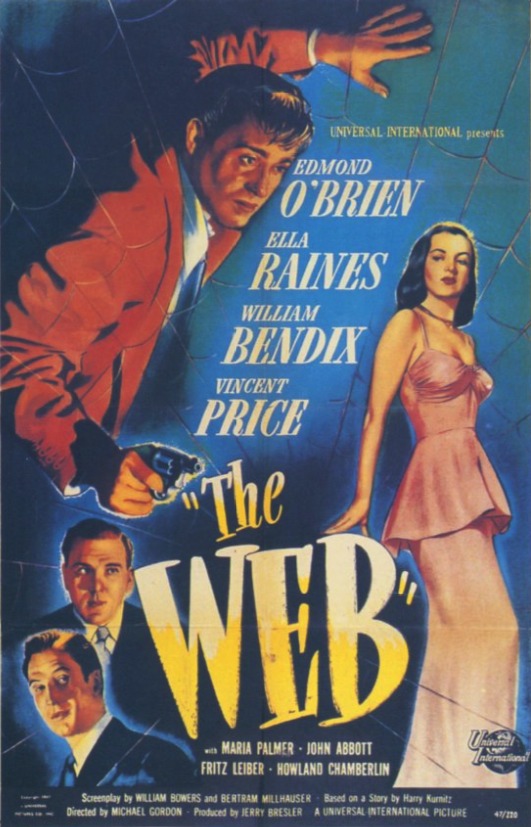
The Web is a classic case of mediocre material made incredibly entertaining by an excellent cast and a good director. The film’s plot may be run-of-the-mill, but the film itself is never boring.

The exciting opening takes the viewer along the busy Manhattan streets and overpasses that lead to Grand Central Station and culminates in a tearful reunion between an old man, Leopold Kroner (Fritz Leiber), and his daughter Martha (Maria Palmer). Kroner has just been released from prison, and he is surprised that “Mr. Colby” didn’t come to meet him at the train station. The viewer immediately knows that something sinister is going on, because we see a mug trailing Kroner and his daughter through the train station.

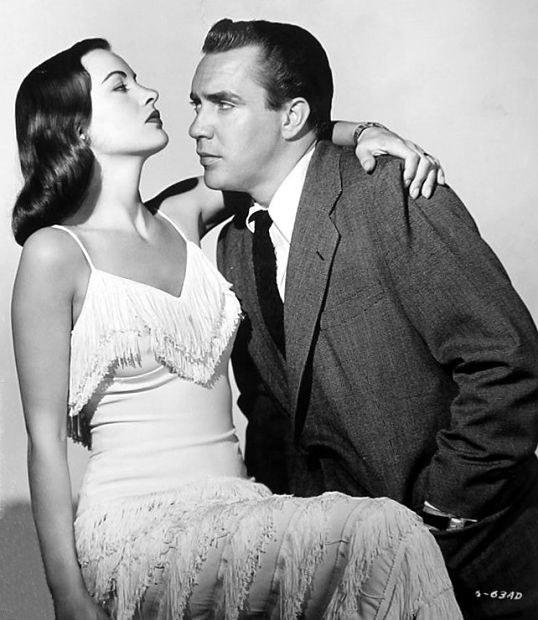
Next, we meet brash young attorney Robert Regan (Edmond O’Brien), who’s trying to force his way into Andrew Colby Enterprises to see the man in charge. When he pushes through several sets of doors and finally meets Noel Faraday (Ella Raines), he demands to see Mr. Colby. When she’s asks what his business with Mr. Colby is, he says, “Well, he’s been carrying on with my grandmother, and I’d like to find out what his intentions are.” When Noel tells him that she’s Mr. Colby’s personal secretary, he responds, “Well that just goes to show you how far a girl can get if she keeps her stocking seams straight.”

Their dialogue continues in this vein for the rest of the picture. Regan is the kind of person who would be known today in some circles as a “jerk,” and if he said half the things he says in The Web during working hours he’d be sued for sexual harassment.

But he’s also a tireless crusader for his clients, which becomes clear when he finally comes face to face with Andrew Colby, who’s played with smooth, villainous charm by the one and only Vincent Price. Regan is there to serve him with a summons on behalf of his client, Emilio Canepa (Tito Vuolo). As a result of Colby’s negligent driving, Canepa’s pushcart and load of bananas were damaged to the tune of $68.72.

Raines and O'Brien

Colby sees in Regan’s bullheaded doggedness an opportunity, and offers Regan a $5,000 retainer to come and work for him. Colby tells Regan that five years ago, his business associate Leopold Kroner took nearly $1 million worth of bonds belonging to Colby’s firm, made duplicates, and sold the counterfeit bonds. He was caught and sent to prison, but now that Kroner has been released, Colby claims he’s been threatening him. Colby has a big deal coming up, and he doesn’t want it known that his life is being threatened. If he hired a bodyguard, it would become public knowledge.

If he just hired another lawyer, however, no one would think twice. All Colby asks of Regan is that he work for him for two weeks as a bodyguard and tell no one what he’s doing.

If you know what the word “patsy” means, you’ll probably have no difficulty figuring out what Colby really wants Regan for.

Rounding out the excellent main cast is William Bendix as Lt. Damico, Regan’s friend on the force. Bendix was equally adept at playing tough guys and clowns, and he gets to flex both his dramatic and comic acting muscles as the long-suffering Damico, who’s a lot wiser than Regan gives him credit for.

Even though he’s the protagonist, O’Brien is probably the weakest link in the film. Regan isn’t a very interesting character, and he’s mostly only good for one-liners, but at least they’re decent one-liners. O’Brien’s innuendo-laced banter with Raines isn’t quite Tracy-Hepburn or Bogie-Bacall, but it’s clever and fast-paced enough to satisfy discriminating noir fans, and Raines’s dark beauty and way with a retort elevate their exchanges.

The screenplay by William Bowers and Bertram Millhauser (based on a story by Harry Kurnitz) really crackles in the dialogue department, which makes up for the pedestrian plot. Director Michael Gordon keeps things moving along nicely, and delivers a satisfying final product. The Web might not be a classic film noir, but it’s thoroughly entertaining.

Repeat Performance (May 22, 1947)

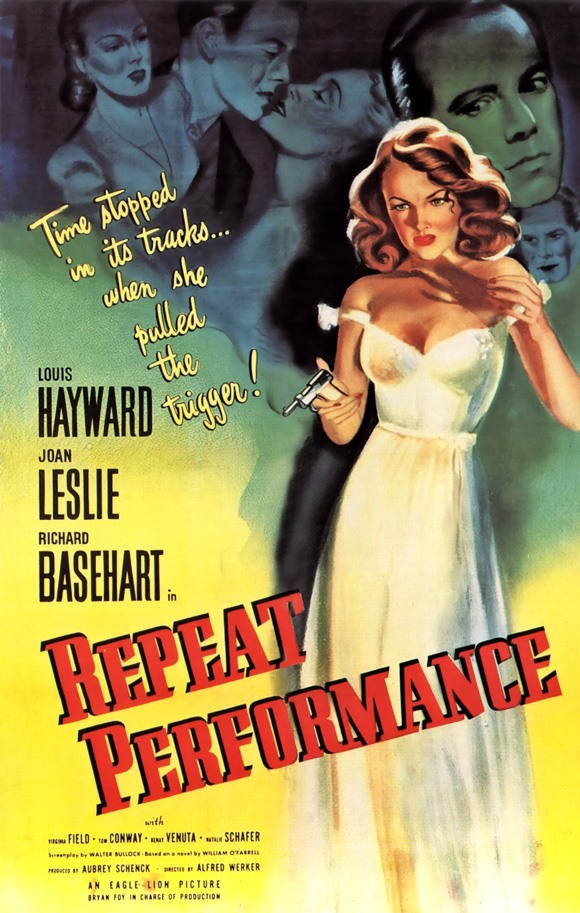
The stars look down on New Year’s Eve in New York. They say that fate is in the stars, that each of our years is planned ahead, and nothing can change destiny. Is that true? How many times have you said, “I wish I could live this year over again”? This is the story of a woman who did relive one year of her life. It’s almost midnight, and that’s where our story begins.

A shot rings out. Beautiful stage actress Sheila Page (Joan Leslie) has just killed her alcoholic, cheating husband Barney Page (Louis Hayward) in self-defense. Distraught, she flees and finds herself in the midst of New Year’s Eve revelers. She wades through the crowd and finds her friend, the troubled poet William Williams (Richard Basehart).

She tells him what happened. “Should I call the police?” she asks.

“Oh heavens no,” he says. “They’d only arrest you for murder. They’ve got such one-track minds.”

Instead, William suggests that she see the influential and wise theatrical agent John Friday (Tom Conway) and ask his advice. On the way, she wishes that she could somehow live the past year all over again, and never go to London, where her husband Barney met the scheming adventuress Paula Costello (Virginia Field). Things would be different for William, too, who is fated to be committed to an insane asylum by a woman named Eloise Shaw (Natalie Schafer).

To Sheila’s surprise, William is no longer standing behind her when she arrives at John Friday’s flat, and she’s suddenly wearing a different evening dress. Furthermore, John insists that it’s only the first day of 1946, not the first day of 1947.

Once Sheila wraps her head around what has happened, she realizes what a rare gift she’s been given, and sets out to make things turn out right this time around.

But she quickly finds that events are conspiring to work themselves out the same way, no matter what she does. She doesn’t need to go to London with Barney to make Paula Costello a part of her life, because Paula knocks on the wrong door when she’s in Greenwich Village in New York, and winds up at Sheila and Barney’s party.

Sheila confides in her friend William, who doesn’t quite believe her cock-eyed story, but is sensitive and open-minded enough to listen to her when she tells him what she thinks will happen. “Barney will fall in love with that woman, William. He’ll go on drinking, become a hopeless alcoholic. He’ll grow to hate me. He’ll try to kill me. I’ve got to escape all that, William.”

Sheila vows that she won’t act in Paula’s play, Say Goodbye, which she did the first time she lived through 1946. She and Barney move to Los Angeles, where he stops drinking and gets back to work on his second play. For awhile, it seems as if Sheila will escape her fate, but then a package arrives. It’s a brilliant new play, Barney declares, but there’s no author’s name on it. “What’s the title?” asks Sheila in horror. “It’s called ‘Say Goodbye,'” Barney responds innocently.

Alfred Werker’s Repeat Performance is very much like an extended episode of The Twilight Zone. The narrator, John Ireland, even sounds a little like Rod Serling. It’s a tricky, clever film with hints of metafiction, particularly in the scene in which Sheila says she doesn’t want to play an actress because audiences don’t like actresses as characters.

It’s a wonderful film that stands up to multiple viewings. It doesn’t need to be seen twice to be appreciated, but if you do watch it twice, you’ll catch many bits of dialogue that have a deeper layer of meaning once you know how everything will end.

Walter Bullock’s script, from a novel by William O’Farrell, is intelligent, and does an excellent job of balancing its science-fiction elements with its human drama. The acting is great, too, especially by Louis Hayward, who gives a weird and brilliant performance as Sheila’s unlikable but ultimately tragic husband Barney.

Dick Tracy’s Dilemma (May 20, 1947)

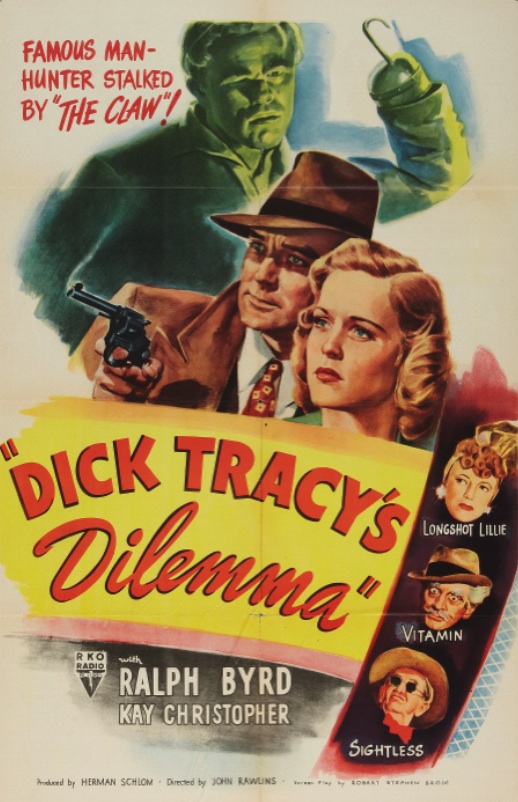
Dick Tracy’s Dilemma, directed by John Rawlins, marked Ralph Byrd’s triumphant return to playing Chester Gould’s famous police detective. Byrd played the hawk-nosed, square-jawed hero in four serials, Dick Tracy (1937), Dick Tracy Returns (1938), Dick Tracy’s G-Men (1939), and Dick Tracy vs. Crime Inc. (1941).

In William Berke’s excellent programmer Dick Tracy (1945), Morgan Conway stepped into the role. I really liked Conway as Tracy. His facial features were as big and ugly as Byrd’s were small and perfect, but he imbued the character with a humanity lacking in Byrd’s one-note performance, and I would have liked to see him in more Dick Tracy movies than just Dick Tracy and Dick Tracy vs. Cueball (1946).

On the other hand, I’m sure a lot of people who grew up watching Byrd in the Dick Tracy cliffhangers on Saturday afternoons were thrilled to see him return to the role. And besides, everything that made Dick Tracy and Dick Tracy vs. Cueball standout pieces of bottom-of-the-bill entertainment from RKO Radio Pictures is still present in Dick Tracy’s Dilemma — tight pacing, good writing, solid direction, dramatic lighting, and nicely staged action — so I enjoyed it in spite of Byrd’s somewhat wooden performance.

The plot of Dick Tracy’s Dilemma is pretty similar to the plot of Dick Tracy vs. Cueball. Instead of a chrome-domed thug with a leather garrote, the villain of the piece is a hulking Neanderthal with a club foot and a hook for a hand. He’s a 39-year-old career criminal named Steve Michel, but he’s better known in the underworld as “The Claw.” Michel was a bootlegger and hijacker during Prohibition. He lost his right hand and crippled his right leg when he was rammed by a Coast Guard cutter, and he’s looking to score some dough now that he’s back on the street. (The Claw is played by character actor Jack Lambert, who’s outfitted with bushy fake eyebrows and a glower that just won’t quit.)

The Claw is part of a crew that takes down a big score at the Flawless Fur warehouse. After the night watchman (Jason Robards Sr.) wakes up from the knockout blow The Claw gave him, he comes after the crew with a gun, and The Claw rips him up with his “hangnail” (as another member of his crew calls his hook). The murder brings in homicide detectives Dick Tracy and his partner, Pat Patton (Lyle Latell).

The Claw waits nervously with his partners for the big payoff. Tracy intercepts Longshot Lillie (Bernadene Hayes), a fence for stolen goods, with $20,000 in her purse. The crew also floats a proposal to Peter Premium (William B. Davidson), the vice president of Honesty Insurance, offering to sell him the furs for half their value before his company has to pay out on the policy.

While this is a solid police procedural with lots of violence, it’s also a Dick Tracy film, so there are plenty of comedic touches. Besides the ridiculous names of some of the characters (see above), there’s a bar called “The Blinking Skull” (not to be confused with “The Dripping Dagger,” which featured in Dick Tracy vs. Cueball), and a beggar named “Sightless” (Jimmy Conlin), who’s only pretending to be blind. Vitamin Flintheart (Ian Keith) is back, too, and provide plenty of laughs — if you’re amused by pretentiousness and narcissism, that is.

John Rawlins directs the one-hour programmer with brisk efficiency. His style is straightforward, but he and his cinematographer Frank Redman throw in plenty of nice touches, such as a man who knocks a plug out of its socket as he is being murdered by The Claw. The next shot is of The Claw rising to stand. The unplugged desk fan is in the foreground, and its blades slowly stop rotating as The Claw leaves the room. It’s a great visual metaphor for a life ending. The film also features a fine score by noir favorite Paul Sawtell.

Desperate (May 9, 1947)

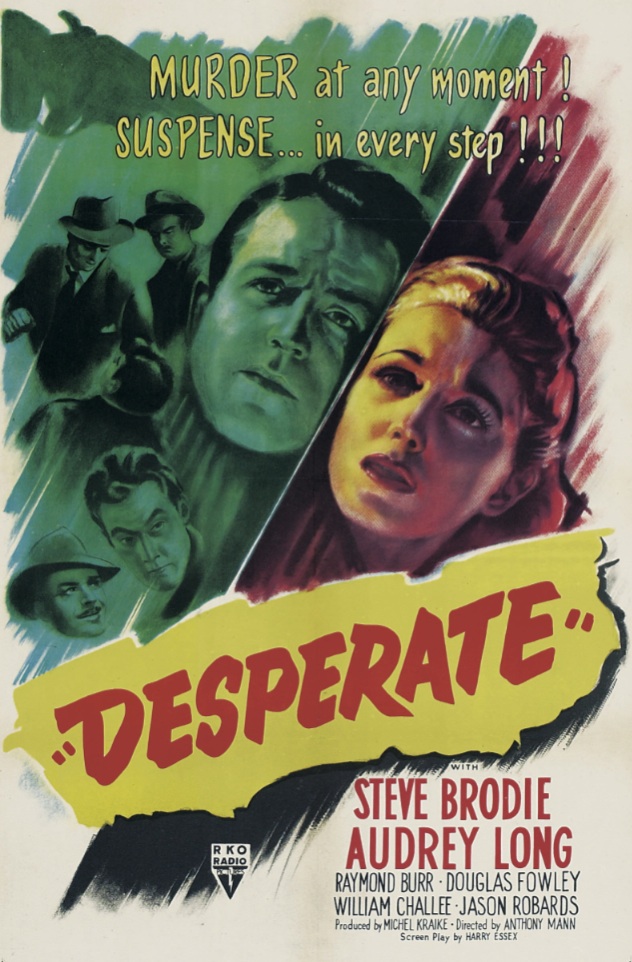
Anthony Mann’s Desperate stars Steve Brodie (not to be confused with the other Steve Brodie) and Audrey Long (the future Mrs. Leslie Charteris) as a young married couple on the run from sinister thugs led by the glowering Raymond Burr.

Steve Randall (Brodie), the owner and sole operator of Stephen Randall Trucking, is such a sweetie that he buys flowers for his wife Anne (Long) on their four-month anniversary. (When I watched this movie with my wife, she turned to me and said, “You didn’t get me anything for our four-month anniversary.” Thanks for making the rest of us look bad, Steve.) But the happy couple’s celebration has to be postponed when Steve gets an offer he can’t refuse … $50 for just one night’s work.

When an offer sounds too good to be true, it usually is. The crew of mugs loading merchandise from a warehouse into Steve’s truck are clearly up to no good. When one of them flashes a rod, Steve balks, so they shove him back in the truck and keep the gun on him. They need a clean “face” for the cops.

When a police officer shows up to investigate, Steve signals him with his lights, which leads to a shootout between the cops and the thieves. Steve drives away. Al Radak (Larry Nunn), who has one foot on Steve’s back bumper and the other on the loading dock, falls and is captured by the police. His older brother, Walt Radak (Raymond Burr), the leader of the crew, gets away with his henchman, Reynolds (William Challee).

Walt’s crazy about his kid brother, and Al will face the death penalty for the cop who was killed during the warehouse heist. So Walt demands that Steve turn himself in to the cops and claim he was responsible. To convince him, Walt calls in Steve’s license plate number and then has his boys work him over in a dark room with a single swinging overhead light. It’s a stunning sequence, and quintessentially noir.

When Steve doesn’t give in, Walt tries a new tactic. “Say, I’ll bet that new bride of yours is pretty,” he says while holding a broken bottle. “How ’bout it Steve?”

Walt has found Steve’s Achilles’ heel, and he agrees to Walt’s plan. Walt says, “I don’t care what you tell them, but if Al doesn’t walk out of that police station by midnight, your wife ain’t gonna be so good to look at.”

But Steve manages to slip away from Reynolds and call Anne from a pay phone. He tells her to meet him at the train station. They’ll go on the lam together, so Anne will be out of Walt’s reach.

Most of the rest of the film is an extended cross-country chase, as Steve and Anne move from place to place, establish new identities for themselves, and pick up work where Steve can find it. They’re pursued not only by Walt and Reynolds, but by the authorities, since Steve is still a person of interest in the murder of the police officer at the warehouse.

Along the way they have the obligatory conversation about how he can’t turn himself in to the police because they won’t believe him. They have a second wedding on the Minnesota farm owned by Uncle Jan and Aunt Klara (Paul E. Burns and Ilka Grüning) because their first marriage was just a courthouse deal and they deserve a big gathering with a real priest. Anne finds out she’s pregnant. They are crossed up by a sleazy private investigator named Pete Lavitch (Douglas Fowley) and they are assisted by a sympathetic police detective, Lt. Louie Ferrari (Jason Robards), who’s not above using Steve as bait to catch Walt.

Desperate is not a long film (it’s less than an hour and 15 minutes), but it drags a little during its middle act, which sometimes feels repetitive. It redeems itself completely in its final act, however, which is as dark and as tense as any film noir fan could ask for. Steve insures himself for $5,000 and heads for Walt dead-on, like a man playing chicken with an oncoming freight train. Six months have passed since Al was arrested, and he’s set to be executed. Walt gave up a long time ago on the idea that his brother could be freed, and all he wants now is the satisfaction of killing Steve at the exact moment that Al dies. A life for a life.

Walt and Reynolds take Steve to an apartment. Walt places a clock on the table between them in the kitchen. It’s a quarter to midnight. He gives Steve a last meal — sandwiches and milk — and a cigarette, and promises to shoot him at the stroke of midnight. There are increasingly tight close-ups of their three sweaty faces. “Now who was it said time flies?” Walt asks sardonically.

Desperate is the first really good noir from Anthony Mann, a director whose name is now inextricable from the term “film noir,” but who started out in Hollywood making mostly musicals and comedies. Desperate is not as interesting as T-Men (1947) or as powerful as Raw Deal (1948), but it’s a well-made, well-acted, exciting thriller. Audrey Long (recently seen as Claire Trevor’s little sister in Robert Wise’s Born to Kill) is probably the weakest actor in the film, but she’s called on to do the least. Steve Brodie is an appealing protagonist. He has a pleasant face and a regular-guy demeanor, and he’s believable as a man who’s pushed too far.

The real treat in Desperate is Raymond Burr as the vicious Walt Radak. This was only Burr’s third credited appearance on film, and while I enjoyed his role as the villain in William Berke’s Code of the West (1947), Desperate plays much better to his strengths as an actor. Burr was a remarkable heavy (no offense intended, big guy), and I never stopped to consider how ludicrous Walt’s plans were while I was watching this film. Burr sells every one of his hard-boiled lines with ruthless efficiency.

Mann’s cinematographer on Desperate, George E. Diskant, deserves mention, too. While he’s perhaps not as famous as Mann’s frequent collaborator John Alton, Diskant’s photography in Desperate is beautiful — full of darkness, hard angles, and vertigo-inducing chiaroscuro constructions.

Born to Kill (May 3, 1947)

Born to Kill
Born to Kill (1947)
Directed by Robert Wise
RKO Radio Pictures

Robert Wise’s Born to Kill has never been one of my favorite noirs. It regularly tops “best of” lists, and many film noir enthusiasts whom I respect love it, so I was hoping a fresh viewing would reveal something new to me.

Alas, for me it was still the same old flick. It’s an enjoyable picture, but it’s wildly melodramatic, there are subplots that never really go anywhere, and its over-the-top characters are mostly two-dimensional. The key to a great noir, like Billy Wilder’s Double Indemnity (1944), is the sense that it could happen to you, or to someone you know. No matter how outlandish the schemes in a film are, if they’re carried out by believable characters then I’m usually able to go along for the ride without asking too many questions.

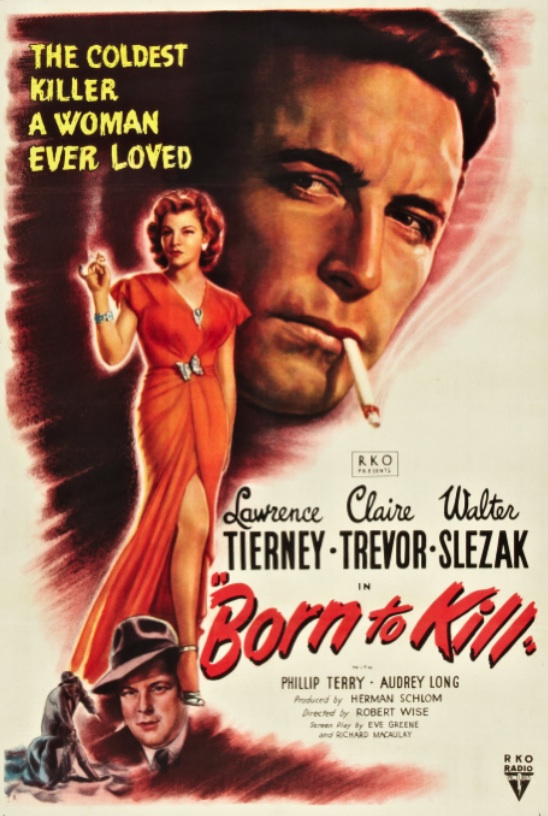
Born to Kill tells the tale of a pair of sociopathic social climbers, the recently divorced Helen Brent (Claire Trevor) and the recently paroled Sam Wild (Lawrence Tierney). Their paths cross in Reno, the biggest little city in the world. Helen is there for a quickie divorce and Sam is there with his reedy little sidekick, Mart Waterman (Elisha Cook Jr.). Helen is staying at a boarding house run by the slovenly Mrs. Kraft (Esther Howard), who, when we first see her, is getting lit up on beer in the middle of the afternoon with the adenoidal tart Laury Palmer (Isabel Jewell).

After Laury goes on a date with dapper Danny Jaden (Tony Barrett) just to make the big lug she’s dating jealous, she invites Danny inside for a nightcap. When Danny goes to the kitchen, he finds Laury’s big lug waiting for him. It’s Sam Wild, of course, and his brutal killing of both Danny and Laury is the film’s high point. (Or the lurid low point, if you’re a prissy scold.) The sound of crickets in the background, the neatly manicured suburban lawns surrounding Mrs. Kraft’s boarding house, the dog barking in the background, and the uptempo swing music playing on the radio in the kitchen all lend a sense of immediacy and familiarity to the murder.

The rest of the film, however, just doesn’t hang together for me. Sam’s little buddy Mart tells him, “You can’t just go around killing people whenever the notion strikes you. It just ain’t feasible.” I feel the same way about the plot of Born to Kill. It just ain’t feasible.

After the murder, Sam blows town. He and Helen meet again on the train to San Francisco. When they disembark, Sam suggests splitting a cab, but Helen tells him she’s going in a different direction. He responds, “That’s where you’re wrong. We’re going in the same direction, you and I.”

Sam insinuates himself into Helen’s life. They are clearly drawn to each other, but she tells him that nothing in the world will stop her from marrying her fiancé, Fred Grover (Phillip Terry). So Sam moves in on her sister, wealthy heiress Georgia Staples (Audrey Long), or, to be more precise, her foster sister, as Helen bitterly reveals to Sam. Not only is Georgia a beautiful blonde, but — as Sam tells Mart — “Marrying into this crowd will make it so’s I can spit in anyone’s eye.”

Meanwhile, back in Reno, Mrs. Kraft retains the services of a sleazy, corpulent private investigator named Matthew Albert Arnett (Walter Slezak). Mrs. Kraft is played by Esther Howard, and her bizarre, bug-eyed performance in this film is nearly identical to the “Filthy Flora” character she played in Dick Tracy vs. Cueball (1946).

Helen and Sam pursue their doomed, twisted love affair. (“Fred is peace and security,” Helen moans. “You, you’re strength, excitement, and depravity. You’ve a kind of corruption inside of you, Sam.”) Arnett sniffs around. Sam and Georgia quarrel after she refuses to let him run her family’s business. Mart Waterman shows up in San Francisco and starts living with the unhappy foursome. (Is he Sam’s partner or his secret lover? The film is never completely clear.) Slowly but surely, the plot threads of the film intertwine, culminating in an orgy of murder and betrayal.

This is the second or third time I’ve seen Born to Kill. While I’ve griped about the ridiculously melodramatic plot, maybe I just want it to be something it’s not. I could certainly see myself watching it again in the future and loving its over-the-top characters, unrealistic scenarios, grotesque supporting players, and generally high level of camp.

I think my biggest problem with Born to Kill is the relationship between Sam and Helen. Claire Trevor is a wonderful performer, but I was never able to accept that she’d love Sam enough to give up everything for him. Helen’s histrionics in her scenes in tastefully appointed drawing rooms with Fred, Georgia, and Sam seem more scripted than natural, and Claire Trevor’s performance as Helen seems too intelligent and composed for the debased character she’s playing.

But maybe that’s the point. Lawrence Tierney is a powerful presence, but he isn’t a particularly gifted actor, especially when either subtlety or range is called for. Not only does Sam Wild commit murder whenever the notion strikes him, he can bend others to his will, getting his friend Mart to kill for him and getting Helen to provide him with an alibi for murder at the drop of a hat. He’s a brutal alpha male, and loving him may go against all reason and sense, but that never stopped anybody before.

Born to Kill is directed by Robert Wise with vigor. The cinematography, by Robert de Grasse, is great, especially in the nighttime exteriors. Paul Sawtell’s music is exciting. I found the plot ridiculous, but that shouldn’t stop any noir fans who haven’t seen Born to Kill from seeking it out.

Fear in the Night (April 18, 1947)

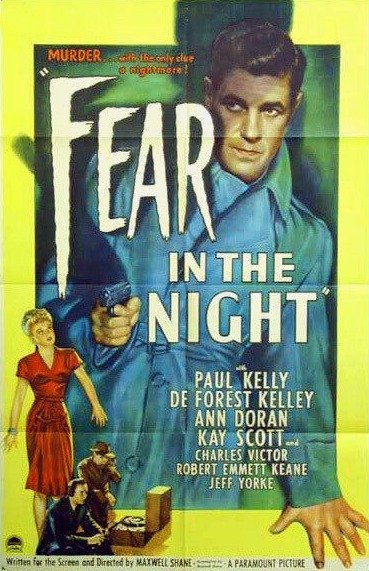
Fear in the Night begins with a little floating dot of light dancing around the screen. It’s a will o’ the wisp that flits here and there before it morphs into the title and an odd, pulsating background pattern that is abstract, but vaguely obscene. The background music by Rudy Schrager is high-pitched and eerie.

After the credits roll, the visual abstractions clear away and are replaced by a black screen and the disembodied head of a beautiful woman with upswept hair (Janet Warren) floating toward the viewer. We hear Vince Grayson (DeForest Kelley) narrate his strange vision:

At first, all I could see was this face coming toward me, then I saw the room. A queer, mirrored room. And somehow, I was inside it. There was danger there. I knew that. I wanted to turn and run, but I couldn’t. It seemed as if my brain was handcuffed, and I had to do what I’d come to do.

Vince dreams that he stabs a man (Michael Harvey) in the heart with a steel bore. The man resists, and chokes Vince. One of the buttons on the man’s jacket pops off. The beautiful woman with upswept hair watches and silently screams, then Vince hides the body in one of the closets in the strange octagonal room full of mirrors. He locks the closet and puts the little key in his pocket. He wakes up from his vivid dream. He is relieved, but then he sees in his bathroom mirror that he has thumbprints in his neck. He looks down and sees a spot of blood on his wrist. He reaches in his pocket and pulls out a key and a button.

Distraught, Vince calls in sick to work. He’s a bank teller, and his pretty co-worker Betty Winters (Kay Scott) is happy to take over his window for the day, but she clearly has feelings for Vince, and is worried when she calls his room and no one answers.

Vince walks the streets alone, eager to be in the sunshine, afraid of the shadows and the coming night. He goes to see his brother-in-law, Cliff Herlihy (Paul Kelly), who just happens to be a police detective. Cliff tells Vince that his mind is playing tricks on him — selling him a phony bill of goods — and not to say anything about this to his sister, Lil (Ann Doran), since she’s expecting a baby and high-strung enough already, but Vince insists on following the leads from his dream. He takes out a newspaper ad that says “WANTED—I am interested in buying or leasing a house with an octagonal mirrored-paneled room or alcove. Location, size secondary, provided has this one essential, desired for reason of sentiment. Phone Grayson, FE-7648.”

Nothing pans out until Vince and Betty go on a picnic with Lil and Cliff. Caught in the rain, they take refuge in a large, unoccupied house. Guess what Vince finds upstairs when he starts poking around? You guessed it … an octagonal mirrored room, the same one he dreamed about.

In a nice bit of realism, as soon as it becomes clear that a murder actually was committed, Cliff jumps to the conclusion that Vince has been stringing him along the whole time with a crazy story so he’ll be able to plead insanity when the case goes to trial.

Fear in the Night was the first film that screenwriter Maxwell Shane directed. He also wrote the screenplay, which was based on the story “Nightmare” by Cornell Woolrich (originally published under his “William Irish” pen name). If you’ve seen Roy William Neill’s Black Angel (1946), which was based on a novel by William Irish/Cornell Woolrich, you’ll noticed a few similarities to Fear in the Night. Blackouts and murders possibly committed in hypnagogic states were frequent occurrences in Woolrich’s fiction, which is unsurprising once you know that Woolrich was an alcoholic shut-in.

Fear in the Night was DeForest Kelley’s first role in a feature film. If you’ve ever seen an episode of Star Trek, it will be impossible to look at him in this film and not constantly see Dr. “Bones” McCoy and all of his trademark twitches and catchphrases. Even though Kelley was only 26 or 27 when he made Fear in the Night, he doesn’t look that different than he would in the ’60s.

If you can get over that, though, Fear in the Night is a twisty and involving noir with some remarkable subjective camerawork. The bits of straight drama are filmed in a flat, conventional style, but all of the dream stuff (of which there’s plenty) is really effective. I’ve seen numerous other films that the cinematographer, Jack Greenhalgh, worked on, and up until now they’ve all been flat, uninteresting P.R.C. westerns, horror films, and mysteries. Fear in the Night really lets him shine, and there are all kinds of wonderful cinematographic flourishes, such as images that shatter into pieces and then are reassembled, scenes that flutter in and out of focus, and even a freeze frame of Kelley’s face while a murder plays out across his empty eyeballs.

The plot is a little wacky, and the solution to the mystery involves some willing suspension of disbelief on the part of the viewer, but no noir fan will be able to resist the central conceit of the film, which is summed up nicely by Vince when he says, “I’ve got an honest man’s conscience in a murderer’s body.”

Violence (April 12, 1947)

Violence
Violence (1947)
Directed by Jack Bernhard
Monogram Pictures

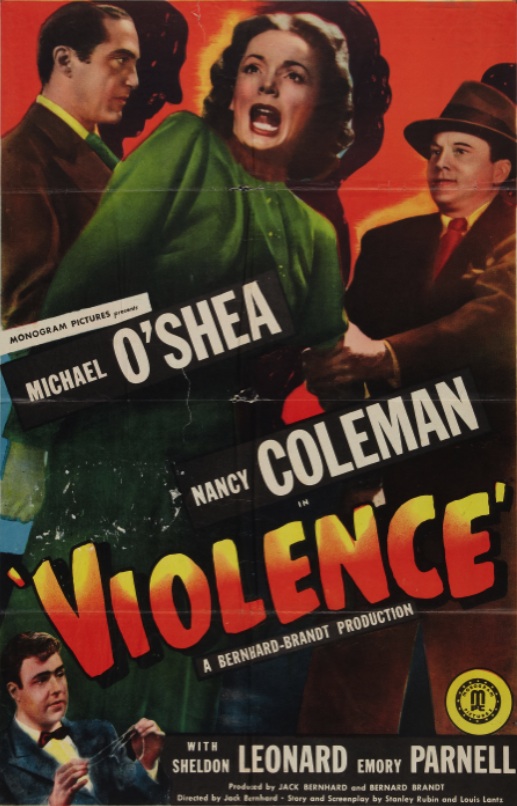
Jack Bernhard’s Violence begins with a stunning freeze frame of the headquarters of the United Defenders, a radical Los Angeles-based group dedicated to preserving “America for Americans.” An American flag stationed above the entrance is captured in mid-billow. The jagged letters of the title shockingly appear: “VIOLENCE.”

After the freeze frame springs to life, we see Fred Stalk (Sheldon Leonard) and the brutal idiot man-child Joker Robinson (Peter Whitney) interrogating and beating a man who has betrayed the United Defenders. The man Stalk and Joker are beating is named Joe Donahue (Jimmy Clark), and his murder is the most violent thing about Violence, which generally doesn’t live up to its sizzling title or the promise of its first reel.

Ann Dwire (Nancy Coleman) is undercover with the United Defenders. She’s operating under the name “Ann Mason” and is preparing material for an exposé of the organization for View magazine. Her methods of subterfuge would get her killed in less than 24 hours in the real world. When she calls in information to Ralph Borden (Pierre Watkin), her managing editor back in Chicago, she calls him from her apartment, even stating Borden’s full name and title to the concierge of her building, a kindly old man called Pop (Frank Reicher). Also, when it comes time to dispose of a letter from Borden, she doesn’t burn it, she just tears it up into smaller pieces (and her delicate fingers don’t do a very good job of it).

The United Defenders recruit disgruntled World War II veterans, promising to fight against housing shortages and unemployment, but they’re really just a fascist organization whose purpose is to sow discord and promote violence. When a young veteran (Richard Irving) stands up at a meeting and tells the organization’s leader, True Dawson (Emory Parnell), that it seems as if his rhetoric only leads in one direction — violence — Dawson has a couple of his followers throw him out on his ear, which proves the young man’s point.

Michael O'Shea and Nancy Coleman

Violence touches on a lot of hot-button issues, but doesn’t delve into them very deeply. (If you wanted deep treatises on post-war intolerance and creeping fascism in America in 1947, you had to be a kid listening to the radio show The Adventures of Superman. Most Hollywood productions just didn’t have the stones to get too specific.) For the most part, Violence uses its serious themes as window dressing for a brisk B movie that only aims to thrill. If Violence had been made a few years earlier, the United Defenders would have been Nazi fifth columnists. If it had been made a few years later, they would have been Communists.

While on a trip back to Chicago to meet with her editor, Ann is in a taxi cab accident and loses her memory. She becomes Ann Mason through and through, even getting up to speak at a meeting and encouraging every man there to recruit friends … friends who aren’t afraid to use violence to get what they want. But to thicken the plot, her fiancé Steve Fuller (Michael O’Shea) accompanies her back to Los Angeles, and he seems to know what’s going on, even though he volunteers to work for the United Defenders.

Coleman’s acting while she’s suffering from memory loss is pretty awful. She keeps looking pained and pressing her fingers to her temples, as though her problem is a bad headache, not post-traumatic retrograde amnesia.

Violence is mildly entertaining, but its low budget and weak performances work against it. The editing is sloppy — there are a lot of jump cuts within scenes — and the amnesia aspect of the story is poorly handled. Violence was directed by Jack Bernhard, who made Decoy (1946), a film noir that has built up quite a reputation in recent years. I’ve seen Decoy twice, and I think it’s overrated, but it does have one thing going for it that is sorely missing in Violence, a truly loony and twisty plot.