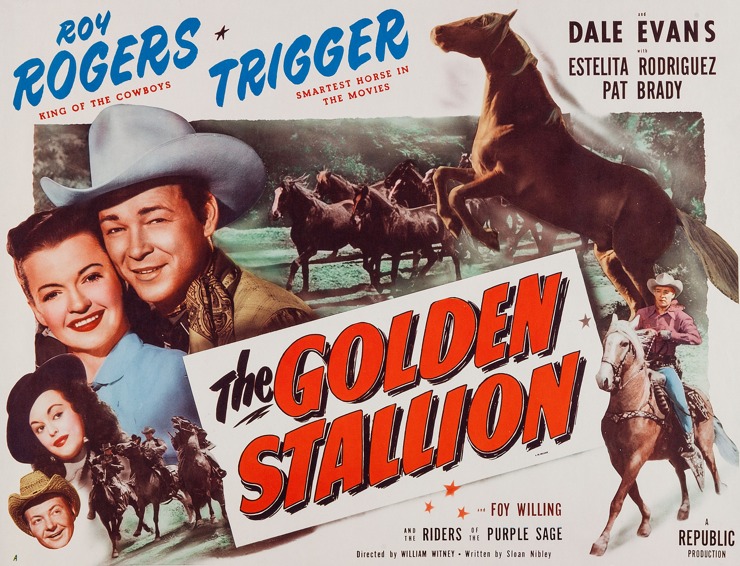
The Golden Stallion (1949)
Directed by William Witney
Republic Pictures
Of the more than 70 oaters that starred Roy Rogers, Dale Evans, and Trigger (the smartest horse in the movies), The Golden Stallion is the best known by today’s film geeks.
The reason for this is an article published in the September 15, 2000, issue of the NY Times called “Whoa, Trigger! Auteur Alert!”, in which Quentin Tarantino waxed rhapsodic about the films of William Witney.
I remember reading the article when it was first published and being immensely pleased. The writer of the piece accurately called Witney “a now all-but-forgotten journeyman director,” but I’ve been a fan of his serials since I was in high school. I watched a lot of serials when I was younger, and it was hard not to notice that the cream of the crop all bore his name as director. Along with his frequent co-director, John English, Witney made one memorable Republic serial after another, like Drums of Fu Manchu (1940), Adventures of Captain Marvel (1941), Jungle Girl (1941), Spy Smasher (1942), The Crimson Ghost (1946), and others too numerous to list here.
In the postwar era the market for serials started to dry up, and Witney turned to making westerns for Republic Pictures, including many with Roy Rogers. Tarantino loves what Witney did with Rogers’s films during this period.
“After their first few movies together,” Tarantino said, “Witney had gotten Roy out of his fringe-and-sparkle attire and was dressing him in normal attire, blue jeans and stuff. They stopped being these crazy musicals. He turned them into rough, tough violent adventures.”
Tarantino is absolutely right. Witney was an old hand at directing knock-down drag-out fistfights in serials, and he brought this experience to his features with Roy Rogers.
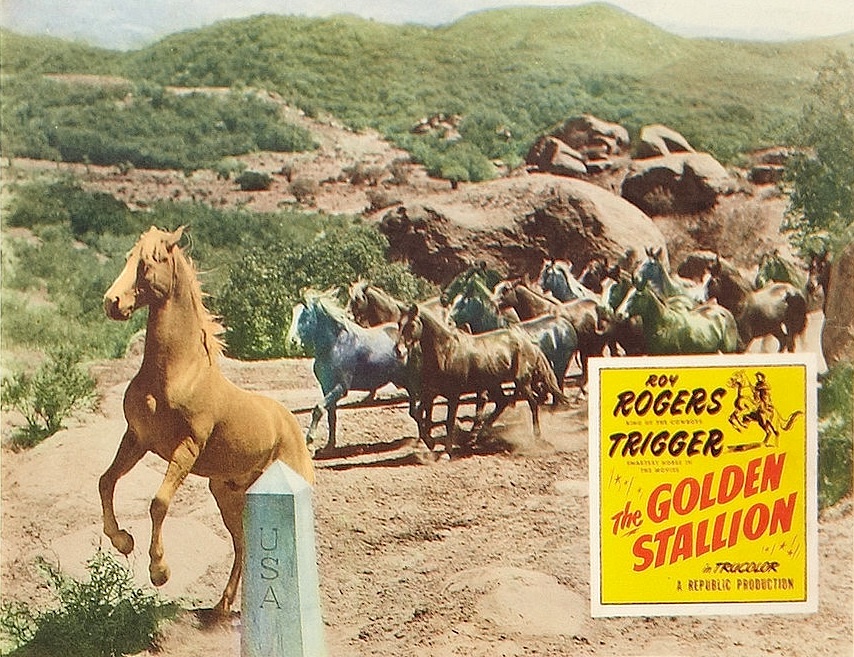
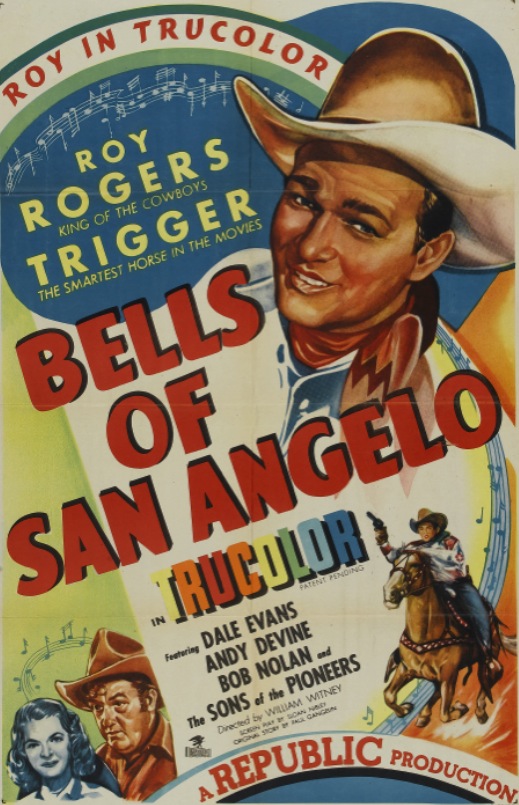
The best fight I’ve seen in a Roy Rogers film that Witney directed is probably the one in Bells of San Angelo (1947), but all of their collaborations had plenty of action, and The Golden Stallion is no exception. What I found most impressive about The Golden Stallion were not any of the fight scenes, but rather the scenes of Trigger galloping at the head of a herd of wild horses. These sequence appear to have been filmed from a jeep, and they’re full of speed and drama.
So is The Golden Stallion — as Tarantino claims — the best film that Witney and Rogers made together?
That’s hard for me to say, because their films were of such a consistent level of quality (for better and for worse). Like all of their other films, The Golden Stallion had a low budget, a tight shooting schedule, and hokey humor. But it has a better-than-average plot (about a gang smuggling uncut diamonds over the border hidden in horseshoes nailed to the hooves of wild horses), a great scene where Roy has to make an enormous sacrifice to save Trigger’s life, and some really beautiful filmmaking.
If you like B westerns — especially if you like B westerns with singing cowboys — you really can’t go wrong with any of the Roy Rogers films that Witney directed. But if you’re unsure about B westerns and you want to see just one, check out The Golden Stallion. Just make sure you watch the full version, which is 67 minutes long. There’s a truncated version that’s less than an hour long currently on YouTube, but the full color version is available to stream if you’re an Amazon Prime member.
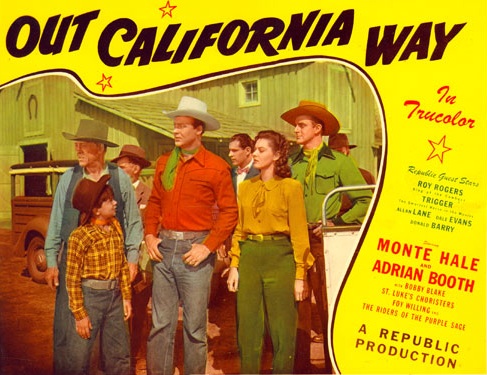
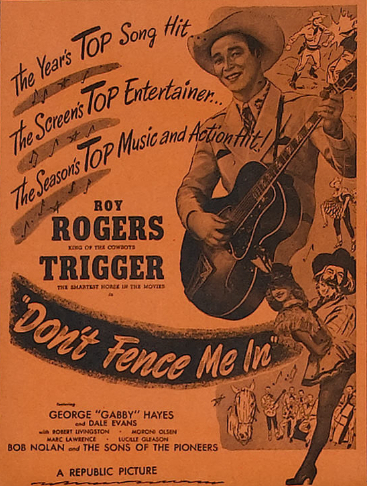
 A lot of men were drafted during World War II. Roy Rogers was one of them. With a 1-A classification, he expected to be shipped out in the spring of 1945. Consequently, screenwriter John K. Butler (working from a story by Leon Abrams) came up with a script to showcase Rogers’s leading lady, Dale Evans. When V-E Day rolled around, however, the draft board exempted men over the age of 30 who had children, so Rogers never had to serve. Director Frank McDonald’s Sunset in El Dorado ended up starring both “The King of the Cowboys” and “The Queen of the West,” but Evans is still the central figure, and it’s a great showcase for her sunny persona.
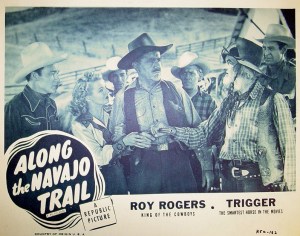 There are no Navajos to be found in this run-of-the-mill Roy Rogers picture, or American Indians of any tribe, for that matter. The title comes from a popular song that was written by Dick Charles (a.k.a. Richard Charles Krieg), Larry Markes, and Edgar De Lange in 1945, and is sung by Rogers, Dale Evans, and the rest of the gang to close the picture. No, the only people of color in Along the Navajo Trail are Spanish-speaking Gypsies, who are portrayed in much the same way Mexicans were in Hollywood westerns except that they wear funny clothes, travel in wagons, and the men wear gold hoop earrings. They also provide George “Gabby” Hayes’s character with a series of comic interludes in which he attempts to cheat the Gypsies, and is in turn cheated himself. These horse trades don’t add much to the plot, but they do result in Hayes sputtering the memorable line, “I sure have gypped that gyppin’ Gypsy!”
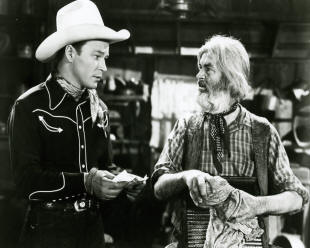 The western genre may be moribund, but it refuses to kick the bucket. Singing cowboys, on the other hand, are deader than vaudeville. There was a time, however, when Gene Autry and Roy Rogers were two of the biggest film stars in America.
 OCD Viewer