Category Archives: May 1947

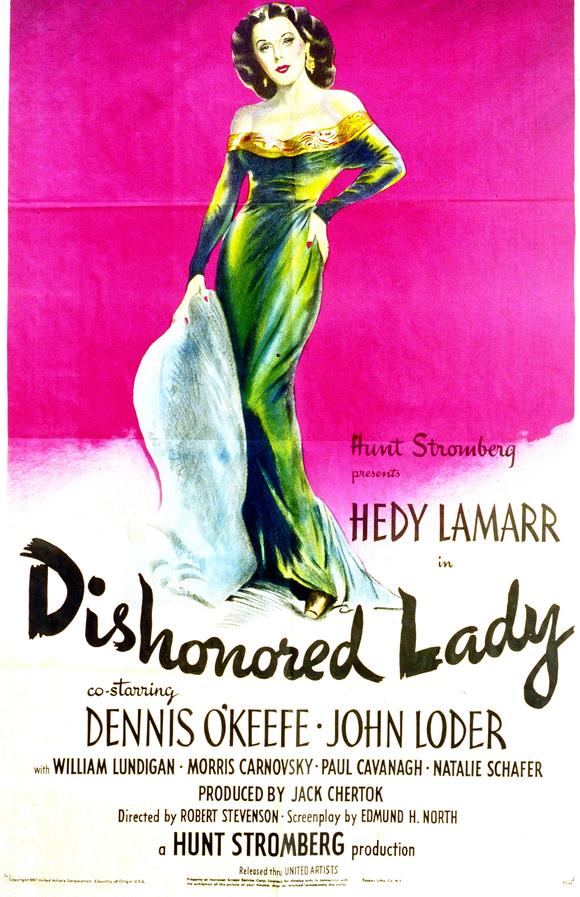
Dishonored Lady (May 16, 1947)

Robert Stevenson’s Dishonored Lady is a classic piece of slickly produced fluff from Hollywood’s Golden Age. It has a little something for everyone; romance, sex, courtroom drama, murder, and psychotherapy.

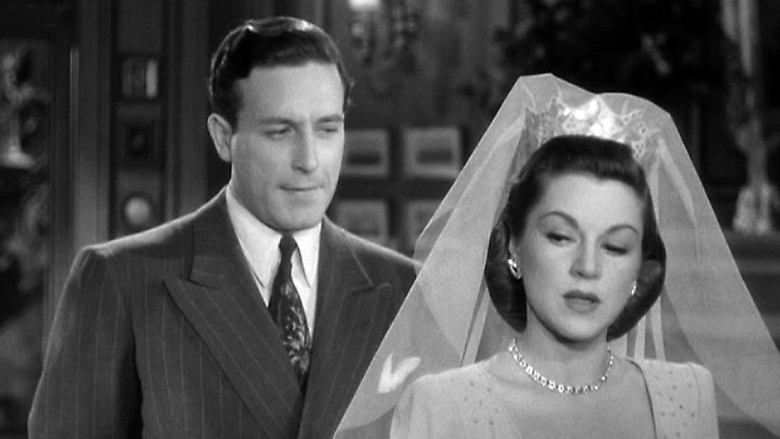
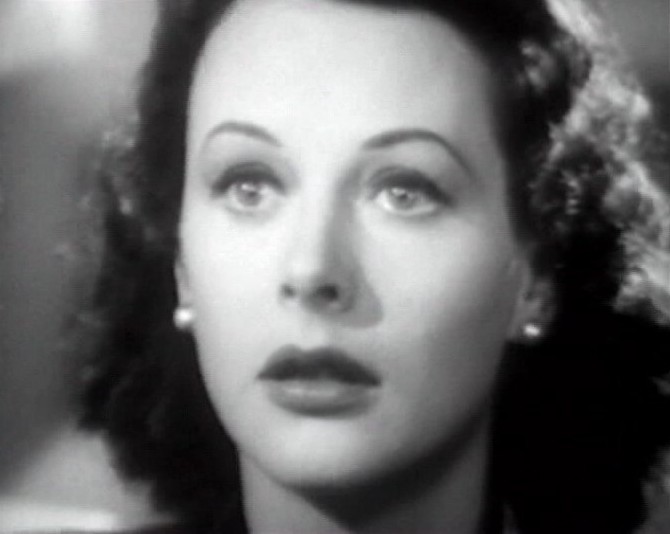
The stunningly beautiful Austrian actress Hedy Lamarr plays Madeleine Damien, the art editor of Boulevard, a chic Manhattan fashion magazine. Exhausted and unhappy with her life of constant parties, dates in nightclubs, drinking, and meaningless affaires de coeur, she attempts suicide in the most sensible fashion imaginable, by driving her car straight into a tree. Luckily for her, it’s a tree on the front yard of the home of psychiatrist Richard Caleb (Morris Carnovsky), and she’s not seriously injured. Dr. Caleb declares that she has no bones broken, but that she needs the courage to face herself, which she’s unwilling to do. Dr. Caleb drives her to the train station and says, “Miss Damien, you’re an intelligent woman, not an idiot. Can you promise me one thing? When you get ready to throw yourself off Brooklyn Bridge Bridge, will you come and see me first?” He gives her his card and she smiles a little. Maybe there’s hope for her after all.

On Monday morning, however, little seems to have changed. Madeleine arrives at work accompanied by that frenetic orchestral music that’s always used in movies from the ’40s to accompany Manhattan street scenes. She appears to be the only woman on the editorial staff of Boulevard, but she’s no shrinking violet. She refuses to be intimidated after she kills the art layout of one of their most prominent advertiser’s spreads, calling it not art, but “a press agent’s dream.” That night, however, she meets the prominent advertiser, Felix Courtland (John Loder), and accepts a ride home from the tall, gray-haired, mustachioed, dapper, handsome, and very wealthy gentleman. After backpedaling on her decision on the art layout, one of her bitter co-workers, Jack Garet (William Lundigan), tells her exactly what he thinks of her and the way she lives her life.
Distraught, she sees Dr. Caleb, and through good old-fashioned talk therapy, realizes how much she hates her life. She was always trying to emulate her father, a successful painter who loved and left more women than he could count. Madeleine adored her father, and thought he was the happiest man in the world. Until he killed himself, that is. Dr. Caleb convinces her to find her true self. She quits her job at Boulevard, gives up her apartment, and moves into a cheap, one-room flat under the name “Madeleine Dixon,” where she pursues her painting.

It just so happens that one of her neighbors is a big handsome lug named David Cousins (Dennis O’Keefe), a pathologist working on a report called “The Effect of Anti-Reticular Serum on Cell Tissue.” He needs some medical illustrations of blood cells done, and Madeleine is just the person. Madeleine and Dr. Cousins fall in love, but she can’t bring herself to admit to him who she really is, and all the details of her past life, even after he proposes marriage.

Her past life comes back to haunt her in the person of Felix Courtland, who finds out where Madeleine is living, and comes a-courting. With David out of town, she unwisely accepts his offer of a night on the town, and becomes embroiled in a murder investigation in which she is the prime suspect.

Will David be able to accept Madeleine after he learns the truth about her and realizes that she’s been lying to him all along? Will Madeleine be able to forgive herself? Or is she heading for a one-way trip to the gas chamber?

Dishonored Lady, which was re-released under the title Sins of Madeleine, is based on the 1930 play Dishonored Lady by Edward Sheldon and Margaret Ayer Barnes. It’s competently made entertainment elevated by Hedy Lamarr’s performance. She’s beautiful to look at, and she strikes a nice balance between wide-eyed vapidity and muted sadness.

Jack Armstrong (15 chapters) (Feb. 6-May 15, 1947)

Jack Armstrong! Jack Armstrong! Jack Armstrong!

Jack Armstrong! The aaaaaaaaaaaaaaall-American boy!

If those words stir something deep within you, you’re probably either a child of the Depression or a freak like me who’s always liked to live in the past.

Beginning in 1933, the eponymous hero of Jack Armstrong, the All-American Boy traveled around the world with his uncle, Jim Fairfield, and his cousins, Betty and Billy Fairfield. The globetrotting quartet battled pirates, evil scientists, gangsters, and restive natives for 15 minutes on the radio every weekday. Sponsored by Wheaties, “the breakfast of champions,” Jack Armstrong gripped the nation’s youth with its blend of high adventure, glacial pacing, and repetitive storytelling until August 22, 1947, when it moved from a quarter-hour, five-day-a-week format to a 30-minute, twice-a-week broadcast.

Beginning in 1945, Jack, Betty, Billy, and Uncle Jim locked horns with the Silencer, a gangland leader who was at war with another crime lord, the Black Avenger. Eventually the Silencer was unmasked and revealed to be Victor Hardy, a brilliant scientist and inventor until a bout of amnesia led him to a life of evildoing (sort of like the Crime Doctor in reverse). After Hardy’s memory was restored, his lent his unique understanding of the criminal mind to Jack Armstrong and his crew. Uncle Jim was phased out of the program, and Vic Hardy became the adult overseer of the group, as well as head of the “Scientific Bureau of Investigation,” or SBI. In 1950, the Jack Armstrong program finally ended and Jack, Betty, and Billy were suddenly grown-ups, heard in a new 30-minute, twice-a-week series called Armstrong of the SBI. The all-American adult version of Jack didn’t last long, though, and Armstrong of the SBI went off the air June 28, 1951.

Wallace Fox’s Jack Armstrong is a 15-part serial from Columbia Pictures. All the major characters from the radio play are present (including both Uncle Jim and Vic Hardy), but after a promising first chapter, the serial devolves into repetitious tangles with “natives” on an island somewhere. I don’t know where the island is supposed to be, but I imagine it’s flying distance from California, since Jack Armstrong and the gang get there in a twin-engine plane. One of the bad guys refers to it as “point X,” and the third chapter of Jack Armstrong is called “Island of Deception,” but I think those are both descriptors, not proper names, so let’s just call it “Crazy Island,” shall we?

In this serial, Jack Armstrong is an all-American “boy” in name only, since the actor who plays him, John Hart, was 28 or 29 during filming, and looked about 30. Hart’s dark good looks and slicked-back hair make him look as if he’d be more comfortable romancing a movie producer’s wife on the dance floor of the Cocoanut Grove nightclub than building a nifty jet engine car with his little buddy Billy (Joe Brown), which is what he’s doing when we meet him in the first chapter of the serial, “Mystery of the Cosmic Ray.”

Billy Fairfield is the obligatory horse-faced, comic-relief sidekick. With his bug eyes and big teeth, Brown looks like Mickey Rooney standing in a wind tunnel. He’s obsessed with food, and most of the “humor” in Jack Armstrong comes from his “But when are we going to eat?” quips. Billy’s sister Betty is played by Miss America 1941, Rosemary La Planche, whom I’ve found delightful in every role I’ve seen her in prior to this. In Jack Armstrong, however, she has the same consternated look on her face in every scene, and is forced to wear an unflattering gray sweat suit that makes her look as if she’s suffering through Army PT.

Jack’s jet engine car has no carburetor, no cylinders, no distributor, and can go 50 miles per hour faster than any other car on the road. Jack never explains why it’s riveted, not welded, or how he can hang outside of it during a high-speed chase without getting his hair mussed, but the action in the first chapter is fast-paced enough that I didn’t really care. (And for my money, sped-up films of car chases never get old.)

I was hoping for lots more high-speed action, but after Uncle Jim (Pierre Watkin), the owner of the Fairfield Aviation Co., announces that they’ve picked up unknown cosmic rays, possibly from another country, he and Jack, Betty, and Billy are off to Crazy Island in the second chapter of the serial, “The Far World,” and things get pretty dull.

Most of Jack’s time on Crazy Island is spent squaring off against evil mastermind Jason Grood, who’s played by Charles Middleton, the man who played Ming the Merciless in the Flash Gordon serials of the ’30s. Remarkably, he’s just as odd-looking without any of his Ming makeup.

Grood kidnaps Vic Hardy (Hugh Prosser) and forces him to work with his henchman, Prof. Hobart Zorn (Wheeler Oakman), who’s discovered a power “several steps above atomic energy,” which they use to create a “cosmic beam annihilator.” Grood sends the cosmic beam into space as part of his “aeroglobe,” which he explains in the following, 100% scientific fashion: “Where the pull of gravity from the sun and outer solar planets equalizes the pull of earth gravity, there you have ‘zero gravity,’ creating a ‘space platform.’ On this, our aeroglobe rests.”

With the ability to train his cosmic beam annihilator at any spot on earth, Grood plans to hold all the nations of the world hostage. While attempting to foil Grood on Crazy Island, Jack, Uncle Jim, Billy, and Betty face the Pit of Everlasting Fire, escape from quicksand, tangle with angry natives, and are helped by friendly natives led by the sexy and beautiful Princess Alura (Claire James). I honestly couldn’t tell the unfriendly natives from the friendly natives. They all have black page-boy haircuts, wear Madras shirts and sarongs, and look about as “native” as Boris Karloff.

Jack Armstrong suffers from poorly staged action and several cliffhangers that are truly awful. In one, bad guy Gregory Pierce (John Merton) is zapped by an intruder alert field. Are we supposed to care about him? Another chapter ends with Jack and a bad guy rolling down a gentle incline while hitting each other. Not exactly “the jaws of death.”

Plausibility, scientific accuracy, and believable dialogue were never requirements for a good serial, but excitement and fun were, and Jack Armstrong suffers from a lack of both.

The Other Love (May 14, 1947)

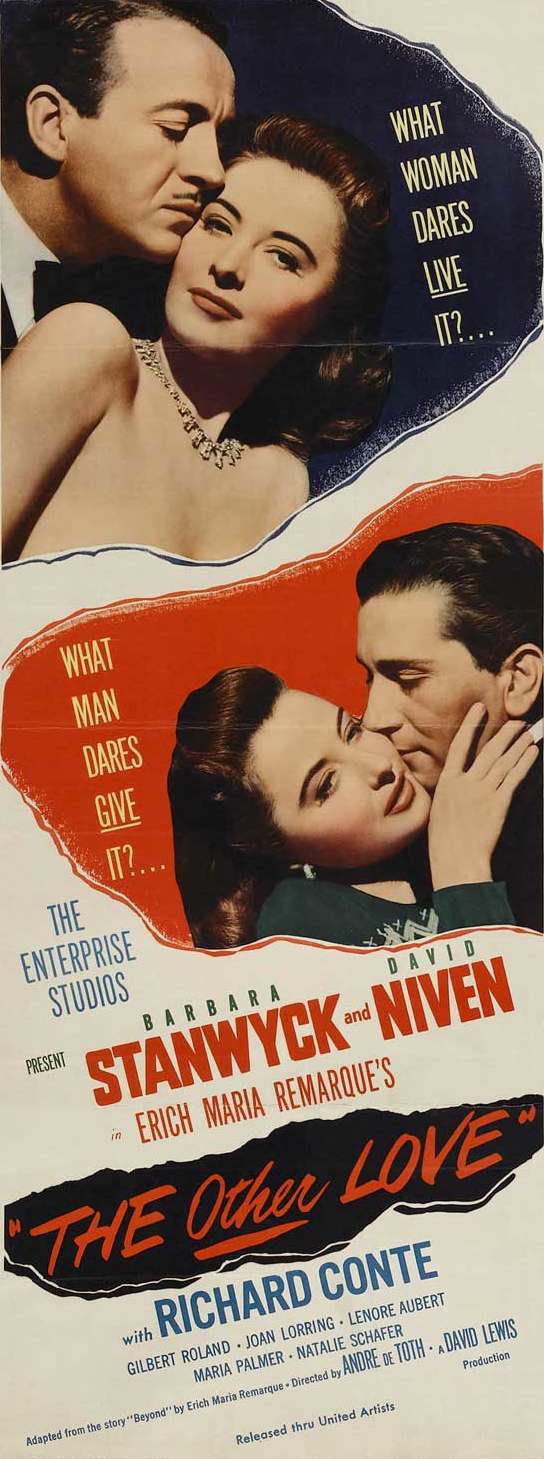
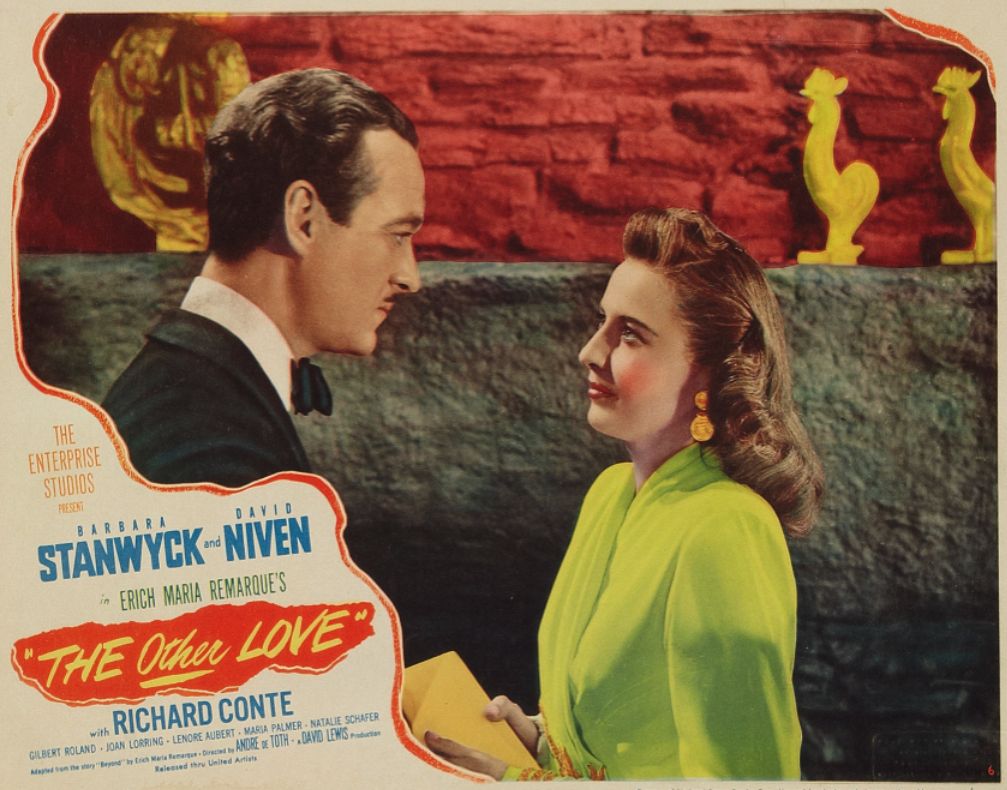
Director André de Toth is mostly associated with hairy-chested genres like westerns and war movies. The Other Love, which is based on a short story by All Quiet on the Western Front author Erich Maria Remarque, is a rare example of de Toth making a “women’s picture,” and it’s not a bad one. It’s also not a great one, so if you’re expecting Dark Victory (1939) or Now, Voyager (1942), don’t bother. But if you’re a fan of well-acted weepers, The Other Love is worth seeking out.

Karen Duncan (Barbara Stanwyck) is a world-renowned concert pianist who is gravely ill. She arrives at Mount Vierge, a sanitarium in the Swiss Alps, unaware of the seriousness of her condition. On her first night in the sanitarium her physician, Dr. Anthony Stanton (David Niven), insists she have dinner with him. He tells the nurse to have the kitchen prepare the “Grade A stimulation diet” and have it sent to Room 17.

Someone sends Karen a white orchid corsage before her “date” with Dr. Stanton, but it wasn’t he. It turns out there is a standing order to have white orchids delivered nightly to Room 17. The order came from a man who died months earlier, and was for a woman who died the day before Karen arrived, but Dr. Stanton insists this is just a rumor, and that they were both cured and moved away. Karen doesn’t believe him.

The second day, Karen has to quit smoking. The patients in Mount Vierge all seem to be on rest cures, which means convalescing outdoors on chaise longues while wrapped snugly in blankets. Karen befriends another patient, Celestine Miller (Joan Lorring), who claims she’s only there to make her philandering husband jealous, but is in fact quite ill, even though she doesn’t know it.

Karen bristles under Dr. Stanton’s inflexibility. When he stops her from playing the piano after she gets too worked up while performing a piece, she shouts, “Is everything forbidden here?” Yes, he tells her. Everything except hope. But a month of bed rest? Being treated like a child? Yes, he tells her. Until she’s well.

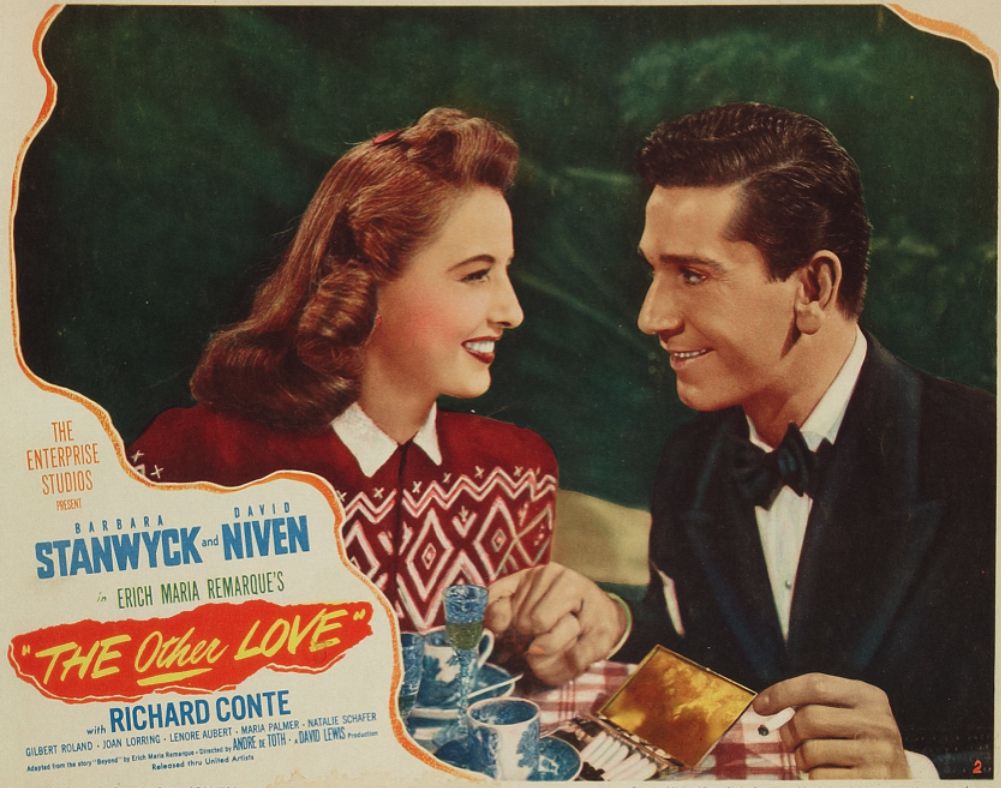
Despite being forbidden from practicing her art, smoking cigarettes, and drinking alcohol, Karen is apparently allowed to drive a horse and carriage all by herself on twisting mountain roads, which is how she meets the handsome and exciting auto racer Paul Clermont (Richard Conte). When he and his buddy Pete (Jimmy Horne) come tearing around a corner in their roadster, Karen’s horse rears up, and Paul comes to her aid after deliberately driving his car into a tree to avoid her.

Paul is in the Alps for an upcoming road race, and he and Karen are instantly attracted to each other, but Dr. Stanton refuses to let her go into the village again after learning of her affaire de cœur with Paul. Why must he take every bit of joy from her? “Too much excitement for one day,” the doctor says, simply.

Dr. Stanton tells her that she must never get overexcited. That she must be an automaton. “You haven’t got a free will anymore,” he tells her. She wants to live! He loves her! She doesn’t believe him! “Believe what you want,” he says. “But you’ve got to get well for your music! The world deserves your music!”

Karen runs away to the village for brandy and a cigarette with Paul. She gets into his car with him and reveals that she is Karen Duncan. Yes, THE Karen Duncan. “If Chopin could see me now,” he quips, and they go away to the Hotel Monaco together.

For most of the film the nature of Karen’s illness is as mysterious to the audience as it is to her. Once out of the crisp, dry air of the mountains, however, it quickly becomes clear that she’s consumptive, and she breaks down in coughing fits in the heavy air and rain of the low altitudes where Paul and she relax and play as only two well-dressed Hollywood actors in a mid-century film can play.

One way to see Karen’s disease in The Other Love is as part of a symbolic representation of the two men in her life. To follow Dr. Stanton’s dictates means a life of convalescence, but also one of security and contentment. To run around the world with Paul means a life of excitement and glamor, but also one of early death and frequent danger (represented quite literally by an amorous croupier, played by Gilbert “Cisco Kid” Roland, who tries to rape Karen in a doorway when she’s drunk and ill).

On the other hand, Dr. Stanton’s treatment of Karen hearkens back so strongly to the medical profession’s patronizing and deceitful treatment of women in less enlightened times that their “romance” is often more creepy than it is romantic. His refusal to reveal to her the seriousness of her illness — a subject he discusses freely with Karen’s mentor, Professor Linnaker (Richard Hale) — seems more like condescension than compassion.

The Other Love may be a “women’s picture,” but it’s certainly not a feminist one. (The Yellow Wallpaper this story is not.) But it’s a well-acted, well-directed, and beautifully staged film, so I wouldn’t hesitate to recommend it to fans of any of the principal actors, or fans of André de Toth who want to see what he could do behind the camera without Joel McCrea blowing someone away with a shotgun in front of it.

Desperate (May 9, 1947)

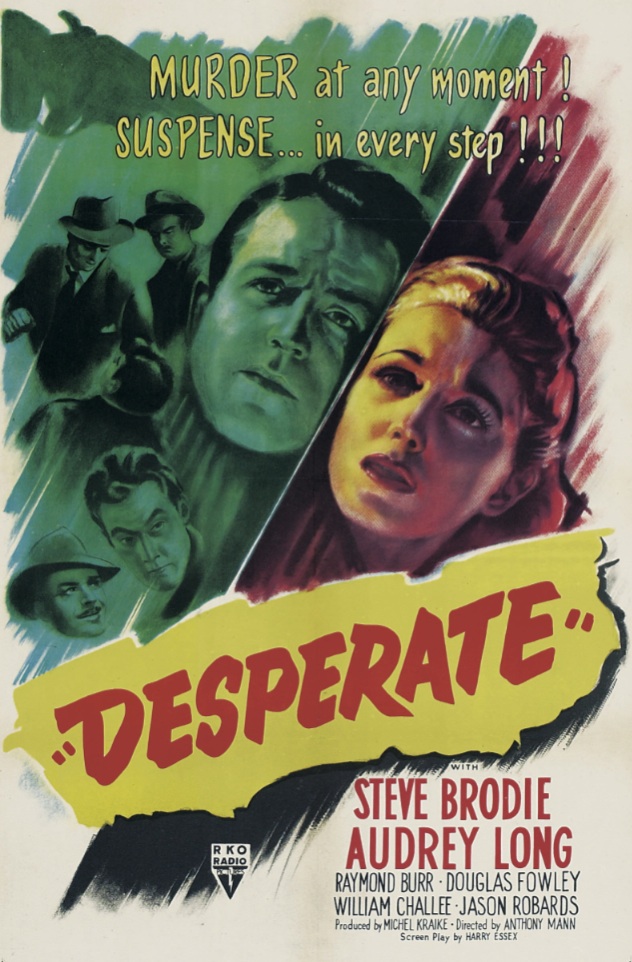
Anthony Mann’s Desperate stars Steve Brodie (not to be confused with the other Steve Brodie) and Audrey Long (the future Mrs. Leslie Charteris) as a young married couple on the run from sinister thugs led by the glowering Raymond Burr.

Steve Randall (Brodie), the owner and sole operator of Stephen Randall Trucking, is such a sweetie that he buys flowers for his wife Anne (Long) on their four-month anniversary. (When I watched this movie with my wife, she turned to me and said, “You didn’t get me anything for our four-month anniversary.” Thanks for making the rest of us look bad, Steve.) But the happy couple’s celebration has to be postponed when Steve gets an offer he can’t refuse … $50 for just one night’s work.

When an offer sounds too good to be true, it usually is. The crew of mugs loading merchandise from a warehouse into Steve’s truck are clearly up to no good. When one of them flashes a rod, Steve balks, so they shove him back in the truck and keep the gun on him. They need a clean “face” for the cops.

When a police officer shows up to investigate, Steve signals him with his lights, which leads to a shootout between the cops and the thieves. Steve drives away. Al Radak (Larry Nunn), who has one foot on Steve’s back bumper and the other on the loading dock, falls and is captured by the police. His older brother, Walt Radak (Raymond Burr), the leader of the crew, gets away with his henchman, Reynolds (William Challee).

Walt’s crazy about his kid brother, and Al will face the death penalty for the cop who was killed during the warehouse heist. So Walt demands that Steve turn himself in to the cops and claim he was responsible. To convince him, Walt calls in Steve’s license plate number and then has his boys work him over in a dark room with a single swinging overhead light. It’s a stunning sequence, and quintessentially noir.

When Steve doesn’t give in, Walt tries a new tactic. “Say, I’ll bet that new bride of yours is pretty,” he says while holding a broken bottle. “How ’bout it Steve?”

Walt has found Steve’s Achilles’ heel, and he agrees to Walt’s plan. Walt says, “I don’t care what you tell them, but if Al doesn’t walk out of that police station by midnight, your wife ain’t gonna be so good to look at.”

But Steve manages to slip away from Reynolds and call Anne from a pay phone. He tells her to meet him at the train station. They’ll go on the lam together, so Anne will be out of Walt’s reach.

Most of the rest of the film is an extended cross-country chase, as Steve and Anne move from place to place, establish new identities for themselves, and pick up work where Steve can find it. They’re pursued not only by Walt and Reynolds, but by the authorities, since Steve is still a person of interest in the murder of the police officer at the warehouse.

Along the way they have the obligatory conversation about how he can’t turn himself in to the police because they won’t believe him. They have a second wedding on the Minnesota farm owned by Uncle Jan and Aunt Klara (Paul E. Burns and Ilka Grüning) because their first marriage was just a courthouse deal and they deserve a big gathering with a real priest. Anne finds out she’s pregnant. They are crossed up by a sleazy private investigator named Pete Lavitch (Douglas Fowley) and they are assisted by a sympathetic police detective, Lt. Louie Ferrari (Jason Robards), who’s not above using Steve as bait to catch Walt.

Desperate is not a long film (it’s less than an hour and 15 minutes), but it drags a little during its middle act, which sometimes feels repetitive. It redeems itself completely in its final act, however, which is as dark and as tense as any film noir fan could ask for. Steve insures himself for $5,000 and heads for Walt dead-on, like a man playing chicken with an oncoming freight train. Six months have passed since Al was arrested, and he’s set to be executed. Walt gave up a long time ago on the idea that his brother could be freed, and all he wants now is the satisfaction of killing Steve at the exact moment that Al dies. A life for a life.

Walt and Reynolds take Steve to an apartment. Walt places a clock on the table between them in the kitchen. It’s a quarter to midnight. He gives Steve a last meal — sandwiches and milk — and a cigarette, and promises to shoot him at the stroke of midnight. There are increasingly tight close-ups of their three sweaty faces. “Now who was it said time flies?” Walt asks sardonically.

Desperate is the first really good noir from Anthony Mann, a director whose name is now inextricable from the term “film noir,” but who started out in Hollywood making mostly musicals and comedies. Desperate is not as interesting as T-Men (1947) or as powerful as Raw Deal (1948), but it’s a well-made, well-acted, exciting thriller. Audrey Long (recently seen as Claire Trevor’s little sister in Robert Wise’s Born to Kill) is probably the weakest actor in the film, but she’s called on to do the least. Steve Brodie is an appealing protagonist. He has a pleasant face and a regular-guy demeanor, and he’s believable as a man who’s pushed too far.

The real treat in Desperate is Raymond Burr as the vicious Walt Radak. This was only Burr’s third credited appearance on film, and while I enjoyed his role as the villain in William Berke’s Code of the West (1947), Desperate plays much better to his strengths as an actor. Burr was a remarkable heavy (no offense intended, big guy), and I never stopped to consider how ludicrous Walt’s plans were while I was watching this film. Burr sells every one of his hard-boiled lines with ruthless efficiency.

Mann’s cinematographer on Desperate, George E. Diskant, deserves mention, too. While he’s perhaps not as famous as Mann’s frequent collaborator John Alton, Diskant’s photography in Desperate is beautiful — full of darkness, hard angles, and vertigo-inducing chiaroscuro constructions.

Oregon Trail Scouts (May 5, 1947)

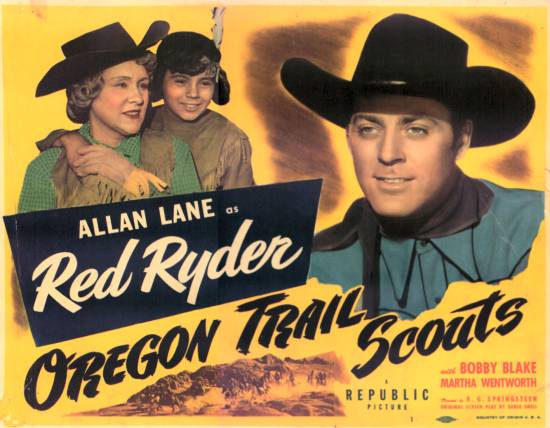
R.G. Springsteen’s Oregon Trail Scouts is an origin story, and tells how cowboy hero Red Ryder (Allan Lane) and his young Indian sidekick Little Beaver (Bobby Blake) first met.

If you’re expecting a grand comic book origin story like Batman Begins (2005), don’t bother. The Red Ryder film series is strictly kids’ stuff, and Oregon Trail Scouts is nearly indistinguishable from all the other entries in the series, but that’s not a bad thing. The journeymen at Republic Pictures — both in front of and behind the camera — knew how to craft solid entertainment for the Saturday-matinée crowd.

Oregon Trail Scouts takes place in the early 1890s, when the best spots for trapping along the Snake River were reserved for American Indians. (Because we all know that the Bureau of Indian Affairs and the federal government bent over backwards to give Indians the best stuff.) This leads to various groups of trappers attempting to curry favor with Chief Running Fox (Frank Lackteen), much to the consternation of Red Ryder’s pal Bear Trap (Emmett Lynn), who fondly recalls the good old days when all you needed to do was get an Indian drunk and keep him drunk to get what you wanted … not that he ever did it himself (wink wink). Bear Trap is a western sidekick in the rootin’ tootin’ mold of Fuzzy Q. Jones and Gabby Hayes.

Meanwhile, a group of black hats attempt to get permission to trap beaver on the Willamette River from Running Fox using methods more devious than firewater. Bill Hunter (Roy Barcroft) uses reverse psychology couched in the pidgin English necessary to communicate with American Indians in B westerns. “Me come to bury hatchet,” he says. And when Running Fox doesn’t agree to give Hunter trapping rights, Hunter says, “What’s the matter with you, Running Fox? You heap big chief? Or like old squaw? That Indian agent lead you around by nose.”

Oregon Trail Scouts is packed with action, even by the action-packed standards of Republic westerns. There are shootouts galore, most of them the function of a ridiculously convoluted plot that has Bill Hunter and his henchmen going after their old comrade, the Judge (Earle Hodgins), who now calls himself the Doctor. The Judge ran off years earlier with Hunter’s money and the Indian boy Hunter had kidnapped. Hunter believes that the Indian boy is actually Running Fox’s grandson, and that if he can get him back then Running Fox will give Hunter beaver trapping rights for sure.

Guess who that little Indian boy turns out to be? If you guessed “Little Beaver, the cutest little Indian boy in the west,” you’d be correct. As if he wasn’t adorable enough, he comes equipped with a little canine sidekick named Wolf Dog, who looks like a Scotty mix with nary a bit of wolf in him. As soon as Little Beaver meets Red Ryder, he falls in platonic love with him, and wants to stay with Ryder, Bear Trap, and Ryder’s aunt, the Duchess (Martha Wentworth), forever and ever. Ryder likes the idea, but is circumspect about the prospect of adopting the Indian boy, and tells him, “I like you, too, Little Beaver, but if I don’t take you back, the Great White Father in Washington may get heap mad.”

Don’t you fret, boys and girls. If you’ve seen just one other Red Ryder movie, you know that things will turn out just fine for Red Ryder and Little Beaver, and that Little Beaver will, in his own words, “Make heap good sidekick.”

Born to Kill (May 3, 1947)

Born to Kill
Born to Kill (1947)
Directed by Robert Wise
RKO Radio Pictures

Robert Wise’s Born to Kill has never been one of my favorite noirs. It regularly tops “best of” lists, and many film noir enthusiasts whom I respect love it, so I was hoping a fresh viewing would reveal something new to me.

Alas, for me it was still the same old flick. It’s an enjoyable picture, but it’s wildly melodramatic, there are subplots that never really go anywhere, and its over-the-top characters are mostly two-dimensional. The key to a great noir, like Billy Wilder’s Double Indemnity (1944), is the sense that it could happen to you, or to someone you know. No matter how outlandish the schemes in a film are, if they’re carried out by believable characters then I’m usually able to go along for the ride without asking too many questions.

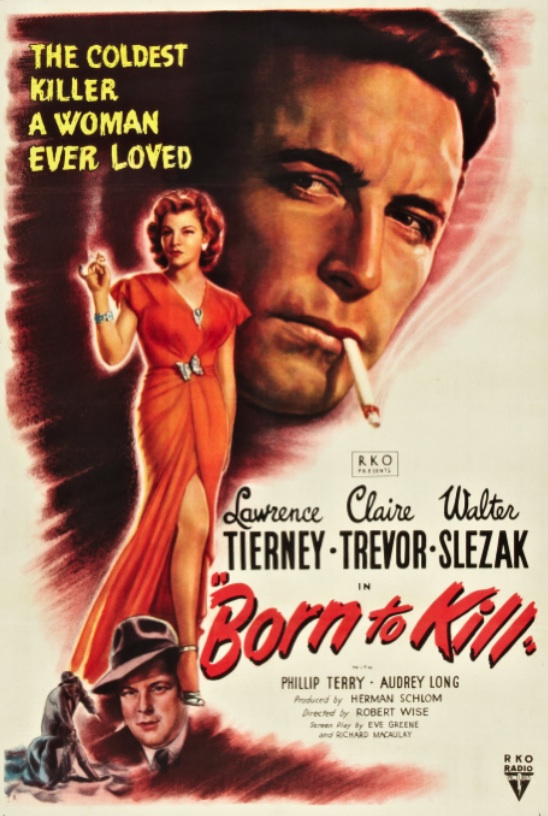
Born to Kill tells the tale of a pair of sociopathic social climbers, the recently divorced Helen Brent (Claire Trevor) and the recently paroled Sam Wild (Lawrence Tierney). Their paths cross in Reno, the biggest little city in the world. Helen is there for a quickie divorce and Sam is there with his reedy little sidekick, Mart Waterman (Elisha Cook Jr.). Helen is staying at a boarding house run by the slovenly Mrs. Kraft (Esther Howard), who, when we first see her, is getting lit up on beer in the middle of the afternoon with the adenoidal tart Laury Palmer (Isabel Jewell).

After Laury goes on a date with dapper Danny Jaden (Tony Barrett) just to make the big lug she’s dating jealous, she invites Danny inside for a nightcap. When Danny goes to the kitchen, he finds Laury’s big lug waiting for him. It’s Sam Wild, of course, and his brutal killing of both Danny and Laury is the film’s high point. (Or the lurid low point, if you’re a prissy scold.) The sound of crickets in the background, the neatly manicured suburban lawns surrounding Mrs. Kraft’s boarding house, the dog barking in the background, and the uptempo swing music playing on the radio in the kitchen all lend a sense of immediacy and familiarity to the murder.

The rest of the film, however, just doesn’t hang together for me. Sam’s little buddy Mart tells him, “You can’t just go around killing people whenever the notion strikes you. It just ain’t feasible.” I feel the same way about the plot of Born to Kill. It just ain’t feasible.

After the murder, Sam blows town. He and Helen meet again on the train to San Francisco. When they disembark, Sam suggests splitting a cab, but Helen tells him she’s going in a different direction. He responds, “That’s where you’re wrong. We’re going in the same direction, you and I.”

Sam insinuates himself into Helen’s life. They are clearly drawn to each other, but she tells him that nothing in the world will stop her from marrying her fiancé, Fred Grover (Phillip Terry). So Sam moves in on her sister, wealthy heiress Georgia Staples (Audrey Long), or, to be more precise, her foster sister, as Helen bitterly reveals to Sam. Not only is Georgia a beautiful blonde, but — as Sam tells Mart — “Marrying into this crowd will make it so’s I can spit in anyone’s eye.”

Meanwhile, back in Reno, Mrs. Kraft retains the services of a sleazy, corpulent private investigator named Matthew Albert Arnett (Walter Slezak). Mrs. Kraft is played by Esther Howard, and her bizarre, bug-eyed performance in this film is nearly identical to the “Filthy Flora” character she played in Dick Tracy vs. Cueball (1946).

Helen and Sam pursue their doomed, twisted love affair. (“Fred is peace and security,” Helen moans. “You, you’re strength, excitement, and depravity. You’ve a kind of corruption inside of you, Sam.”) Arnett sniffs around. Sam and Georgia quarrel after she refuses to let him run her family’s business. Mart Waterman shows up in San Francisco and starts living with the unhappy foursome. (Is he Sam’s partner or his secret lover? The film is never completely clear.) Slowly but surely, the plot threads of the film intertwine, culminating in an orgy of murder and betrayal.

This is the second or third time I’ve seen Born to Kill. While I’ve griped about the ridiculously melodramatic plot, maybe I just want it to be something it’s not. I could certainly see myself watching it again in the future and loving its over-the-top characters, unrealistic scenarios, grotesque supporting players, and generally high level of camp.

I think my biggest problem with Born to Kill is the relationship between Sam and Helen. Claire Trevor is a wonderful performer, but I was never able to accept that she’d love Sam enough to give up everything for him. Helen’s histrionics in her scenes in tastefully appointed drawing rooms with Fred, Georgia, and Sam seem more scripted than natural, and Claire Trevor’s performance as Helen seems too intelligent and composed for the debased character she’s playing.

But maybe that’s the point. Lawrence Tierney is a powerful presence, but he isn’t a particularly gifted actor, especially when either subtlety or range is called for. Not only does Sam Wild commit murder whenever the notion strikes him, he can bend others to his will, getting his friend Mart to kill for him and getting Helen to provide him with an alibi for murder at the drop of a hat. He’s a brutal alpha male, and loving him may go against all reason and sense, but that never stopped anybody before.

Born to Kill is directed by Robert Wise with vigor. The cinematography, by Robert de Grasse, is great, especially in the nighttime exteriors. Paul Sawtell’s music is exciting. I found the plot ridiculous, but that shouldn’t stop any noir fans who haven’t seen Born to Kill from seeking it out.

Miracle on 34th Street (May 2, 1947)

When I was a kid, I briefly corresponded with Santa Claus. I’m not talking about the annual “letter to Santa” every kid writes, with a list of everything they want in their stocking that year. I dropped Santa a line in the off-season — June or July — and asked him how summers were at the North Pole, how Mrs. Claus and the elves were doing, and what his reindeer liked to eat.

I was eight or nine years old. I didn’t exactly believe in Santa Claus, but I liked the idea of him. Writing a letter to him felt good. And doing it in the summer made me feel unselfish.

I can’t remember if I was surprised or not when I received a response from Santa Claus.

It was a typewritten letter, and it was postmarked the North Pole. Santa thanked me for my letter, let me know what was going on at the North Pole, told me what his reindeer liked to eat, and told me that he liked my drawing of a train and said he assumed I must live near a railroad and that he sincerely hoped I stayed away from the railroad tracks. I didn’t quite understand that last part. There was a freight train that ran through town, but it wasn’t that close to my house, and I never hung out down there, and why wouldn’t Santa know that? Doesn’t he know everything? Surely “plays risky games on the train tracks” would’ve put me in the “naughty” column, wouldn’t it?

He ended the letter by saying that he thought the stamp I’d pasted to the front of the letter was awfully attractive, and asked if I’d ever considered stamp collecting as a hobby. He may have thrown in some stamps to get me started. I can’t remember.

I figured I should probably take Santa’s advice, so I got into stamp collecting and kept up the hobby for several years. It did occur to me that it was a little strange that the last place I saw my letter to Santa was sliding down the mail slot at the post office and that I got a response from some dude calling himself Santa who seemed to be really into philately. (That’s “stamp collecting” for all you non-philatelists out there.)

Around this time, one of my teenaged foster sister’s friends asked me if I believed in Santa Claus, and I responded, “I believe in the spirit of Christmas.”

Which brings me around (finally) to George Seaton’s Miracle on 34th Street, which I hadn’t seen since I was a kid. It was just as funny and enjoyable as I remember it being. I found the scene in which Kris Kringle (Edmund Gwenn) tells a shop owner that his store display features his reindeer in the wrong order more whimsical than factual this time around, and the scene in which we see a man in a chintzy Santa suit, drunk as a lord, really disturbed me when I was a kid. This time around, it was merely mildly amusing. (As a jaded adult, Santa Claus-related hijinks have to be a little more disturbing than public intoxication to get a rise out of me.)

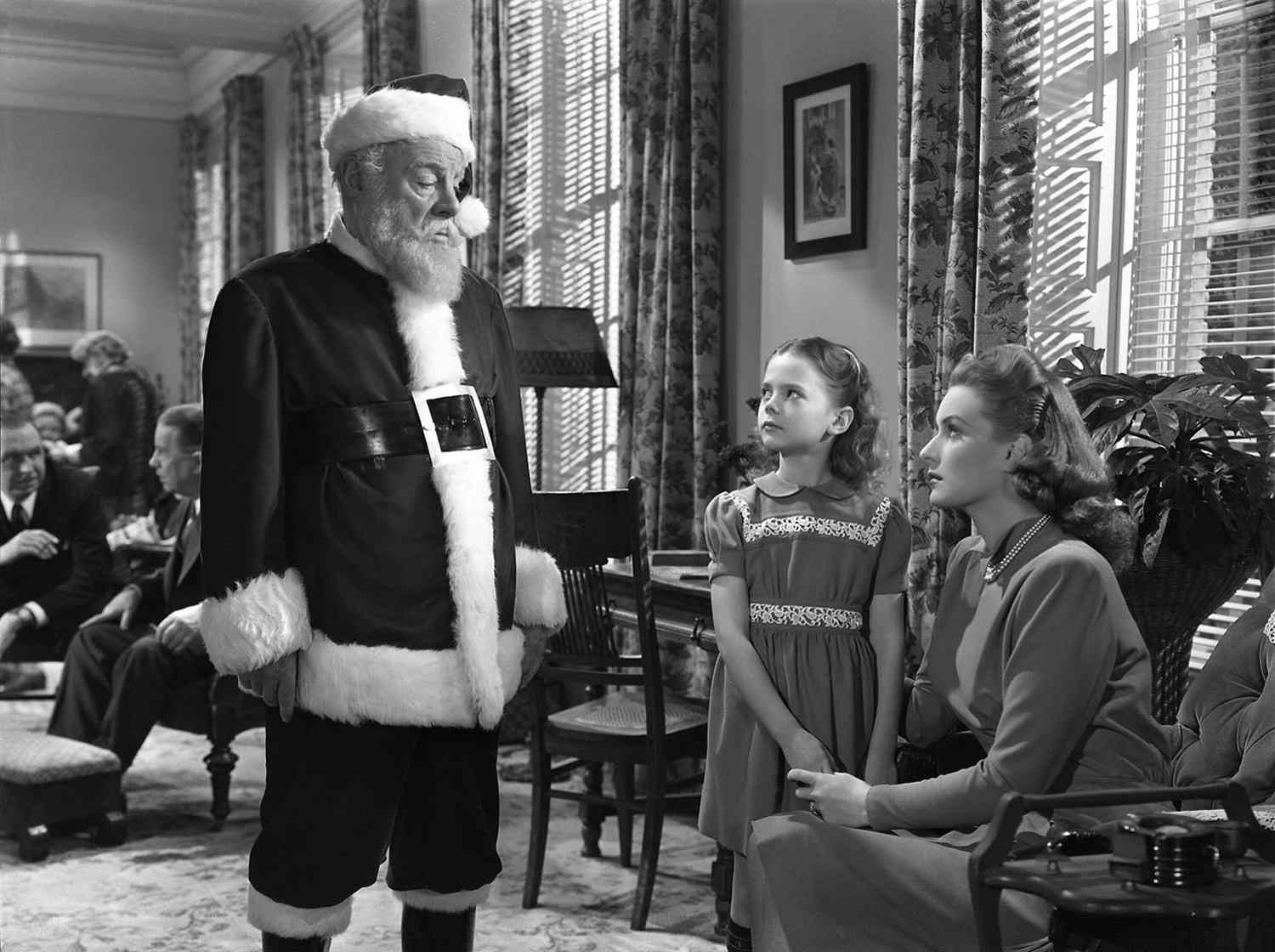
Kris Kringle replaces the intoxicated Santa in the Macy’s Thanksgiving Day Parade, and does such a good job that he’s hired as a store Santa. Unlike most department store Santas, he doesn’t shill for his employer. In his first day on the job at Macy’s, he sends a harried mother (Thelma Ritter) to Schoenfeld’s Department Store, which he says is the only place in town that has the toy her son wants. Kringle keeps a very close watch on the toy market, after all. She’s flabbergasted that a department store Santa would send her to a competitor, but she’s delighted, too, and Kringle’s helpfulness creates an enormous wave of good publicity for Macy’s.

The only problem is that Kris believes he really is Santa Claus, and tells everyone so. When the event director who hired him, single mother Doris Walker (Maureen O’Hara), finds out that he’s been filling the head of her six-year-old daughter, Susan (Natalie Wood), full of such nonsense, she’s upset, and pulls his employment card. It lists his address as Brooks’ Memorial Home for the Aged, 126 Maplewood Drive, Great Neck, Long Island, but his date of birth says “As old as my tongue and a little bit older than my teeth,” under “place” he has written “North Pole,” and his eight tiny reindeer are listed as his next of kin.

Dr. Pierce (James Seay), the doctor at Kris’s nursing home, assures Doris that Kris’s delusion is harmless, but a meddling little twit named Granville Sawyer (Porter Hall) who gives psychological evaluations to Macy’s employees conspires to have Kris committed.

In order to prove Kris’s sanity, his lawyer, Fred Gailey (John Payne), announces that he will in fact prove that Kringle is Santa Claus, and therefore not insane. It’s the trial of the century. A series of newspapers blare increasingly wild headlines, culminating in the ridiculous “Kris Kringle Krazy? Kourt Kase Koming ‘Kalamity!’ Kry Kiddies.” (A lot of people will tell you that puns are the lowest form of humor, but they’re not. Alliteration is.)

Miracle on 34th Street is a wonderful film. It walks the tricky line between faith and skepticism without ever going too far in either direction. Every character who has faith is rewarded, but there’s nothing in the film that’s overtly unreal. Doris and Fred find love with each other, and Susan’s only Christmas wish is fulfilled, but in a clever, roundabout way. (There’s no final shot of Kris Kringle shooting out of a chimney or anything.)

It was a little weird to watch this movie in springtime. It created the same type of cognitive dissonance as smelling turkey roasting in August, or attending a Fourth of July barbecue in November. I blame Daryl F. Zanuck, who insisted that the film be released in May, since he said that more people went to the movies in the summer than during the holidays. The studio kept the film’s Christmas theme a secret in its trailer. Also, you’ll note that the theatrical release poster above prominently features Payne and O’Hara, and Gwenn is not dressed up like Santa.

Miracle on 34th Street was nominated for four Academy Awards — Best Picture, Best Supporting Actor (Gwenn), Best Adapted Screenplay (George Seaton), and Best Story (Valentine Davies). It won all of the Oscars it was nominated for except Best Picture, which went to Elia Kazan’s Gentleman’s Agreement.