I now have a Twitter account, so if you’d like to receive updates about new reviews on this site and all kinds of other scintillating information, you can follow me at: http://twitter.com/#!/ocdviewer/. Thanks!
Pursued (March 2, 1947)
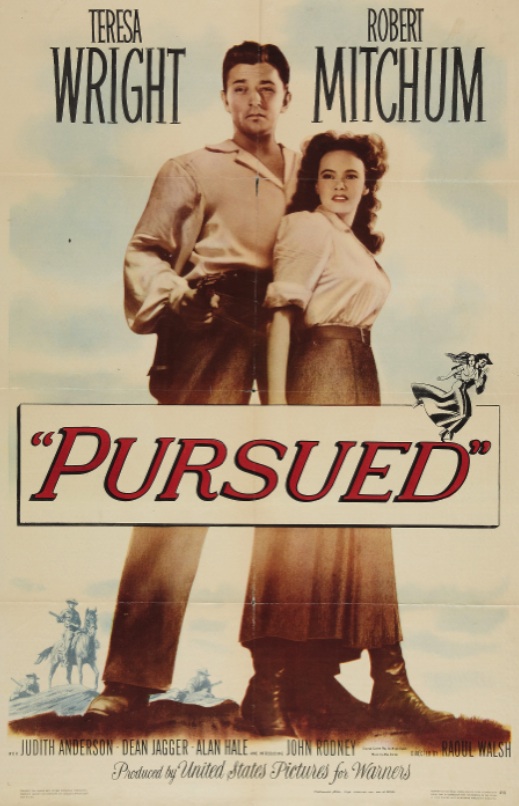
Pursued (1947)
Directed by Raoul Walsh
United States Pictures / Warner Bros.
In the territory of New Mexico at the turn of the century, a handsome, sloe-eyed man named Jeb Rand (Robert Mitchum) is hunted across a desolate landscape by gunmen. He returns to the cabin where he was found as a boy and prepares for a showdown. The mountains that surround the cabin are drenched in shadows, and they tower above the tiny human figures below them like skyscrapers. As Jeb waits, he is plagued by nightmares of boots on wooden floors — boots with jangling spurs — but he can’t make sense of his strange visions.
Welcome to the world of Raoul Walsh’s Pursued. It’s an oneiric film about a man who is haunted by the past. Mitchum narrates the film, sounding like someone who knows he is doomed. (“I always have a feeling something’s after me,” he says.)
Pursued is a western, not a film noir, but it has all the hallmarks of noir, including stunning black and white cinematography by the great James Wong Howe, Freudian relationships up the wazoo, the sins of the past coming back to haunt the present, a man on the run, plenty of sinister characters packing heat, and a story mostly told in flashback.
Young Jeb Rand (played by Ernest Severn) survived the massacre that killed his family and was taken in by Mrs. Callum (Judith Anderson), who has two children about Jeb’s age — Thor (short for “Thorley”) and Adam. They’re played by Peggy Miller and Charles Bates as kids, and by Teresa Wright and John Rodney as adults.
Jeb often complains that his head hurts. Nothing about his past makes sense, and his present is equally confusing. Thor and Adam don’t treat him as a brother. (His separation from them is represented visually as well as thematically. In one scene in which the family gathers, Mrs. Callum stands in the center, with Thor and Adam on one side of her and Jeb on the other.) Adam hates his adopted brother Jeb. Thor loves Jeb, but her love seems more romantic than sisterly.
One day, someone shoots young Jeb’s horse out from under him. Mrs. Callum tells him it was probably just careless deer hunters, but Jeb is convinced that it was Adam.
We eventually learn that Mrs. Callum’s brother-in-law, Grant Callum (Dean Jagger), led the attack on Jeb’s family. Grant’s brother (Mrs. Callum’s husband) was killed in the attack, and Grant was wounded and had to have his arm amputated. Grant vowed not to rest until every last Rand on earth was dead. Mrs. Callum, on the other hand, considers the events of that night Providence — the Lord may have taken her husband, but He delivered unto her a second son.
Jeb, Thor, and Adam grow to adulthood. When the draft board demands that at least one young man from every family in the territory enlist to fight in the Spanish-American War, Jeb and Adam flip a coin. Jeb loses.
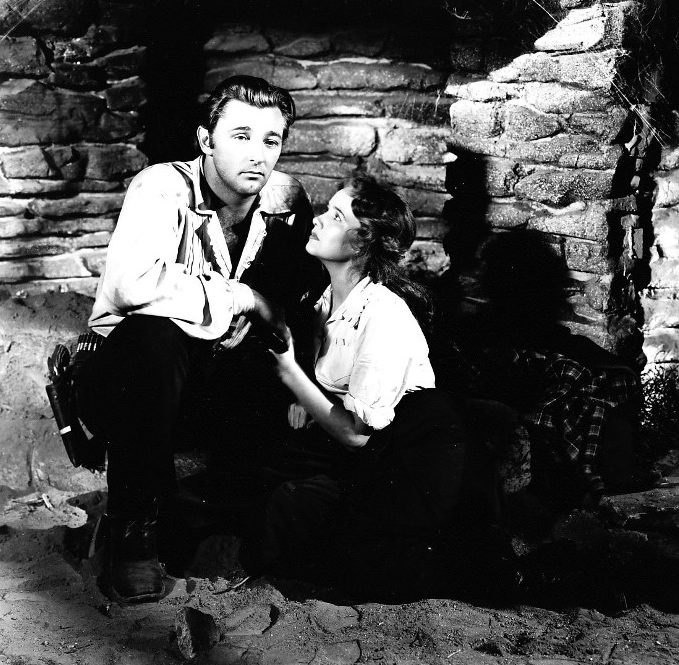
He returns home from the war to find that little has changed. Adam still hates him, and Thor still has romantic feelings for him. “I want you to come courtin’ me,” she says. “I know that seems silly when we grew up together, but I want to pretend we didn’t.”
Mrs. Callum doesn’t have a problem with Jeb and Thor marrying, but she refuses to ever talk with Jeb about the night his family was killed, no matter how much he pushes her. “I’m giving you my daughter for your wife,” she says. “Isn’t that enough for you? Doesn’t that show you that you’re loved?”
Grant Callum dogs Jeb’s every move, sending shooters after him even though he clearly just wants to be left alone. After he’s forced to kill two men in self-defense, Mrs. Callum and Thor shun Jeb, and tell him that he’s dead to them.
“Right then I knew I had to have you,” Jeb says in voiceover as he watches Thor at a funeral. “I’d have to climb across two graves to get to you, but nothing in the world would hold me back.”
Pursued has a happy ending, but that doesn’t stop Jeb and Thor’s semi-incestuous love from having a doomed quality. “There was a black dog riding my back and yours,” Jeb tells Thor as they reminisce about their past while waiting in the burned-out cabin together for Grant Callum and his gunmen to arrive.
This noirish sense of doom pervades the film. So many scenes take place at night or indoors — in smoky saloons and casinos — that the film has a powerful sense of claustrophobia. And the fact that Jeb is a returning combat veteran plagued by nightmares gives him more in common with many of the protagonists of post-war film noirs than it does with the cowboy heroes of most post-war oaters.
Carnegie Hall (Feb. 28, 1947)
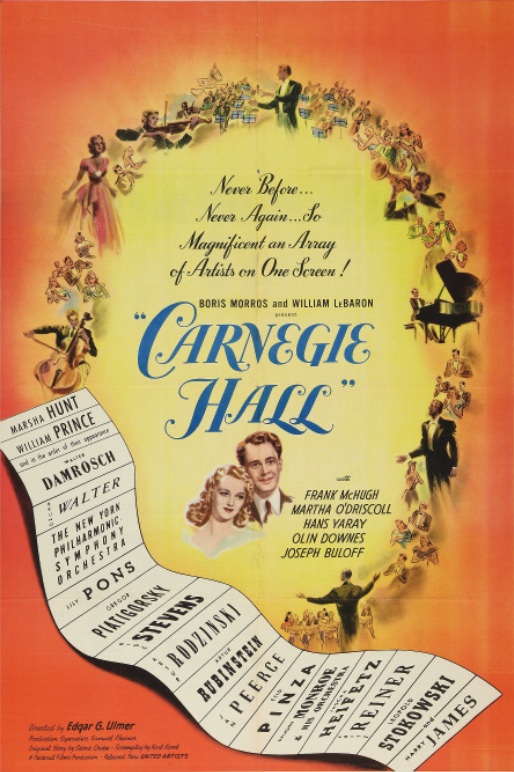 The poster for Edgar G. Ulmer’s Carnegie Hall boasts the following: “Never before … never again … so magnificent an array of artists on one screen!”
That’s true. It’s a film jam-packed with the crème de la crème of classical musicians, opera singers, and conductors from the first half of the 20th century.
What the poster doesn’t tell you is that the dramatic portions of the film are pretty dire. But if you can suffer through violinist Jascha Heifetz and conductor Fritz Reiner reading their lines in monotones as they discuss stage fright with an Irish usher named John Donovan (Frank McHugh), who says he only feels that strange feeling in the pit of his stomach when he’s eaten too much, you’ll be rewarded by hearing Heifetz play the First Movement of Tchaikovsky’s Violin Concerto in D Major with the New York Philharmonic Orchestra, under the direction of Reiner.
Carnegie Hall was directed by Edgar G. Ulmer, the poet of Poverty Row, who directed such minor masterpieces as Detour (1945), Bluebeard (1944), and The Black Cat (1934). Ulmer’s love of classical music was apparent in Detour — the main character is a nightclub pianist who, in one memorable scene, plays boogie-woogie variations on a Brahms waltz. Carnegie Hall is a love letter to great music and musicians, as well as to the eponymous edifice itself.
The plot in a nutshell (and there’s barely enough of it to fill two nutshells) involves an Irish girl named Nora Ryan (Marsha Hunt) who sees her first performance in Carnegie Hall as an adorable little rag-headed immigrant in 1891, and works her way up from cleaning woman to program director. She marries a febrile pianist named Tony Salerno (Hans Jaray, listed in the credits as “Hans Yaray”), who falls to his death while drunk when their son, Tony Jr. (William Prince), is still a baby.
Tony Salerno Jr. grows to maturity while being forced to diligently practice piano by his mother. They experience a rift after Tony Jr. falls in love with a nightclub singer named Ruth Haines (Martha O’Driscoll) and runs away to perform with crooner and band leader Vaughan Monroe. (Monroe is best known today for his version of “Let It Snow! Let It Snow! Let It Snow!” Ironically, Monroe wanted to be an opera singer, but the economic realities of the Depression coupled with a string of early hits led him to perform popular music exclusively.)
Eventually, Tony Jr. gets a record set released on RCA/Victor called “American Rhythms,” and performs his own composition, “57th Street Rhapsody,” onstage at Carnegie Hall as pianist and conductor of the New York Philharmonic, with soloist Harry James on the trumpet. It’s a performance that blends “high” and “low” music, and brings tears to his mother’s eyes. The end.
The drama is hackneyed and poorly written (and it doesn’t help that Jaray is utterly charmless as Tony Sr.), but the bulk of the film’s 2 hour and 15 minute running time is occupied by great performances — the Prelude to Die Meistersinger von Nürnberg, performed by the New York Philharmonic under the direction of Bruno Walter; soprano Lily Pons singing the “Bell Song” (“L’Air des clochettes”) from Delibes’s opera Lakmé; cellist Gregor Piatigorsky performing Saint-Saëns’s “The Swan,” from The Carnival of Animals (Le carnaval des animaux); mezzo-soprano Risë Stevens performing the end of the introduction and the start of the principal melody of Delilah’s song that seduces Samson in the second act of Saint-Saëns’s opera Samson and Delilah, followed by a performance of the Seguidilla from Act I of Bizet’s Carmen. And that’s just scratching the surface.
The DVD of Carnegie Hall that’s currently available from Kino Video looks great. The print is crisp, the blacks are deep, and the contrast is good. (And the “piano” scene from Detour is included as an extra.) As a dramatic film, Carnegie Hall doesn’t really succeed, but as a showcase for great musicians and singers, it’s a winner.
Nora Prentiss (Feb. 21, 1947)
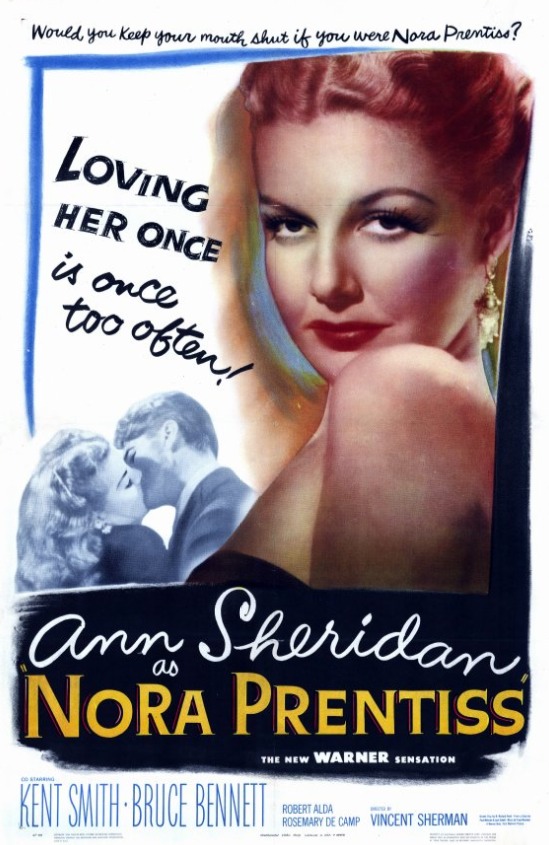 In 1947, March was “make jokes about Nora Prentiss” month on the Jack Benny show. A week didn’t go by with at least one line like, “She makes Nora Prentiss look talkative.”
I suppose the promotional tagline for the film — “Would you keep your mouth shut if you were Nora Prentiss?” — was irresistible for comedians, especially since it’s selling the picture based on its final 10 minutes, which strain credulity a bit.
If you can swallow a few plot contrivances, however, Nora Prentiss is a fantastic film. The performances are great, Vincent Sherman’s direction is assured, Franz Waxman’s score is rich and expressive, and James Wong Howe’s black and white cinematography is crisp and beautiful, as it always was.
The title, poster, and advertising campaign for Nora Prentiss all seem to be modeled on the earlier Warner Bros. “women’s noir” Mildred Pierce (1945), but they’re very different films. Nora Prentiss, which is based on Paul Webster’s short story, “The Man Who Died Twice,” is more about its male protagonist, Dr. Richard Talbot (Kent Smith), than it is about Nora.
The film begins, as so many noirs do, at the end. A man sits in the shadows of a prison cell and refuses to say how he knew Dr. Talbot, or why he was blackmailing him.
Dr. Talbot is a 43-year-old physician with a wife (Rosemary DeCamp) and two teenaged children (Robert Arthur and Wanda Hendrix). He lives in a beautiful house in San Francisco and shares a thriving practice with his partner, Dr. Joel Merriam (Bruce Bennett).
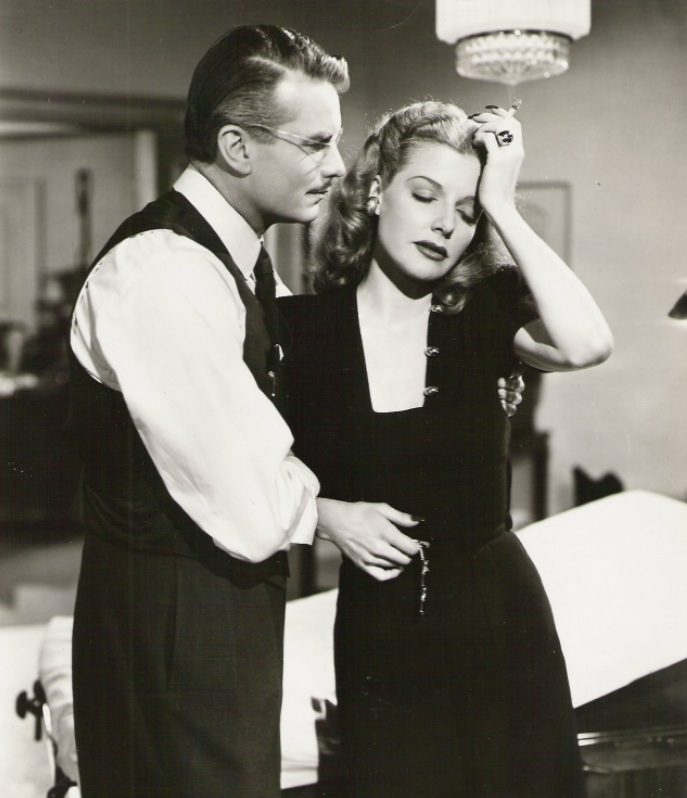 One night, Talbot comes to the aid of a beautiful nightclub singer after she’s knocked down by a car and suffers minor leg injuries. The singer, Nora Prentiss (Ann Sheridan), flirts with him a little as he tends to her, her nylon rolled down on one leg.
The strait-laced Talbot is completely smitten with Nora, but when she finds out he’s married, she resists his clumsy advances. Talbot says he doesn’t see a reason why they can’t be friends, but an afternoon at his cabin in the mountains never seems platonic, no matter what either of them says.
Nora is drawn to Talbot, but she never seems less than clear-headed about the affair. After a short, dreamy period of time with Talbot, she realizes that she doesn’t want to be “the other woman,” and attempts to break it off. He is less clear-headed, and will do anything to be with her, including — but not limited to — promising her he will divorce his wife, using a cadaver to fake his own death, and following her to New York, traveling under an assumed name.
If the logic police tend to kick down your doors of perception anytime the party in your head gets too weird, you’ll probably find yourself picking apart the plot of Nora Prentiss starting around the halfway mark.
But if you can relax, sit bank, and enjoy the ride, Nora Prentiss is an absorbing film about a man who loses everything for the love of a woman, eventually devolving into a paranoid, hard-drinking wreck who never leaves his hotel room for fear he will be recognized.
Kent Smith is very good as Talbot, but the film works as well as it does because of Ann Sheridan’s performance as Nora. Unlike noirs in which a wicked femme fatale with no discernible inner life seduces and ensnares a sad sack Everyman, Sheridan’s Nora is a three-dimensional character. She’s beautiful, intelligent, and sensible enough to pull away from Talbot when things start to go south. This has the effect of making Talbot’s obsession sadder and more believable than it would be if she were just a harpy with a beautiful face.
Ramrod (Feb. 21, 1947)
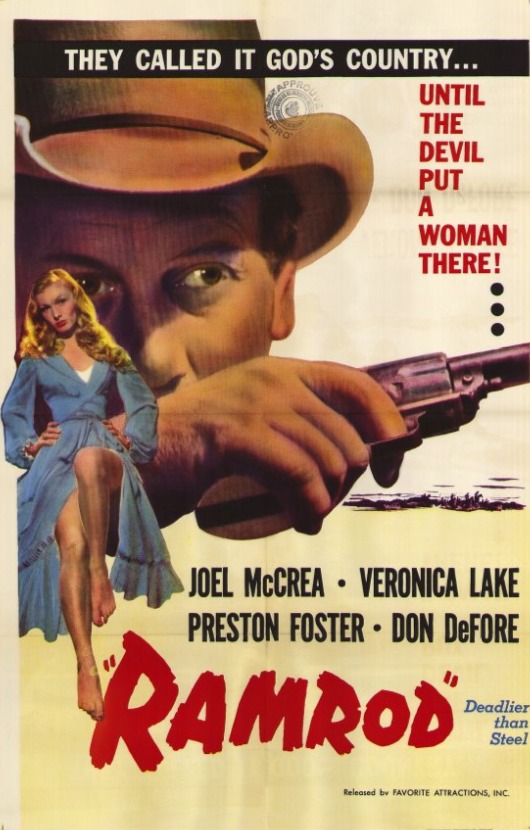
Ramrod (1947)
Directed by André De Toth
United Artists
They called it God’s country … until the Devil put a woman there! screams the poster for André de Toth’s Ramrod.
That darned Scratch. Goin’ and puttin’ women where they oughtn’t to be.
The woman in Ramrod is Connie Dickason, whose slight frame and small stature belie her will of iron. She’s played by Veronica Lake (de Toth’s wife from 1944 to 1952).
Connie’s fiancé, Walt Shipley (Ian MacDonald), plans to bring sheep through public grazing land, which hasn’t endeared him to local cattleman Frank Ivey (Preston Foster), who has Connie’s father, Ben Dickason (Charles Ruggles), in his pocket.
Alcoholic cowhand Dave Nash (Joel McCrea) has worked for Shipley for the past three weeks. At the request of Connie, with whom he has a history, he backs up Shipley when Ivey and his men attempt to stop Shipley from leaving on the night stage. (If Shipley gets out of town, he’ll come back with sheep.)
Sheriff Jim Crew (Donald Crisp) cautions Dave to stay out of it. When Dave says to the sheriff, “I work for Walt,” the sheriff responds, “For three weeks? What do you owe that fool, your life?”
All of this takes place in the first 10 minutes of the film. De Toth drops the viewer into the action in media res. Without a scorecard, it’s hard to keep track of who’s who during the first reel. (And it doesn’t help that Shipley and Ivey look nearly identical.)
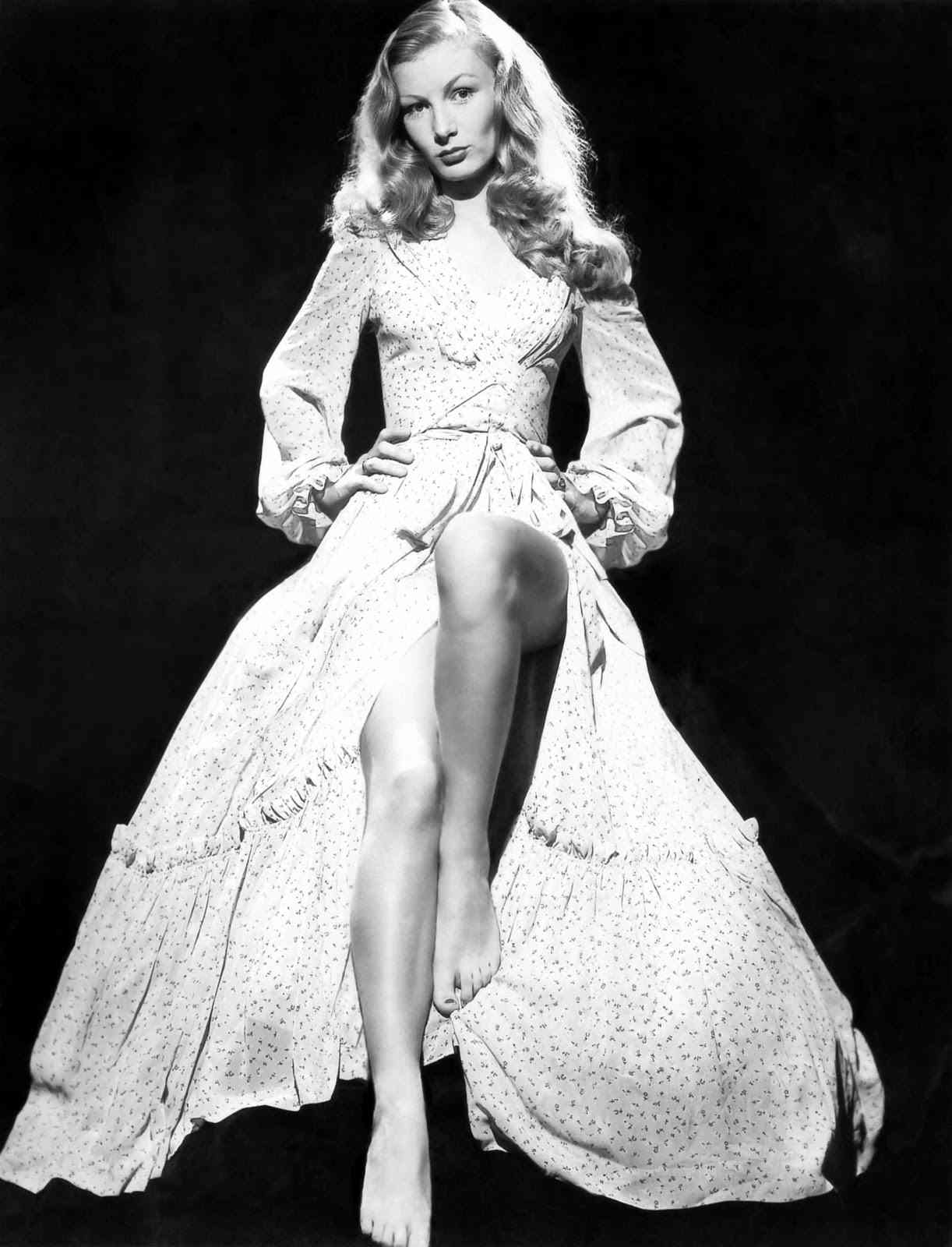
But things become more clear as the plot rolls forward. Shipley decides that he doesn’t love Connie enough to die for her, so he heads out of town, leaving her his ranch. Connie’s father expects that she’ll do his bidding after Shipley departs, but she throws down the gauntlet with a fiery speech: “From now on I’m going to make a life of my own. And being a woman, I won’t have to use guns. This isn’t just a fight between father and daughter. You’ve pushed Frank Ivey at me ever since I can remember. For years I’ve watched him run things his way. The town, the valley, you, and now me! No one’s ever had the nerve to stand up to him. Well I have!”
Connie hires Dave to be foreman of her ranch, the Circle 66. He in turn hires an old friend of his, a handsome, charming loose cannon named Bill Schell (Don DeFore). Dave is determined that everything the Circle 66 does to fight Ivey be above board, but Connie and Bill have their own ideas. Connie may have made the decent and honest Dave “ramrod” of her outfit, but it’s the violent Bill Schell who is the true instrument of her will.
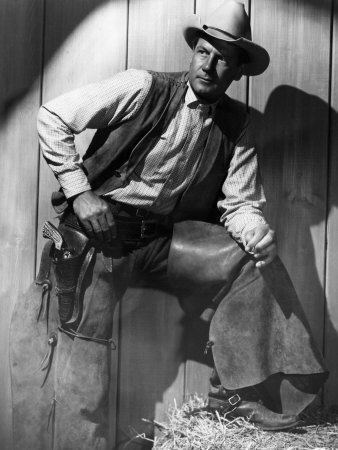
Joel McCrea has the pleasantly handsome, soft-featured face of the dad next door, but he’s tall enough and projects enough quiet menace to be convincing as the ramrod of the Circle 66 ranch. Don DeFore, who usually played pleasant, jovial men, is excellent playing against type as a cold-blooded gunman.
Ramrod is a great western. It’s based on a novel by Luke Short, and de Toth does an excellent job of capturing Short’s hard-boiled western prose and talent for characterization. The tone of the picture is closer to the film noirs of the period than it is to the westerns.
In Ramrod, de Toth creates a grim, violent world in which the righteous are just as likely to die as the wicked. Fistfights in this film don’t end with a bunch of broken furniture, they end with blood. A group of Ivey’s men beat an unarmed cowhand to death in front of Connie. When Bill Schell slaps a man in the face to enrage him, he tells Bill that he won’t be “rawhided” into drawing, so Bill burns his hand with a cigar. When Ivey shoots a man, he steps forward and finishes him off with another shot. Ramrod ends with a shootout, of course, but it doesn’t end with a quick draw or any fancy trick shooting. It ends with a shotgun blast to the gut.
True to the noir tone of the film, there’s a “good girl” to counterbalance Connie, named Rose (Arleen Whelan). The intertwined relationships of Dave, Bill, Connie, and Rose are well-played, and evolve naturally over the course of the film. Character drives the plot of Ramrod forward as much as bullets and fists.
Ramrod premiered on Friday, February 21, 1947, in Salt Lake City, at both the Utah and Capitol theaters. The world premiere event was part of Utah’s centennial celebration as a U.S. Territory. Ramrod went into wide release on May 2, 1947.
The Devil Thumbs a Ride (Feb. 20, 1947)
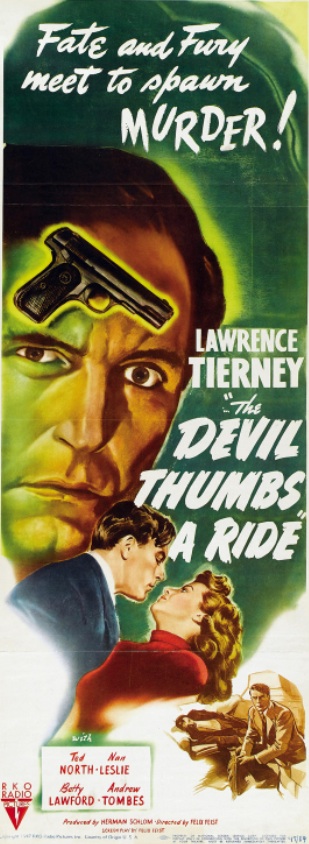 Felix Feist’s The Devil Thumbs a Ride has acquired a fearsome reputation over the years, so I wasn’t prepared for how weird and funny it ended up being.
This film has more oddball characters than you can shake a stick at. The protagonist, Jimmy Ferguson (Ted North), is a bra and panties salesman driving a 1941 gray convertible who has a bad case of the hiccups and a wine bottle on the seat next to him with a rubber nipple attached to it. It was a gag gift from his buddies, and he swears he only smells like booze. He hasn’t had a nip since before dinner. But he sure seems drunk, especially at the beginning of the movie.
There’s also a detective who keeps his dog in his car and belts his trench coat around his chest, a young gas station attendant who has a funny-looking daughter, an alcoholic night watchman who takes a $1 bet that he can’t drink an entire glass of whiskey like it’s water, and a wrongfully arrested wedding party who prove they’re not the people the cops are looking for by having the groom remove his toupee.
The one character who doesn’t come off like a caricature — and the major reason for the film’s enduring legacy — is Steve Morgan, a sociopathic robber, forger, and killer. He’s played by Lawrence Tierney, an actor whose notorious offscreen exploits — arrests for drunken brawling and driving under the influence — often overshadow his talents as an actor.
Toward the end of his life, in an interview with Rick McKay, Tierney said that he didn’t enjoy making The Devil Thumbs a Ride. He said, “I resented those pictures they put me in. I never thought of myself as that kind of guy. I thought of myself as a nice guy who wouldn’t do rotten things. I hated that character so much but I had to do it for the picture.”
Assuming Tierney wasn’t rewriting history, and he really did hate playing Steve Morgan, none of his discomfort is visible onscreen. Cruelty and duplicity are as natural for Steve as breathing, and despite this, he’s the most likable person in the film. The hapless salesman who gives Steve a lift is too goofy-acting and stiff to elicit much audience sympathy. And the cops who pursue Steve following his robbery of an old man outside of a San Diego bank are too incompetent and obsessed with playing poker to really root for.
Steve controls and manipulates people effortlessly. Within minutes of getting in Ferguson’s car, he’s renamed Ferguson “Fergie” and has picked up a couple of passengers of his own at a gas station — a bottle-blonde party girl named Agnes (Betty Lawford) and her prim, dark-haired friend Carol (Nan Leslie).
The Devil Thumbs a Ride is an hour-long paean to bad behavior. It moves too quickly for the viewer to stop and consider all the contrivances that lead Steve, Fergie, Agnes, and Carol to Fergie’s boss’s beach house in Newport. Along the way, there’s more boozing, lying, property destruction, and running from the cops than you’ll find in most movies twice as long.
It’s not quite a “lost classic” of film noir, like Detour (1945), and its humorous moments outweigh its chilling moments, but The Devil Thumbs a Ride is still well worth seeking out.
Code of the West (Feb. 20, 1947)
 Code of the West, a programmer from RKO Radio Pictures, has the same pedigree as Sunset Pass (1946). Both films are based on novels by Zane Grey, the screenplays for both films were written by Norman Houston, both are directed by William Berke, both star James Warren and John Laurenz, and both feature Robert Clarke, Harry Woods, Steve Brodie, and Harry Harvey in supporting roles.
In Sunset Pass, the tall, lean, blond-haired, scowling Warren played a cowboy named “Rocky.” Here, he plays a cowboy named “Bob Wade.” John Laurenz plays the same character, Chito Rafferty, a comical, musically inclined Irish-Mexican. (Incidentally, “Chito Rafferty” was a sidekick character made famous by Richard Martin, who played the character in 33 different westerns from 1943 to 1952. Laurenz was the only other actor to play the character, and he only did so in Sunset Pass and Code of the West.)
While I won’t be able to tell you the plot of either of these films at this time next month, I thought Code of the West was the better picture, largely due to the presence of a young Raymond Burr, who is a smoother and more malevolent villain than Harry Woods was in Sunset Pass.
In Code of the West, Burr plays a land baron (what else?) named Boyd Carter. Carter and his henchmen know that the railroad is coming through town, but they’re keeping the information to themselves as they buy up all the land they can get their hands on. When a young banker named Harry Stockton (Robert Clarke) lends Bob and Chito money to stake a claim of their own, Carter’s men go into action.
If you were drawn to this film by the poster above, be forewarned that Carter’s arson-murder gang that blasts the frontier is mostly a collection of stock footage. But if you squint your eyes, suspend your disbelief, and take another sip of bourbon, you’ll be fine.
Vigilantes of Boomtown (Feb. 15, 1947)
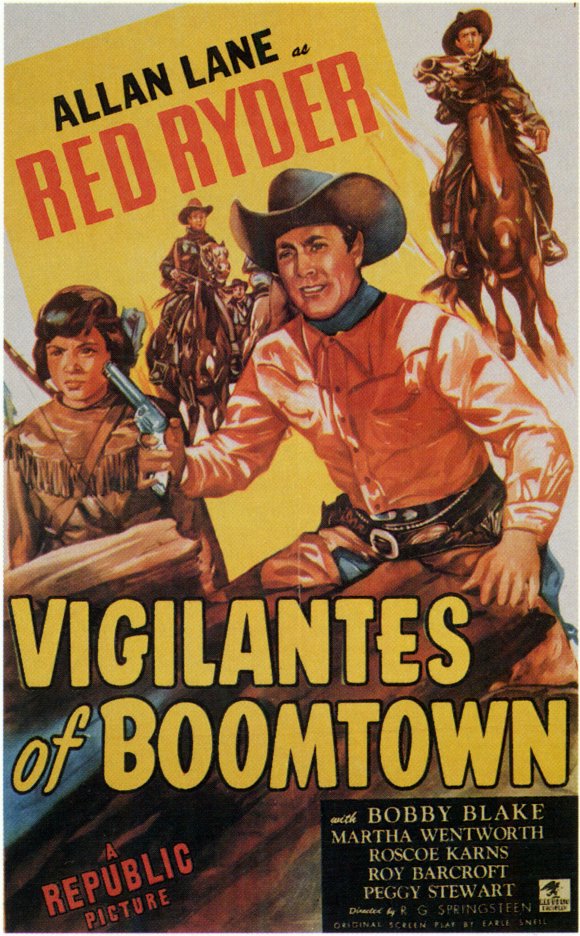 I thought Allan Lane’s third go-round as Red Ryder was his best yet, but it could just be because I’m a boxing fan.
Or maybe I’m just getting used to good old “Wild” Bill Elliott no longer playing Fred Harman’s comic-strip cowboy in his inimitable wooden style.
Either way, Vigilantes of Boomtown was a fun way to spend an hour. It begins with a tour of boomtowns, culminating with Carson City, the capital of Nevada. The year is 1897, and a bill legalizing boxing in the state has enraged Molly McVey (Peggy Stewart), the daughter of a U.S. senator. Molly believes that Nevada crawled its way to respectability, and hosting a bloodsport will make the state look like a hotbed of savagery to the rest of the country. She’s so opposed to prizefighting that she plans to hire gunmen to stop the fight if the state legislature goes ahead with its plans.
Red Ryder (Lane) and his English-challenged young sidekick, Little Beaver (Bobby Blake), are drawn into the fracas because Ryder’s aunt, the Duchess (Martha Wentworth), is leasing her ranch out to the fight’s promoters, who plan to hold their bout on St. Patrick’s Day. The combatants are a Cornish blacksmith named Fitzsimmons (John Dehner) and a bank clerk named Corbett (George Tumer).
Corbett (the more likable and handsome of the two fighters) stays with Ryder and the Duchess at their ranch, teaching Ryder a thing or two about the sweet science. When Molly hires a couple of thugs (George Chesebro and George Lloyd) to kidnap Corbett, there’s a bit of mistaken identity, which leads to them carrying off Ryder instead of Corbett, and they stash him in that cave where all bad guys go in Republic westerns. Will Corbett’s boxing lessons stand Ryder in good stead? You’ll just have to watch and find out.
Oh, and at the very end, Corbett’s referred to as “Gentleman Jim,” just in case you hadn’t already put the pieces together.
Angel and the Badman (Feb. 15, 1947)
 James Edward Grant’s Angel and the Badman is a fish-out-of-water story about a gunfighter named Quirt Evans (John Wayne) who renounces violence after he is injured and nursed back to health by a pretty Quaker girl named Penelope Worth (Gail Russell) and taken in by her community. Like most Hollywood movies of this sort, Angel and the Badman has its cake and eats it too — it preaches nonviolence, but is still jam-packed with gunfights and fistfights.
The action is fast and furious from the very opening moments of the film, which begins with a close-up of a gun being drawn, the shooter fanning the hammer, firing from right to left, emptying the cylinder, and then running to his horse.
Legendary stuntman Yakima Canutt was the second unit director on this picture, and it shows. There’s a cattle raid sequence that’s among the best I’ve seen, and most of the action is well-staged. There’s one orgy of fistfighting, however, that was so over-the-top that I wasn’t sure if it was supposed to be funny or not. By the time the melee was finished, every visible piece of wood in the saloon was in splinters.
Angel and the Badman was John Wayne’s first time as a producer, and it feels like a labor of love. Unfortunately, the direction, cinematography, and pacing of the film aren’t up to the standard of Wayne’s other pictures I’ve seen from the ’40s. The music is especially bad, and is rarely appropriate for the scene it’s accompanying. At its heart, Angel and the Badman is a B picture with an A-list star.
The film ends with a line that could be interpreted as pro gun control — “Only a man who carries a gun ever needs one.” This is a rarity for a western, especially one starring John Wayne, but if you’re a traditional sort, don’t worry; all the bad guys die of lead poisoning before the film is through.
The Arnelo Affair (Feb. 13, 1947)
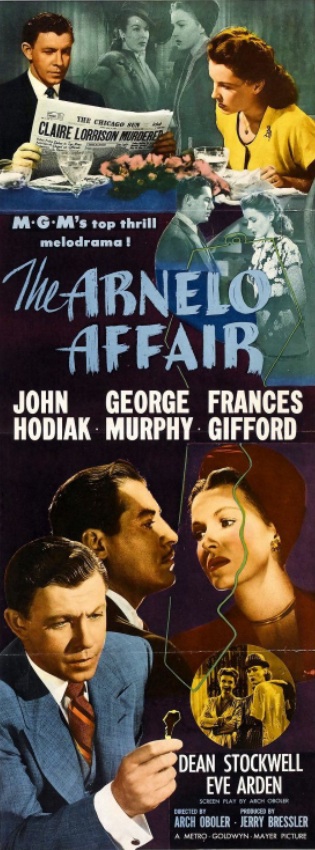 Arch Oboler’s The Arnelo Affair is a crime melodrama with so much voiceover narration that most of it can easily be understood and enjoyed by blind people.
Oboler cut his teeth in radio. His most famous work was for the horror anthology Lights Out, which is one of the scariest and most gruesome radio shows of all time. Oboler was a native of Chicago and the child of Jewish immigrants from Latvia. He was a prolific writer — one of the most talented in the medium of radio. His work as a film director is more hit or miss.
The Arnelo Affair, his third film, is based on a story by Jane Burr and takes place in Chicago. It starts out promisingly, with a lot of heat between its protagonist, Anne Parkson (Frances Gifford), and the magnetic, mustachioed nightclub owner Tony Arnelo (John Hodiak). Anne is married to a lawyer and all-around stuffed shirt named Ted (George Murphy), who’s such a drip that he won’t let their 9 year-old son, Ricky (Dean Stockwell), touch any of the tools in the room in their house marked “Ricky’s Workshop.”
The Parksons have been married for 12 years (which, if Gifford’s character is the same age as she is, means they got hitched when she was only 14 or 15), and Anne is clearly neglected and unloved. When her path crosses Arnelo’s, his persistence and menacing charm draw her to him.
Eve Arden, at this point typecast as the worldly and knowing friend of the troubled female protagonist (see also Mildred Pierce and My Reputation), plays Anne’s friend Vivian, who cautions Anne that “Canaries and hawks don’t make good playmates.”
She’s right, of course, and when Arnelo murders one of his other girlfriends in order to draw Anne closer to him, Anne will realize what a dangerous game she’s been playing.
Oboler’s script is perceptive about infidelity, and the dialogue is more believable than in most melodramas, but Oboler’s direction is flat, and he relies too heavily on voiceover narration by Gifford to explicate her character’s emotions. The Arnelo Affair isn’t bad, but after 45 minutes it loses momentum and never really picks up again. It might have made a better 60-minute B movie programmer from one of the small studios than a 90-minute maudlin MGM melodrama.
 OCD Viewer