Tag Archives: United Artists

Arch of Triumph (Feb. 17, 1948)

Lewis Milestone’s Arch of Triumph has all the elements of a great film, but they never quite coalesce. It’s based on a novel by Erich Maria Remarque, the writer of All Quiet on the Western Front (which was director Milestone’s greatest film success). It stars the patrician Charles Boyer, the beautiful Ingrid Bergman, and the grotesque Charles Laughton, all of whom are well cast. And its setting — Paris in 1939 — is atmospheric. The city was still a refuge for people fleeing the Nazis, but dark clouds were gathering over France, and everyone knew it.

The review of the film in the May 10, 1948, issue of Time called it an “outstanding misfire,” and that’s as good a description as any. Why? At a little more than two hours, is the movie too long? Is it too short? (The rough cut ran about four hours.)

I could go on and on with this kind of equivocation. Is the film too melodramatic? Not melodramatic enough? And so on. Suffice it to say that the film had a budget of $5 million, but doesn’t look nearly that expensive, and that it began filming in 1946 but didn’t make it to movie theaters until 1948.

Boyer plays a Central European medical doctor named Ravic who doesn’t exist on paper. He is in Paris without a passport, and if he’s caught he’ll be deported … or worse. (It is ironic but not disconcertingly dissonant to watch Boyer, the archetypal Frenchman, play a refugee in Paris.)

One night Ravic meets a despondent young woman named Joan Madou (Bergman), standing on a bridge, possibly contemplating suicide. They embark on a love affair that is as doomed as it is long-winded; they leave Paris on holiday, they return, Ravic is caught by the police, Joan attaches herself to another man, Ravic returns to Paris, etc.

For the most part, Arch of Triumph is an overlong, soapy melodrama. Every time Charles Laughton is on screen, however, it feels like a thriller. Laughton plays Ivon Haake, the Nazi officer who tortured and interrogated Ravic and murdered Ravic’s former lover. Ravic has vowed to avenge her death, and the scenes in which he stalks Haake through the nighttime streets of Paris generate the most excitement in the film, and lead to an exciting and violent conclusion (although the violence as originally written in the script had to be toned down for the Breen Office).

After Ravic’s arrest at about the midpoint of the film, his fellow refugee, the White Russian “Col.” Boris Morosov (Louis Calhern), tells Joan, “History has no special accommodations for lovers.”

It’s this sense of the great weight of history bearing down on people’s lives that is my most lasting impression of the film. Arch of Triumph is a much less hopeful film than the similarly themed Casablanca, but its dour tone suits the proceedings well. I certainly didn’t hate Arch of Triumph, and for the most part I liked it. There’s just the sense that something’s missing from the overall experience when the credits roll.

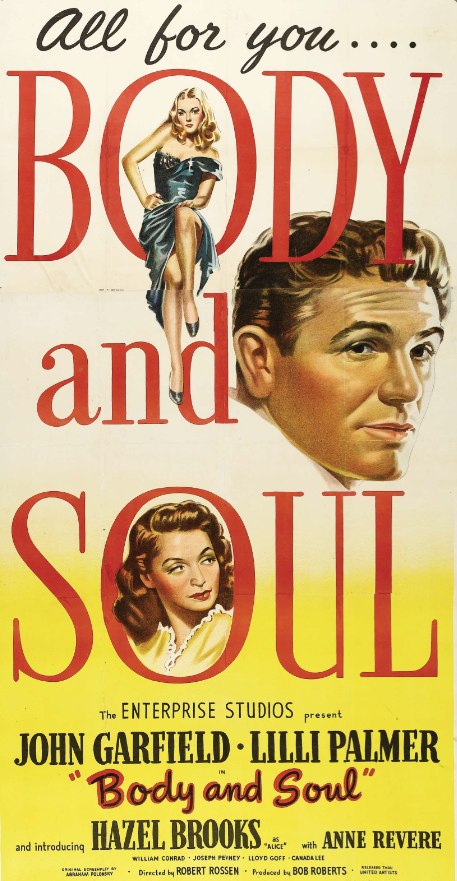
Body and Soul (Nov. 9, 1947)

Body and Soul
Body and Soul (1947)
Directed by Robert Rossen
Enterprise Productions / United Artists

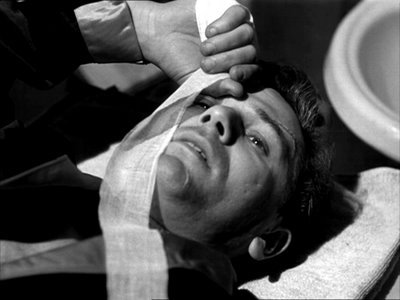
Charlie Davis’s face is a road map. Every scar tells a story, and every story is the same — a bruising boxing match, a big purse, wealth, success, and another step farther away from the people he loves.

This isn’t a spoiler, because we see exactly how far Charlie Davis (John Garfield) has fallen in the first scene of Robert Rossen’s Body and Soul. He wakes from a nightmare, sweat glistening on his scarred face, mournfully crying out a name … “Ben!”

He drives to his childhood home in New York’s Lower East Side and sees his mother (Anne Revere), but neither she nor his old girlfriend, Peg (Lilli Palmer), wants anything to do with him, so he drives to a smoky jazz club to see the beautiful singer Alice (Hazel Brooks). She tells him his manager has been looking for him everywhere. “How does it look, Charlie, the night before the fight, three a.m. and you loaded?” she asks him.

The next morning at the weigh-in, the challenger for the middleweight championship of the world, Jack Marlowe (Artie Dorrell), derides the tired and hungover champ. “All fat,” he sneers. “Nightclub fat … whiskey fat … thirty-five year-old fat.”

Back in his dressing room, Charlie’s gangster manager Roberts (Lloyd Gough) reminds him that he’s being paid $60,000 to throw the fight, and to make it look good.

John Garfield

Most of the rest of the film is told in flashback. We see Charlie’s youth as a tough Jewish kid looking to break into the fight game. His best friend Shorty Polaski (Joseph Pevney) is his manager. Charlie’s father David (Art Smith) is supportive, but his mother wants him to choose a more respectable profession than the sweet science. All of this is strongly reminiscent of Garfield’s previous film, Humoresque (1946), although I have to say that Garfield is more believable as a pugilist than he was as a violinist.

Body and Soul is the first really great boxing film, and it still stands as one of the best. Garfield’s performance as Charlie Davis is pitch-perfect, and James Wong Howe’s black and white cinematography is gorgeous. As good as Raging Bull (1980) is, it still owes an enormous debt to this film. And so does nearly every boxing picture made after 1947.

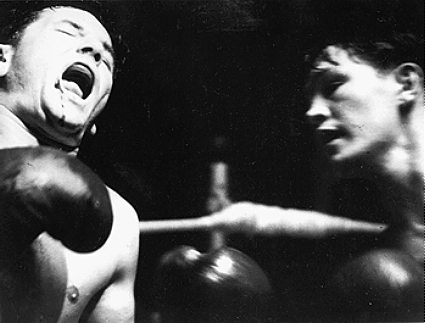
To be fair, the rise and fall structure of Body and Soul and most of its story elements were clichéd even at the time of the film’s release. But despite a sense of familiarity, Body and Soul still manages to feel fresh. A lot of this has to do with the final fight, which Howe famously shot with a handheld camera while standing on roller skates. It’s a brilliantly shot and edited sequence, and still thrilling to watch.

Garfield and Dorrell

Body and Soul was director Rossen’s second feature. His first, Johnny O’Clock (1947), was good, but overly complicated and occasionally contrived. Body and Soul, on the other hand, is a punch straight to the gut. It’s moving, brilliantly acted, and one of the best films I’ve seen in a long time.

Body and Soul was nominated for three Oscars; John Garfield for best actor, Abraham Polonsky for best original screenplay, and Francis Lyon and Robert Parrish for best film editing, the only category in which it won.

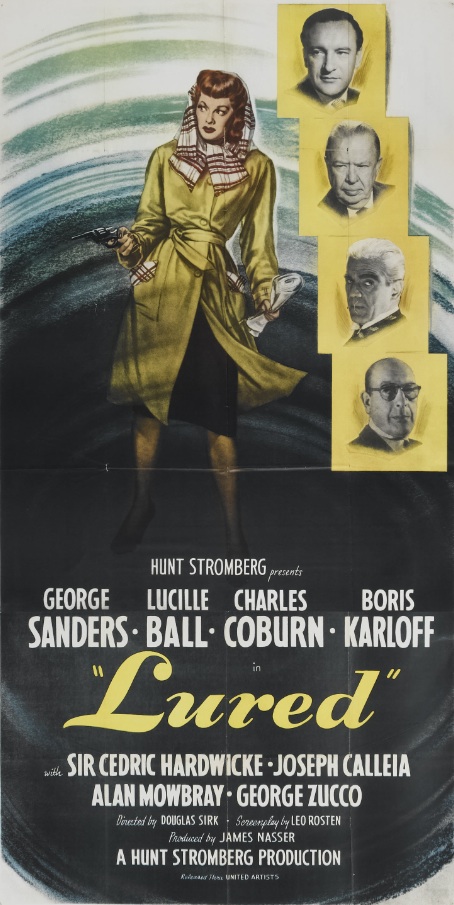
Lured (Aug. 28, 1947)

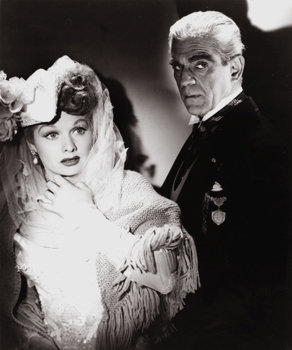
If you go solely by the current DVD cover art for Douglas Sirk’s Lured, you’ll come away thinking it’s a thriller starring Boris Karloff and Lucille Ball; possibly a Gothic melodrama in which her character marries his character and is then terrorized by him in a creepy old mansion.

Or you might not.

But in any case, that’s what I thought, so I was surprised when it turned out that Karloff’s character in Lured is essentially a throwaway, and all of his scenes could be excised from the film without affecting the plot.

Of course, excising Karloff from the film would excise much of the ghoulish fun, since the sequence in which he plays a thoroughly mad former fashion designer who forces Ball to model his “latest creations” is one of the best bits in the picture, but it ultimately has very little to do with the central mystery about a poetry-obsessed killer who places ads in the personal columns.

In Lured, Lucille Ball plays Sandra Carpenter, an American dancer and actress who came to London from New York with a show. It folded after four nights and she was broke. So now she works in a dance hall called the Broadway Palladium where “50 beautiful ravishing glamorous hostesses” dance with men off the street for six pence a twirl.

It’s no picnic. After one of Sandra’s co-workers mentions that there’s just two hours left to go in their shift, Sandra responds, “Two hours in this cement mixer’s longer than a six-day bike race.” (Incidentally, Ball played a similarly occupied character on the CBS radio show Suspense in the January 13, 1944, broadcast, “A Dime a Dance.”)

When Sandra is offered a tryout for a part in the new Fleming & Wilde show, she jumps at the chance, not so affectionately referring to her current place of employment as a “slaughterhouse.”

But just as she arranges a private audition with Mr. Fleming over the phone, she sees the headline of the London Courier. Her friend and fellow taxi dancer Lucy Barnard (Tanis Chandler) has just become the eighth victim of the “Poet Killer”!

So two very different men enter Sandra’s life, and things will never be the same for her.

One is the charming and insouciant Robert Fleming (played by the the charming and insouciant George Sanders), who initially wants to cast Sandra in his show, but soon wants her to play the leading lady in his own life, till death do them part.

The other is Inspector Harley Temple (Charles Coburn), who tests Sandra’s powers of observation and then enlists her in Scotland Yard after she passes with flying colors.

Their policewomen are very clever, he says, but the killer only places ads for young, beautiful women. (Sorry, ladies of Scotland Yard. No offense intended, I’m sure.)

Sandra then has to respond to every personal ad for young, unattached women. The police will write the responses, but Sandra will have to keep the appointments. A humorous montage follows, natch.

Lured is a mixed bag. Douglas Sirk is a great director, but Lured isn’t one of the films he’s remembered for. It’s well-done, and Sirk’s fascination with surface opulence masking (or possibly masking) darker forces is in full effect. The plot, however, twists and turns through so many contrivances that it’s hard to keep track of everything, let alone take any of it seriously.

It’s worth seeing, however, by anyone who’s a Sirk completist, or anyone who wants to see Lucille Ball in a glamorous leading role in a beautifully art-directed film. She didn’t have too many of those, you know, after I Love Lucy.

Copacabana (May 30, 1947)

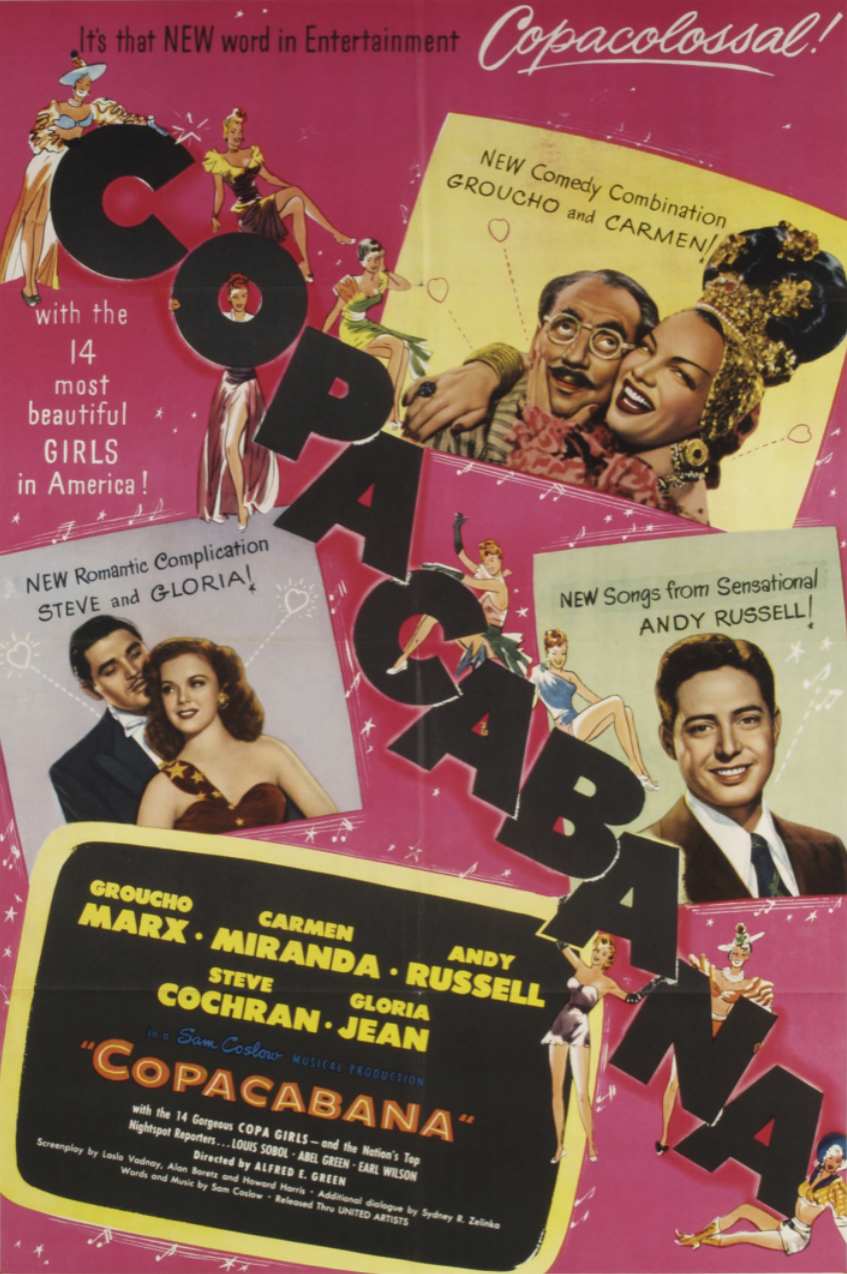
Hey there! Do you like the comedy of Groucho Marx? Do you like the music of Carmen Miranda? Do you like the sweet song stylings of Andy Russell? Do you like beautiful women with nice legs?

You do? Well then, brother, have I got a picture for you.

Alfred E. Green’s Copacabana is a classic example of a Hollywood product that is designed for only one purpose — to entertain.

The plot of the film is little more than an excuse to showcase Groucho Marx’s wordplay and fast-paced comedic line deliveries, Carmen Miranda’s mesmerizing vocal performances, big musical numbers featuring the 14 beautiful “Copa” girls, and Andy Russell’s syrupy, sentimental songs.

The plot, which can summarized on the back of a cocktail napkin, is this: wildly unsuccessful nightclub performer Lionel Q. Deveraux (Groucho Marx) and his fiancée of 10 years, equally unsuccessful nightclub singer Carmen Navarro (Carmen Miranda), decide that desperate measures are called for. Deveraux has been kicked out of more clubs than he can count, and threats like, “This is an outrage. You’ll hear from my lawyer, as soon as he gets a telephone,” clearly aren’t getting him anywhere.

So Deveraux decides to pass himself off as a top talent agent. He arranges for Carmen to perform for Steve Hunt (Steve Cochran), the owner of the most glamorous nightclub in Manhattan, the Copacabana. Without Deveraux onstage with her, Carmen makes a positive impression, but Steve wants to see more of Deveraux’s acts. Naturally, he has only one act — Carmen — but some quick thinking produces a second act, the beautiful and mysterious “Mademoiselle Fifi.”

Mlle. Fifi is of course just Carmen with a white costume straight out of the Arabian Nights, a blond wig piled atop her head, and a heavy veil to cover her face. Deveraux explains to Steve why she never takes the veil off. “No one but her lover is allowed to gaze upon her face,” he says. “Not even her husband.”

Meanwhile, the starry-eyed Anne Stuart (Gloria Jean) toils away in the office of the Copacabana as Steve Hunt’s gal Friday, unable to tell Steve how she really feels. Will she ever be able tell him? Will the wide-eyed, golly-gee naïveté of singer Andy Russell (played by singer Andy Russell) and his encouragement that she express herself through song help? Will that song be called “Stranger Things Have Happened”? You’ll just have to see Copacabana to find out.

I’m not the biggest fan of musicals, but I’m perfectly willing to sit back and be entertained by one if it’s well put together, and Copacabana features plenty of entertainment bang for your buck. It’s especially entertaining if you’re as much of a sucker for great gams as I am. The Copa girls are blessed with pretty faces, good singing voices (although I’m not sure if they were actually singing during their numbers), dancing ability, and — most of all — shapely getaway sticks, which are on display even when they’re in the background. When Mlle. Fifi sings her first number at the Copa, “Je Vous Aime,” the Copa girls are draped all over the place like leggy cats, listening in rapture.

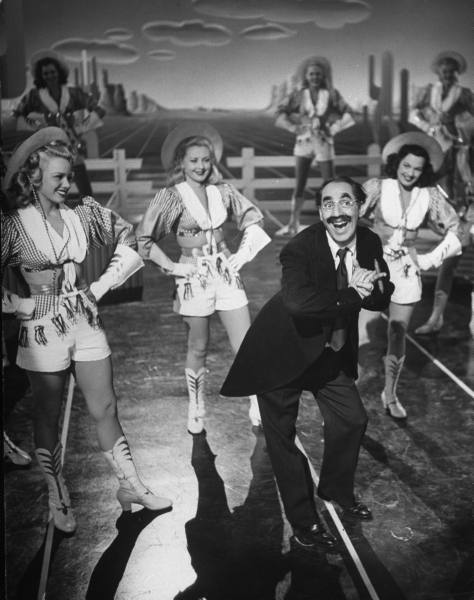
And speaking of perfect pins, I’d be remiss if I didn’t mention Gloria Jean’s final song and dance with Groucho Marx and Carmen Miranda, in which she wears a shorts and high heels outfit that might be the cutest thing I’ve seen in a movie from 1947 so far.

I believe this was the first film in which Groucho Marx appeared without his classic greasepaint mustache and thick glasses get-up. (His actual mustache and regular glasses aren’t wildly different, of course.) Also, his brothers, Harpo, Chico, and sometimes Zeppo, are nowhere to be seen in Copacabana, but it’s still worth seeing if you’re a Marx Brothers fan. It’s not as sublime as Duck Soup (1933) or A Night at the Opera (1935), but it’s still a funny, entertaining film, and offers the last chance to see Groucho in his classic get-up, when he performs Bert Kalmar and Harry Ruby’s song “Go West, Young Man” in a slightly surreal scene. (Click the name of the song to watch the performance.)

Most of the music in Copacabana is written by Sam Coslow. It’s uniformly good, but for my money, the best song in the picture is Carmen Miranda’s performance of “Tico Tico No Fubá,” which was written by Zequinha de Abreu and Aloysio de Oliveira.

Dishonored Lady (May 16, 1947)

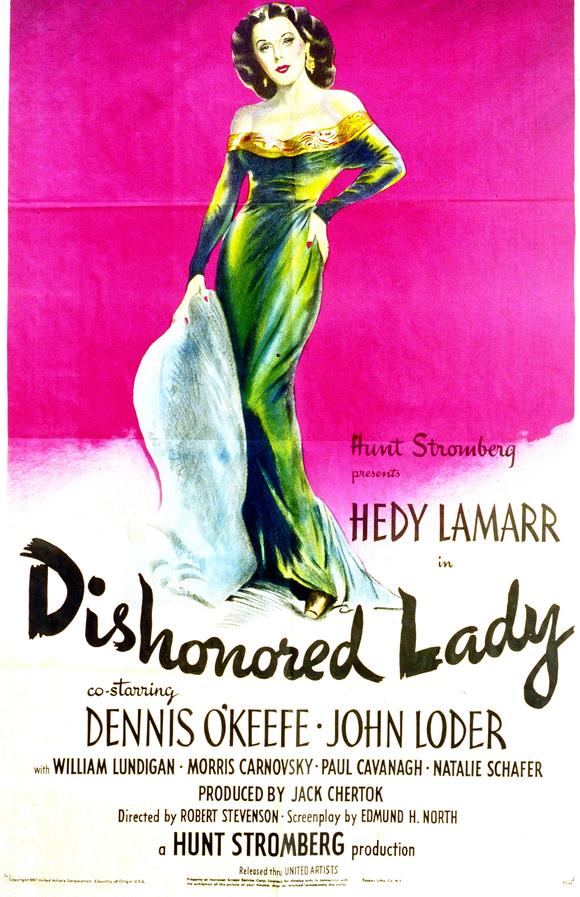
Robert Stevenson’s Dishonored Lady is a classic piece of slickly produced fluff from Hollywood’s Golden Age. It has a little something for everyone; romance, sex, courtroom drama, murder, and psychotherapy.

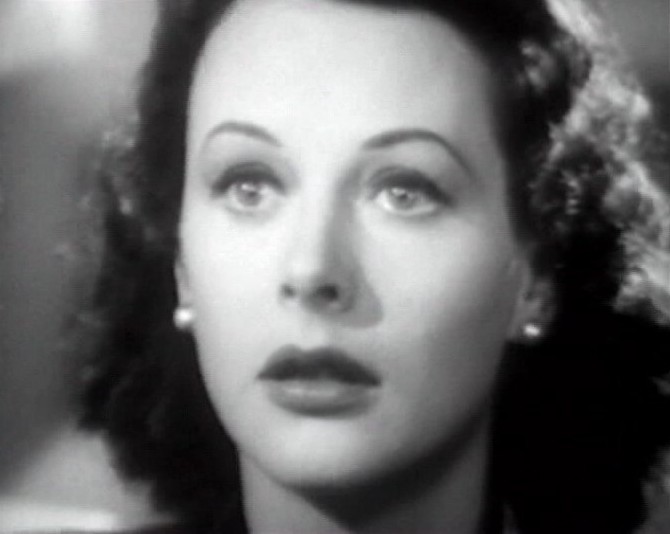
The stunningly beautiful Austrian actress Hedy Lamarr plays Madeleine Damien, the art editor of Boulevard, a chic Manhattan fashion magazine. Exhausted and unhappy with her life of constant parties, dates in nightclubs, drinking, and meaningless affaires de coeur, she attempts suicide in the most sensible fashion imaginable, by driving her car straight into a tree. Luckily for her, it’s a tree on the front yard of the home of psychiatrist Richard Caleb (Morris Carnovsky), and she’s not seriously injured. Dr. Caleb declares that she has no bones broken, but that she needs the courage to face herself, which she’s unwilling to do. Dr. Caleb drives her to the train station and says, “Miss Damien, you’re an intelligent woman, not an idiot. Can you promise me one thing? When you get ready to throw yourself off Brooklyn Bridge Bridge, will you come and see me first?” He gives her his card and she smiles a little. Maybe there’s hope for her after all.

On Monday morning, however, little seems to have changed. Madeleine arrives at work accompanied by that frenetic orchestral music that’s always used in movies from the ’40s to accompany Manhattan street scenes. She appears to be the only woman on the editorial staff of Boulevard, but she’s no shrinking violet. She refuses to be intimidated after she kills the art layout of one of their most prominent advertiser’s spreads, calling it not art, but “a press agent’s dream.” That night, however, she meets the prominent advertiser, Felix Courtland (John Loder), and accepts a ride home from the tall, gray-haired, mustachioed, dapper, handsome, and very wealthy gentleman. After backpedaling on her decision on the art layout, one of her bitter co-workers, Jack Garet (William Lundigan), tells her exactly what he thinks of her and the way she lives her life.

Distraught, she sees Dr. Caleb, and through good old-fashioned talk therapy, realizes how much she hates her life. She was always trying to emulate her father, a successful painter who loved and left more women than he could count. Madeleine adored her father, and thought he was the happiest man in the world. Until he killed himself, that is. Dr. Caleb convinces her to find her true self. She quits her job at Boulevard, gives up her apartment, and moves into a cheap, one-room flat under the name “Madeleine Dixon,” where she pursues her painting.

It just so happens that one of her neighbors is a big handsome lug named David Cousins (Dennis O’Keefe), a pathologist working on a report called “The Effect of Anti-Reticular Serum on Cell Tissue.” He needs some medical illustrations of blood cells done, and Madeleine is just the person. Madeleine and Dr. Cousins fall in love, but she can’t bring herself to admit to him who she really is, and all the details of her past life, even after he proposes marriage.

Her past life comes back to haunt her in the person of Felix Courtland, who finds out where Madeleine is living, and comes a-courting. With David out of town, she unwisely accepts his offer of a night on the town, and becomes embroiled in a murder investigation in which she is the prime suspect.

Will David be able to accept Madeleine after he learns the truth about her and realizes that she’s been lying to him all along? Will Madeleine be able to forgive herself? Or is she heading for a one-way trip to the gas chamber?

Dishonored Lady, which was re-released under the title Sins of Madeleine, is based on the 1930 play Dishonored Lady by Edward Sheldon and Margaret Ayer Barnes. It’s competently made entertainment elevated by Hedy Lamarr’s performance. She’s beautiful to look at, and she strikes a nice balance between wide-eyed vapidity and muted sadness.

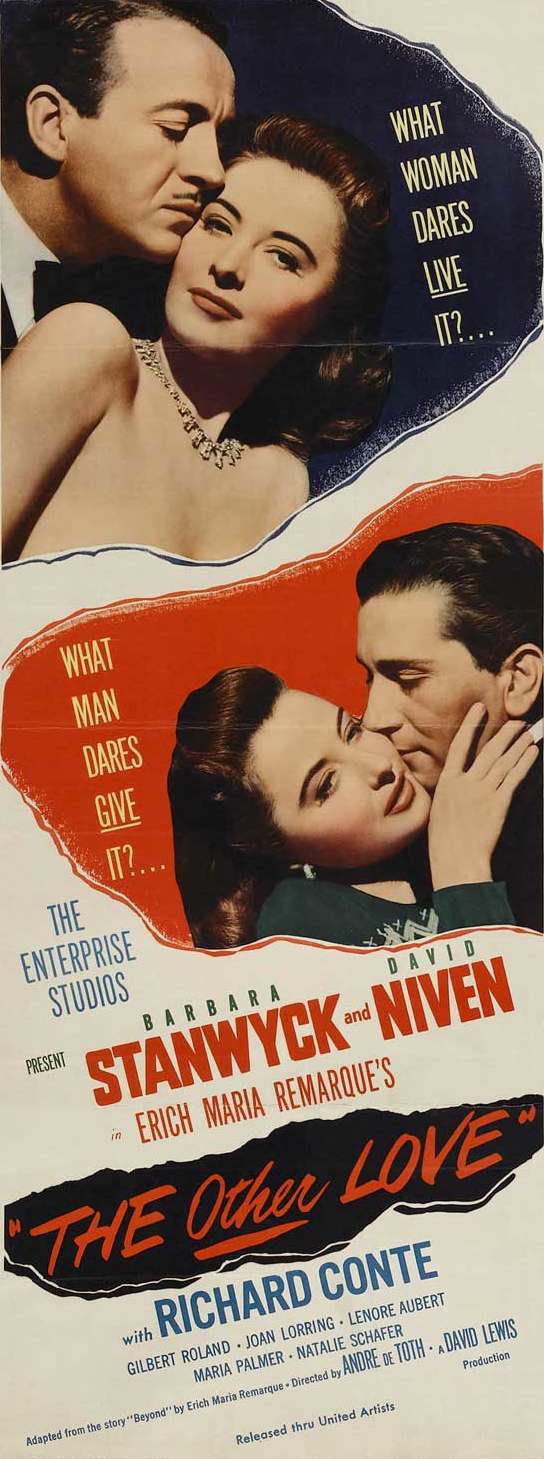
The Other Love (May 14, 1947)

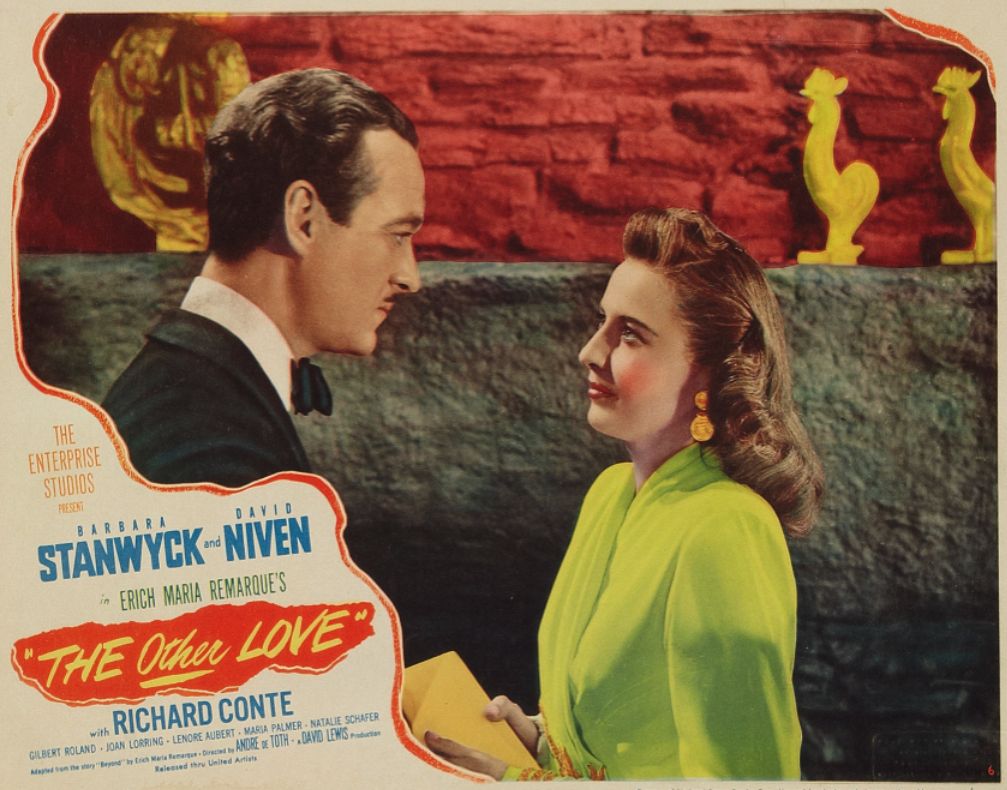
Director André de Toth is mostly associated with hairy-chested genres like westerns and war movies. The Other Love, which is based on a short story by All Quiet on the Western Front author Erich Maria Remarque, is a rare example of de Toth making a “women’s picture,” and it’s not a bad one. It’s also not a great one, so if you’re expecting Dark Victory (1939) or Now, Voyager (1942), don’t bother. But if you’re a fan of well-acted weepers, The Other Love is worth seeking out.

Karen Duncan (Barbara Stanwyck) is a world-renowned concert pianist who is gravely ill. She arrives at Mount Vierge, a sanitarium in the Swiss Alps, unaware of the seriousness of her condition. On her first night in the sanitarium her physician, Dr. Anthony Stanton (David Niven), insists she have dinner with him. He tells the nurse to have the kitchen prepare the “Grade A stimulation diet” and have it sent to Room 17.

Someone sends Karen a white orchid corsage before her “date” with Dr. Stanton, but it wasn’t he. It turns out there is a standing order to have white orchids delivered nightly to Room 17. The order came from a man who died months earlier, and was for a woman who died the day before Karen arrived, but Dr. Stanton insists this is just a rumor, and that they were both cured and moved away. Karen doesn’t believe him.

The second day, Karen has to quit smoking. The patients in Mount Vierge all seem to be on rest cures, which means convalescing outdoors on chaise longues while wrapped snugly in blankets. Karen befriends another patient, Celestine Miller (Joan Lorring), who claims she’s only there to make her philandering husband jealous, but is in fact quite ill, even though she doesn’t know it.

Karen bristles under Dr. Stanton’s inflexibility. When he stops her from playing the piano after she gets too worked up while performing a piece, she shouts, “Is everything forbidden here?” Yes, he tells her. Everything except hope. But a month of bed rest? Being treated like a child? Yes, he tells her. Until she’s well.

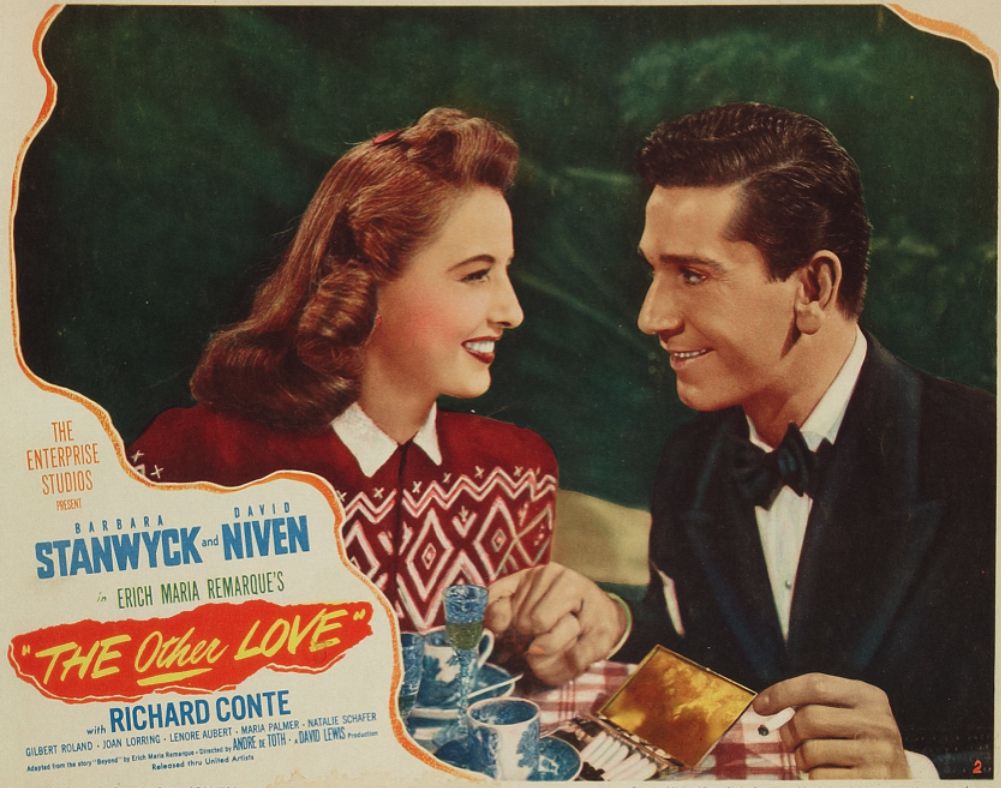
Despite being forbidden from practicing her art, smoking cigarettes, and drinking alcohol, Karen is apparently allowed to drive a horse and carriage all by herself on twisting mountain roads, which is how she meets the handsome and exciting auto racer Paul Clermont (Richard Conte). When he and his buddy Pete (Jimmy Horne) come tearing around a corner in their roadster, Karen’s horse rears up, and Paul comes to her aid after deliberately driving his car into a tree to avoid her.

Paul is in the Alps for an upcoming road race, and he and Karen are instantly attracted to each other, but Dr. Stanton refuses to let her go into the village again after learning of her affaire de cœur with Paul. Why must he take every bit of joy from her? “Too much excitement for one day,” the doctor says, simply.

Dr. Stanton tells her that she must never get overexcited. That she must be an automaton. “You haven’t got a free will anymore,” he tells her. She wants to live! He loves her! She doesn’t believe him! “Believe what you want,” he says. “But you’ve got to get well for your music! The world deserves your music!”

Karen runs away to the village for brandy and a cigarette with Paul. She gets into his car with him and reveals that she is Karen Duncan. Yes, THE Karen Duncan. “If Chopin could see me now,” he quips, and they go away to the Hotel Monaco together.

For most of the film the nature of Karen’s illness is as mysterious to the audience as it is to her. Once out of the crisp, dry air of the mountains, however, it quickly becomes clear that she’s consumptive, and she breaks down in coughing fits in the heavy air and rain of the low altitudes where Paul and she relax and play as only two well-dressed Hollywood actors in a mid-century film can play.

One way to see Karen’s disease in The Other Love is as part of a symbolic representation of the two men in her life. To follow Dr. Stanton’s dictates means a life of convalescence, but also one of security and contentment. To run around the world with Paul means a life of excitement and glamor, but also one of early death and frequent danger (represented quite literally by an amorous croupier, played by Gilbert “Cisco Kid” Roland, who tries to rape Karen in a doorway when she’s drunk and ill).

On the other hand, Dr. Stanton’s treatment of Karen hearkens back so strongly to the medical profession’s patronizing and deceitful treatment of women in less enlightened times that their “romance” is often more creepy than it is romantic. His refusal to reveal to her the seriousness of her illness — a subject he discusses freely with Karen’s mentor, Professor Linnaker (Richard Hale) — seems more like condescension than compassion.

The Other Love may be a “women’s picture,” but it’s certainly not a feminist one. (The Yellow Wallpaper this story is not.) But it’s a well-acted, well-directed, and beautifully staged film, so I wouldn’t hesitate to recommend it to fans of any of the principal actors, or fans of André de Toth who want to see what he could do behind the camera without Joel McCrea blowing someone away with a shotgun in front of it.

The Private Affairs of Bel Ami (April 25, 1947)

The Private Affairs of Bel Ami
The Private Affairs of Bel Ami (1947)
Directed by Albert Lewin
United Artists

I love George Sanders. I don’t know what it is. I could give you a laundry list of attributes — his effortless charm, his ironic detachment, his pitch-perfect performances as cads and bounders — but that would only scratch the surface.

I like him so much that I found it impossible to root against him as the villain opposite Tyrone Power in John Cromwell’s minor swashbuckling classic Son of Fury: The Story of Benjamin Blake (1942) and I even enjoyed his role in Douglas Sirk’s lightweight A Scandal in Paris (1946).

His insouciance and Herculean detachment from the concerns of everyday life weren’t just an onscreen pose. In the suicide note he left in 1972 before taking his own life at the age of 65, Sanders wrote, “Dear World, I am leaving because I am bored. I feel I have lived long enough. I am leaving you with your worries in this sweet cesspool — good luck. Love, George.”

In life as in art, there is always the sense with Sanders that you are only seeing the tip of the iceberg. Certainly boredom was not the real reason Sanders took his own life. His brother, actor Tom Conway, had died of cirrhosis of the liver — a complication of his alcoholism — five years earlier. Sanders had four failed marriages under his belt, was himself a heavy drinker, and suffered from extremely poor health in his later years, as well as related bouts of depression. But who really knows? No one really kills themselves because they’re bored, but with Sanders, that’s all we’re left with.

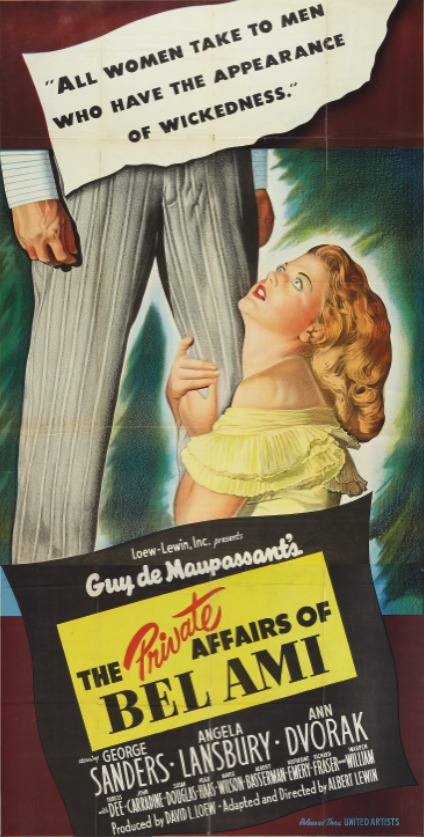
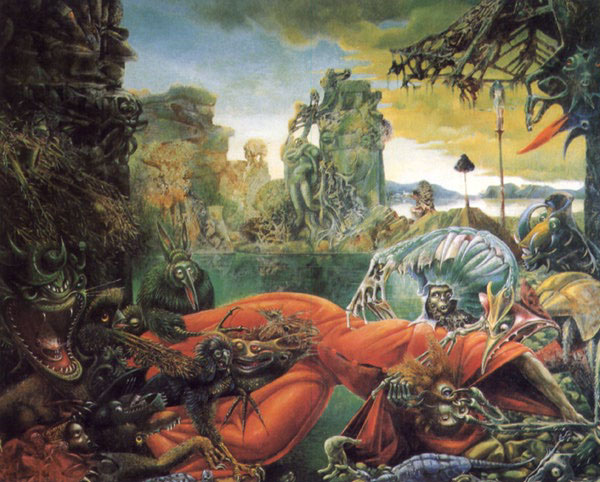
Albert Lewin’s The Private Affairs of Bel Ami is based on Guy de Maupassant’s 1885 novel Bel Ami. Dubbed “the history of a scoundrel,” the film has a lot in common with Lewin’s 1945 film The Picture of Dorian Gray, which also featured Sanders and Angela Lansbury in starring roles. Both films are black and white adaptations of 19th-century novels that feature a single oil painting shown in stunning Technicolor. In the case of The Picture of Dorian Gray, it’s Dorian Gray’s famous portrait, hidden away in an attic, revealing his corruption. In The Private Affairs of Bel Ami it’s the totally crazy and anachronistic “The Temptation of Saint Anthony,” by surrealist painter Max Ernst.

Max Ernst

Ernst’s painting isn’t the only anachronistic thing about Lewin’s film. While the film ostensibly takes place in Paris in 1880, there are no attempts at verisimilitude. Frank Paul Sylos’s art direction in The Private Affairs of Bel Ami is careful and loving, but it looks more like a picture postcard than real life.

Sanders’s character, Georges Duroy, is a bored habitué of Parisian café society who seduces women and uses them for social and professional gain, then discards them as soon as a lovely new opportunity sashays across his path. The women who love him call him “Bel Ami.” The name is ironic, since Duroy is a friend only to himself. When the film begins, he is already ignoring a hurt-looking former conquest while he seduces the pale beauty Clotilde de Marelle (Angela Lansbury). He’ll soon throw Clotilde over for his business partner’s wife, Madeleine Forestier (Ann Dvorak), to whom he proposes marriage in a businesslike fashion literally as her consumptive husband, Charles Forestier (John Carradine), is drawing his last breath.

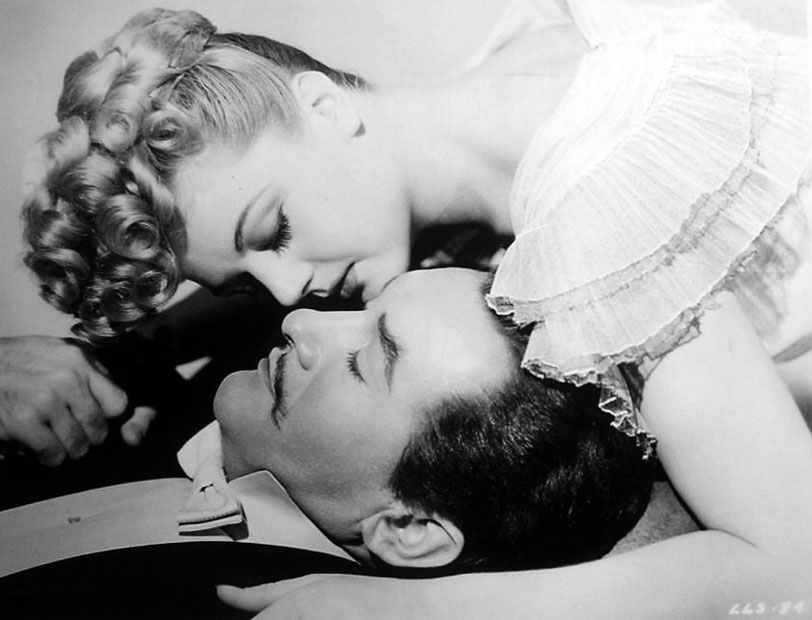
Angela Lansbury and George Sanders

Clotilde remains a presence in the film throughout. (Perhaps in an attempt to make Duroy more sympathetic, he dies with her name on his lips.)

She loves him madly, and while Duroy’s treatment of Clotilde is never less than ungentlemanly, the film never gets as sexually brutal as the poster above promises with its implication of desperate, “please-don’t-leave-me” fellatio.

With the help of his wife Madeleine, who does most of the actual writing, Duroy becomes a Victorian-era Walter Winchell with a gossip column called “Echoes.” With it, he influences politics and high society, and becomes a high-level player, but he always wants more. He attempts to buy a title from a family named “De Cantel” whose last descendant is missing, presumed dead. With the promise of his incipient nobility, Duroy courts the young heiress Suzanne Walter (Susan Douglas).

In his role as Duroy, Sanders is always doing things that telegraph his utter boredom with the here-and-now, such as playing with a ball and cup or flipping playing cards into a hat on the floor. He has a voracious appetite for fame, wealth, and women, but he almost never seems to be enjoying himself.

It’s a role tailor-made for the deadpan Sanders. In one of the last scenes of the film, in which he is preparing to fight a duel in the rain with an overheated young opponent, he casually asks for an umbrella and says, “I should not like to quit the field of honor with a bad case of the sniffles.”

New Orleans (April 18, 1947)

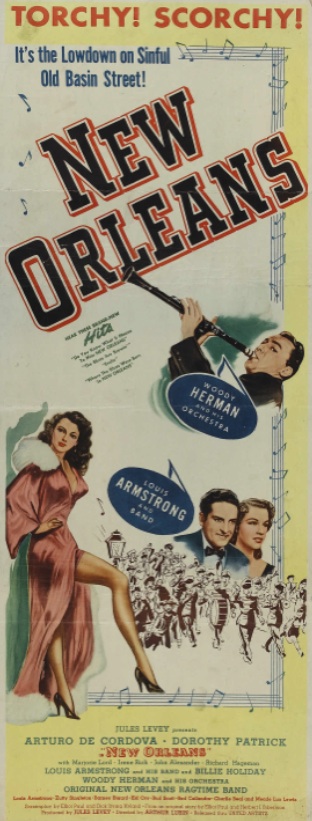
Arthur Lubin’s New Orleans takes place in 1917, the year that Storyville, the notorious red-light district of New Orleans, was shut down.

Like Edgar G. Ulmer’s Carnegie Hall (1947), New Orleans features some of the greatest musicians and performers of the ’40s shoehorned into a flat, uninteresting story.

I had high hopes for New Orleans. In the first scene, we see Nick Duquesne (pronounced “doo-cane”), who’s played by Arturo de Córdova, operate his casino and nightclub with smooth, effortless charm. Duquesne is known as the “King of Basin Street,” and de Córdova plays him well, so I was hoping to see an involving story about vice, graft, and crime.

Alas, the story quickly devolves into a maudlin melodrama about a young blond singer named Miralee Smith (Dorothy Patrick) who falls in love with both Duquesne and the Dixieland jazz she hears played by Louis Armstrong and his ragtime band. Of course, Miralee’s mother, the wealthy Mrs. Rutledge Smith (Irene Rich) doesn’t approve, and wants her daughter to sing opera.

The screenplay and acting in New Orleans are better than they are in Carnegie Hall, but the only reason most people will want to see this movie is for the music. The good news is that there’s plenty of it, especially if you’re a fan of Louis Armstrong and Billie Holiday.

Holiday plays a maid named Endie, and she doesn’t look happy in the outfit, or in the scene in which she’s dressed down by Mrs. Smith for playing the piano and singing while on the job. The strange thing is that her role as a maid is tangential to her role in the rest of the film, and she only appears in a maid’s uniform in her first scene, in which she introduces Miralee to jazz. After that, Holiday loosens up a bit, and her scenes onstage with Louis Armstrong and his band are all fantastic. Together they perform Louis Alter’s “Do You Know What It Means to Miss New Orleans,” “The Blues Are Brewin’,” and “Endie,” as well as Spencer Williams’s “Farewell to Storyville.”

Holiday and Satchmo aren’t the only great performers in the film. Woody Herman, Charlie Beal, Barney Bigard, George “Red” Callender, Meade “Lux” Lewis, Kid Ory, Bud Scott, Lucky Thompson, and Zutty Singleton all play themselves.

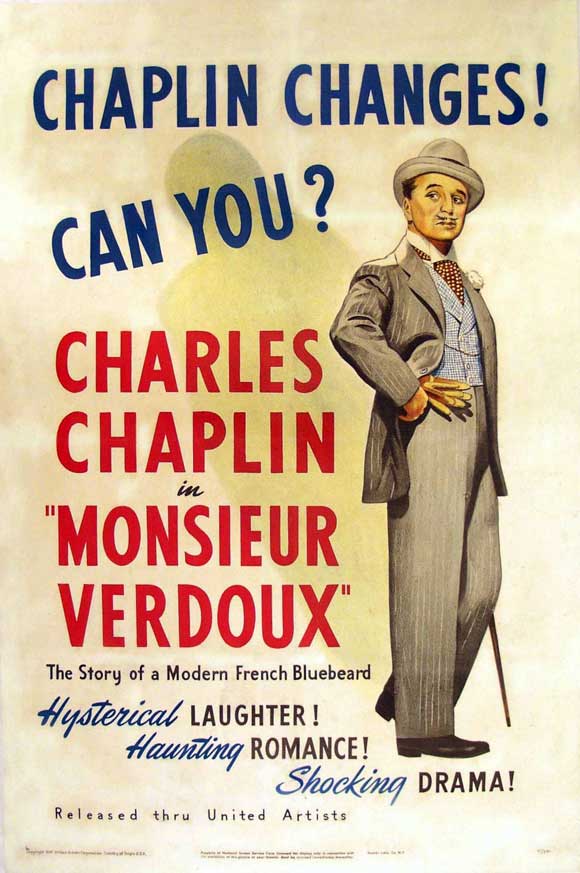
Monsieur Verdoux (April 11, 1947)

Monsieur Verdoux
Monsieur Verdoux (1947)
Directed by Charles Chaplin
United Artists

Monsieur Verdoux, “a comedy of murders,” is a product of Charles Chaplin’s Frantic One-Man Band. Besides starring in the film, Chaplin is credited with directing the picture, writing the screenplay, producing the film, and writing the music. Orson Welles wrote the original script and was slated to direct Chaplin in the picture, but at the last minute, Chaplin decided that he didn’t want to be directed by someone else — he’d always been his own director in the past — and bought the script from Welles, crediting him with the “idea” for the film.

The film is based on the career of real-life murderer Henri Désiré Landru, who between 1914 and 1918 seduced a number of women and murdered them after gaining access to their assets. He burned their dismembered bodies in his oven, disposing of them completely, which made prosecuting him a challenge after he was caught. A trail of paperwork and other evidence was enough to eventually convict him of 11 counts of murder (10 women and one of their teenaged sons), and he was executed on the guillotine in 1922.

In Monsieur Verdoux, Chaplin plays a man named Henri Verdoux, who describes himself as an “honest bank clerk.” Honest, that is, until the Depression of 1930, at which point he began his new career, “liquidating members of the opposite sex.” He claims that he began his career as a Bluebeard strictly as a business proposition. This is utter claptrap, as is nearly every other word out of M. Verdoux’s mouth that isn’t plot-advancing dialogue, but we’ll get to that later.

The film takes place in 1932. M. Verdoux had a 30-year career in banking before he began his new career as a murderer, and with his dainty, foppish clothes he looks like a relic of another time. When the film begins, he is living in a villa in the south of France. He’s a tidy little man who loves to garden, but whose incinerator has been going full-blast for the past three days. He’s kind to animals, moving a caterpillar out of his way in the garden path and feeding a cat on the street. M. Verdoux is even a vegetarian.

He is also a lothario with an insatiable appetite for well-heeled widows. But this, M. Verdoux assures us, is just his day job. His heart belongs to his wheelchair-bound wife Mona (Mady Correll) and adorable little boy Peter (Allison Roddan). At home, M. Verdoux lectures Peter when he catches him pulling the cat’s tail that “violence begets violence.” He also tells his son that he has a mean streak. “I don’t know where you get it!” he exclaims.

Aside from the saintly Mme. Verdoux, nearly everyone in the film is a grotesque and obnoxious caricature. In this way, Monsieur Verdoux is a distillation of Chaplin’s career-long vacillation between sentimentality and cruelty. A perfect example of this is the scene in which M. Verdoux brings a girl in off the street to poison her, but thinks better of it after she speaks of how wonderful life can be, and how she loved her husband, crippled in the war. (The girl is played by 20-year-old ingenue Marilyn Nash.)

The few bits of physical comedy in the film are funny, but they’re mostly either too brief or out of character with the rest of the scene in which they take place. Several comedic scenes — such as when M. Verdoux and another man start slapping each other with rapid-fire speed, or when M. Verdoux is romancing the older woman who was going to buy his villa in the beginning of the film, and he’s moving ever closer to her on the couch — fade to black in a quick, unsatisfying way.

When Monsieur Verdoux was released, Chaplin’s reputation was severely tarnished. He hadn’t made a film since The Great Dictator (1940), and he was under attack for both his Leftist political sympathies and his morals (he was the subject of a sensational paternity suit, and was a serial seducer of young women, many of them underage).

Chaplin and Nash

Monsieur Verdoux can be seen as a defiant stand against his critics. It’s the blackest of black comedies, and was a box office disaster in the United States when it was first released (it fared a bit better in Europe), but has built up quite a cult since it was re-released to receptive audiences in the ’60s and ’70s. At the time of its release, however, it polarized critics. James Agee crowned it a masterpiece, and the National Board of Review named it the best English-language film of 1947. Others were less enthusiastic.

I think that Monsieur Verdoux is a deeply flawed film. Chaplin was the preeminent clown of the silent era. He wasn’t quite the master technician of hijinks that Buster Keaton was, but he was able to convey a panoply of emotions through his face and body. His films are not only some of the funniest of the silent era, but are emotionally affecting, too. The ending of City Lights (1931) is still one of the most powerful I have seen in any film.

When he was able to speak onscreen, however, Chaplin was a tedious hack who only thought he was profound. Monsieur Verdoux isn’t as crushingly pretentious and boring as his later film Limelight (1952), but it has its moments.

The end of Monsieur Verdoux is especially problematic. Speaking on his own behalf in court, M. Verdoux says, “I was forced to go into business for myself. As for being a mass killer, does not the world encourage it? Is it not building weapons of destruction for the sole purpose of mass killing? Has it not blown unsuspecting women and little children to pieces? And done it very scientifically? As a mass killer, I am an amateur by comparison. However, I do not wish to lose my temper, because very shortly, I shall lose my head. Nevertheless, upon leaving this spark of earthly existence, I have this to say: I shall see you all… very soon… very soon.”

The problem with this is that the murders of dowdy and grotesque women that we’ve seen M. Verdoux carry out in the film are very different from the mass mechanized killing of the Great War or the genocidal horrors of World War II. They’re intimate crimes, carried out for personal gain, and occasionally hilarious, such as the sequence in which M. Verdoux is repeatedly foiled while attempting to drop a noose around one of his wives’ necks while they are out fishing. It would be one thing if Chaplin were presenting M. Verdoux’s crimes as symptoms of a sick society, but what he seems to be doing is using a sick society as a justification for M. Verdoux’s crimes.

Is M. Verdoux meant to be an unreliable narrator? Perhaps, but he never comes across that way. I think that Chaplin was simply too infatuated with himself to present M. Verdoux as anything but a lovable cad, which makes the entire film uncomfortable and off-putting in ways I’m not sure Chaplin ever intended.

The Red House (March 16, 1947)

The Red House

The Red House (1947)
Directed by Delmer Daves
Sol Lesser Productions / United Artists

Is there really a red house in Delmer Daves’s The Red House? The movie is filmed in black and white, so I can’t tell you.

I’m not being cheeky, I’m making a point. The “red house” in The Red House is a haunting presence, unseen for most of the film. And when it is finally shown, it’s an eerie sight. It’s a structure in disrepair, covered in lichen, standing close to another abandoned house, both on the banks of a stream deep in the woods.

If The Red House had been filmed in color, this uncanny effect would have been destroyed. As it is, the red house — while shown — still stands more strongly as a disturbing manifestation of all the creepy goings-on in the film than as an actual thing.

The setting of the film is indeterminate. It’s a region called Piny Ridge, where, the narrator informs us, “modern highways have penetrated the darkness.” The darkness remains in an area farther south called Oxhead Woods, where “obsolete trails wander vaguely,” but “only one leads to the Morgan Farm.”

The narrator goes on to tell us that “Pete Morgan’s farm has the allure of a walled castle that everybody knows about, but that few have entered.” This all sounds a bit like a fairy tale, which I think is deliberate.

Pete Morgan (Edward G. Robinson) is a mercurial farmer who lives a lonely life with his sister, Ellen Morgan (Judith Anderson), and their adopted daughter, a pretty, demure 17-year-old named Meg (Allene Roberts). Fifteen years earlier, Meg’s parents both died in mysterious circumstances, and Pete and Ellen have raised her ever since.

Pete has a wooden leg, which makes farm work difficult, so he agrees to hire one of Meg’s high school classmates, Nath Storm (Lon McCallister), to help him out. Pete offers to pay Nath 35 cents an hour for his help after school, but Nath talks him up to four bits.

Pete seems reluctant to hire Nath, and is only convinced to do so by his sister and adopted daughter. It’s clear from the outset why this is. He has an unnatural interest in Meg, and wants to keep her all to himself.

After his first day helping out Pete, Nath plans to take a shortcut home through Oxhead Woods, but Pete tries to convince him to take the long way around. When Nath refuses to heed his warnings, Pete resorts to scare tactics. “You won’t save yourself from the screams in the night that’ll lodge in your bones all your life!” Pete tells him.

Nath asks, “Screams from what?”

Pete responds, “From the red house!!!”

Nath tries, but he can’t do it. The power of suggestion in the dark, terrifying woods amidst the howling winds proves too much for him, and he runs back to the Morgan farm and sleeps in the barn. Were they real screams? Or was it just the wind?

Meg and Nath are attracted to each other, but he has a girlfriend named Tibby, who’s played by the 20-year-old singer and actress Julie London. London is quite possibly the sultriest high school student I’ve ever seen in a film from the ’40s.

Tibby’s not very loyal to Nath, and throws herself at the strapping young woodsman named Teller (Rory Calhoun) who patrols Pete Morgan’s woods with a rifle. Teller never got past the ninth grade, but he’s as big and as handsome as Li’l Abner.

Teller is also the instrument of Pete Morgan’s twisted will, and goes even so far as attempting to commit murder when Pete Morgan asks him to.

The Red House, which is based on the 1943 novel by George Agnew Chamberlain, is sometimes classified as a film noir, but it’s not a noir. It’s a mystery wrapped up inside of a dreamy, avant-garde horror film. It’s halfway between Jean Renoir’s ode to rural American life The Southerner (1945) and Frank Wisbar’s backwoods ghost story Strangler of the Swamp (1946).

Daves’s naturalistic take on the uncanny tale, coupled with a lush score by Miklós Rózsa that alternates between being wildly dramatic and quietly eerie, elevates the pedestrian script and easy-to-figure-out mystery. The Red House could have easily been a forgettable B movie, but it’s a memorable little chiller with heavy doses of perverse sexuality running beneath the surface. With a few changes in costuming and dialogue, it could just as easily have taken place 300 years earlier, which is part of its power and its appeal.

https://www.youtube.com/watch?v=XzS-Vj6XsHM