Tag Archives: Film Noir

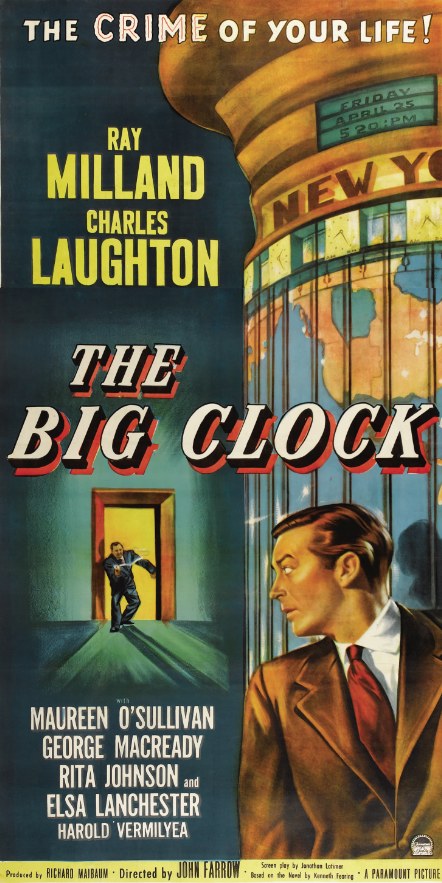
The Big Clock (April 9, 1948)

Billy Wilder’s The Lost Weekend (1945) wasn’t the only film in which Ray Milland got into trouble because of booze.

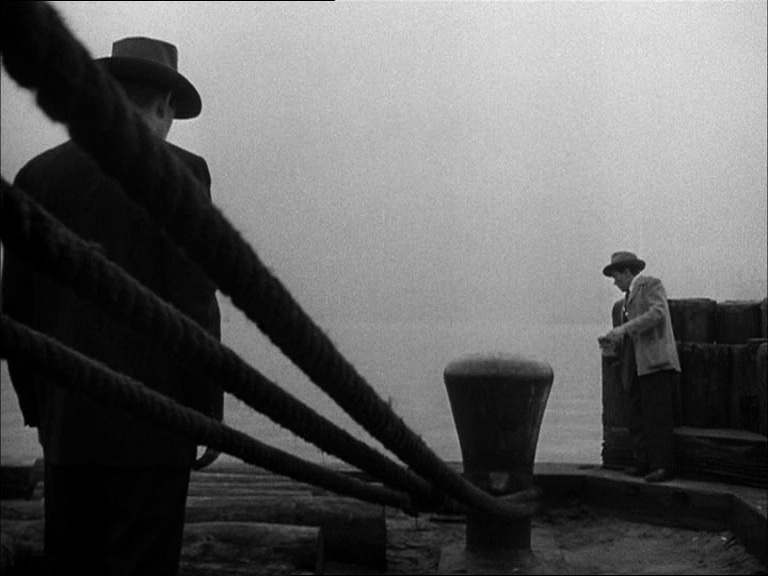
In John Farrow’s The Big Clock, based on the best-selling novel by Kenneth Fearing, George Stroud (Milland) misses the 7:25 train home because he’s knocking back stingers with Pauline York (Rita Johnson), a former model for Styleways magazine, one of the many imprints of Janoth Enterprises. In the film, Janoth is a Manhattan publishing juggernaut that also owns magazines with names like Artways, Airways, Sportways, Futureways, and Crimeways.

Stroud is the executive editor of Crimeways, and not long after the film begins he offers Earl Janoth (Charles Laughton) his resignation. He’s been promising his wife Georgette (Maureen O’Sullivan) a honeymoon since they were married, and now that they’ve been married long enough to have a five-year-old son, her patience has reached its breaking point.

Of course, Stroud strains her patience even further by missing that 7:25 train home, and Georgette leaves for their belated honeymoon alone while he goes out to nightclubs and passes out dead drunk in Pauline’s apartment, fully clothed on the couch. Oh, and did I mention that Pauline is the girlfriend of Stroud’s temperamental boss, Earl Janoth?

In Fearing’s 1946 novel, it’s made explicit that George Stroud has sex with Pauline (whose last name in the book is Delos, not York). He’s a regular cad and even has an overnight bag ready for any illicit sleepovers that might come his way.
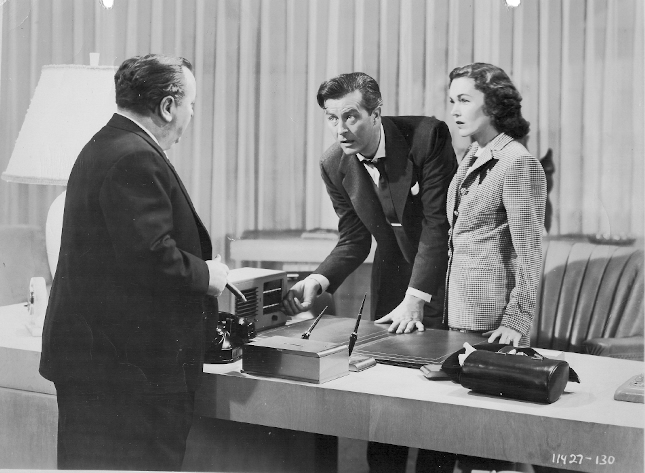
With The Big Clock, Farrow crafted a remarkably faithful version of Fearing’s best seller. Stroud’s extramarital affair couldn’t be shown in a Hollywood film, obviously, and all mentions of homosexuality had to be expunged from the script, but in adapting the book Farrow and screenwriter Jonathan Latimer seemed to adopt an “if it ain’t broke don’t fix it” approach.

There are some minor changes that neither add nor detract from the story, like how the Strouds of the film have a five-year-old son while the Strouds of the novel have a five-year-old daughter, but there’s one big change that works extremely well. In the novel, “the big clock” was merely George Stroud’s personal metaphor for the rat race — the vast machinery of life and society that never stops ticking forward — but the big clock has been made literal for the film. It’s an enormous contraption that dominates the lobby of the building that houses Janoth Enterprises, and — no surprises here — the climax of the film involves a good amount of crawling around in its works.
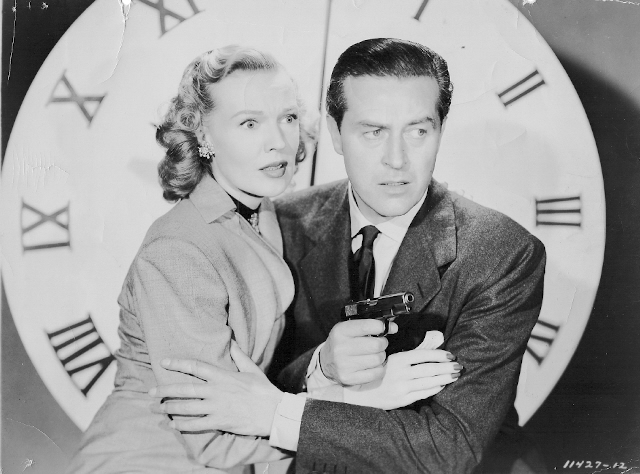
The central conceit of The Big Clock is too good to screw up. Stroud leaves Pauline’s apartment moments before Janoth steps out of the elevator and sees a shadowy figure leaving down the stairs. Janoth and Pauline have words, he flies into a rage, and murders her. Janoth’s co-publisher Steve Hagen (George Macready) convinces Janoth that they need to find the mysterious witness and eliminate him.

Since Crimeways has an investigative team, Janoth and Hagen put Stroud in charge of the search for the mysterious witness. Stroud knows Janoth killed Pauline, but he can’t speak up or his marriage will be ruined. He also can’t mess up the search for himself too badly without raising any red flags. All he can do is try to stay one step ahead of things.

The Big Clock is full of nail-biting suspense — especially the last reel — and features fine performances all around. I can’t picture anyone but Charles Laughton as Janoth, a grotesque, vain, sensitive, mercurial publishing genius with one of the silliest little mustaches you will ever see on film, and Milland is perfect as a very intelligent man who knows just exactly how badly he’s trapped but who never stops trying to figure out his escape route. I also especially liked Harry Morgan as Janoth’s personal masseur and probable hit man Bill Womack, a creepy guy who wears dark clothes, has a perpetual scowl, and never speaks.

And in case you were wondering, the director, John Farrow, is indeed Mia Farrow’s father. He and Maureen O’Sullivan were married on September 12, 1936, and had seven children together; Michael, Patrick, John Charles, Mia, Tisa, Prudence, and Stephanie.
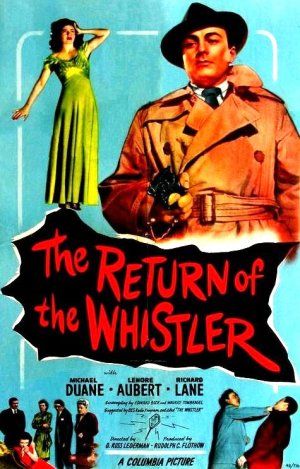
The Return of the Whistler (March 18, 1948)

The Return of the Whistler
The Return of the Whistler (1948)
Directed by D. Ross Lederman
Columbia Pictures

The Return of the Whistler was the final entry in the Columbia Pictures series based on the CBS radio show. It’s the only Whistler film that doesn’t star Richard Dix, who was in poor health when it was made (he died on September 20, 1949, at the age of 56).

Not only were the Whistler films excellent B-movie programmers, they were remarkably faithful to their source material. Just like the radio show, The Return of the Whistler begins with the eerie whistled theme music. The camera tracks the shadow of a walking man as he narrates in voiceover: I am the Whistler, and I know many things, for I walk by night. I know many strange tales hidden in the hearts of men and women who have stepped into the shadows. Yes, I know the nameless terrors of which they dare not speak.

Michael Duane and Lenore Aubert star as Ted Nichols and his fiancée Alice, who — when the film begins — are driving through a dark and story night to be married by a justice of the peace. Alice is a Frenchwoman, and Ted has only known her for two weeks. He found her under mysterious circumstances, limping through the woods near his summer cabin, running away from someone or something. There’s a lot about her past that he doesn’t know, but he does know one thing — he loves her more than anything in the world.

Naturally, things don’t go according to plan. First their car breaks down, then they discover that the justice of the peace is out of town, trapped by bad weather. Ted and Alice can’t stay in a hotel room together for the night because they aren’t legally married yet, so Ted leaves Alice at the hotel alone and walks to a nearby garage to have his car fixed. The shadow of the Whistler follows him.

This isn’t just the way you’d planned your honeymoon is it, Ted? But don’t be too unhappy, it’s only a few more hours before you and Alice will be united forever.

Like most things the Whistler says, those words drip with sardonic irony, because when Ted returns to the hotel the next morning Alice is gone, and the cranky night clerk (played by Olin Howland) claims not to know anything.

The Return of the Whistler is a fine capper to the series. The pacing is excellent and the actors all turn in solid performances. The mystery of what happened to Alice isn’t attenuated unnecessarily, and the movie is more suspenseful because of it, getting us involved in her predicament and Ted’s desperate fight to find out what’s going on before it’s too late.

The Return of the Whistler was directed by D. Ross Lederman, produced by Rudolph C. Flothow, and written by Edward Bock and Maurice Tombragel, based on a story by Cornell Woolrich. There are currently a few uploads of The Return of the Whistler on YouTube. You can watch one of them below:

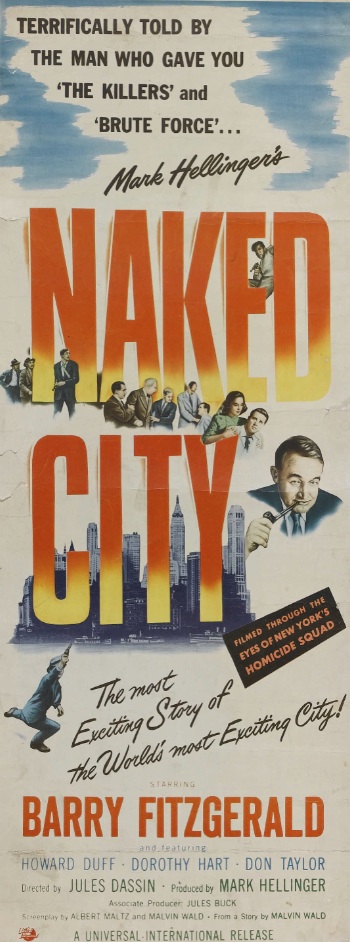
The Naked City (March 4, 1948)

The Naked City
The Naked City (1948)
Directed by Jules Dassin
Universal Pictures

The Naked City was — sadly — the second and final collaboration between producer Mark Hellinger and director Jules Dassin. Their first collaboration was the hard-hitting prison drama Brute Force (1947), and we can only imagine what their third collaboration might have been had Hellinger not died on December 21, 1947, at the age of 44.

Hellinger was a hard-living, hard-drinking newspaper columnist. At the height of his popularity, he reportedly had 18 million readers. Like his friend Walter Winchell, Hellinger had an instinctive knack for writing what people wanted to read, and his insight into the criminal demimonde was unparalleled.

Unparalleled except, perhaps, for his love of New York City and all its inhabitants, from Lower East Side deliverymen to Park Avenue titans of industry. In his review of The Naked City in the March 5, 1948, issue of the NY Times, Bosley Crowther wrote that the film was “a virtual Hellinger column on film. It is a rambling, romantic picture-story based on a composite New York episode, the detailed detection of a bath-tub murder by the local Homicide Squad. And it is also a fancifully selective observation of life in New York’s streets, police stations, apartments, tenements, playgrounds, docks, bridges and flashy resorts.”

By “fancifully selective,” of course, Crowther meant that the film was Hellinger’s vision, and Hellinger was more drawn to mugs, thugs, and crooks than he was to schoolteachers or veterinarians. On the other hand, The Naked City is a police procedural (arguably the very first of its genre), and cops spend more time rousting crooks than they do schoolmarms.

The film is so thoroughly Hellinger’s vision that he narrates the film himself. After a guided nighttime tour of the city that never sleeps, full of his trademark witticisms and wry observations, he tells the viewer that his film will attempt to show “…the buildings in their naked stone, the people without makeup.”

http://www.youtube.com/watch?v=nfH3aY-Qy6I

The opening sequence introduces us to most of the film’s major players. (Whether or not the first-time viewer will catch everything, however, is another matter.) The two mugs murdering a beautiful young woman at 52 West 83rd Street, the charming Frank Niles (Howard Duff) and his fiancée Ruth Morrison (Dorothy Hart) out at a nightclub, young NYPD detective Jimmy Halloran (Don Taylor) and his wife Jane (Anne Sargent) and their young children at home in Jackson Heights, Queens, and the crotchety old Detective Lieutenant Dan Muldoon (Barry Fitzgerald), whom we see in his undershirt and suspenders, preparing breakfast.

Most of Hellinger’s narration is engaging and fun to listen to. Some of it is even necessary, especially considering that The Naked City was released before Dragnet existed, even on the radio, and the finer points of police procedure might have been unknown to the average viewer. But there are aspects of his narration that don’t play so well. For instance, the images of the city and its inhabitants are powerful on their own. The overlay of Hellinger’s voice-over “thoughts” and “dialogue” for a variety of average New Yorkers captured on film just comes off as hokey.

The film’s biggest weakness, however, is its two leads. Some people find Barry Fitzgerald charming, but I find his whole grumpy leprechaun shtick as Det. Lt. Muldoon — essentially the same role he played as a priest in Going My Way (1944) — annoying. But at least he has a personality, unlike Don Taylor, who plays Muldoon’s young partner and protégé Det. Halloran. Taylor has a “golly gee shucks” attitude and not much else. He also doesn’t seem to know what to do with his face when he’s on camera but doesn’t have any lines.

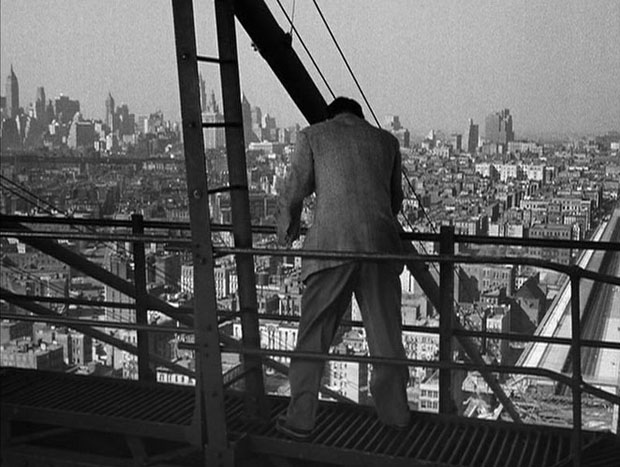
Taylor and Fitzgerald and their dialogue undercut much of the vérité quality of the film, but certainly don’t ruin anything. As a cinematic experience, I don’t think The Naked City is as satisfying as Brute Force, but it’s still a tremendously entertaining, well-made picture. When Dassin and Hellinger allow the action to speak for itself, as they do in the final, bravura chase along the Williamsburg Bridge, the film is untouchable.

The Naked City was nominated for three Academy Awards; Best Story (Malvin Wald), Best Cinematography, Black and White (William H. Daniels), and Best Film Editing (Paul Weatherwax). It won in the categories of Best Cinematography and Best Film Editing.

Sleep, My Love (Feb. 18, 1948)

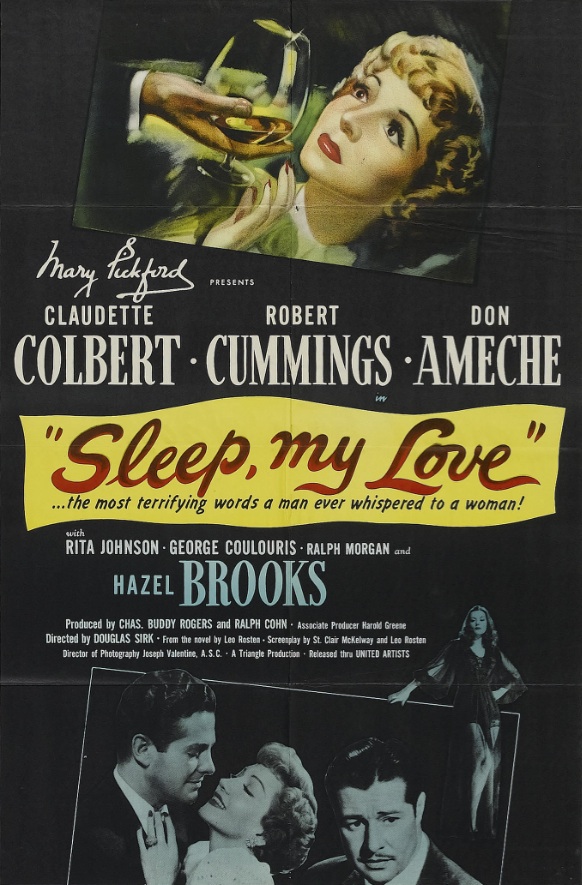
Sleep, My Love is a slick, classy thriller from the slickest, classiest director of all time, Douglas Sirk.

Granted, his greatest work was a few years ahead of him, but even when he was making run-of-the-mill potboilers like Sleep, My Love and Lured (1947), Sirk applied not only his considerable skill as a filmmaker to the material, but also his fetishistic attention to details, and his love of the sumptuous and the glamorous.

The film starts with a bang. Alison Courtland (Claudette Colbert) wakes up from a nightmare on a train, screaming. She doesn’t have any memory of how she got there. The last thing she remembers is going to sleep next to her husband in their palatial home on Sutton Place and East 57th Street.

Oh, and there’s a small pistol in her bag that she doesn’t remember having, either.

Sirk introduces all the players in his mystery early in the film — Alison’s husband, Richard Courtland (Don Ameche), her friend Barby (Rita Johnson), Barby’s brother Bruce (Robert Cummings), Detective Sgt. Strake (Raymond Burr), a mysterious man with horn-rimmed glasses named Charles Vernay (George Coulouris), and the leggy, beautiful Daphne (Hazel Brooks) — but it’s not immediately clear how they all relate to one another.

Much of the pleasure in watching Sleep, My Love comes from seeing how Sirk moves all of his chess pieces around the board. It’s clear from the outset that someone is gaslighting Alison, but who is doing it? And why are they doing it?

This isn’t the kind of mystery in which the solution comes as a complete surprise and is explained by a brilliant detective who gathers all the suspects together in a drawing room; rather, it evolves and reveals itself naturally over the course of the film. It won’t take an astute viewer long to figure out what’s going on, but Sirk isn’t trying to pull the wool over anyone’s eyes. He’s simply making a thrilling film that’s beautiful to look at, and succeeding with aplomb.

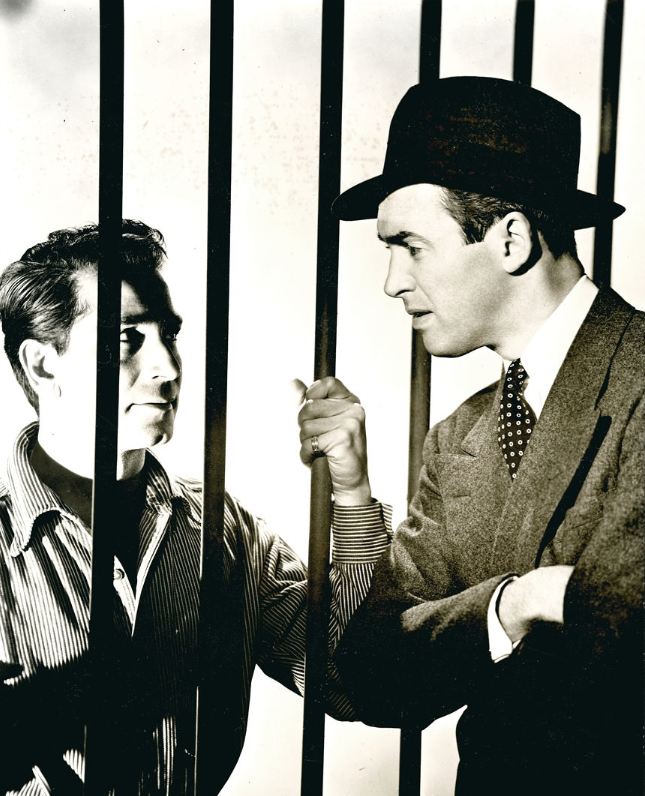
Call Northside 777 (Feb. 1, 1948)

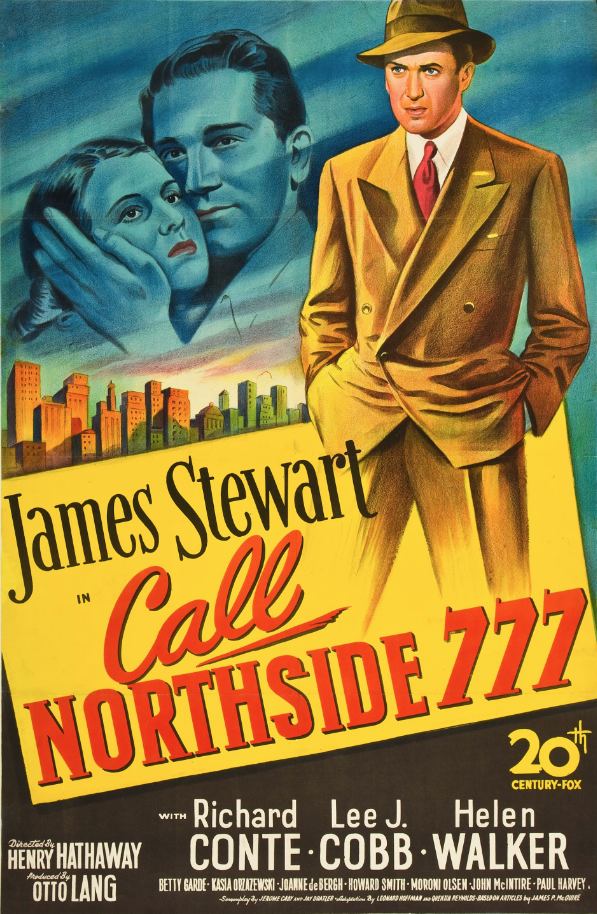
Call Northside 777 is the latest in director Henry Hathaway’s series of fact-based dramas.

Together with producer Louis de Rochemont, the creator of the March of Time series of newsreels, Hathaway made The House on 92nd Street (1945) and 13 Rue Madeleine (1947), which were both based on the wartime exploits of the OSS.

Unlike Hathaway’s previous film, Kiss of Death (1947), which was fiction, but made in a verité style and filmed on location, Call Northside 777 is more in line with Louis de Rochemont’s Boomerang (1947), which was directed by Elia Kazan.

Like Boomerang, Call Northside 777 is about a miscarriage of justice.

In 1933, Joseph Majczek and another man, Theodore Marcinkiewicz, were convicted of killing a Chicago police officer the previous year. In 1944, their convictions were overturned when a crusading reporter named James McGuire helped prove that the eyewitness who gave the testimony that sent the two men to prison had perjured herself under pressure from the police.

Majczek is renamed “Frank Wiecek,” and he’s played by Richard Conte. The crusading Chicago Times reporter is renamed “Jim McNeal” and he’s played by James Stewart.

McNeal’s editor, Brian Kelly (Lee J. Cobb), spots a notice in the classified section of the Times — “$5000 reward for killers of Officer Bundy on Dec. 9, 1932. Call Northside 777. Ask for Tillie Wiecek 12-7 p.m.” — and sends McNeal to investigate.

Tillie Wiecek (Kasia Orzazewski) is the convicted man’s mother. She earned the $5,000 by scrubbing floors.

After McNeal interviews Mrs. Wiecek, his wife Laura (Helen Walker) says to him, “I wasn’t thinking about the boy, I was thinking about his mother. You know what it is? It catches your imagination. Nobody knows whether she’s right or not. She’s worked so hard, she’s had such faith that, well, I want her to be right.”

McNeal, on the other hand, is hard-nosed and unsentimental about the case. As he tells Wiecek when he goes to prison to interview him, “She believes you. I need proof. This thing’s gotta have sock — mass appeal. It’s the only way we’ll be able to help you.”

Eventually, though, the evidence begins to pile up, and even the cynical McNeal is convinced of Wiecek’s innocence.

Call Northside 777 was released on DVD in 2004 as part of the Fox Film Noir collection, but there’s very little thematically that marks it as “noir.” The closest the film gets stylistically to being a film noir is toward the end of the picture, when McNeal scours the Polish neighborhoods of Chicago in search of the eyewitness in the Wiecek case, Wanda Skutnik (Betty Garde). These scenes are bathed in shadows and shot through with suspense.

For the most part, though, Call Northside 777 is lit and shot in a neutral, docudrama fashion, which is a shame, since it was the first big Hollywood production filmed in Chicago. There are a few shots of the Merchandise Mart, the Loop, and Holy Trinity Polish Mission, but most of the film takes place indoors.

It’s a good film, but since it’s mostly a hidebound retelling of established facts, it’s never as thrilling or suspensful as a piece of pure fiction like Kiss of Death. It’s interesting, for instance, that Leonarde Keeler, the co-inventor of the polygraph, plays himself in the scene in which Wiecek is given a lie detector test, but it’s not really the stuff of great drama.

The best thing about the film is Jimmy Stewart’s performance. He handles his character’s progression from a cynical reporter who’s “just doing his job” to a man who’s finally found a cause worth fighting for wholly believable and thoroughly involving.

http://www.youtube.com/watch?v=7K5G-9CIUBc

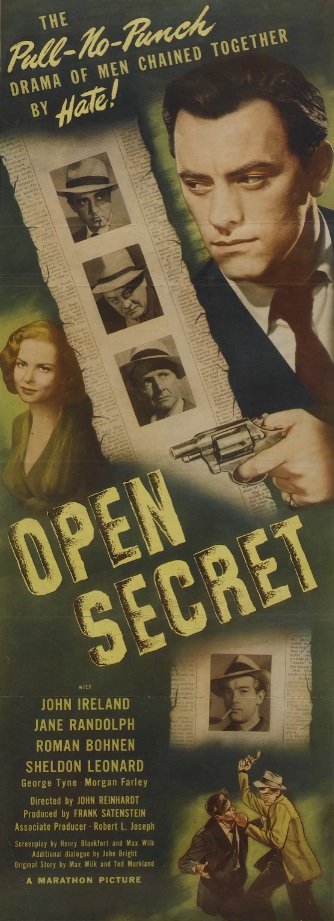
Open Secret (Jan. 31, 1948)

Open Secret
Open Secret (1948)
Directed by John Reinhardt
Marathon Pictures

The years following World War II gave us a number of films that explored anti-Semitism in America. On the top of the heap were Elia Kazan’s Gentleman’s Agreement (1947), a thoughtful, Oscar-winning drama, and Edward Dmytryk’s Crossfire (1947), a taut, Oscar-nominated thriller.

On the bottom of the bill, so to speak, were movies like the Monogram cheapie Violence (1947), which was about a cabal of American fascists who were dedicated to preserving “America for Americans,” although the film never really got into specifics about who they intended to preserve it from.

John Reinhardt’s Open Secret, on the other hand, is just as cheap as Violence (possibly even cheaper), but it’s very specific about who its anti-Semitic antagonists hate.

Open Secret grabs viewers right from the beginning with a pre-credits sequence. (A rare occurrence in movies made in the ’40s.) A man walks into the back room of a bar, where a group of men sit around a poker table, and stands in the shadows, his face hidden. The camera pans across the men’s faces until one of the men finally speaks. “He’s guilty,” he says. “Well, get going,” says the man in the shadows. The men get going, and walk by Marathon Pictures Presents painted on the side of a fence like “Kilroy Was Here.”

The following 66 minutes of Open Secret don’t always live up to to the exciting promise of the first 2, but it’s briskly paced and features a good lead performance by the always-dependable John Ireland. He’s reunited with Jane Randolph, his co-star from Railroaded (1947). They play a newlywed couple, Paul and Nancy Lester, who are the polar opposites of the boozy thugs they played in Railroaded.

Faced with a hotel shortage on their honeymoon, Paul and Nancy stay with Paul’s old friend Ed Stevens (Charles Waldron Jr.), and are shocked when they find pamphlets in his apartment with titles like “The White Knight” and “Were the Nuremberg Trials Fair?”

“Somebody probably stuffed them in his mailbox. Must be. Ed isn’t like that,” Paul says to his wife.

Open Secret has all the hallmarks of a B picture. Like similar offerings from Monogram Pictures and P.R.C., the sets look like they’d fall over if one of the actors sneezed, the music is obtrusive, and the supporting players’ acting is more wooden than a Louisville Slugger. But on the plus side it has an interesting premise, a decent script, and the “star” players are all convincing. I always enjoy seeing Sheldon Leonard (he plays a detective in Open Secret), and George Tyne, who plays Harry Strauss, the proprietor of a camera shop, is also good.

Strauss is targeted by his prejudiced neighbors, not only because he’s Jewish, but because he’s in possession of some damning photographic evidence.

Open Secret is also interesting because it’s the earliest film I’ve seen in which a television is present. There’s a scene in Strauss’s shop that shows him and another man watching a baseball game on the television behind his counter. Full-scale commercial television broadcasting began in 1947, and televisions started showing up in large numbers in bars, hotels, and private homes, but Open Secret is the first film in which I’ve seen characters watching television.

Excluding science-fiction films, does anyone know of an earlier film that showed people watching television? If you do, please comment.

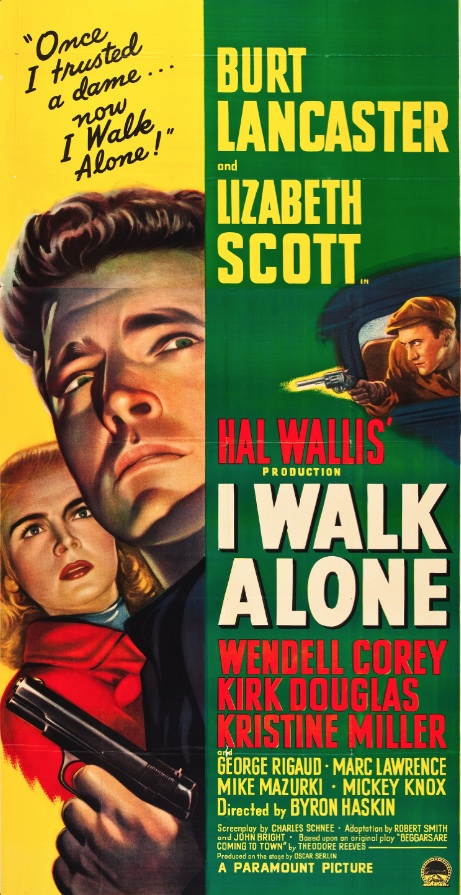
I Walk Alone (Jan. 16, 1948)

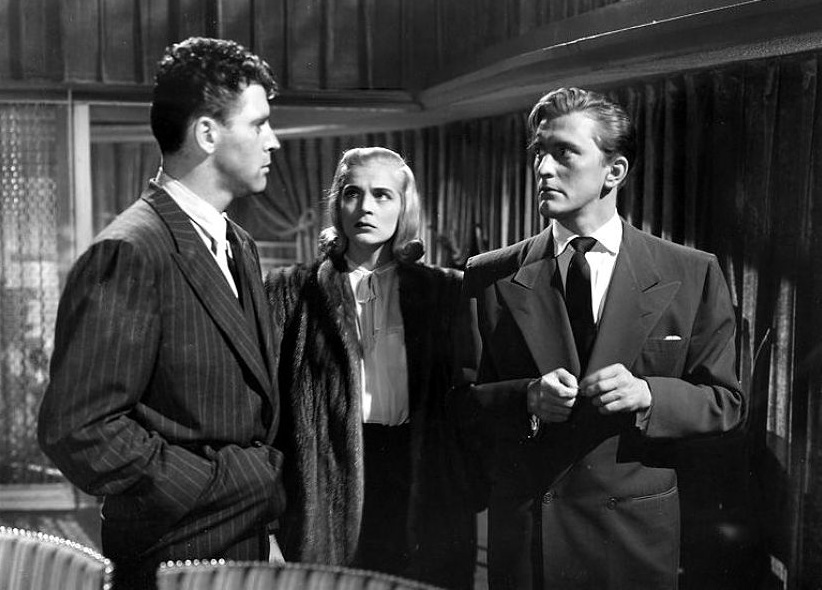
It’s the battle of the strutting, preening alpha males!

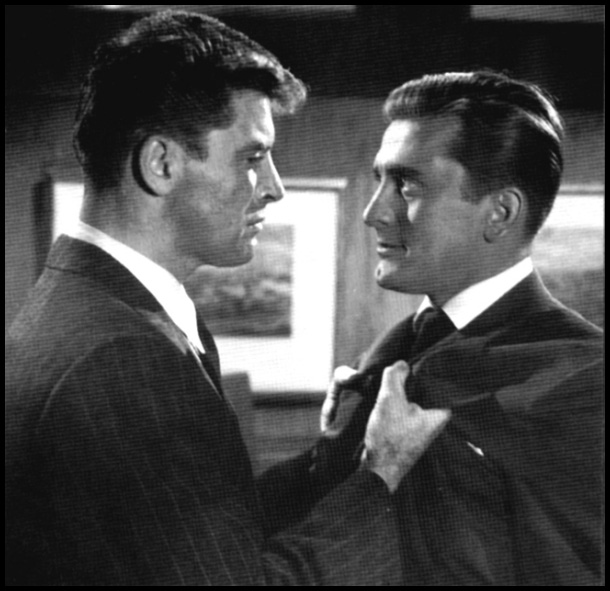
Fighting out of the blue corner, with the prison pallor, the brand new cheap suit, and the “not good, not bad” room at the Avon, it’s Frankie Madison (Burt Lancaster), former world heavyweight champion of bootlegging.

Fighting out of the red corner, with the jutting cleft chin, the expensive wardrobe, and the controlling interest in the swank night spot the Regent Club, it’s Noll “Dink” Turner (Kirk Douglas), the current world heavyweight champion of upscale criminality.

Let’s get ready to ruuuuuuuuuuuuuuumble!

When the film begins, Frankie, a former hard man in the bootlegging rackets who came up in a tough neighborhood and knew how to handle himself, has just gotten out of prison after a 14-year stretch for murder.

He’s picked up at Grand Central Station by his old friend Dave (Wendell Corey), who’s now the bookkeeper for Dink Turner.

The killing that sent Frankie to prison occurred when he and Dink were running rye whiskey from Canada through upstate New York and they blew through a roadblock set up by hijackers, which led to a chase and a gun battle that left one of the hijackers dead. Afterward, Dink and Frankie split up and agreed to go 50-50 for each other, no matter what happened or which one of them got nabbed.

All of Turner’s men call him “Noll” now, but Frankie mostly still refers to him as “Dink.” When Dave takes Frankie to the Regent Club, Frankie recognizes his old friend Dan (Mike Mazurki), a hulking mug who used to be behind the door of Dink and Frankie’s speakeasy the Four Kings, staring through a little peephole. Now he’s out front, in a snappy uniform.

A lot has changed in 14 years, but Frankie’s still the same guy he was when he went to prison.

Dink tells him, “The world’s spun right past you, Frankie. In the ’20s you were great. In the ’30s you might’ve made the switch, but today you’re finished. As dead as the headlines the day you went into prison.” (On New Year’s Day, 1930, Burt Lancaster was 16 years old and Kirk Douglas had just turned 13, so I think both men might be a little young for the roles they’re playing.)

The Regent Club was built on the force of Dink’s personality. It was his personality that controlled Frankie back in their bootlegging days. He expects the force of his personality to still be able to get Frankie to do what he wants, but all of his smooth talk and finesse only carries him so far.

Frankie is bitter than Dink never came to personally visit him in prison, and instead sent Dave, even though the prison was only an hour’s drive on the new parkway. All Dink did was send Frankie a carton of cigarettes a month.

Dink tells Frankie he feels terrible about never coming to see him, but that he just couldn’t be associated with a convicted murderer when he was building up a high-class joint like the Regent Club. Back in the days of the Four Kings they ruled things by force, but now Dink deals with banks and lawyers, and his nightclub has a Dun & Bradstreet rating.

Dink manages to deflect Frankie for a little while by setting him up with his paramour Kay Lawrence, who’s played by the angular, dead-eyed beauty Lizabeth Scott. Dink tells Kay he wants her to find out what Frankie really wants, so he can help him, but she can’t help falling for Frankie a little, especially after Dink shows his true colors by planning to marry the wealthy Mrs. Alexis Richardson (Kristine Miller) while telling Kay that it’s just to increase his wealth and prestige, and his upcoming nuptials don’t have to change anything between him and Kay.

Frankie is volatile and brutish. He wants what’s his. But he’s like a bulldozer and Dink is like a silk curtain. No matter how hard he comes at him, Dink just seems to slide harmlessly to one side.

Dink tells Frankie that their 50-50 agreement was based on their partnership in the Four Kings, not on anything future. Dave brought Frankie a lot of things to sign in prison that he didn’t read very carefully, and one of them was a dissolution of his partnership in the Four Kings. After closing costs, plus 6% interest compounded over 14 years, there’s $2,912 Frankie has coming to him. Dink makes it an even $3,000 and wishes him well. Frankie wants half of everything Dink has, but Dink doesn’t think Frankie’s entitled to anything Dink earned on his own after the Four Kings closed down. “How can you collect on a race when you don’t hold a ticket?” Dink asks Frankie rhetorically.

This confrontation occurs about two-thirds of the way through the film, and it’s a great sequence. Burt Lancaster was a former acrobat and circus performer, and he was always wonderful at using his body. When he finally realizes how little he can do to get what he wants from Dink, he stands alone in the middle of Dink’s conference room, his fists balled, bent over in anguish.

I Walk Alone was directed by Byron Haskin and produced by Hal B. Wallis. The screenplay is by Charles Schnee, and it’s based on the play Beggars Are Coming to Town by Theodore Reeves.

It’s not a bad film, but it’s not good enough to be called a classic. Part of the problem is that it too often strays from its most compelling feature, the snarling macho men at its center who oppose each other. I was really caught up in the story when Dink denies Frankie his half and Frankie vows to kill him, but then the story veers into less interesting territory. Where does Dave’s loyalty lie? What does Dink have over Dave? Will Dave be able to break free? Does Kay really love Frankie? And so on.

Lancaster and Douglas are both outsized personalities who dominate the screen. By the time things come to a head two-thirds of the way through the film, the picture might have been more compelling if it focused solely on them and their head-to-head conflict, instead of spinning off a variety of plot threads.

The film ends with a shootout in a darkened room that we’ve seen a hundred times before and will probably see a thousand times again. Like everything else in the film, it’s not terrible, but it’s too run-of-the-mill to be truly outstanding.

I Walk Alone is definitely worth seeing if you’re a die-hard fan of either of the two lead actors, and worth a look for film noir fans who’ve never seen it. If, however, you’re looking for something truly great, I Walk Alone never quite rises above the level of entertaining mediocrity.

Brighton Rock (December 1947)

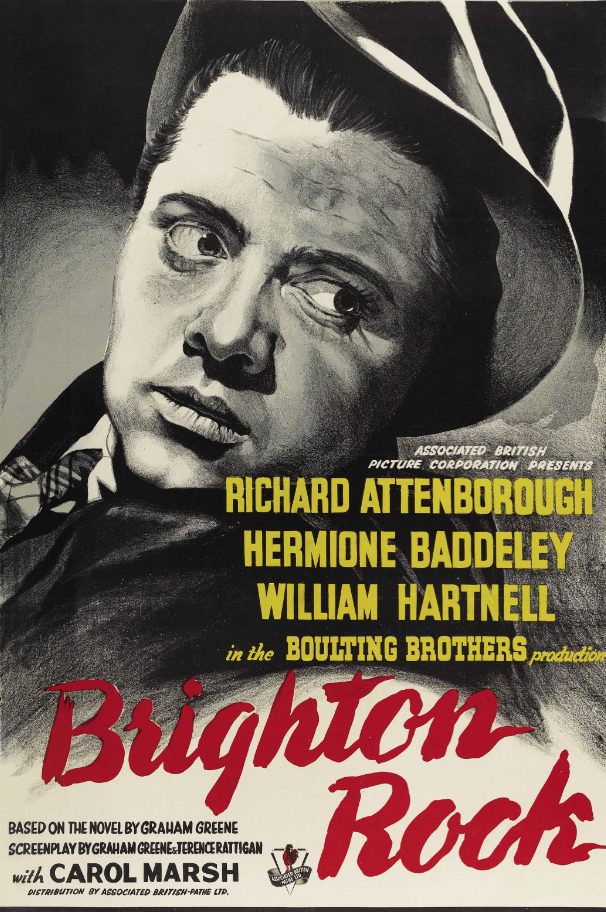
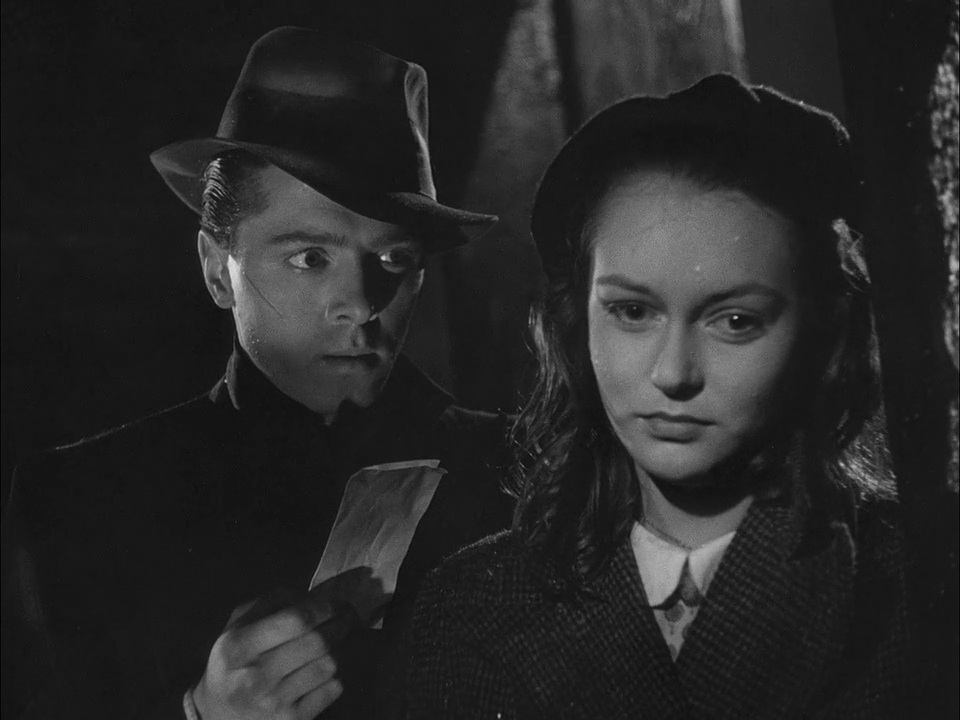
John Boulting’s Brighton Rock is an indelible portrait of evil. Richard Attenborough’s portrayal of 17-year-old gangster Pinkie Brown is one of the nastiest and coldest characterizations I’ve ever seen on film.

While Pinkie Brown’s crimes may pale in comparison with cinematic bogeymen like Hannibal Lecter — Pinkie is a garden-variety murderer, schemer, racketeer, and despoiler of women — Attenborough’s uncompromisingly nasty performance has no equal.

Brighton Rock is based on the novel by Graham Greene. It takes place during the interwar years in the seaside resort town of Brighton, home of the Brighton Racecourse, where Pinkie and his crew ply their protection racket.

Before seeing this film, my only image of Attenborough was as the middle-aged, pouchy-eyed RAF Squadron Leader of The Great Escape (1963) and as the grandfatherly CEO of Jurassic Park (1993). If I’d missed the credits, I never would have recognized him. He was 23 or 24 when he appeared in Brighton Rock, a little older than the 17-year-old hoodlum he was playing, but nevertheless he was perfectly cast.

Attenborough has the smooth, angelic face of a choirboy, but his eyes are cold and malevolent. Pinkie is a young man with no past and no future. There is no real explanation of how he came to be the way he is, and his homicidal impulses and poor planning guarantee that he is not long for this world.

The film begins with the choice Pinkie makes that will seal his downfall. It’s fitting that it’s a murder committed not out of necessity, but in retaliation for a perceived slight. Pinkie blames a newspaper writer named Fred Hale (Alan Wheatley) for the death of his gang’s leader, so when Hale is in Brighton for a day, Pinkie sets his sights on him.

After threatening Hale in a pub, Pinkie and his henchmen — the happy-go-lucky ne’er-do-well Cubitt (Nigel Stock) and the coldly efficient Dallow (William Hartnell) — pursue Hale through the throngs of summertime beachgoers in a pulse-pounding sequence. Pinkie finally corners Hale and murders him on a carnival ride.

It’s appropriate that it’s a fun-house ride to hell, with painted demons and cartoonish monsters flying toward the riders, since Pinkie is himself headed to hell, and Brighton Rock is the chronicle of his dissolution.

His murder of Hale piques the interest of Ida Arnold (Hermione Baddeley), a brassy music-hall singer who spent some time with Hale on the day of his death. However, Pinkie’s attempt to create an alibi for himself only creates a second possible witness — a shy waitress named Rose (Carol Marsh) — after Pinkie’s elderly henchman Spicer (Wylie Watson) bungles the job of trying to create a false trail for the police to follow.

Pinkie’s interest in Rose causes her to become deeply attached to Pinkie. She falls in love with him, even though she knows how wicked he is.

Pinkie’s evil is inextricably tied to his Catholicism. He’s not a psychopath who doesn’t understand the difference between right and wrong. His rejection of goodness is a conscious decision. As he tells Rose, “These atheists don’t know nothing. Of course there’s a hell, flames, damnations, torments.”

Pinkie knows he is damned. He just doesn’t care.

Rose is his diametrical opposite. Modern viewers might have trouble swallowing how deeply devoted Rose is to Pinkie, despite his clear disdain of her, but her love of Pinkie is a mirror of her devotion to God. It’s the kind of devotion that asks nothing in return.

When Pinkie tries to convince her they should enter into a suicide pact (which he calls a “suicide pax” — as a Catholic he knows that “pax” means “peace”), she weepingly protests that it’s a mortal sin. He responds, “Just one more.”

If you care for the character of Rose, Brighton Rock can be a difficult film to watch. While the ending of the film is an ironic demonstration of “the appalling strangeness of the mercy of God,” watching Pinkie systematically attempt to destroy such a simple, sweet-natured young woman is appalling.

On the other hand, it’s his unblinking awfulness that makes Brighton Rock such a powerful film. Most film villains have something that makes them likable or fun to watch — a sardonic sense of humor, a glimmer of goodness, a tragic origin story. Pinkie has none of these things. He is a nasty piece of work, through and through.

Secret Beyond the Door (Dec. 29, 1947)

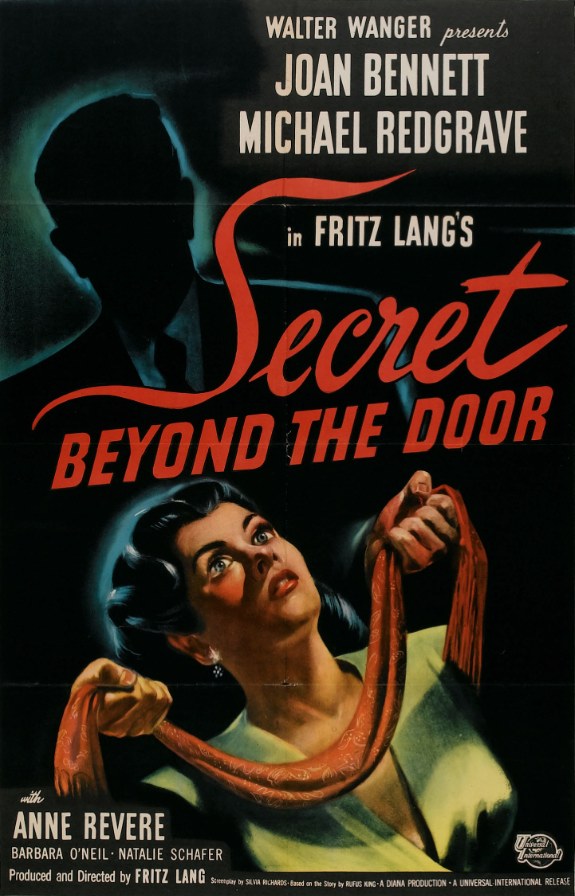
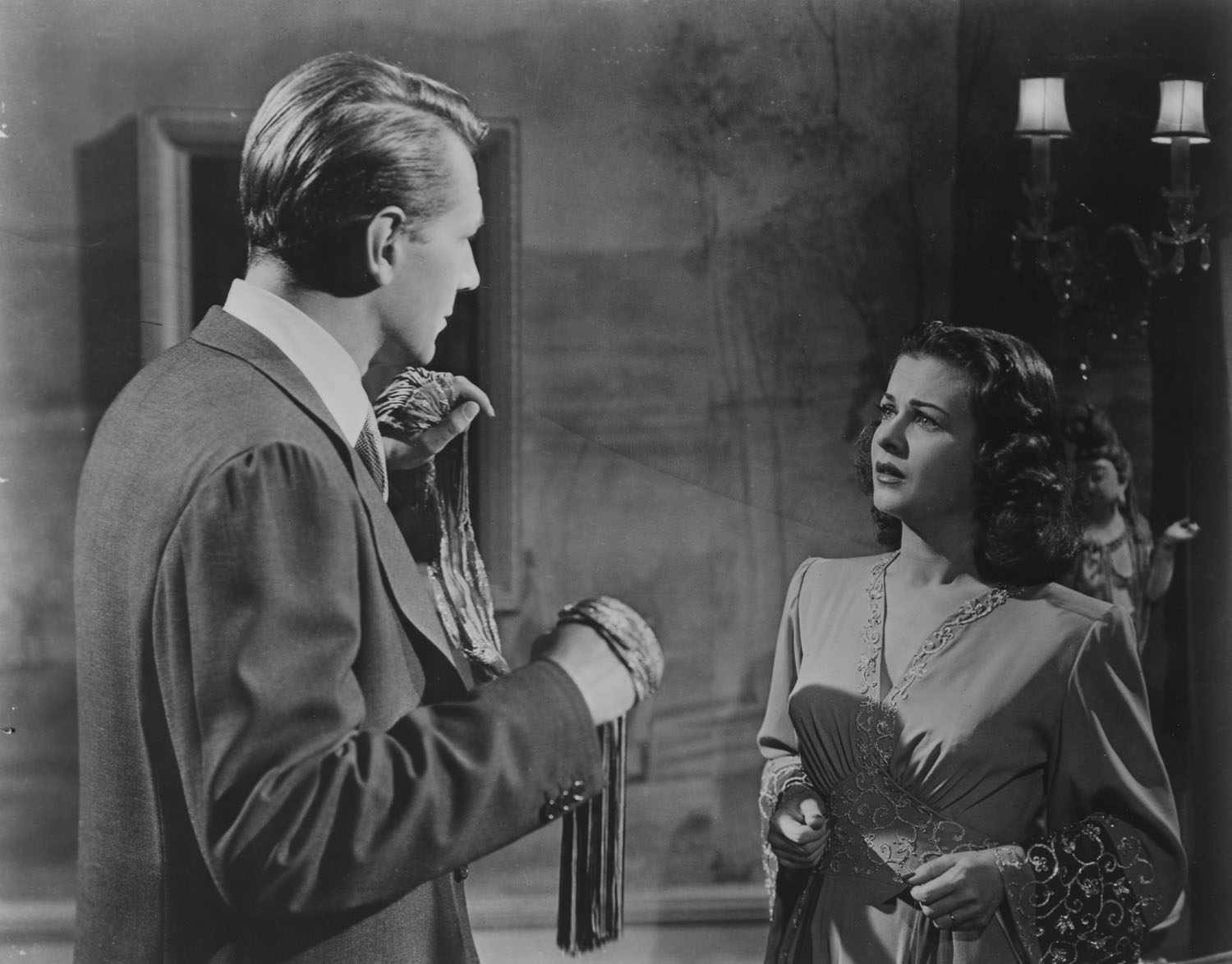
Fritz Lang’s Secret Beyond the Door takes the perennially popular Gothic theme, “Someone is trying to kill me, and I think it may be my husband,” throws in a liberal dose of psychological melodrama à la Alfred Hitchcock’s Spellbound (1945), and caps it off with a fiery finale that tips its hat to Charlotte Brontë’s Jane Eyre.

The first hour or so of the film is firmly in the mold of earlier Gothic “my husband might be a murderer” thrillers like Hitchcock’s Rebecca (1940), George Cukor’s Gaslight (1944), Vincente Minnelli’s Undercurrent (1946), and Joseph L. Mankiewicz’s Dragonwyck (1946). The last couple of reels veer off into such loony, faux-Freudian territory that I honestly didn’t know quite what to make of them.

But Lang is a consummate professional, no matter how weird or silly his material, and Secret Beyond the Door is always intriguing and occasionally a little spine-tingling.

The film stars Joan Bennett as Celia, a fashionable, bored young woman with a trust fund who meets a mysterious British architect while she’s on vacation in Mexico. His name is Mark Lamphere (played by Michael Redgrave), and he tells Celia that she is a “Twentieth-century sleeping beauty. Wealthy, American girl who’s lived her life wrapped in cotton wool, but she wants to wake. Maybe she can.”

They’re married after a whirlwind romance, despite Celia’s terrified feelings of apprehension as she walks toward the altar.

Unsurprisingly, her trepidation is well-founded. After they move into Mark’s sprawling home in Levender Falls, NY, she finds out that not only was Mark previously married, but he also has a teenage son and a creepy housekeeper named Miss Robey (Barbara O’Neil) who covers the burn scars on the side of her face with a flowing headscarf.

Most frightening of all, Mark’s first wife died under mysterious circumstances, and Celia learns at one of Mark’s fancy parties that he doesn’t have a sou to his name. His beautiful home is mortgaged to the hilt, and the architectural magazine he’s peddling around New York seems to be going nowhere fast. Celia is worth a lot … would she be worth more to Mark dead than alive?

Wait, did I say “most frightening of all”? Actually, the most frightening thing about Mark might be his bizarre hobby of recreating, piece by piece, rooms in which murders occurred, sort of like Frances Glessner Lee’s dollhouses, only at a 1:1 scale.

Six of his seven rooms are showcases that he’s happy to show off to his tony friends, but the seventh must always remain hidden. Even from his dear wife Celia.

As I said, Secret Beyond the Door gets into some pretty loony territory during its last two reels. While much of it is silly amateur psychology, it’s at least visually arresting. Joan Bennett runs for her life through the same dark forest sets on the Universal sound stages that Lon Chaney Jr. stalked in 1941 as The Wolf Man, and her journeys down dimly lit corridors are the stuff of beautiful nightmares.

A Double Life (Dec. 25, 1947)

A Double Life
A Double Life (1947)
Directed by George Cukor
Universal Pictures

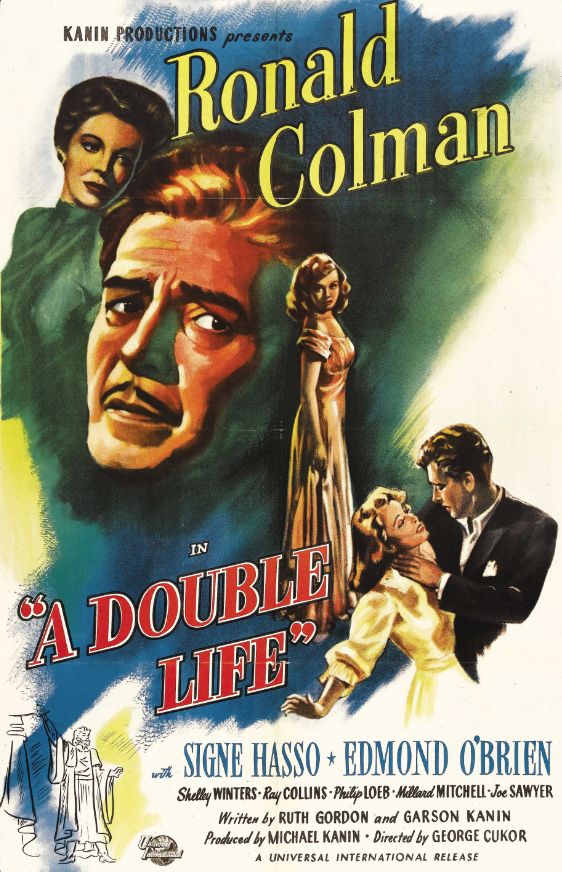
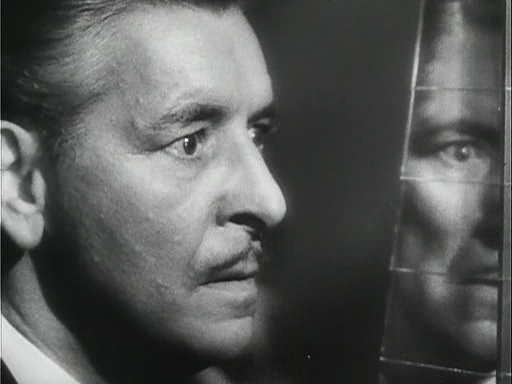
George Cukor’s A Double Life stars Ronald Colman as a brilliant stage actor named Anthony John — “Tony” to his friends — who loses himself so completely in each of his roles that he has to be careful about which parts he accepts.

When the film begins, Tony appears to be a charming, “hail fellow well met” sort of chap who’s as friendly with theatrical agents and his fellow actors as he is with stagehands and women on the street. It’s no coincidence, however, that he’s starring in Philip MacDonald’s comedy A Gentleman’s Gentleman.

When the run comes to an end and he’s offered the lead in Shakespeare’s Othello, Tony hesitates. He’s always wanted to play the part, and even worked out some staging ideas years earlier.

But the role of Othello is a dark one (no pun intended), and Tony fears what psychic and emotional depths he might sink to playing the tragic Moor night after night.

And he’s not the only one. His beautiful ex-wife Brita Kaurin (Signe Hasso) cautions against it. She and Tony still love each other, but when she tells her boyfriend, theatrical agent Bill Friend (Edmond O’Brien), what it was like to be married to Tony, it’s clear that the good times and bad times all coincided with the parts he was playing. “When he’s doing something gay like this it’s wonderful to be with him, but … when he gets going on one of those deep numbers,” she says. “We were engaged doing Oscar Wilde, broke it off doing O’Neill, were married doing Kaufman and Hart, and divorced doing Chekov.”

Winters and Colman

Against her better judgment, however, Brita eventually takes the role of Desdemona, and everything goes just as badly as you might expect.

If A Double Life were just a burlesque version of Othello, with a stand-in for Iago whispering lies about infidelity in Tony’s ear, it wouldn’t be nearly as good or as interesting as it is.

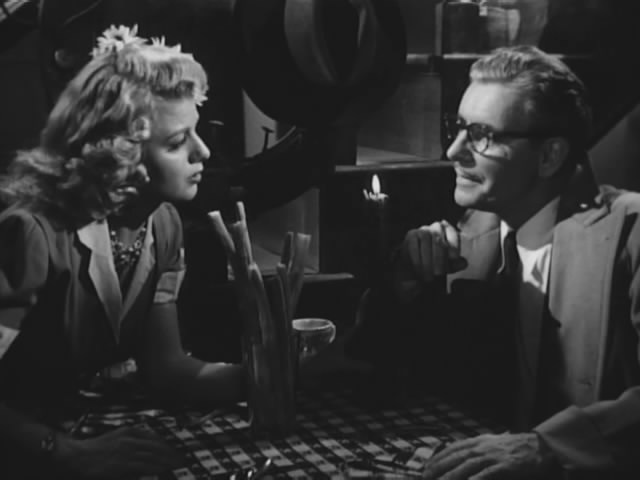
Instead, it’s a hypnotic portrait of self-inflicted madness. We watch Tony slide easily from one persona to another early in the film when he slips on a pair of eyeglasses and goes out to eat in a new restaurant, convincing young waitress Pat Kroll (Shelley Winters) that he’s new in town.

Ronald Colman

He’s a hugely talented actor, but his talent comes with a price. The more popular his performances as Othello become, the more his mental and emotional health deteriorate. (And his performances are indeed popular; his Othello ends up running on Broadway for an unbelievable, not to mention unrealistic, 300 performances.)

When Tony finally commits the inevitable murder, it’s not a passionate reenactment of Othello’s murder of Desdemona, it’s a weird, tawdry killing committed in a dissociative state.

There’s much about A Double Life that’s heavy-handed, both visually and thematically. If you’re paying close attention, all the attempts early in the film to hammer home the point that Anthony John has a “double life” might seem like a bit much. (Even his name — two Christian names in search of a surname — is a clue.) By the second or third reel, however, I was completely enthralled.

Othello

The plot of A Double Life is essentially pulpy and exploitative, so I think a great deal of credit must be paid to Ronald Colman for his exceptional performance, not only as Anthony John, but as Anthony John playing Othello. (The role was originally intended for Laurence Olivier. When Olivier was unavailable, the producers went with another seasoned British thespian.)

Colman ended up winning the Academy Award for best actor for his role in A Double Life. It was the fourth time he was nominated and the first time he won. (Miklós Rózsa’s score also won an Academy Award.) There are moments when his performance tends to get a little exaggerated and “showy,” but I thought that was appropriate for the character. He’s playing a self-involved, grandiose stage actor, after all.

Milton R. Krasner’s brilliant cinematography bears mention, too. There are many things about A Double Life that don’t exactly place it in the category of film noir, but the look of the film is pure noir. It’s full of shadows, dramatic lighting effects, city streets at night, and cramped, dark rooms. There’s a mounting sense of dread running through the film, and Krasner’s cinematography is largely responsible for it.

I had no idea what to expect from A Double Life and I was completely blown away. It’s a film where everything comes together; Cukor’s direction, Ruth Gordon and Garson Kanin’s script, Krasner’s photography, and the performances of the three principal actors. I’m looking forward to seeing it again some day, and I highly recommend it if you’ve never seen it.