Category Archives: 1947

Out of the Past (Nov. 13, 1947)

Out of the Past
Out of the Past (1947)
Directed by Jacques Tourneur
RKO Radio Pictures

Jacques Tourneur’s Out of the Past is the greatest film noir ever made, but no one knew it at the time.

Robert Mitchum even said as much when he told writer Arthur Lyons, “Hell, we didn’t know what film noir was in those days. Cary Grant and all the big stars at RKO got all the lights. We lit our sets with cigarette butts.”

In 1947, French film critics and cinéastes were just beginning to use the term “film noir” (it was first used in 1946 by French film critic Nino Frank) and it would be decades before the term caught on in the United States, long after the end of the “noir cycle.”

All of this is a good thing, of course, since self-consciousness can kill art.

If filmmakers in the ’40s and ’50s had deliberately tried to make films with all the elements that the French were praising, they probably would have produced ham-fisted junk that was as unwatchable as most of the “neo-noir” that littered multiplexes in the ’90s.

On the other hand, this means that a brilliant noir like Out of the Past got lost in the shuffle at the time of its release, and was viewed as just one more “private eye” picture, or just one more “violent melodrama.” The review in the December 15, 1947, issue of Time, for instance, called it “a medium-grade thriller.” (Although they did praise Nicholas Musuraca’s beautiful cinematography.)

In his November 26, 1947, review of Out of the Past, curmudgeonly NY Times critic Bosley Crowther had a lot of good things to say about the film, and praised the dialogue and acting, but admitted that he couldn’t make heads or tails of the plot.

This is a fair criticism, since the plot of Out of the Past still confounds first-time viewers, and most second- and third-time viewers as well. Note, for instance, the number of reviews of the film that claim the story is told mostly in flashback, when the flashback portion of the story actually occupies less than a half hour of running time, and from the 40-minute mark onward, the film takes place entirely in the present.

But time has been kind to Out of the Past, and a perfect understanding of its plot isn’t a prerequisite for enjoying every gorgeously filmed minute of it, since it’s packed with everything that makes a noir a noir. Its male protagonist, Jeff Markham (Robert Mitchum), is smart and tough, but ultimately helpless when faced with the seductive charms of the film’s femme fatale, Kathie Moffat (Jane Greer). The film contains murders, swindles, frame-ups, crosses, double-crosses, triple-crosses, gambling, a large chunk of stolen money, a tragic ending, and some of the most seductive chiaroscuro cinematography of all time.

Greer and Mitchum

The plot can’t really be summarized in a nutshell, but I’ll try anyway.

While driving through a one-stoplight California town called Bridgeport, which is 79 miles south of Lake Tahoe, Joe Stephanos (Paul Valentine) pulls into a service station owned by Jeff Markham, who’s living in Bridgeport under the name “Jeff Bailey” and trying to forget his tawdry old life by going fishing every day with a nice girl named Ann (Virginia Huston), which her boyfriend Jim (Richard Webb) isn’t too happy about.

Joe tells Jeff that Whit Sterling (Kirk Douglas), his old employer, wants to see him in Lake Tahoe.

So Jeff spills to Ann. His real name is Markham, not Bailey. Three years ago he lived in New York and worked with an oily gentleman named Jack Fisher (Steve Brodie). They were detectives. They got a call to see a big operator, a gambler named Whit. His girl had shot him with his own .38 and taken off with $40,000 of his money, and he wanted her back. The money, too, but mostly her.

Jeff took off on his own, leaving Fisher behind, and followed Kathie’s trail to Acapulco, Mexico. As soon as he saw her, he was hooked like a fish.

In voiceover, Jeff recalls his romance with Kathie in Acapulco.

I never saw her in the daytime. We seemed to live by night. What was left of the day went away, like a pack of cigarettes you smoked. I didn’t know where she lived, I never followed her. All I ever had to go on was a place and time to see her again. I don’t know what we were waiting for. Maybe we thought the world would end. Maybe we thought it was a dream and we’d wake up with a hangover in Niagara Falls. I wired Whit but I didn’t tell him.

“I’m in Acapulco,” I said. “I wish you were here.” And every night I went to meet her. How did I know she’d ever show up? I didn’t. What stopped her from taking a boat to Chile or Guatemala? Nothing. How big a chump can you get to be? I was finding out.

Kathie swore to Jeff that she didn’t take Whit’s money, to which he responded, “Baby, I don’t care,” and kissed her.
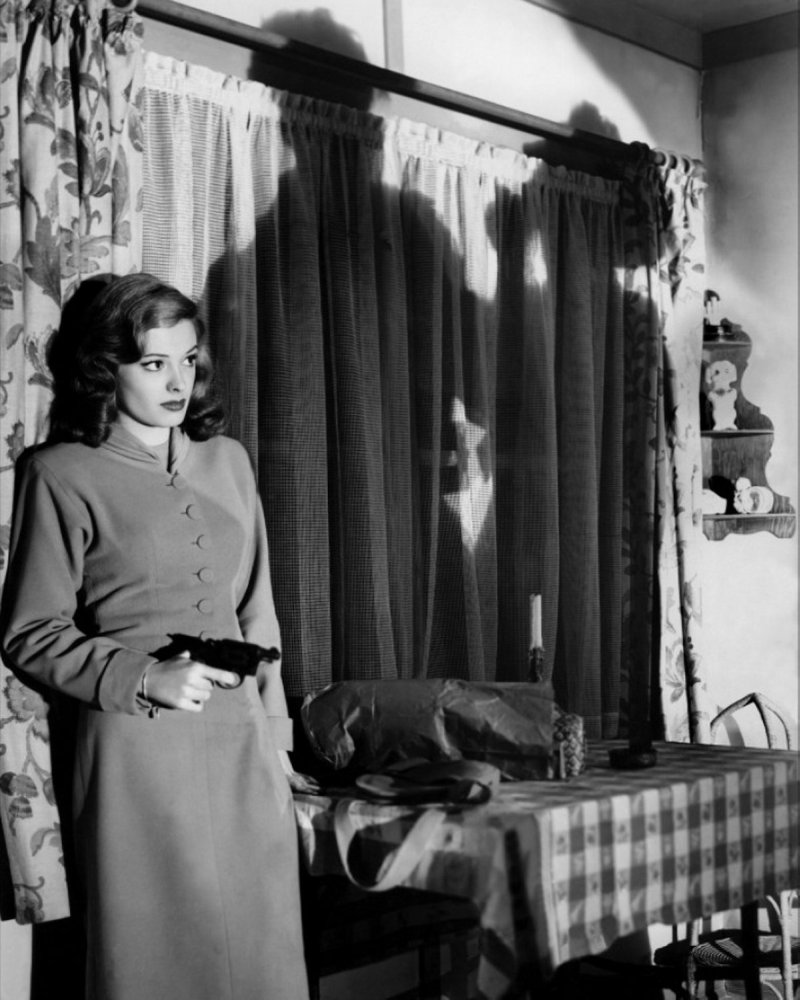
Jane Greer

Jeff and Kathie ran off together and headed for San Francisco. Things went swimmingly until he was spotted at the racetrack by his old partner Jack Fisher, who would turn him and Kathie over to Whit in a heartbeat for the payoff.

Despite Jeff’s best efforts to lose the tail, Fisher eventually tracked him and Kathie down. When Jeff and Fisher started trading blows, Kathie coldly shot Fisher, then took off.

Jeff never saw her again. He was left to bury Fisher’s body in the woods. He also found a deposit slip for $40,000 in Kathie’s purse, confirming that she’d lied to him about the money.

The rest of the film takes place in the present. Jeff meets with Whit at his palatial getaway in Lake Tahoe. Kathie has returned to Whit, and he now knows everything about Jeff’s betrayal of him.

Exacting a kind of payback, Whit forces Jeff to go to San Francisco to steal income tax records from the crooked accountant — Leonard Eels (Ken Niles) — who helped him hide his money from Uncle Sam and who’s now demanding $200,000 hush money. Jeff is supposed to get to Eels through his beautiful secretary, Meta Carson (Rhonda Fleming).

But it quickly becomes clear to Jeff that he’s being set up as a patsy, and that Whit’s people are going to kill Eels and make it look as if Jeff did it.

Ann, the good girl in Jeff’s life, can’t believe that Kathie is as awful as he makes her out to be. “She can’t be all bad, no one is,” Ann says. “Well, she comes the closest,” Jeff responds.

And he’s right. Kathie is a murderer, a thief, and a liar. She’s completely and utterly faithless, but Jeff keeps falling for her. Every time she calls, he comes running. He can’t help it. He hates himself for it, but he can’t stop.

I first saw Out of the Past when I was 17, and I’ve seen it many times since then. It took me several viewings before I got a handle on exactly what was going on in the film, but I always felt that its byzantine plot was part of its appeal.

Even if you can’t figure out exactly what’s going on or who’s doing what to whom (or why), Out of the Past is still a seductive and brilliant film. It’s the Platonic ideal of a film noir.
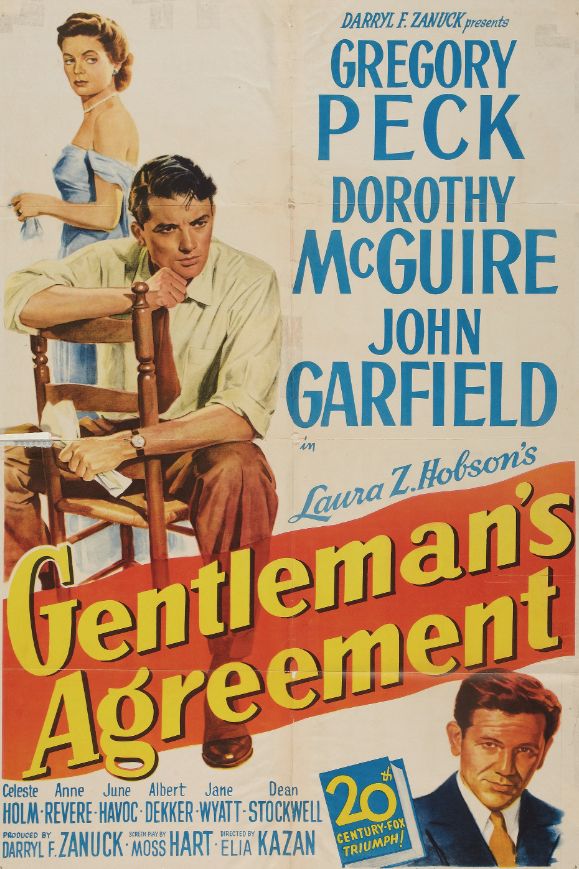
Gentleman’s Agreement (Nov. 11, 1947)

Director Elia Kazan’s fourth film, Gentleman’s Agreement, dominated the 20th Academy Awards.

It was nominated for eight Oscars and took home three — best picture for producer Darryl F. Zanuck, best director for Kazan, and best supporting actress for Celeste Holm.

It was also incredibly popular, and was the eighth highest grossing film of the year, earning more than $4 million at the box office.

This was a remarkable feat for a sober black and white drama about anti-Semitism, especially considering that most of the ten highest grossing films of 1947 were either comedies or Technicolor spectacles.

Before embarking on this project, I’d never had much desire to see Gentleman’s Agreement, despite my love of Kazan’s other films. It has a reputation for being heavy-handed, and I dislike movies with good intentions that spoon-feed the audience a simplistic message.

So I was really happy to discover that Gentleman’s Agreement is a much more subtle and thought-provoking film than its reputation suggests. It’s a little dry in stretches, but it wasn’t nearly as preachy as I was expecting.

In fact, it’s still a unique movie because it addresses not active, virulent anti-Semitism but the silent majority that allows prejudice to flourish. In other words, if there are ten people at a table and one person tells a nasty joke about Jews and the other nine people either chuckle politely or feel offended but don’t say anything, the problem is not the one anti-Semite, but the other nine people.

Most movies made after Gentleman’s Agreement still focus on active, violent hatred, which lets the audience off the hook to some degree. Someone can watch Mississippi Burning (1988) and come away with the feeling that they’re not a racist, because they’d never burn a cross in a black family’s yard or participate in a lynching.

Gentleman’s Agreement, on the other hand, never really lets the audience off the hook, and now that I’ve seen it, I suspect that part of its reputation for preachiness comes from the discomfort it causes.

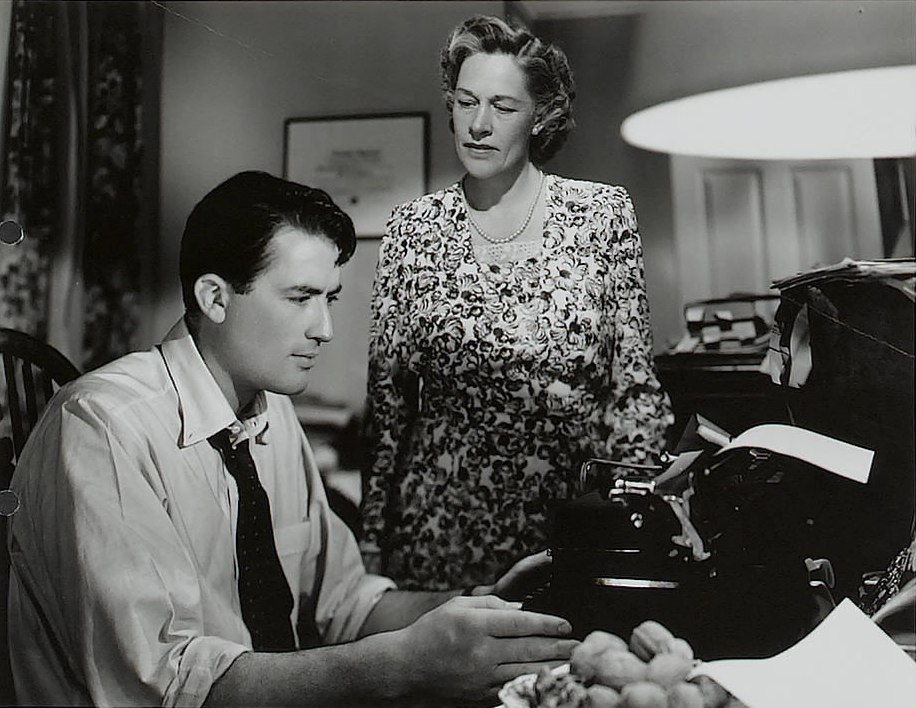
For instance, there’s a great scene in which writer Phil Green (Gregory Peck), who is pretending to be Jewish in order to write an exposé on anti-Semitism, tries to get a hotel manager to tell him if the hotel is restricted. The manager refuses to answer the question, but still steers Green out of the hotel, saying things like “Maybe you would be more comfortable in another establishment.” The viewer expects Green to get somewhere and it’s incredibly frustrating when he doesn’t. Eventually he leaves and all the people in the lobby watch him go. Probably many of them feel bad about what’s happening, but no one speaks up. It’s a maddening, intensely uncomfortable scene, and begs the question, “What would you do if no one else was speaking up?”

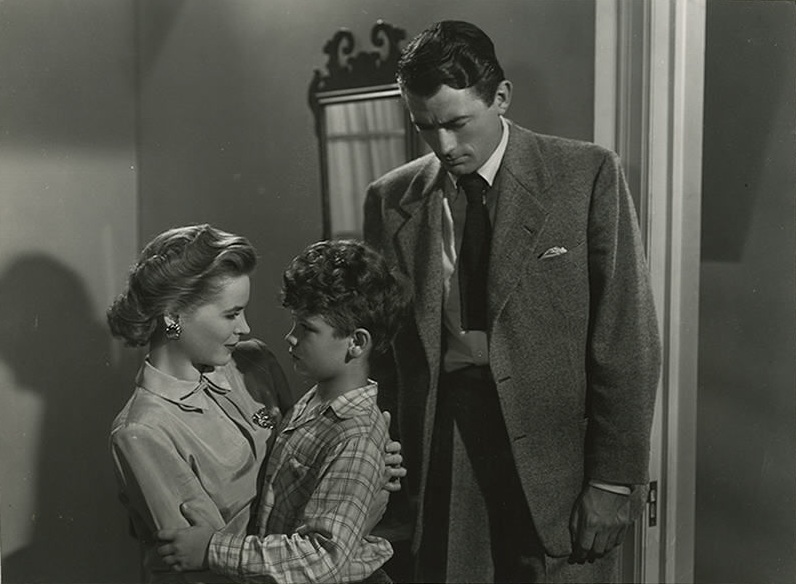
Another scene that really stuck with me was the one in which Green’s son Tommy (Dean Stockwell) comes home crying after a group of boys call him a “stinking kike” and “dirty yid.” Green’s fiancée Kathy (Dorothy McGuire) is upset, as anyone would be, but she comforts Tommy by hugging him and telling him that it’s all a mistake, and he isn’t really Jewish.

This causes Green to fly into a rage, and he lectures Kathy that her attitude is what allows prejudice to flourish unchecked.

I think that Gregory Peck’s humorless performance and holier-than-thou attitude is what turns off some viewers, but I couldn’t find fault in the logic of anything he says in the film.

His relationship with his secretary Elaine (June Havoc) is particularly interesting, since she’s Jewish but pretends not to be. Early in the film, when she still believes Green is Jewish, she expresses dismay that the magazine they work for is courting Jewish applicants. She tells Green, “Just let them get one wrong one in here and it’ll come out of us. It’s no fun being the fall guy for the kikey ones.”

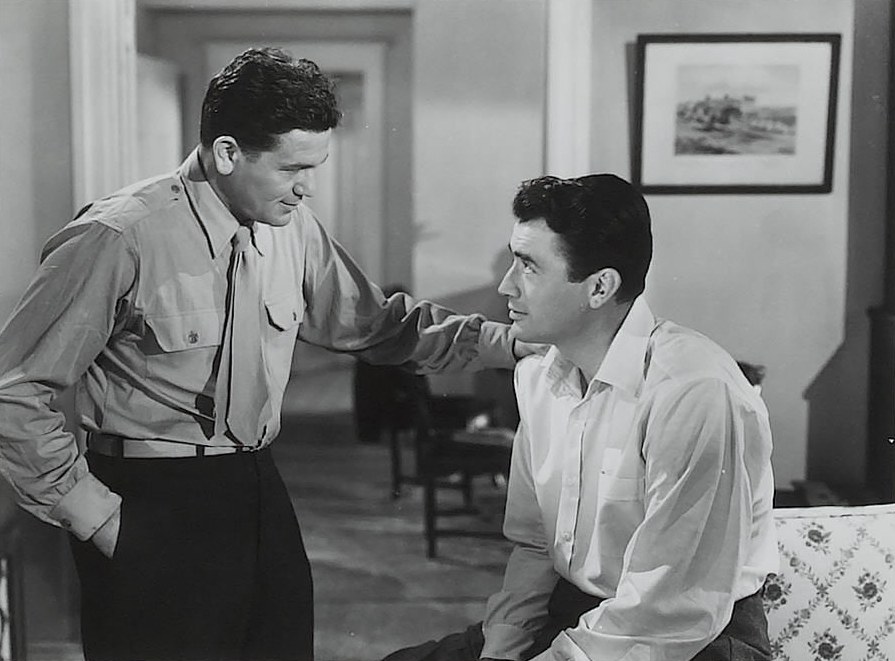
Green’s childhood friend Dave Goldman (John Garfield) tells him that he’s having such strong reactions to anti-Semitism because he’s experiencing it all at once. Dave grew up experiencing subtle prejudice, so he’s learned to filter a lot of it out. There’s something else, however, that I think is unspoken in the film, which is that Green is experiencing the passion of the newly converted.

He may not have converted to Judaism, but he’s committed to his subterfuge, and takes all the slings and arrows of anti-Semitism intensely personally.

Apparently many Hollywood studio heads, most of whom were Jewish, didn’t want Darryl F. Zanuck (who wasn’t Jewish) to make Gentleman’s Agreement. They feared that it would stir up trouble, and that directly confronting anti-Semitism would only make things worse.

One of the big themes of Gentleman’s Agreement is how wrong-headed this notion is, and that failing to confront things is never the right move.

It’s a really good movie, and not just because its philosophy is “politically correct.” The actors all play their parts perfectly, and it’s a really well-made film about people, and how people relate to each other. Most of the “big ideas” in the film are expressed the way they are in real life — by people who have opinions.

Body and Soul (Nov. 9, 1947)

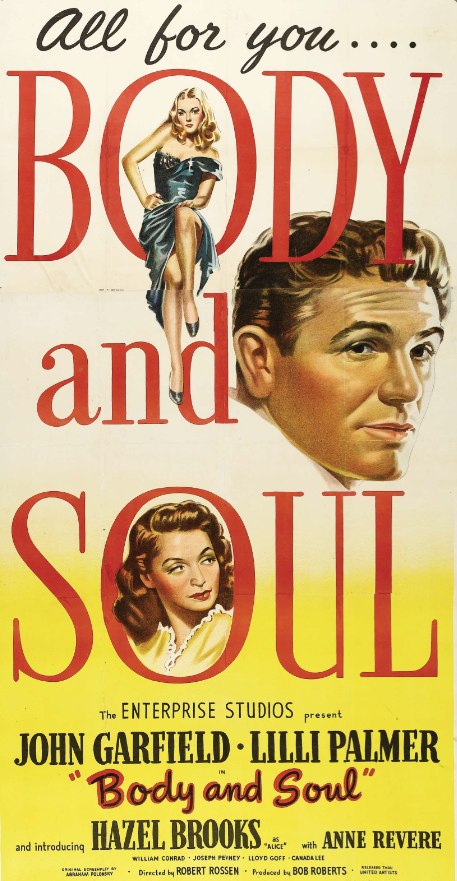
Body and Soul
Body and Soul (1947)
Directed by Robert Rossen
Enterprise Productions / United Artists

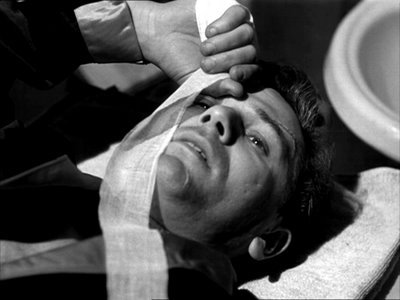
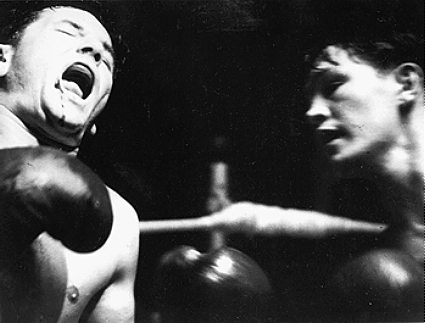
Charlie Davis’s face is a road map. Every scar tells a story, and every story is the same — a bruising boxing match, a big purse, wealth, success, and another step farther away from the people he loves.

This isn’t a spoiler, because we see exactly how far Charlie Davis (John Garfield) has fallen in the first scene of Robert Rossen’s Body and Soul. He wakes from a nightmare, sweat glistening on his scarred face, mournfully crying out a name … “Ben!”

He drives to his childhood home in New York’s Lower East Side and sees his mother (Anne Revere), but neither she nor his old girlfriend, Peg (Lilli Palmer), wants anything to do with him, so he drives to a smoky jazz club to see the beautiful singer Alice (Hazel Brooks). She tells him his manager has been looking for him everywhere. “How does it look, Charlie, the night before the fight, three a.m. and you loaded?” she asks him.

The next morning at the weigh-in, the challenger for the middleweight championship of the world, Jack Marlowe (Artie Dorrell), derides the tired and hungover champ. “All fat,” he sneers. “Nightclub fat … whiskey fat … thirty-five year-old fat.”

Back in his dressing room, Charlie’s gangster manager Roberts (Lloyd Gough) reminds him that he’s being paid $60,000 to throw the fight, and to make it look good.

John Garfield

Most of the rest of the film is told in flashback. We see Charlie’s youth as a tough Jewish kid looking to break into the fight game. His best friend Shorty Polaski (Joseph Pevney) is his manager. Charlie’s father David (Art Smith) is supportive, but his mother wants him to choose a more respectable profession than the sweet science. All of this is strongly reminiscent of Garfield’s previous film, Humoresque (1946), although I have to say that Garfield is more believable as a pugilist than he was as a violinist.

Body and Soul is the first really great boxing film, and it still stands as one of the best. Garfield’s performance as Charlie Davis is pitch-perfect, and James Wong Howe’s black and white cinematography is gorgeous. As good as Raging Bull (1980) is, it still owes an enormous debt to this film. And so does nearly every boxing picture made after 1947.

To be fair, the rise and fall structure of Body and Soul and most of its story elements were clichéd even at the time of the film’s release. But despite a sense of familiarity, Body and Soul still manages to feel fresh. A lot of this has to do with the final fight, which Howe famously shot with a handheld camera while standing on roller skates. It’s a brilliantly shot and edited sequence, and still thrilling to watch.

Garfield and Dorrell

Body and Soul was director Rossen’s second feature. His first, Johnny O’Clock (1947), was good, but overly complicated and occasionally contrived. Body and Soul, on the other hand, is a punch straight to the gut. It’s moving, brilliantly acted, and one of the best films I’ve seen in a long time.

Body and Soul was nominated for three Oscars; John Garfield for best actor, Abraham Polonsky for best original screenplay, and Francis Lyon and Robert Parrish for best film editing, the only category in which it won.

Monsieur Vincent (Nov. 5, 1947)

Last Easter, I attended services at the Cathedral of St. John the Divine in Manhattan. The bishop who delivered the sermon told of how Jesus was resurrected after dying on the cross, and how he appeared to Mary Magdalene. At first she didn’t recognize him, and mistook him for a common laborer. Clearly there was no unearthly glow around his body or blindingly bright halo encircling his head. “Hollywood would not approve,” the bishop said.

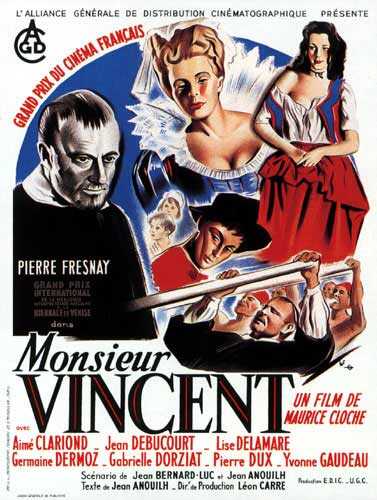
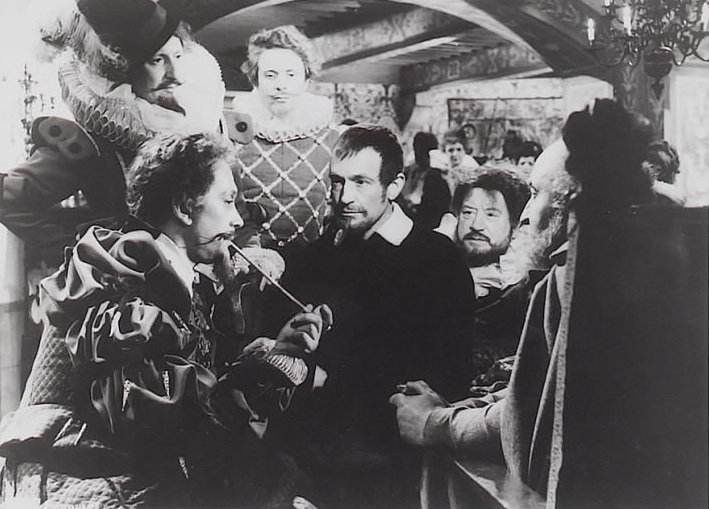
I thought about the bishop’s joke when I watched Maurice Cloche’s Monsieur Vincent, a biography of the seventeenth century curé Saint Vincent de Paul.

It’s a great film, and not just because of Pierre Fresnay’s brilliant, totally convincing performance as Vincent de Paul. It’s a great film because it doesn’t engage in the flashy hokum that so many films about religious figures do. There are no heavenly choirs, light streaming through stained glass, or mist-shrouded appearances of Jesus.

Despite the fact that Monsieur Vincent is about a deeply religious man, it depicts his life as one might have observed it at the time. His commitment to caring for the poor isn’t idealized — the people who receive his charity are often filthy, miserable, and ungrateful — but the film is all the more powerful for its realism.

Monsieur Vincent was released in France on November 5, 1947, and in the United States on December 20, 1948. It was awarded the Oscar for best foreign language film in 1949 at the 21st Academy Awards.

The Fugitive (Nov. 3, 1947)

Faith and religiosity are notoriously difficult things to depict on film. It’s easy to go too far in one direction — witness for instance, the brutal, mind-numbing literalism of Mel Gibson’s The Passion of the Christ (2004). Belief and faith are abstract things, and while cinema can suggest the abstract, it is still a visual medium.

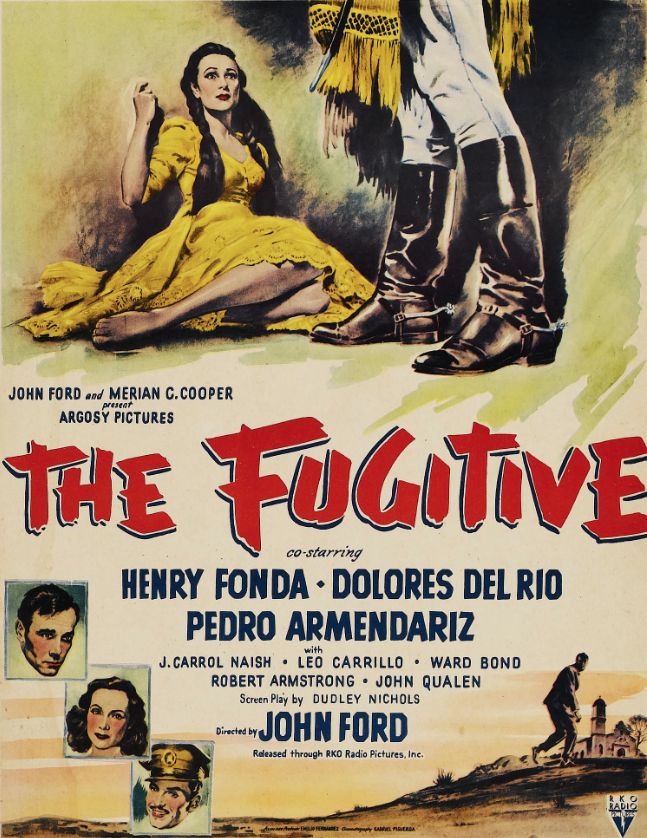
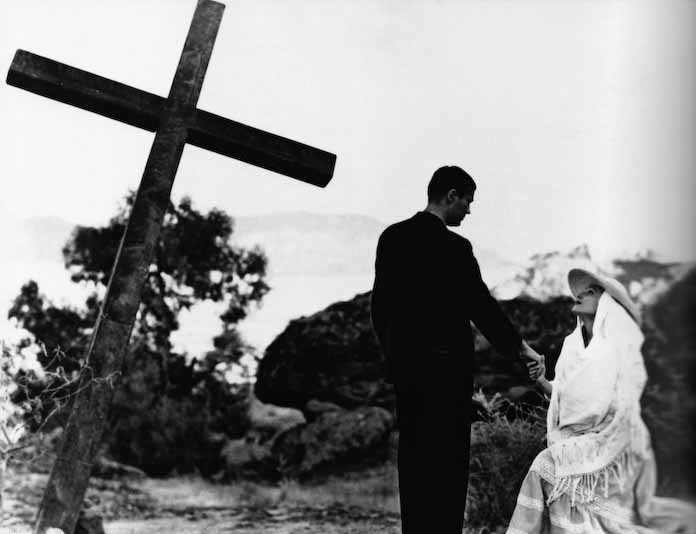
John Ford’s The Fugitive is rarely numbered among the director’s greatest achievements, but it was reportedly one of his personal favorites. It was filmed entirely in Mexico, and much of the crew was assembled from the Mexican film industry.

In it, Henry Fonda plays a fugitive priest, on the run from the authorities after the church and its emissaries have been made illegal following a civil war. He’s a man whose faith appears to be broken — or at least in the process of being tested — but it’s difficult to really know, because Fonda’s performance is so blank-eyed and tentative that it’s hard to know what’s going on in his mind for most of the picture. Ironically, The Fugitive is a movie that is strongest when it is at its most heavy-handed.

It’s clear from the outset that the movie is meant to be seen as an allegory — the opening narration tells us as much. Also, in the opening credits, we see that none of the characters have names. Fonda plays “A Fugitive,” Dolores del Rio plays “An Indian Woman,” Pedro Armendáriz plays “A Lieutenant of Police,” J. Carrol Naish plays “A Police Informer,” Leo Carrillo plays “A Chief of Police,” and Ward Bond plays “El Gringo.” It’s also not meant to take place in Mexico, but rather, as the narrator informs us, “merely a small state, a thousand miles north or south of the Panama Canal. Who knows?”

Graham Greene’s 1940 novel The Power and the Glory (also published as The Labyrinthine Ways) did actually take place in Mexico, but the filmmakers likely didn’t want to offend their host country with a story that was critical of the Mexican Revolution or any of its ramifications.

Greene wrote The Power and the Glory when he was himself a kind of fugitive. Twentieth Century-Fox and Shirley Temple’s lawyers had sued Greene and the magazine Night and Day for criminal libel over his review of the film Wee Willie Winkie (1937), which — ironically — was directed by John Ford. In his review of the film, Greene wrote of Temple that “she measures a man with agile studio eyes, with dimpled depravity. Her admirers — middle-aged men and clergymen — respond to her dubious coquetry, to the sight of her well-shaped and desirable little body, packed with enormous vitality, only because the safety curtain of story and dialogue drops between their intelligence and their desire.”

Greene’s trip to Mexico in 1938 was ostensibly at the behest of the Vatican, who wanted him to document anti-Catholic violence and persecution. According to Greene’s friend, director Alberto Cavalcanti, whose lost autobiography was recently unearthed, Greene’s real reason for going to Mexico was to escape Temple’s lawyers.

In any case, whatever narrative subtlety and moral complexity the novel had is not present in the film, which has little to offer in the way of ideas. I hesitate to call Henry Fonda “miscast,” because he’s usually such a wonderful performer, but he really is awful in The Fugitive. His facial expressions range from beatific to panicked, and that’s about it.

The power of the film — and it is a powerful film, especially toward the end — comes from its visuals. Ford and his cinematographer, Gabriel Figueroa, crafted a beautiful-looking movie, full of nighttime shadows, murky light, and sun-drenched wide open spaces. The final sequence, which is an allegory for the crucifixion and resurrection, is achieved with very little dialogue, and is well-done, if a little obvious.

Forever Amber (Oct. 22, 1947)

Forever Amber
Forever Amber (1947)
Directed by Otto Preminger
20th Century-Fox

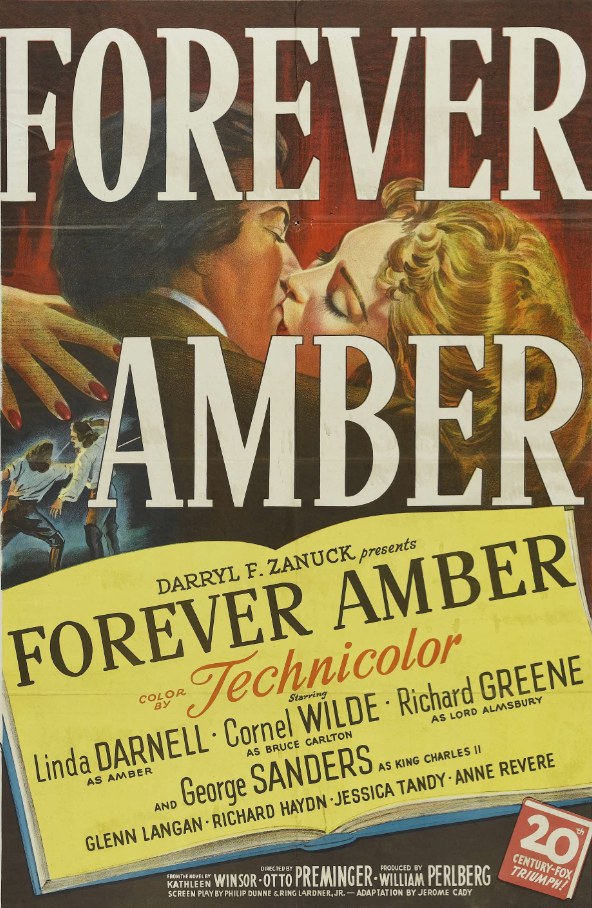
The review of Otto Preminger’s Forever Amber in the November 3, 1947, issue of Time magazine called it “every bit as good a movie as it was a novel,” but I’m not sure if they meant it as a compliment.

Kathleen Winsor’s 1944 period romance was the best-selling American novel of the ’40s. Forever Amber sold more than 100,000 copies during its first week on the shelves, and went on to sell more than three million copies. I haven’t read it, so I don’t know how much Winsor’s storytelling skills had to do with its popularity. What I do know is that it was banned in 14 states, and that the attorney general of Massachusetts — the first state to institute a ban — cited 70 references to intercourse, 39 out-of-wedlock pregnancies, and seven abortions, among other reasons for the ban.

So it seems clear that whatever other merits the novel had, its biggest selling point was S-E-X.

To be adapted as a film, a lot of the novel’s more scandalous bits had to be cut out, but it still has one big selling point: L-I-N-D-A. D-A-R-N-E-L-L.

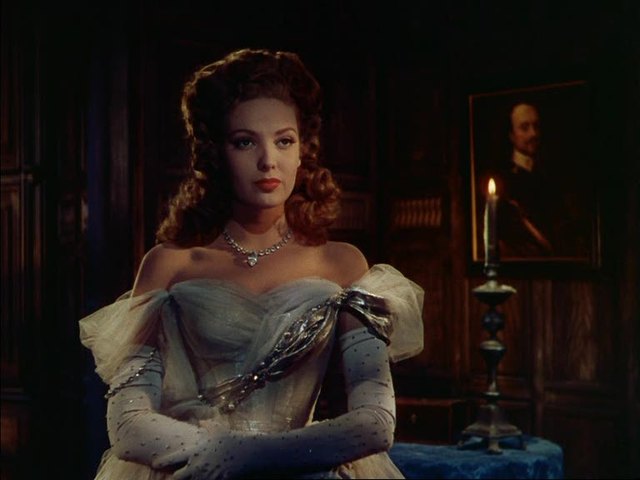
In her journey to the screen, the vain, beautiful, promiscuous, and socially climbing Amber St. Clare lost many of her lovers and innumerable shocking details and compromising situations from the novel were excised. (The film does contain one element from the novel that was extremely rare in Hollywood films of the ’40s — Amber’s out-of-wedlock pregnancy. However, the fornicating that produces the offspring occurs so far off screen that the announcement that she’s expecting comes as a complete surprise.) No matter how tame the story might be compared with the book, though, Linda Darnell’s megawatt sex appeal and unearthly beauty lend a constant sense of illicit excitement to Forever Amber.

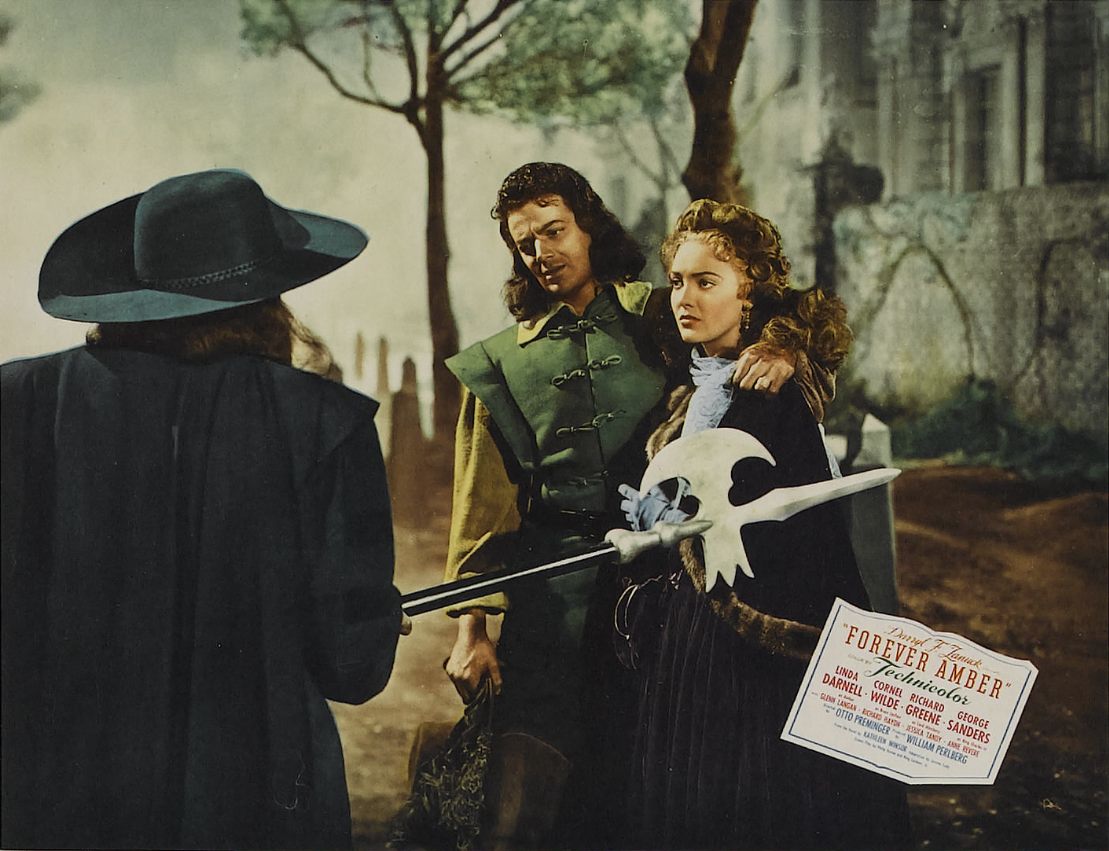
Unfortunately, the same can’t be said of her co-star, Cornel Wilde, who plays Lord Bruce Carlton, the gentleman soldier on whom Amber sets her sights at the beginning of the film, but who never loves her quite as much as she loves him. Wilde cuts a dashing figure, but he has roughly one facial expression. He doesn’t so much act in this film as much as he exists.

Forever Amber is set during the English Restoration, when Charles II returned to the throne from exile and the monarchy was restored. The film hits all the high points of the time period, like the plague and the Great Fire of London. Also, George Sanders, who plays King Charles II, is a lot of fun to watch. His trademark indifference and supercilious charm are perfectly suited to the hedonistic monarch he’s playing.

Forever Amber is far from a great film, but I still enjoyed it a lot. It’s a beautifully filmed Technicolor epic that overwhelms the senses with its visuals and sweeping musical score. This is the kind of film in which $100,000 was spent filming a single kiss that was later cut from the film.

The Black Widow (13 chapters) (July 28-Oct. 20, 1947)

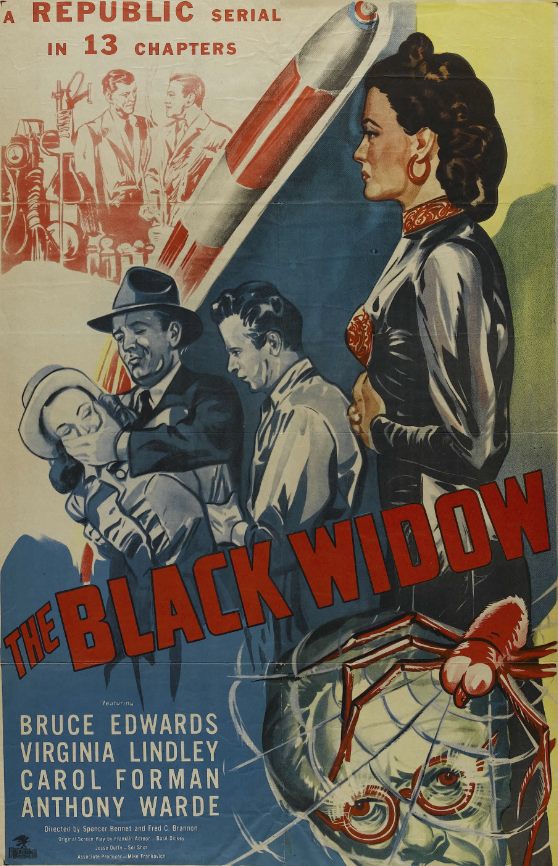
Spencer Gordon Bennet and Fred C. Brannon’s The Black Widow is a typically thrilling chapterplay from Republic Pictures. With its shadowy, semi-mystical antagonists and plucky male-female pair of protagonists navigating their way through a slam-bang adventure with plenty of sci-fi elements, it hits a lot of the same notes as The Crimson Ghost (1946), which Brannon co-directed with William Witney.

The Black Widow of the title is the darkly beautiful fortune teller Sombra (Carol Forman), who uses her crystal-gazing business as a front for her espionage activity. Like Fu Manchu’s daughter, she’s the henchwoman for an evil foreign mastermind bent on world domination. Her father, Hitomu, is played by grim monologist Brother Theodore, a.k.a. Theodore Gottlieb.

Hitomu is a weird character, and Theodore’s performance is suitably bizarre. Hitomu looks like a stage hypnotist wearing a turban with a fez on top. His plan for world conquest involves stealing the atomic rocket that Prof. Henry Weston (Sam Flint) is working on. Most of the time Hitomu pulls the strings from the background, giving Sombra his orders, then disappearing the same way he appeared — in a puff of smoke.

To do her bidding, Sombra has a pair of loyal henchmen, Dr. Z.V. Jaffa (I. Stanford Jolley) and Nick Ward (Anthony Warde). She’s also a master of disguise. With just a floppy rubber mask and a camera dissolve, Sombra can assume the appearance of any woman she pleases. It should come as no surprise — if you’re familiar with the conventions of serials — that this talent comes in handy week after week.

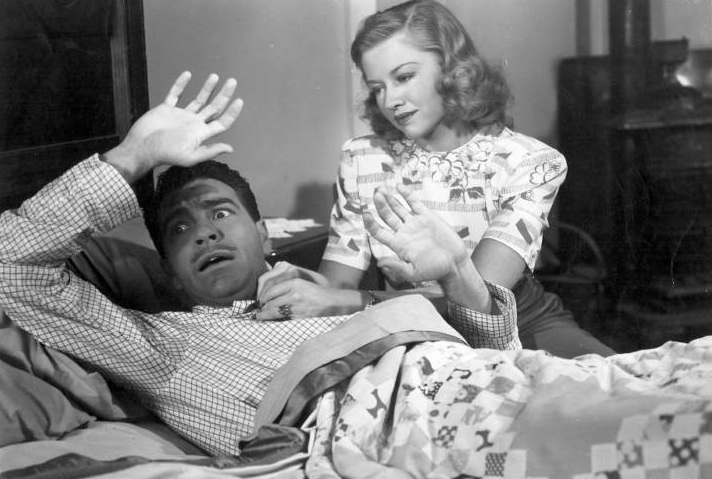
Opposing the Black Widow Gang at every turn are plucky Daily Clarion reporter Joyce Winters (Virginia Lee, who’s listed in the credits as Virginia Lindley) and amateur criminologist and mystery writer Steve Colt (Bruce Edwards), the creator of the fictional detective “Rodman Crane.”

Joyce and Steve have a mildly antagonistic relationship that’s supposed to be flirty and playful, but it never quite works because Lee and Edwards are such stiff actors. Occasionally, however, it reaches such insane heights that it’s hard not to go along for the ride, like the scene in which Steve handcuffs Joyce to the steering wheel of their car so she won’t follow him, but she detaches the steering wheel and ends up saving Steve from a gunman by attacking the gunman with the steering wheel.

The Black Widow is full of nifty pseudoscientific malarkey like the “Sinetrone,” which uses sound vibrations to destroy atomic rockets, and a tube of rocket fuel that contains “phosphoro,” a deadly chemical that can only be neutralized by “ciprocyllium acid.”

There’s plenty of action, but none of it’s meant to be taken very seriously. And in case you thought it was, the final chapter of the serial ends with Joyce rushing off to investigate a hot tip that Hitler is hiding in the Florida Everglades and Steve calling after her, “Wait for me!”

The Invisible Wall (Oct. 15, 1947)

Never gamble with the boss’s money.

I don’t know about you, but that seems to me like a pretty simple rule to follow.

Then again, more film noirs than I can count are based on doomed protagonists breaking simple life rules because of their uncontrollable urges.

In the case of Eugene Forde’s The Invisible Wall, the protagonist’s uncontrollable urge is the urge to gamble.

When World War II veteran Harry Lane (Don Castle) is sent to the Hotel Flamingo in Las Vegas by his once and future boss, big-time L.A. bookie and racketeer Marty Floyd (Edward Keane), he has $1,000 of his own money, and he plans to blow his roll fast. He’s holding $20,000 of Marty Floyd’s money that he needs to make a payoff with, though, so when he meets a man who claims to have a system for beating roulette, his goose is cooked.

The man who draws Lane into his gambling scheme in Las Vegas, Richard Elsworth (Richard Gaines), is accidentally killed, so Lane heads to Denver, where he impersonates Elsworth. The only snag is Elsworth’s wife, Mildred (Virginia Christine), who shows up and throws a monkey wrench into Lane’s plans.

The Invisible Wall follows a familiar film noir structure. It begins in St. Louis, where Harry Lane works at the Crown Jewelry Company under another name. He’s arrested for murder and gives a full confession, telling the story in flashback.

The Invisible Wall isn’t a great film by any stretch of the imagination, but it’s solid entertainment from Sol M. Wurtzel Productions, theatrically distributed by Twentieth Century-Fox. The actors are all stiff, but not laughably so, and as far as B noirs go, you could do a lot worse.

Unconquered (Oct. 10, 1947)

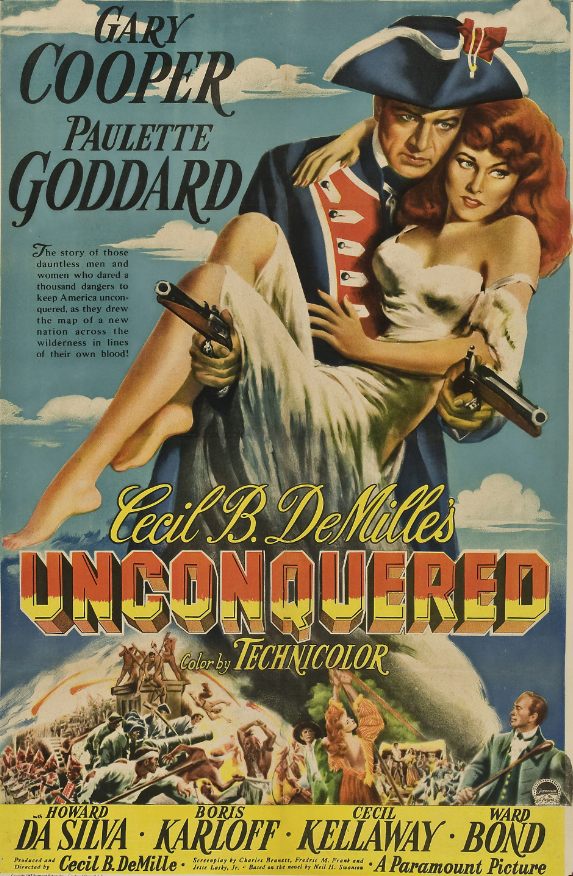
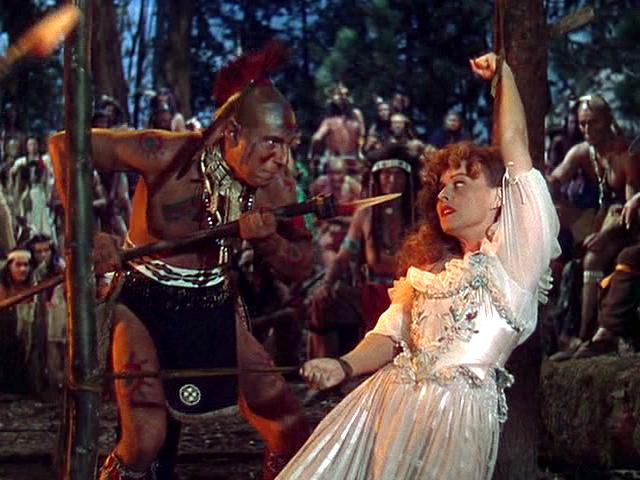
Cecil B. DeMille’s Unconquered is an overblown, bodice-ripping Technicolor epic that’s equal parts high drama and high camp. It’s also a whole lot of fun.

DeMille was 65 years old when he directed Unconquered, and by that point in his career he knew his way around an over-budget spectacle. (Unconquered cost almost $5 million to make, a king’s ransom in 1947.)

Most of the money shows up on screen, though. This is a great-looking picture. It drags a little in places, but for the most part it’s a fun ride. There are a few standout action set pieces — like a canoe chase that ends with a drop straight down a waterfall — but the talky bits are pretty enjoyable, too, even if they’re straight out of a potboiler.

Unconquered, which is based on Neil H. Swanson’s novel The Judas Tree, takes place in 1763, when Fort Pitt marked the end of the known and the beginning of the unknown in America. Located where one can now find Pittsburgh, the fort was the last outpost of civilization in the New World, surrounded by a vast forest filled with hostile Indians.

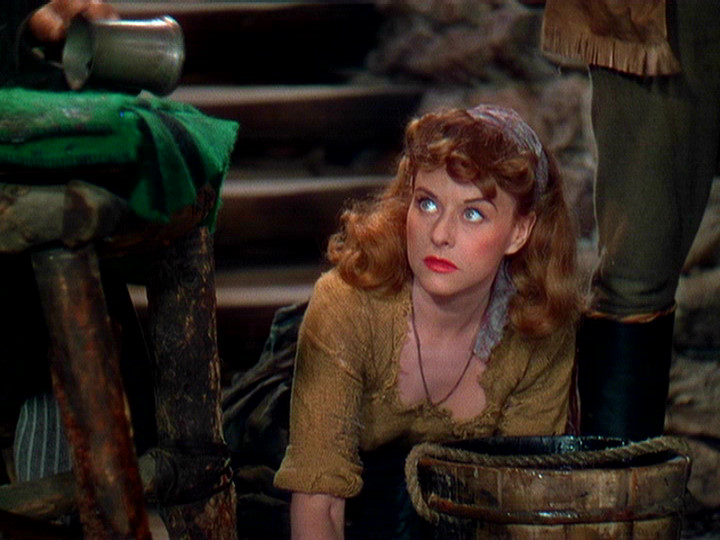
A beautiful Englishwoman named Abigail Hale (Paulette Goddard) stands trial for the murder of the royal officer who was killed when she was helping her brother fight off the King’s press gang. She is given a choice, face execution in England or be sold as a bond slave in Norfolk, Virginia.

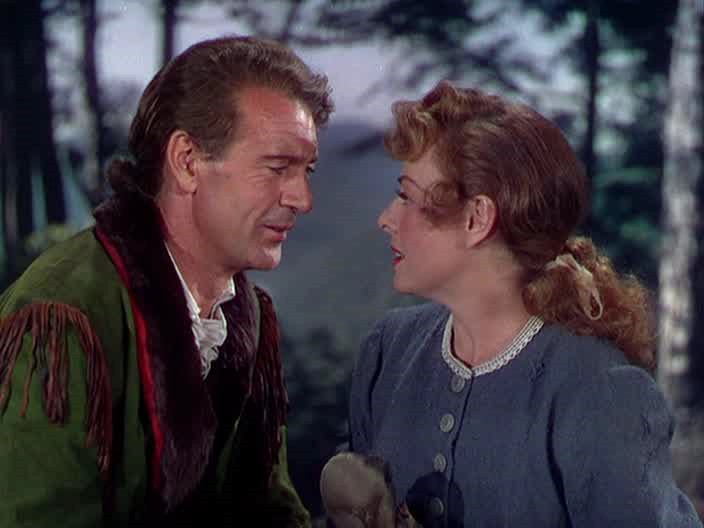
Naturally, she chooses life over death, but life as a bond slave is no picnic, especially when she’s bought by the villainous arms trader Garth (Howard Da Silva). The handsome Capt. Christopher Holden (Gary Cooper) outbids Garth and then casually gives Abby her freedom, but the treacherous Garth makes a deal with the slave trader to double-sell her and retakes possession of her.

Garth’s villainy isn’t limited to his treatment of beautiful white female slaves. He also has a monopoly on the lucrative beaver-fur trade west of Fort Pitt, and will do anything to maintain it, including arming the hostile Indian tribes to prevent white settlement beyond the Alleghenies.

The chief of one of those hostile Indian tribes is named Guyasuta, and he’s played by Boris Karloff, who’s always fun to watch. Guyasuta’s medicine man, Sioto, is played by Marc Lawrence, a regular in gangster movies. The scene in which Capt. Holden tricks Guyasuta and Sioto into releasing the captive Abby by using his “magic” compass was the high point of ridiculousness in the film, but in a movie like Unconquered, once you’re along for the ride, the more ridiculous the better.

Cooper and Goddard were both a little too old for the roles they were playing in Unconquered, but they were both still extremely attractive, so it didn’t bother me that much. The action in the film is well-staged, especially the final battle for Fort Pitt, which is heavy on the pyrotechnics. Who cares if it’s all a little hokey? No one does epics like Cecil B. DeMille.

Incidentally, Unconquered was the highest grossing film of 1947, with total ticket sales of more than $6 million. So at least it made its money back.

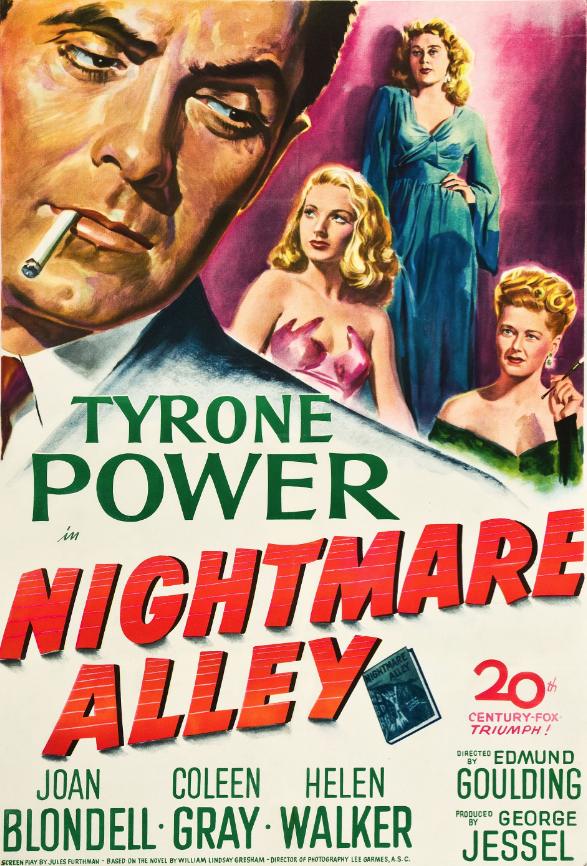
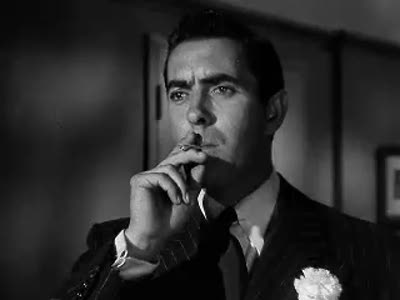
Nightmare Alley (Oct. 9, 1947)

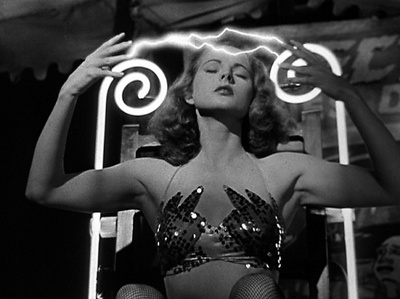
Nightmare Alley is a harrowing tale of manipulation and degradation. It’s a journey through a night-lit carnival world in which everyone is out for themselves and no one cares who they chew up and spit out if it means climbing one more rung on the ladder.

It was Tyrone Power’s second film directed by Edmund Goulding, and it’s miles ahead of their first collaboration, The Razor’s Edge (1946).

While The Razor’s Edge was more acclaimed at the time of its release — four Oscar nominations and one win — it’s aged poorly, and the Eastern mysticism at its center is supposed to be profound but is really just high-minded hokum.

Power made The Razor’s Edge with Goulding as a deliberate attempt to break out of the mold he’d been cast in as a handsome swashbuckler with a limited range. His performance wasn’t bad, but at times it seemed forced.

In Nightmare Alley, however, he completely loses himself in his character. His performance as Stanton “Stan” Carlisle — a grasping, duplicitous carny who graduates to tony nightclub performances and fleecing the wealthy — is so natural that I think someone who’d never heard of Tyrone Power before seeing Nightmare Alley would never guess that he wasn’t always seen as a serious actor.

Stan is one of the most memorable film characters I’ve seen in a long time. He’s a drifter who joins a carnival and attaches himself to an aging mentalist named Zeena (Joan Blondell) and her husband, broken-down alcoholic Pete (Ian Keith), then throws both of them aside when he’s learned all he can from them.

He takes up with Molly (played by the stunningly beautiful Coleen Gray), much to the dismay of her boyfriend, the brutish, simple-minded carnival strongman Bruno (Mike Mazurki). Using the techniques he learned from Pete and Zeena for cold reading a subject and conveying information through a spoken code, he and Molly take their mind-reading act to posh nightclubs, where they’re a sensation. Stan is more than just a quick study. He has an innate ability to see through people and glean their pasts, their innermost desires, and their secrets. The fact that he uses his talents to take people’s money doesn’t bother him, but it bothers Molly, who’s the only character in the film who’s essentially good and decent.

I love the scene in which Stan breaks down and finally uses the oldest trick in the book on Molly. He admits he’s a bad person and a hustler, but that he’s never lied to her. He may have used everyone else in his life, but he’s never used her.

This is, of course, also a lie, which becomes clear when he tosses Molly aside for Lilith Ritter (Helen Walker), consulting psychologist to Chicago’s upper crust, and uses Lilith’s knowledge of the intimate details of the lives of the wealthy to take them for all they’re worth.

While The Razor’s Edge was about Power’s character’s spiritual awakening, Nightmare Alley is about his character’s use of spiritual tropes to lie, cheat, and steal. Maybe it’s just the cynical age in which we live, but I thought that The Razor’s Edge came off as disingenuous, while Nightmare Alley was utterly convincing.

Nightmare Alley is based on the best-selling novel by William Lindsay Gresham. Certain aspects of the novel had to be sanitized for the film version, but it’s still a kick to the stomach. Its story of degradation is so powerfully told that there are many people who saw the film a long time ago and claim that there was a horrifying scene that was deleted for the DVD release. The scene they remember never existed (even in the novel), but it’s easy to see why they think they saw it. Like Psycho (1960) and Rosemary’s Baby (1968), Nightmare Alley uses the power of suggestion to make you remember horrifying things that you never actually see. It’s a great film, and one that will stay with you a long time after the credits have rolled.