Category Archives: 1949

Battleground (Nov. 9, 1949)

Battleground
Battleground (1949)
Directed by William A. Wellman
Metro-Goldwyn-Mayer

A lot of reviews of Battleground claim it was the first World War II movie to portray servicemen as fully human characters who experience fear and doubt, and not just as inspirational patriotic figures.

Whoever thinks this has probably not seen very many World War II movies made between 1941 and 1945. While Americans have never been great at understanding our enemies, we have always been good at exploring the vulnerability, fears, and doubts that our own soldiers experience in combat. Everything from Stephen Crane’s novel The Red Badge of Courage (1895) to Lewis Milestone’s film version of All Quiet on the Western Front (1930) presented nuanced views of men under fire.

During World War II, Hollywood films about the war tended to lionize servicemen and depict America’s involvement as vitally necessary, but the better ones, like Mervyn LeRoy’s Thirty Seconds Over Tokyo (1944) (with script by Dalton Trumbo), were also great human dramas.

I think the most significant antecedents to Battleground were two other films about men in the infantry: The Story of G.I. Joe (1945) and A Walk in the Sun (1945).

A Walk in the Sun was directed by Lewis Milestone, the man who directed All Quiet on the Western Front. It attempts to depict the mind of the American infantryman, through both dialogue and rambling internal monologues (a technique Terrence Malick would later use in The Thin Red Line). In keeping with the POV of the soldiers, the viewer is kept mostly in the dark about the larger significance of the violence, which punctuates the film in terrifying and confusing bursts.

The Story of G.I. Joe starred Burgess Meredith as embedded combat reporter Ernie Pyle and co-starred Robert Mitchum as the commanding officer of Company C, 18th Infantry. It was directed by William A. Wellman, the man who directed Battleground. Just like Battleground, the scenes of violence were swift and brutal, but the focus for most of the film was on the infantrymen themselves, and the boredom, extreme physical discomfort, and drudgery punctuated by fear that everyone who serves in combat experiences. Also like Battleground, most of the extras in The Story of G.I. Joe were actual soldiers who had served in combat.
Johnson and Hodiak

The big studios dumped most of their existing war movies in theaters not long after V-E Day and V-J Day in 1945, rightly assuming that the public had little interest in war movies once the war was over. In the few years that followed, plenty of movies dealt with veterans’ homecomings (The Best Years of Our Lives, released in 1946, was the finest of these films), but I’m hard pressed to think of any American films from this period that directly dealt with the experience of combat. The only one I can think of is Mervyn LeRoy’s Homecoming (1948), but all of the fighting in that film was just the backdrop for a passionate and illicit romance between Clark Gable and Lana Turner.

So Battleground was unique in that it was a return to films about World War II that focused on the combat experience. Producer Dore Schary brought the project with him to Metro-Goldwyn-Mayer when he left RKO Radio Pictures. It was a passion project for him, and he really had to fight to get it to the screen, since MGM head Louis B. Mayer believed that the public was still tired of war films.

Schary’s persistence paid off. His tribute to the “battered bastards of Bastogne” was a huge hit with audiences, and was nominated for six Academy Awards, including Best Picture and Best Director. (It took home two Oscars, one for Best Story and Screenplay, and one for Best Cinematography, Black & White.)

As I said earlier, Battleground is firmly in the tradition of humanistic portraits of ordinary soldiers like The Story of G.I. Joe and A Walk in the Sun, but it does go further than any films made during World War II depicting how scared many ordinary infantrymen really were, and how strongly they could desire to be far, far away from the fighting.

One character in Battleground is counting the days until he rotates out of the Army, and is furious when he’s told that they’re surrounded by the Germans, and he’s not going anywhere. But typically of the film, he steels his courage and eventually manages to make jokes about how the Germans are committing war crimes by shooting at him, a civilian. Another character has a full set of false teeth, which he loses and then tries to be given medical leave for a few days. (That character is played by Douglas Fowley, who really did lose his teeth in an explosion while serving on an aircraft carrier in the Pacific.)

At one point in the film, two soldiers retreat and have to leave behind a wounded man, who hides himself from the Germans by crawling under the wreck of a jeep and covering himself with snow. The film never depicts any of the men’s acts as cowardly; they are badly outnumbered, and doing anything else would have been suicide for all of them.

The Oscar-winning screenplay of Battleground was written by Robert Pirosh, who served as a master sergeant with the 35th Infantry Division during the Battle of the Bulge. Pirosh based his script partly on his own experiences, but the film details the exploits of the 327th Glider Infantry Regiment of the 101st Airborne Division, so Lt. Col. Harry Kinnard, who had been the deputy divisional commander of the 101st at Bastogne, served as technical advisor. More than a dozen veterans of the 101st appeared as extras in the film and worked with the actors to ensure accuracy. (The film is relatively accurate except for a plot about German soldiers moving through the lines who are disguised as Allied soldiers, but this can be forgiven in the interest of creating suspense and tension. It is, after all, “only a movie.”)

SPAM

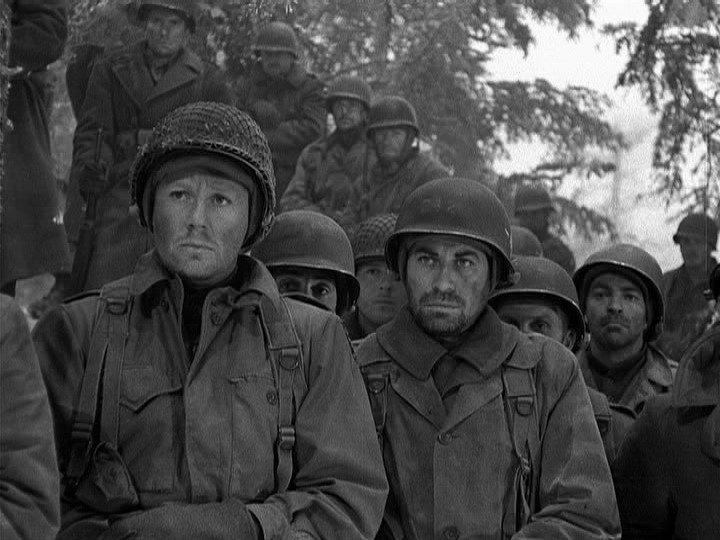
The actors are all great, and many of them had actually served in combat. James Whitmore, who plays Sgt. Kinnie and was nominated for a Best Supporting Actor Oscar for the role, served in the Marine Corps in World War II. James Arness, who would go on to star in the 20-year run of Gunsmoke on TV, has a small role in the film, and was the most decorated soldier among the cast. (Arness was severely wounded at Anzio, and received the Bronze Star, the Purple Heart, the World War II Victory Medal, the Combat Infantryman Badge, and the European-African-Middle Eastern Campaign Medal with three bronze battle stars.)

Consequently, Battleground is one of the most authentic World War II movies you will ever see, even though it might not seem that way to a viewer who has been weaned on the bloody CGI horrors of 21st-century war movies. However, if you’re conversant in the language of film, and can read what is being written on and off the screen, there’s one sequence that’s as brutal as anything you’ll ever see in a war film. Our heroes are surprised by German troops and in a fast-moving sequence, Ricardo Montalban rips a German soldier’s throat out with his teeth, Van Johnson stabs a German soldier to death with his bayonet, and John Hodiak bashes in the skull of a German soldier with the stock of his rifle.

I’ve read reviews of Battleground that refer to it as an “anti-war film.” I don’t know if this point of view springs from Steven Spielberg’s ridiculous assertion, made around the time that the philosophically incoherent Saving Private Ryan (1998) was released, that “every war movie, good or bad, is an anti-war movie,” but it couldn’t be further from the truth.

Although very few Hollywood films can simply be called “pro-war” films, a truly “anti-war” film would have to condemn any kind of armed conflict and celebrate pacifism as a viable and noble alternative. A truly “anti-war” film could not depict death and destruction in a highly aestheticized way, like Apocalypse Now (1979). And it could not celebrate the value of brotherhood under fire, as do Saving Private Ryan and Black Hawk Down (2001). No film that celebrates soldiers nobly putting their lives on the line for the greater good can ever be called an “anti-war movie,” any more than The Passion of the Christ (2004) can by called an “anti-crucifixion movie.”

I’m not condemning Battleground because it’s not an anti-war movie. I even thought the short, moving scene in which an Army chaplain explains why he thinks America’s involvement in the war is vitally necessary was one of the best bits of the movie.

But today is Memorial Day, and I think it’s worth considering, as we honor the sacrifice of people who laid down their lives overseas, that no war movie can ever replicate the experience of combat. No matter how realistic, the viewer is watching from a position of safety. And every war film is a tale told by survivors. The dead no longer have a voice.
All the King’s Men (Nov. 8, 1949)

All the King's Men
All the King’s Men (1949)
Directed by Robert Rossen
Columbia Pictures

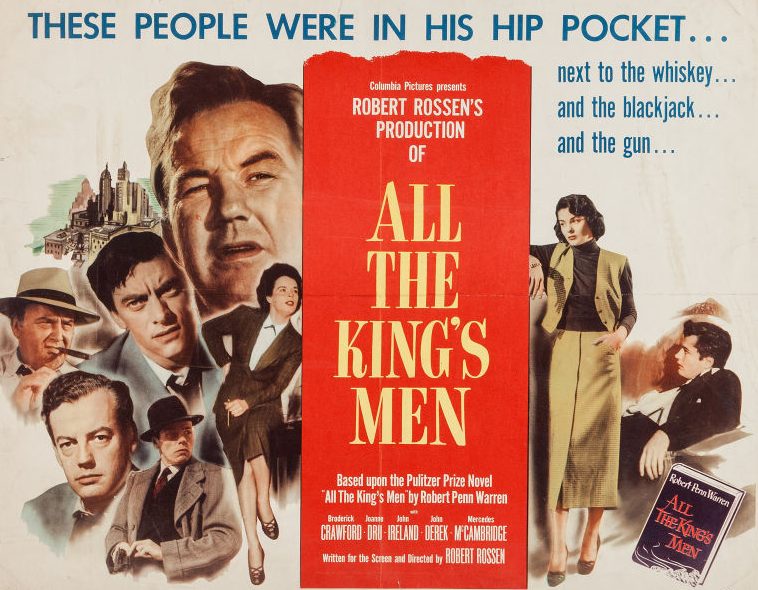
Director Robert Rossen’s film adaptation of Robert Penn Warren’s Pulitzer Prize-winning novel All the King’s Men was a big winner at the Oscars in 1950.

With seven nominations and three wins, All the King’s Men just trailed behind William Wyler’s The Heiress (an adaptation of Henry James’s 1880 novel Washington Square), which had eight nominations and four wins.

At the 22nd Academy Awards, All the King’s Men was nominated for Best Motion Picture, Best Director (Robert Rossen), Best Actor (Broderick Crawford), Best Supporting Actor (John Ireland), Best Supporting Actress (Mercedes McCambridge), Best Screenplay (Robert Rossen), and Best Film Editing (Robert Parrish and Al Clark).

It took home the awards for Best Motion Picture, Best Actor for Crawford, and Best Supporting Actress for McCambridge.

Broderick Crawford

These were huge wins for both actors. Broderick Crawford had appeared in a lot of movies, but probably hadn’t made a big impression on the movie-going public. Prior to All the King’s Men his biggest acting success had been playing Lennie in Of Mice and Men on Broadway, but when the film version was made in 1939, he was passed up for the role and Lon Chaney, Jr., was cast instead.

Mercedes McCambridge was an accomplished radio performer who did a lot of work on the air with Orson Welles, but this was her first appearance in a film. Not too shabby!

Rossen did a lot of work as a screenwriter before making All the King’s Men, but it was only the third film he directed. The first two films he directed were Johnny O’Clock (1947), which not very many people saw, and Body and Soul (1947), which was a hit with both critics and audiences.

All the King’s Men was an even bigger success than Body and Soul. In the 1950s, Rossen had trouble with HUAC, eventually “named names,” and continued directing films, but it would be a long time before he would make another widely acclaimed film (The Hustler, with Paul Newman, in 1961).

Just as Citizen Kane was a thinly veiled gloss on the life and career of William Randolph Hearst, All the King’s Men is a thinly veiled gloss on the life and career of Louisiana politician Huey Long.

Huey Long was Governor of Louisiana from 1928 to 1932 and a U.S. Senator from 1932 until his death in 1935. He was a political operator who could turn wild dreams into massive public projects, he was a passionate advocate of wealth redistribution, and he was a divisive figure.

The film twists and amplifies Long’s legacy for dramatic effect, but enough of the details are close enough that speaking the name “Huey Long” was forbidden on the set.

Rally

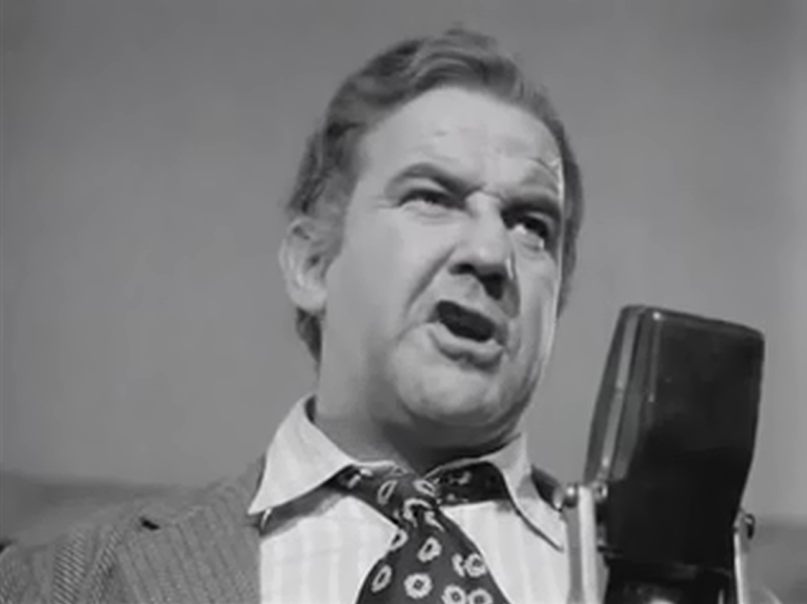
As Willie Stark, Broderick Crawford doesn’t attempt a Southern drawl, but it’s probably better that way. I didn’t even think about the way Crawford was speaking while I was watching the movie. His performance is raw and powerful, and is the perfect mix of bonhomie, sincerity, menace, and naked ambition. Through the eyes of reporter Jack Burden (John Ireland) we see Willie Stark transform from an honest but inexperienced politician to a canny operator in charge of an enormous political machine.

Unlike Citizen Kane, which is one of the most highly stylized films ever made, Rossen and his cinematographer, Burnett Guffey, shot All the King’s Men in a naturalistic fashion. It’s mostly shot in real locations (which are occasionally very drab) and employs a lot of non-actors (a.k.a. “real people”) in small parts. The only really over-the-top visuals occur at Willie Stark’s political rallies, which often take place at night and are full of torches and rows of jackbooted police officers, which makes the rallies resemble the Nuremberg Rally.

I especially liked some of the casting choices. Dark-haired pretty boy John Derek plays Willie Stark’s son, college football star Tom Stark. He is oddly mirrored by Walter Burke as “Sugar Boy,” Willie Stark’s nefarious bodyguard. Derek and Burke have similar bone structure and coloring, but while Derek is handsome and charming, Burke is reptilian and creepy.

All the King’s Men is far from being a docudrama about American politics, but its over-the-top tale of ambition perverted by corruption is still relevant.

https://www.youtube.com/watch?v=lyBBhMPQLYw

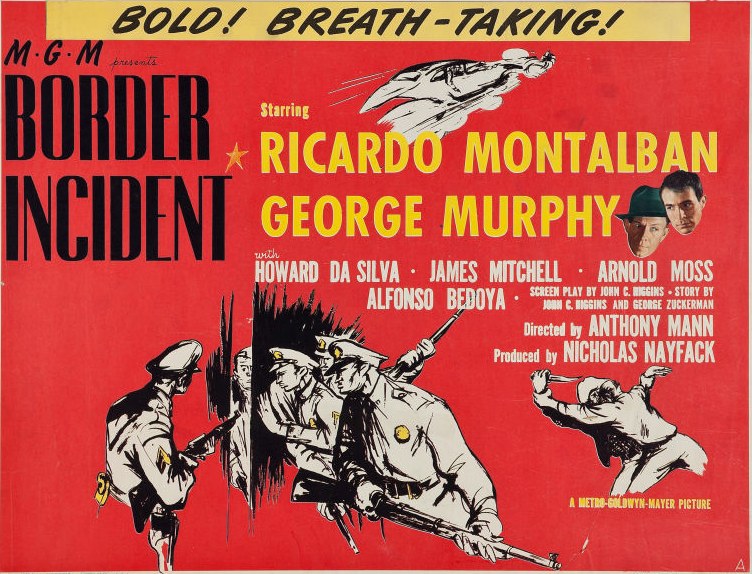
Border Incident (Oct. 28, 1949)

Border Incident
Border Incident (1949)
Directed by Anthony Mann
Metro-Goldwyn-Mayer

If you think that Mexico-U.S. border security and illegal immigration are relatively new issues, check out Anthony Mann’s Border Incident. Watching it today, it’s remarkable how familiar the social and political backdrop feels.

Border Incident is a fictional film, but it’s a composite of actual cases. It begins with the stentorian narration that opened nearly every docudrama from the 1940s, and explains how important migrant labor from Mexico is to the U.S. agricultural industry. The narrator goes on to say that while the vast majority of Mexican farm workers play by the rules, wait their turn, and arrive in the United States with working papers, some go through back channels and slip across the border in order to work illegally.

In Border Incident, Mexican and U.S. law-enforcement agencies join forces not to combat illegal immigration but to protect illegal immigrants who are being victimized in the lawless borderlands. (Police officers going undercover to protect illegal immigrants was also the subject of Joseph Wambaugh’s 1984 nonfiction book Lines and Shadows, which I highly recommend.)

The police officers on the front line of the operation are Pablo Rodriguez (Ricardo Montalban) and Jack Bearnes (George Murphy). Pablo and Jack have worked together before and have an easy friendship, but they don’t get much time together onscreen in Border Incident.

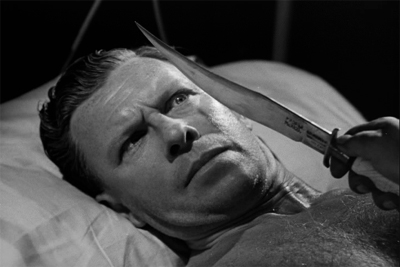
George Murphy

Jack goes undercover as an American fugitive looking to flee the country and cozies up to the vicious leader of the gang who are robbing and killing illegal immigrants. The gang’s leader is named Owen Parkson and he’s played with understated relish by dependable heavy Howard Da Silva. (And speaking of dependable heavies, the great Charles McGraw is also on hand as one of Parkson’s lieutenants.)

Meanwhile, Pablo goes undercover as a migrant laborer looking to put himself at the mercy of the human traffickers who transport desperate men in dangerous and cramped conditions. Will his soft hands give him away? You’ll just have to watch the movie to find out.

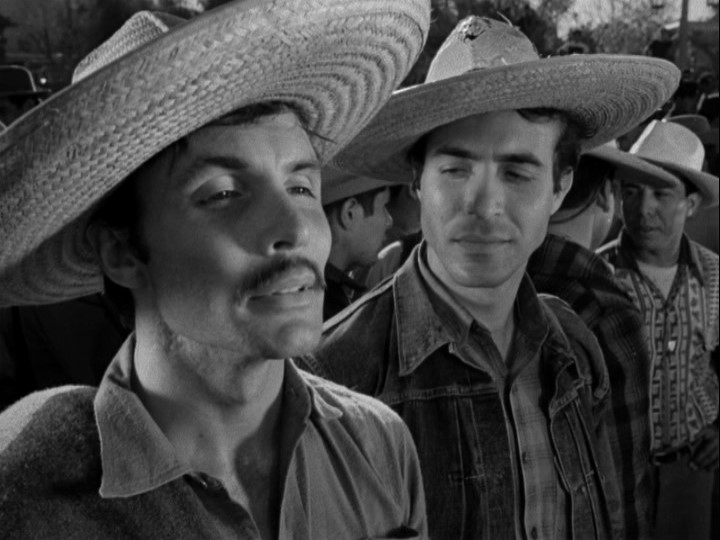
Mitchell and Montalban

Border Incident was one of the last films Anthony Mann made with cinematographer John Alton. Earlier in their careers, Mann and Alton made two of the most visually innovative noirs of all time; T-Men (1947) and Raw Deal (1948).

I didn’t find Border Incident quite as involving as either T-Men or Raw Deal, but visually it’s every bit the equal of those films, maybe even better. It’s full of deep-focus photography that frames two people’s faces — one in the foreground and one in the background — in a way that dials up the tension and paranoia. Day-for-night shooting rarely looks good, but Alton makes it work in Border Incident, which is replete with stunning desert landscapes that are dominated by jagged mountains and that have a sense of claustrophobia despite taking place outdoors.

While Border Incident doesn’t have any of the “We don’t need no steenking batches” types of Mexican caricatures, aside from Montalban’s protagonist, the Mexican characters don’t have much depth. And it’s odd that a film with so much authenticity would cast an Anglo actor, James Mitchell, as the second most prominent Mexican character. (If you’re a fan of soap operas, you might know Mitchell as Palmer Cortlandt on All My Children.)

Minor quibbles aside, however, Border Incident is a top-notch entry in the film noir docudrama genre. It’s a tough, tense, violent film that features extremely impressive cinematography and continually mounting tension. It also made me wonder what Orson Welles’s masterpiece Touch of Evil (1958) would have been like if Ricardo Montalban (an actual Mexican) had been cast in the lead role instead of Charlton Heston (a fake Mexican).

She Wore a Yellow Ribbon (Oct. 22, 1949)

She Wore a Yellow Ribbon
She Wore a Yellow Ribbon (1949)
Directed by John Ford
Argosy Pictures / RKO Radio Pictures

As a cinephile, I feel like any criticism of the almighty John Ford must be made in hushed tones.

So in that spirit, let me begin by praising the aspects of She Wore a Yellow Ribbon that I found praiseworthy.

She Wore a Yellow Ribbon is one of the most beautifully shot westerns I’ve ever seen. Winton C. Hoch won the Academy Award for best color cinematography for this film, and he deserved it. Hoch had previously shot 3 Godfathers (1948) for Ford, and would go on to lens three more films for Ford, The Quiet Man (1952), Mister Roberts (1955), and The Searchers (1956).

Technicolor is a process that often looked oversaturated and occasionally even gaudy, but She Wore a Yellow Ribbon looks simultaneously lifelike and hyperreal. It stands as a towering achievement of what a talented cinematographer could do when shooting in Technicolor.

I also really enjoyed Ben Johnson’s performance as Sgt. Tyree, a former Confederate captain now serving in the U.S. Cavalry as a scout. Johnson was as comfortable in the saddle as he was on his own two legs, and he would go on to a long career in Hollywood, specifically in westerns. I enjoyed his role in Mighty Joe Young (1949), but it didn’t hint at his future greatness in the same way that his performance in She Wore a Yellow Ribbon does. I also enjoyed Richard Hageman’s score, and I found this film enjoyable moment to moment.

John Wayne

But overall, I really didn’t like it. I like plenty of John Ford’s movies just fine, but for more than 20 years I have been mystified by the universal reverence film fans have for his work.

She Wore a Yellow Ribbon is emblematic of what I don’t like about Ford’s films. His westerns were grand operations in mythmaking, but with an excess of sentimentality. They were historically inaccurate and geographically incoherent, and without a great actor like Henry Fonda in the lead, his films feel like they’re adrift at sea.

I like John Wayne. I really do. But he was better at being an iconic presence than he was at turning in a good performance. The only “performances” of his I’ve found compelling were ones that contained a streak of nastiness, like his roles in Red River (1948) and The Searchers (1956). In She Wore a Yellow Ribbon, Wayne is mostly himself, but he has a few opportunities to emote, and those scenes were dead on arrival for me. There’s nothing interesting about his character, unlike Henry Fonda’s deeply flawed character in Fort Apache (1948).

This is a film with remarkably low dramatic stakes. Almost nothing happens in She Wore a Yellow Ribbon. This would be fine if it were simply a realistic look at the role the U.S. Cavalry played in the settling of the American West, but it’s not in any way realistic or historically accurate. It takes place in 1876, shortly after the massacre of General Custer and the 7th Cavalry at the Battle of the Little Bighorn. The film’s narrator informs us that multiple Indian nations are joining forces to fight the U.S. government en masse, and that just one more defeat like the one Custer suffered and it will be a century before the Pony Express will be able to safely cross the west again. Historically, this is utter hogwash, and not just because the Pony Express ceased operations in 1861.

Of course, a western doesn’t need to be historically accurate to be entertaining, but with no interesting characters, no dramatic tension, and extremely little action, She Wore a Yellow Ribbon just didn’t work for me. Perhaps my viewing was a victim of high expectations, since She Wore a Yellow Ribbon seems to be universally loved by classic film fans. It’s the second in Ford’s unofficial “Cavalry Trilogy,” but aside from the gorgeous visuals I thought it was a much weaker movie than the first, Fort Apache. (The third part of the trilogy is Rio Grande, which was released in 1950 and also starred John Wayne.) On the other hand, I brought no particular expectations to Ford’s last film, 3 Godfathers, and I enjoyed that one quite a bit.

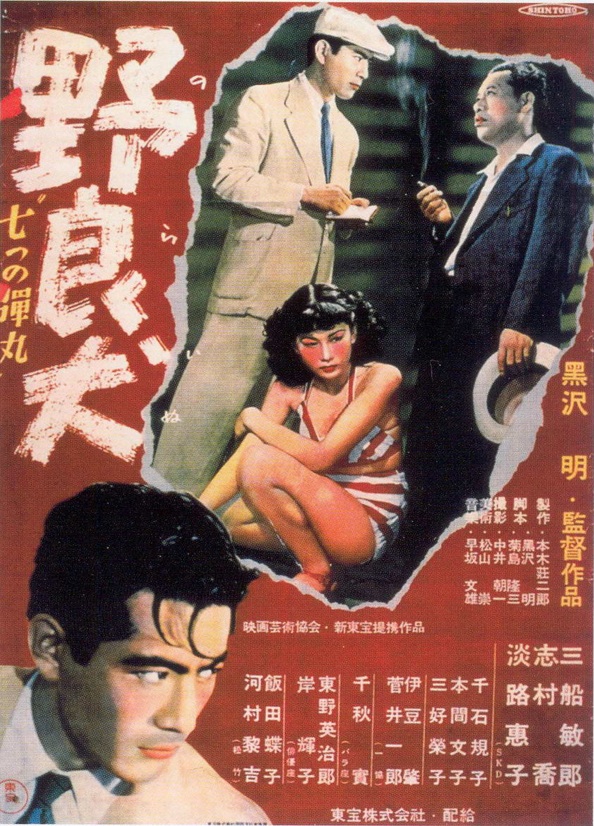
Stray Dog (Oct. 17, 1949)

Stray Dog
Stray Dog (1949)
Directed by Akira Kurosawa
Toho Company

Akira Kurosawa’s ninth film is one of my personal favorites. I love a good police procedural, and Stray Dog is one of the best.

Kurosawa originally wrote Stray Dog as a novel. He was influenced by the Inspector Maigret novels by French writer Georges Simenon. In the 1960s, in an interview with Donald Richie, Kurosawa expressed his disappointment about the film. “I wanted to make a film in the manner of Simenon, but I failed,” he said. “Everybody likes the picture, but I don’t.”

I think it’s good for artists to be their own harshest critics, but in this case I think the public is right. Kurosawa may have failed to make the film he wanted, but he succeeded in making a great film nevertheless. For my money, Stray Dog and Drunken Angel (1948) are Kurosawa’s two earliest masterpieces.

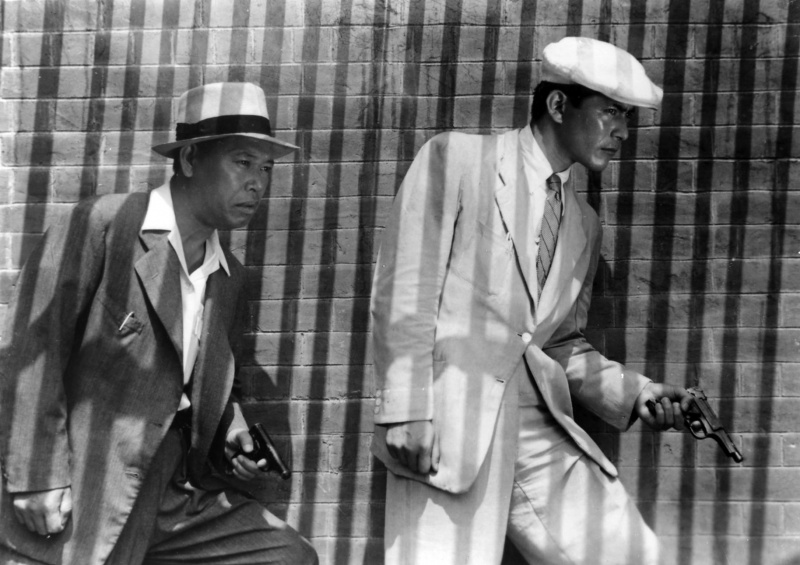
Like The Naked City (1948), which was one of the first police procedural movies, Stray Dog pairs an older, seasoned detective with a younger, inexperienced detective. They’re played by Kurosawa regulars Takashi Shimura and Toshirô Mifune.

If you’ve seen Seven Samurai (1954), you know Shimura as the de facto leader of the samurai (he’s the one with the shaved head) and you know Mifune as the wild and unpredictable odd man out.

Shimura and Mifune played variations on this relationship in numerous Kurosawa films. In Drunken Angel Shimura was an alcoholic physician who struggled to convince the swaggering young gangster played by Mifune that he had to treat his tuberculosis. In The Quiet Duel (1949), Mifune played a young surgeon desperate to keep his syphilis infection a secret, and Shimura played his father and the head of their medical practice.

In Stray Dog, Shimura plays Detective Sato and Mifune plays Detective Murakami. Their relationship has elements from their previous two collaborations with Kurosawa, but there’s a playfulness and sense of humor that was absent from both Drunken Angel and The Quiet Duel.

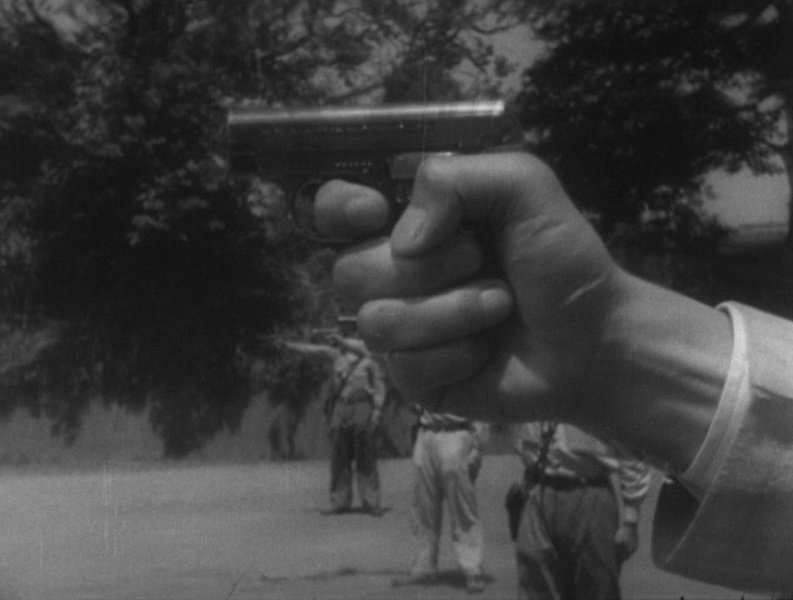
Colt Model 1908 Vest Pocket

The film begins when Murakami’s service weapon is stolen, and Murakami’s shame is more than he can bear. The little .25 caliber Colt Model 1908 Vest Pocket was lifted by a pickpocket on a crowded bus. Its magazine was loaded with all seven rounds. After the weapon is used in a mugging, Murakami writes a resignation letter, but his lieutenant rips up the letter and advises him that catching the thief would be a better form of penance.

Stray Dog presents a panoramic view of postwar Japan. Unlike the huge cesspool in Drunken Angel that functioned as a grim and fairly obvious metaphor for life during the American occupation, Stray Dog presents a world that has changed forever, in ways both good and bad.

After Murakami makes a positive identification of a female suspect, another detective who is familiar with the woman is surprised to learn that she was wearing a dress, since she always wore a kimono in the past. Murakami assures the older detective that she was wearing a Western-style dress, and that she had a perm and stank of perfume. The older detective shakes his head and observes that times have certainly changed.

When Murakami goes undercover to track the passage of the stolen pistol through the black market, we see one destitute person after another in a series of dissolves. Life is not easy for most people after the war.

But there’s also the sense of life returning to normal. Sato and Murakami track a suspect to a baseball game and keep him under observation in the stands. This tense sequence features seamlessly integrated 16mm footage of an actual game between the Nankai Hawks and the Yomiuri Giants. The players all have numbers on their uniforms, which was forbidden as “too individualistic” during World War II.

Sato and Murakami

I think that Stray Dog presents a more realistic view of police psychology than The Naked City. After Murakami and Sato narrow down their search to a single suspect, Murakami feels sympathy for the man. Like Murakami, the criminal is also a returning serviceman, and Murakami thinks that he could have easily become a criminal if he hadn’t become a cop. As his stolen Colt is used in a series of increasingly brutal crimes, he feels responsible for each one. Sato tells him to leave the psychoanalysis to detective novels and just focus on arresting the bad guys. Sato says that Murakami will never forget his first arrest, but after each subsequent collar he will grow less and less sentimental.

Sato has a much lighter touch than Murakami. When we first see him, he is laughing and sharing popsicles with the female suspect who Murakami got nothing from after leaning on her too hard. Sato’s way with suspects appears more lenient than Murakami’s, but it’s because he has a much better idea of what he’s doing.

Murakami is dogged but fairly incompetent in the early stretches of the film, but as he learns from Sato he becomes more patient and observant. A young person learning from a seasoned veteran is one of the oldest stories in the book, but it’s a damned good one when told well, and Kurosawa told stories extremely well.

Mifune

In addition to the convincing performances and the involving story, Stray Dog is a triumph of atmosphere. The film takes place in the hottest days of summer, and Kurosawa never lets the viewer forget it. The opening shot is a closeup of a dog lying on the ground and panting. The first words we hear from the narrator are, “It was an unbearably hot day.” In nearly ever scene there is something that conveys the humidity and languor — people fanning themselves, sweat glistening on faces and staining clothing, men mopping themselves with handkerchiefs and rolling up their sleeves. When a chorus of scantily clad showgirls led by the beautiful and petulant Harumi Namaki (Keiko Awaji) traipse off stage and collapse on the floor, their flesh is beaded with perspiration.

At just over two hours, Stray Dog is a long movie, but even in the stretches where not much happens there’s always a sense of forward movement conveyed by well-paced edits, frequent dissolves, and wipes to transition from one scene to another. (Kurosawa loved wipes.)

Fumio Hayasaka’s score conveys tension and excitement, but it’s used judiciously. Kurosawa also makes great use of diegetic music in the film’s two climactic scenes. In the first, the heat has finally broken and there is a tremendous rainstorm as the radio in a hotel lobby plays Sebastián Yradier’s “La Paloma” in the background. In the second climactic scene, Murakami confronts his quarry behind a house where a young woman is playing Friedrich Kuhlau’s Sonatina in C Major, Op. 20 No. 1. The music tinkles out of an open window, its serenity at odds with the violent confrontation that is about to explode.

Stray Dog is one of the best police procedurals of all time, but like a lot of great films it transcends its own genre to tell a universal story.

Starting in 1950 with Rashômon, Kurosawa would gain more and more attention worldwide as he produced one great film after another. Stray Dog was one of the last films Kurosawa made that was pretty much unknown outside of Japan until the 1960s. It’s still not as widely seen as his best-known films, so if you like Japanese cinema and haven’t seen it yet, you have something to look forward to.

Thieves’ Highway (Oct. 10, 1949)

Thieves' Highway
Thieves’ Highway (1949)
Directed by Jules Dassin
20th Century-Fox

Welcome to the white-knuckle world of trucker noir!

Trucker noir is a sparsely populated subgenre, even though the world of long-haul trucking seems tailor-made for film noir. Truck drivers are blue-collar everymen who push themselves to the limit and exist in a nighttime world where sleep equals death. They battle corrupt syndicates and each other for a little cold hard cash.

And yet, when I was trying to think of great noirs (and not-so-great noirs) specifically about truck drivers, I could only come up with a handful.

The original, and still one of the best, trucker noirs is Raoul Walsh’s They Drive by Night (1940), which is based on the 1938 novel The Long Haul, by A.I. Bezzerides. Produced by Mark Hellinger and released by Warner Bros., They Drive by Night still stands up as superior entertainment, and was the template for most of the trucker noirs that followed. It stars film-noir mainstays George Raft and Humphrey Bogart as brothers who run a small trucking business in California that carries fresh fruit from farms into the markets of Los Angeles. The beautiful and talented Ann Sheridan plays a truck-stop waitress who takes a shine to Raft, and Ida Lupino — one of my favorite actresses from the classic noir cycle — is the femme fatale who wants to get her claws into Raft.

Other noirish tales of brave men fighting rackets and trying to stay awake through the night include Truck Busters (1943) (directed by B. Reeves Eason), Speed to Spare (1948), and Highway 13 (1948) (both directed by William Berke).

Trucker noir reached its apotheosis in 1953 with Henri-Georges Clouzot’s Le salaire de la peur (The Wages of Fear), which was remade by William Friedkin in 1977 as Sorcerer. The Wages of Fear is one of the greatest films ever made, and one of the few thrillers that lives up to the term “edge of your seat.”

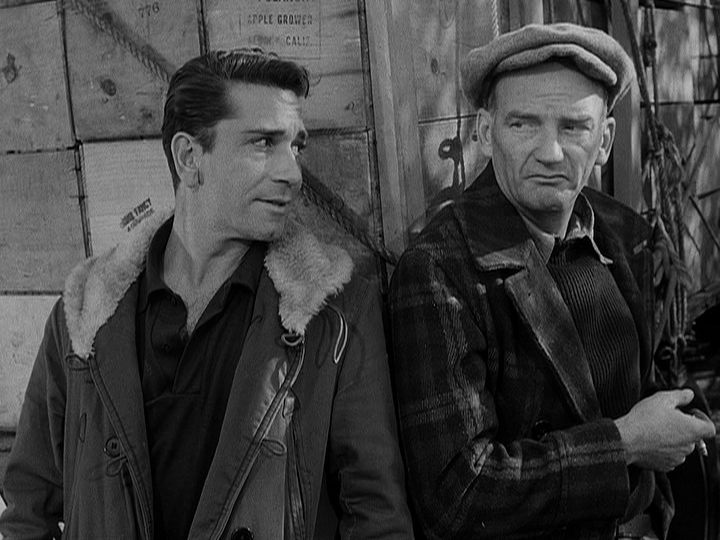
Conte and Mitchell

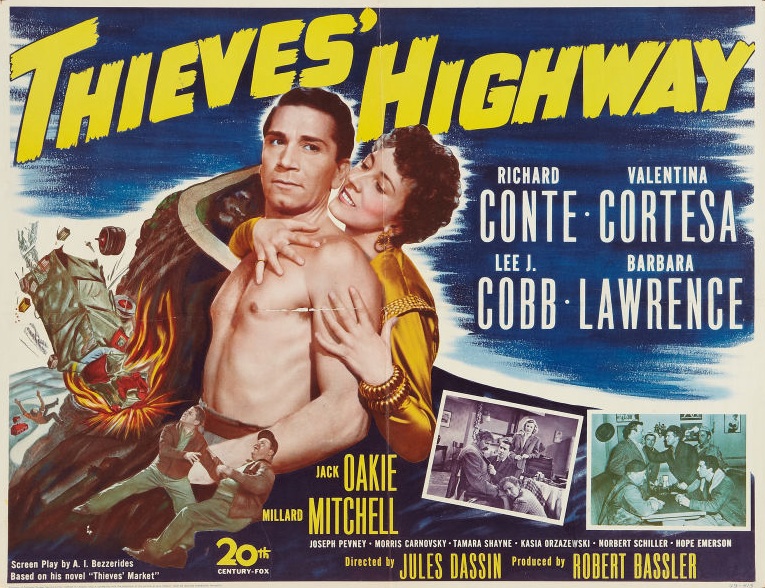
But before that high-water mark, Jules Dassin directed a very good film called Thieves’ Highway. It’s similar in a lot of ways to They Drive by Night, probably because they’re both based on novels by A.I. Bezzerides. Thieves’ Highway is based on Bezzerides’s novel Thieves’ Market, which was published earlier in 1949.

Richard Conte plays Nick Garcos, a Greek-American who has returned home to Fresno, California, after serving overseas. He discovers that his father, Yanko Garcos (Morris Carnovsky), has been crippled following an altercation with the crooked produce distributor Mike Figlia (Lee J. Cobb).

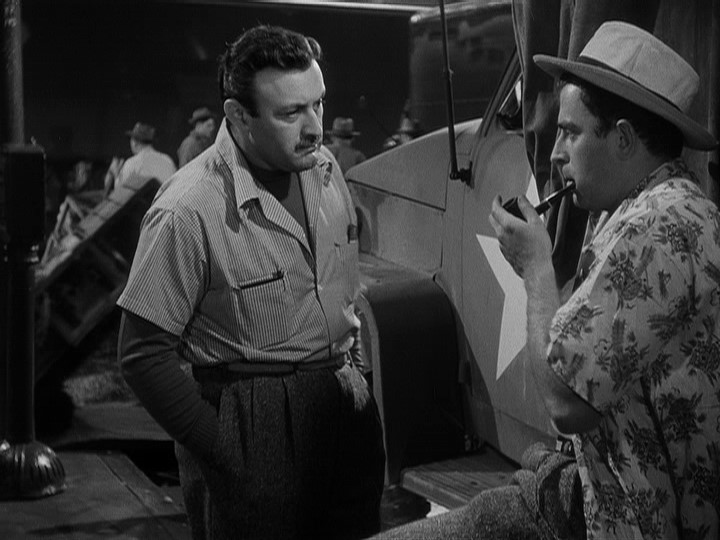
Nick vows revenge, and teams up with a salty old trucker named Ed Kinney (Millard Mitchell) to deliver a big load of Golden Delicious apples to Figlia’s market in San Francisco. Nick drives a military surplus Studebaker US6 and Ed drives an old Mack AB that’s on its last legs.

My favorite sections of Thieves’ Highway are the ones that take place on the road. Jules Dassin’s direction is at its best in these sequences, which are full of tension and drama. There are another pair of wildcatters, Pete (Joseph Pevney) and Slob (Jack Oakie), who are trying to beat Ed and Nick to the San Francisco markets. I love Pevney and Oakie’s performances in this film. Even though they come off as jerks in most of their early scenes, they’re both able to craft fully realized and relatable characters who are as much a part of the fabric of the film as Ed and Nick are.

Lee J Cobb

I also love the scenes in the market, which were shot on location in San Francisco and are dominated by the menacing bonhomie of Lee J. Cobb as Figlia. I’ve never seen Cobb give a bad performance, and Thieves’ Market is no exception.

Ditto for Richard Conte, who plays Nick as a determined guy who doesn’t have a lot of experience, but is good at thinking on his feet and won’t ever back down from a conflict. I love the scene where he snarls the extremely old-school threat, “Touch my truck and I’ll climb into your hair.”

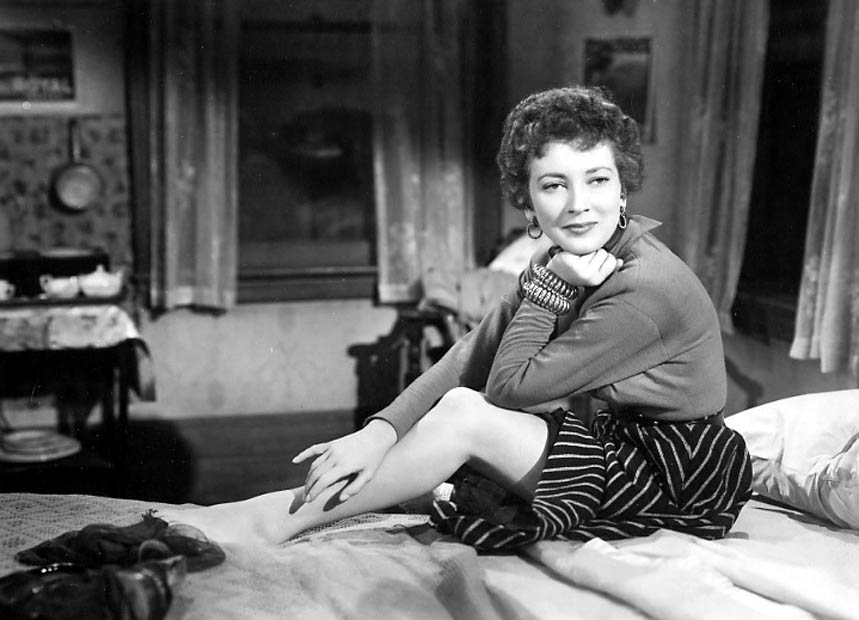
The scenes in the market are punctuated by Nick’s burgeoning love affair with a prostitute named Rica, played by Valentina Cortese. (She’s listed in the credits as Valentina “Cortesa.”) She invites him up to her rented room, and lets him sleep and bathe after spending hundreds of miles on the road. These scenes are strongly reminiscent of the bits in They Drive by Night where Ann Sheridan cares for the bone-tired George Raft, but they’re much more sexually charged. Not only does Nick remove his shirt and allow her to caress him, but it’s brazenly obvious that she’s a prostitute. Figlia even refers to her as a “trick” when he admits to Nick that he paid her to get Nick up to her room.

Valentina Cortese

Dassin directed a bunch of films for MGM before making his two early masterpieces, Brute Force (1947) and The Naked City (1948) for Universal with producer Mark Hellinger. He was blacklisted around the time he made Thieves’ Highway, and it would be the last film he directed in Hollywood. (He was still under contract with 20th Century-Fox when he directed his final post-blacklist film, Night and the City, but that movie was shot in London.)

Thieves’ Highway was a modestly budgeted film shot on a very tight schedule, and it suffered some narrative tinkering by Darryl F. Zanuck, but it still stands as a typically great film by Dassin. It’s also an important part of the wave of post-war/pre-HUAC film noirs that explicitly critiqued the American capitalist system.

Thieves’ Highway is a tale of capitalism in miniature. The Golden Delicious apples that Ed and Nick struggle to get to market are a hot but perishable commodity. They’re gambling with their livelihoods and their lives to get them to Figlia’s market as fast as they can. Dassin presents capitalism as an economic structure that, at its best, encourages daring, shrewd negotiation, and hard work. At its worst, it encourages deceit, treachery, and the exploitation and death of laborers as long as there’s a buck to be made.

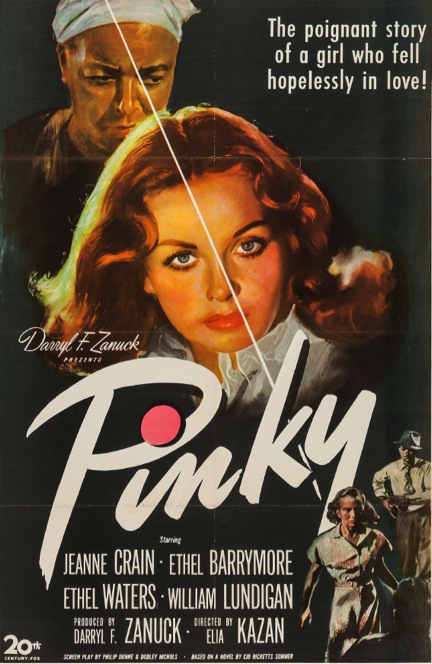
Pinky (Sept. 29, 1949)

Pinky
Pinky (1949)
Directed by Elia Kazan
20th Century-Fox

Elia Kazan directed a lot of great movies. Pinky is not one of them, but there’s a great movie somewhere in there that’s struggling to get out.

The biggest problem with the film is that Jeanne Crain, the actress who plays Patricia “Pinky” Johnson, is wildly miscast.

Pinky is based on Cid Ricketts Sumner’s 1947 novel Quality, which is about a light-skinned African-American girl who “passes” as white.

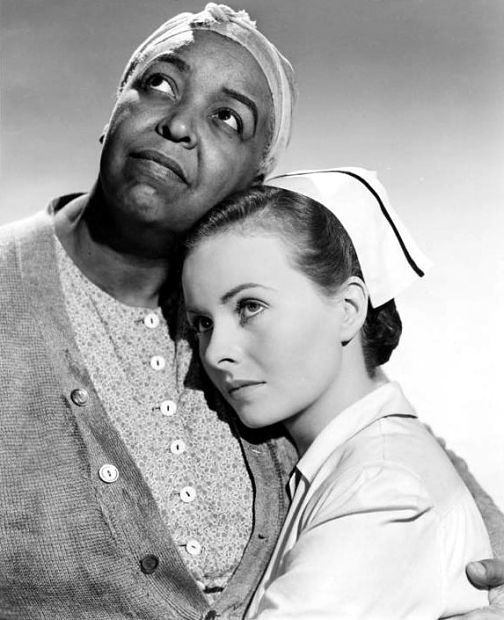
Crain is as white as white can be, and to accept her as the granddaughter of the character played by Ethel Waters requires a willing suspension of disbelief. Crain’s physical appearance is only part of the problem, however. Her performance is never convincing either.

Pinky is a character who was raised by her grandmother, Dicey (played by Waters), in the Deep South, but who passed herself off as white after she went north to study nursing. She has a fiancé, Dr. Thomas Adams (William Lundigan), who has no idea about her racial background. When he finds out, he’s progressive enough to tell her it shouldn’t matter, but he acknowledges the racist and segregated world they live in. “It’s a tricky business,” he says to her. “You never know what exists deep down inside yourself.”

At no point in the film does Crain seem like she actually grew up in the Deep South community in which Dicey lives. It’s believable enough that she changed the way she spoke when she was “up North,” but at no point does her mannered demeanor crack, no matter how angry, scared, or sad she is.

Waters and Crain

Kazan knew that Crain was the wrong actress for the role, and probably made the best film he could with what he had to work with. The original director of Pinky, John Ford, dropped out of the project because he didn’t get along with Ethel Waters, and Crain was already cast as the lead when Kazan took over.

In the book Kazan on Film, he said, “The only things that were not mine, which are a hell of a lot, were the script and the cast. It was the last time I ever allowed that. Jeanne Crain was a sweet girl, but she was like a Sunday school teacher. I did my best with her, but she didn’t have any fire. The only good thing about her face was that it went so far in the direction of no temperament that you felt Pinky was floating through all of her experiences without reacting to them, which is part of what ‘passing’ is.”

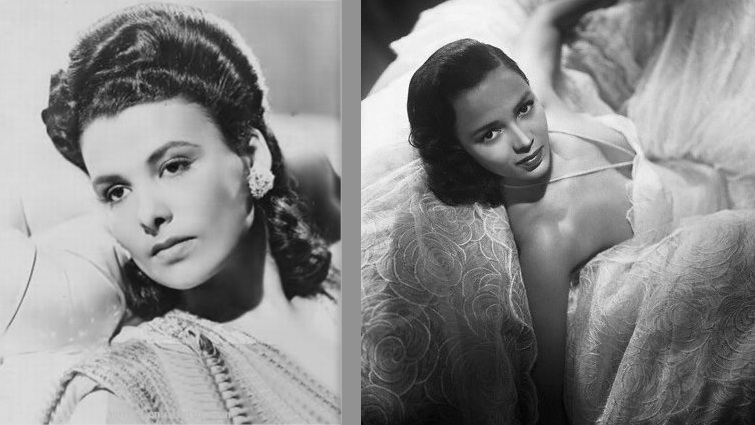
A much better choice for the role of Pinky would have been an actress who was actually mixed race, like Lena Horne, Dorothy Dandridge (both pictured below), or Hilda Simms.

Lena Horne and Dorothy Dandridge

If a white actress absolutely had to be case as Pinky, Linda Darnell would have been a much better choice. Jennifer Jones or Yvonne De Carlo wouldn’t have been terrible choices, either.

Crain, on the other hand, seems like stunt casting done for shock value. For instance, Melba Wooley (Evelyn Varden), one of the most odious characters in the film, exclaims after meeting Pinky, “Why she’s whiter than I am! It just gives me the creeps.”

The only interesting thing about having Crain in the lead is that it draws attention to how inextricable the concept of race was from the social struture of the segregated South. For instance, when two police officers show up after Pinky is arguing with a black man and a black woman, their attitude to her is solicitous and deferential. But as soon as her “true” race is revealed, they manhandle her and throw handcuffs on her.

Later in the film, when Mrs. Wooley is unable to get a store cashier to interrupt her transaction with Pinky to pay attention to her, she raises her voice loud enough for the manager to hear and says, “Since when has it been your policy to wait on nigras before white folks?!”

Like every film directed by Elia Kazan, Pinky is worth seeing at least once. Ethel Barrymore and Ethel Waters both turn in excellent performances, and films from this era that tackle racism head-on are extremely rare. Still, after watching Pinky I was left considering what might have been.

https://www.youtube.com/watch?v=dm09iOIjM1M

Late Spring (Sept. 13, 1949)

Late Spring
Late Spring (1949)
Directed by Yasujiro Ozu
Shôchiku Eiga

Like a lot of people, I was introduced to Japanese cinema through the films of Akira Kurosawa. I was 11 years old, and my mother took me to see Ran (1985) at our local art house theater. Not long after, we saw Seven Samurai (1954) on the big screen.

I was hooked, and saw Rashomon (1950), Throne of Blood (1957), Yojimbo (1961), and Dreams (1990) before I graduated high school. I also watched Hiroshi Inagaki’s trilogy of films about Musashi Miyamoto (1954-1956) that starred Toshiro Mifune.

At some point in my early adulthood, I realized that there was more to Japanese cinema than samurai and swordplay. Kurosawa himself made brilliant human dramas like Ikiru (1952) and contemporary police dramas like High and Low (1963), and he was just one director among many.

It’s become a cliche to say that Kurosawa was the “most Western” of Japanese filmmakers and that Yasujiro Ozu was the “most Japanese” of Japanese filmmakers, but there’s plenty of truth in it. Kurosawa drew inspiration from American westerns and French detective novels, while Ozu depicted Japanese family life without any fireworks or flashiness.

One of the most commonly mentioned aspects of Ozu’s directorial style is that he shot most of his interiors with a camera placed about three feet above the floor, which is the point of view of a person sitting on a tatami mat at home. Ozu framed his shots unpretentiously, and made the viewer of his films an unseen but unremarkable presence in the lives of his characters.

Wedding Day

Ozu began making films in the silent era. By the time he directed Late Spring, he’d made close to 40 movies.

Late Spring is based on Kazuo Hirotsu’s short novel Father and Daughter. Ozu wrote the screenplay with his frequent writing partner Kogo Noda.

The luminous actress Setsuko Hara, whom I last saw in the early Kurosawa film No Regrets for Our Youth (1946), plays Noriko Somiya, a 27-year-old who still lives at home with her father.

Her father, Shukichi Somiya, is played by Chishu Ryu. Both Setsuko Hara and Chishu Ryu appeared in many of Ozu’s films. Ryu worked with Ozu 33 times and Hara appeared in six of his films.

Noriko has a sunny disposition and is devoted to her father. She is charming, and gets along with everyone, but sees no reason why she should marry and leave her aging father to fend for himself (although she does seem to have romantic feelings for her father’s assistant, Shoichi Hattori, who is played by Jun Usami).

Father and Daughter

Her father desires to marry her off, but he is ambivalent. He loves her and doesn’t want to let her go, but children must marry and leave home. It is simply the way of the world.

On one level, Late Spring is a simple story of normal people living in a specific place and time, but on another level it is a timeless and universal story about change, aging, regret, and loneliness.

Unlike most American films, there are no solutions to anyone’s problems. No one is completely right or completely wrong. Late Spring isn’t a cri de coeur against the patriarchy, but it’s not a celebration of it either. The final reel of the film doesn’t feel calamitous or momentous, until the final minute, which is one of the most quietly devastating endings to a film I have ever seen.

Drink Coca Cola

After Late Spring, Setsuko Hara appeared in five more of Ozu’s postwar films. In her next two films for Ozu she also played a character named Noriko — Early Summer (1951) and Tokyo Story (1953) — and Chishu Ryu again played her father in both films. They weren’t meant to be exactly the same characters from film to film, but they were all thematically linked.

Unlike the filthy cesspool Kurosawa depicted in his postwar film Drunken Angel (1948), Ozu’s critique of the American occupation of Japan in Late Spring is much more subtle. But in typical Ozu fashion it’s haunting despite its simplicity. Was he the first filmmaker to use the ubiquitous Coca-Cola symbol to represent American military and social power? If he wasn’t, its use in Late Spring is the first I’ve seen.

Late Spring is a brilliant film. It’s only the second Ozu film I’ve seen (the first was Tokyo Story), but I’m looking forward to seeing many more.

On a personal note, I’ve written this entire review with my four-month-old daughter asleep in a baby carrier on my chest. I have no idea what the future will bring, but someday I will have to let her go. It’s a prospect both wonderful and terrifying.

Under Capricorn (Sept. 9, 1949)

Under Capricorn
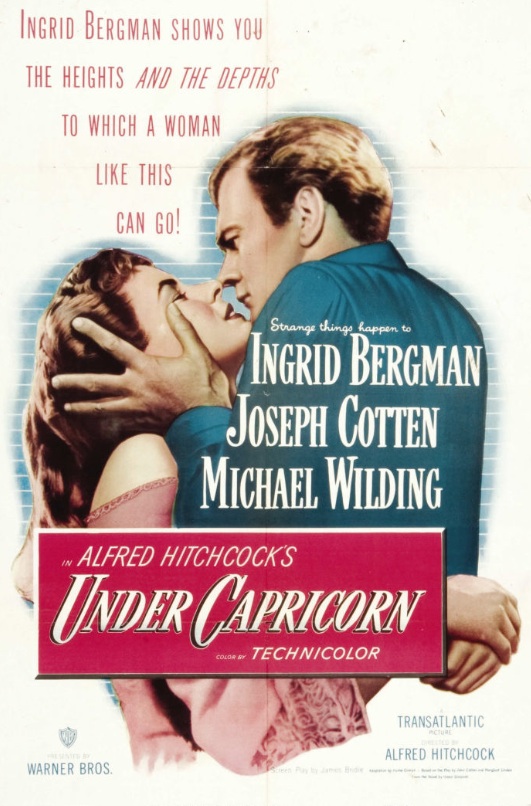
Under Capricorn (1949)
Directed by Alfred Hitchcock
Warner Bros. / Transatlantic Pictures

After directing The Paradine Case (1947) and Rope (1948), Alfred Hitchcock made Under Capricorn, and completed a hat trick of box office disappointments.

It’s not hard to see why Under Capricorn underperformed at the box office. Like nearly all of Hitchcock’s films, it’s a technical marvel, but it’s also a half-baked melodrama.

Under Capricorn is based on the play by John Colton and Margaret Linden, which was adapted from Helen Simpson’s 1937 historical novel. It takes place in Australia in 1831, when Sydney was still a small port city full of ex-convicts. The new governor’s young cousin, Charles Adare (Michael Wilding), arrives from Ireland, hoping to make his fortune. He’s quickly embroiled in a land-buying plot with the brusque Samson Flusky (Joseph Cotten). Flusky’s criminal past is whispered about and hinted at, but Adare quickly learns that directly asking about anyone’s criminal past in New South Wales is taboo.

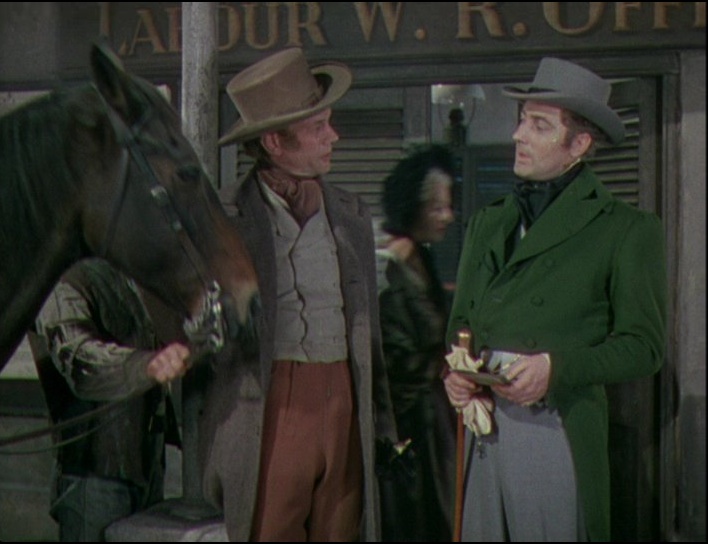
Cotten and Wilding

The loneliness of life in the outback has not been kind to Sam Flusky’s wife, Henrietta (Ingrid Bergman), and when she first appears onscreen she looks like a ghost. She’s drunk, barefoot, and in her dressing gown. However, her exposure to Charles Adare quickly changes her, and she begins to take care of her appearance and show a renewed interest in life.

Like Rope, Under Capricorn was shot in Technicolor, and it’s a sumptuous film. There are a lot of bravura little touches, like a tracking shot that briskly follows Adare down a long hallway and through two doorways in the governor’s mansion. This is followed by a slower tracking shot of Adare as he slinks outside Flusky’s estate, peeping in open doors. Hitchcock’s camera, operated by cinematographer Jack Cardiff, is lissome, and flows through the spaces of Flusky’s home like water, in and out of rooms, following first one character, then another.

There are also some lovely visual metaphors. When Henrietta happily reminisces with Adare about their youth together, the film cuts to Flusky, his face perfectly framed by a double candle holder, which resembles horns, the traditional symbol of the cuckold.

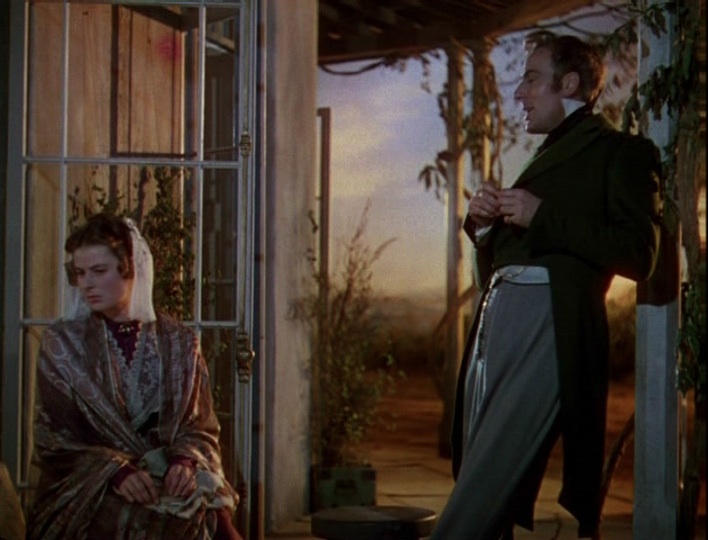
Bergman and Wilding

But all the stunning camerawork, beautiful Technicolor, and perfectly framed shots in the world can’t make a dull movie interesting, and Under Capricorn is an awfully dull movie. Its origins as a stage play are painfully obvious. Michael Wilding turns in a one-note performance, Joseph Cotten seems to be phoning it in (he apparently referred to this film as “Under Corny Crap”), and only Ingrid Bergman and Margaret Leighton (in a small but juicy role) are any fun to watch.

However, any Alfred Hitchcock film is worth seeing at least once, and Under Capricorn is no exception. Not everyone finds it dull, either. The film has plenty of proponents, most notably Cahiers du Cinema, the influential French film magazine. In 1958, they named Under Capricorn one of the 10 best films ever made.

White Heat (Sept. 2, 1949)

White Heat
White Heat (1949)
Directed by Raoul Walsh
Warner Bros.

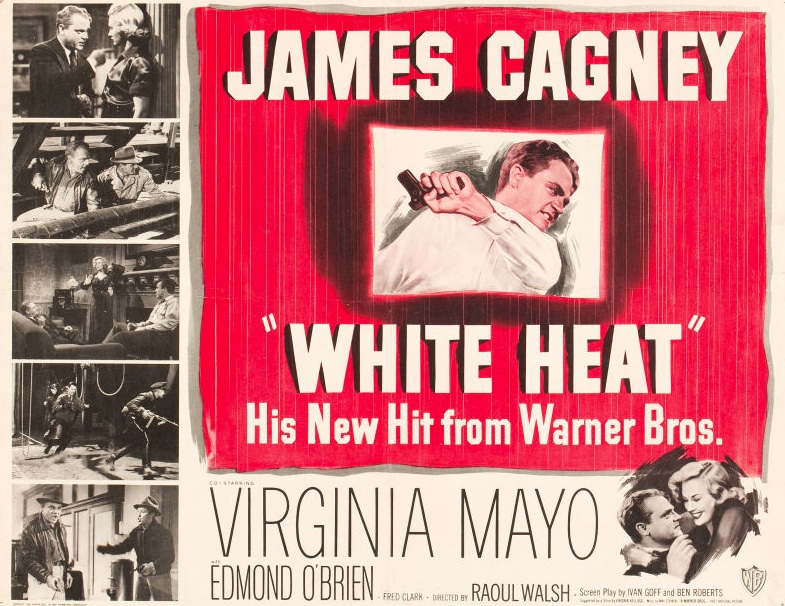
White Heat lives up to its name. It starts with a bang and ends with an even bigger bang.

The tempo doesn’t slacken in the middle, either. Director Raoul Walsh had a great sense of scope and pacing, and White Heat is one of his best films.

Walsh is a director I’ve seen a lot of lately. I recently re-watched High Sierra (1941) and watched The Roaring Twenties (1939) for the first time. I’ve also reviewed six of his other films since I started this blog.

I had good things to say about Walsh’s last movie, Colorado Territory (1949), but White Heat is a masterpiece. It features a blistering performance by James Cagney as the psychopathic criminal Cody Jarrett and rolls together elements of gangster films, police procedurals, heist movies, prison dramas, and movies about undercover cops.

White Heat brought the era of the Warner Bros. gangster movie to a close, while laying the groundwork for all the crime and heist pictures to come.

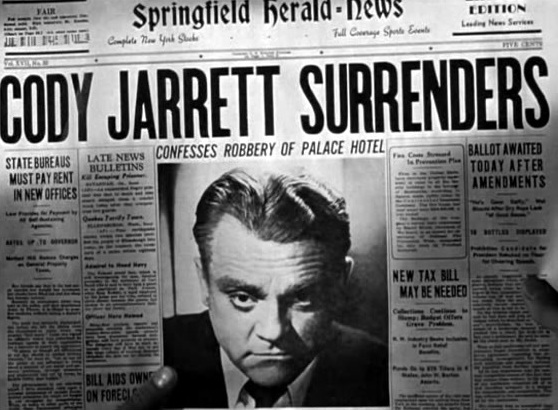
Cody Jarrett headline

The era of the Warner Bros. gangster movie began in 1931 with the release of Little Caesar, which made Edward G. Robinson a star, and The Public Enemy, which made James Cagney a star.

As a contract player for Warner Bros. and as an independent actor, Cagney played all types of roles, but his persona is most closely associated with gangster roles in movies like Angels With Dirty Faces (1938) and The Roaring Twenties (1939).

White Heat is unique because Cody Jarrett lacks any redeeming characteristics. Unlike his previous gangster roles, where glimmers of humanity and acts of redemptive self-sacrifice were commonplace, in White Heat he’s a trigger-happy psychopath.

Even the thing that should make him more human — his relationship with his mother — is twisted. Ma Jarrett (Margaret Wycherly) is just as cold-blooded as her son, and has a more important leadership role in Cody’s gang than his own wife, Verna (Virginia Mayo).

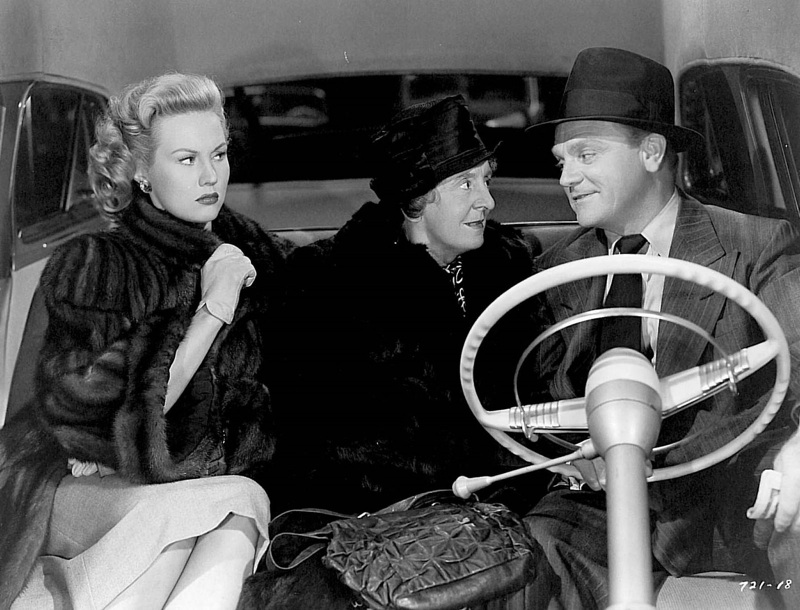
In the scene where Cody Jarrett says goodbye to his mother and wife at a drive-in theater, Ma Jarrett is sitting between them and there is clearly more affection between Cody and his Ma than there is between Cody and Verna.

Mayo Wycherly and Cagney

Virginia Mayo was the female lead in Walsh’s previous film, Colorado Territory (which was a loose remake of Walsh’s own film High Sierra), but that role couldn’t have been more different from Verna Jarrett.

In Colorado Territory, she was the ultimate ride-or-die chick, ready and willing to go down in a hail of bullets with her man by her side.

In White Heat she a faithless slattern who’s only out for herself.

She might be a better role model in Colorado Territory, but her performance in White Heat is one for the ages. When we first see her, she’s in bed and snoring. Later, when she’s serving drinks to Cody and another man, she serves herself a big slug of whisky first and gets good and loaded. In one scene, she spits out her chewing gum before kissing Cody. These are all things that were simply not done by Hollywood actresses at the time of the film’s release.

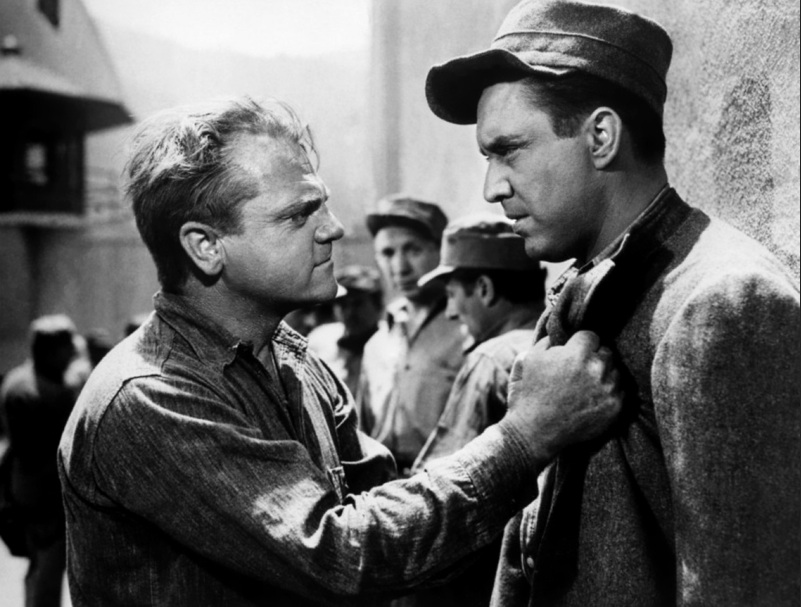
Cagney and OBrien

The memorable villains in White Heat have their stolid good-guy counterpoint in Edmond O’Brien, who plays a Treasury Agent named Hank Fallon. After the daring train heist that opens the film, Cody Jarrett turns himself in for a smaller crime he didn’t commit to beat the bigger rap. The T-men send Fallon into the prison under the name “Vic Pardo” to cozy up to Jarrett. Fallon isn’t a very interesting character, but he’s in an interesting situation, and O’Brien excelled at playing Average Joes up to their necks in trouble.

The T-men who back up Fallon are all interchangeable squares, but their methods are fascinating. Police procedurals and docudramas were extremely popular when Walsh directed White Heat, and the film features modern law enforcement techniques like a three-car tail with radio communication to coordinate cars A, B, and C. The police tail that leads up to the climax of the film involves long-range surveillance that uses two electronic oscillators zeroing in on a transmitter secretly placed by Fallon.

Made It Ma

It might be hard for today’s viewers to see, but White Heat was an extremely current film at the time of its release. The law-enforcement methods are modern, and the film playing at the drive-in where Cody says goodbye to Verna and his Ma was a current release, Task Force (1949).

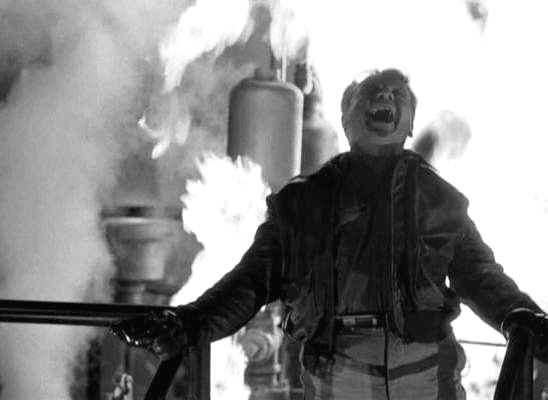
Most importantly, it’s not a story of romantic gangsters who belong to the past. Cody Jarrett is nothing like the tragic gangster Humphrey Bogart played in High Sierra, who meets his fate on a lonely mountain range. Cody Jarrett’s last stand takes place amid the gleaming silver pipes and Horton spheres of a Shell Oil plant.

There’s nothing romantic or tragic about Cody Jarrett’s last stand. It’s a violent, psychopathic “screw you” to the world, and one of the most memorable moments in cinematic history.

http://www.youtube.com/watch?v=hF4kug0dj10