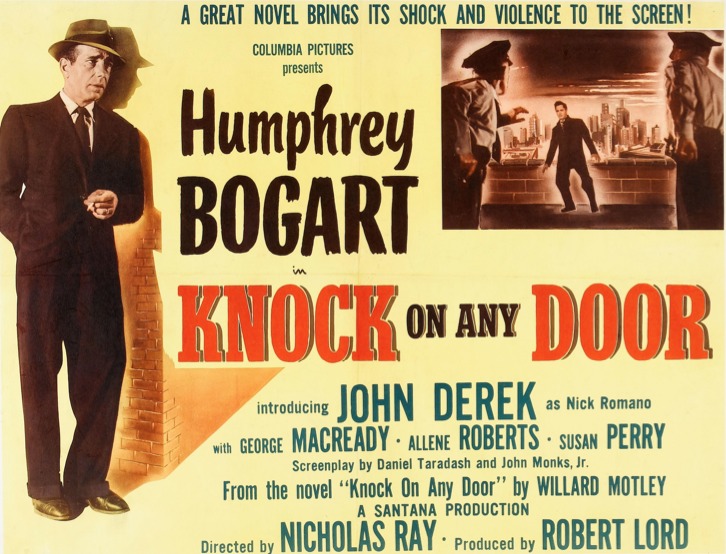
Knock on Any Door (Feb. 21, 1949)

Knock on Any Door
Knock on Any Door (1949)
Directed by Nicholas Ray
Santana Pictures Corporation / Columbia Pictures

SPOILER ALERT. This review will discuss plot points of this film that you may not want to know if you haven’t already seen it.

Knock on Any Door was the third film Nicholas Ray directed, but it was the first of his films to have a wide theatrical release.

Ray directed his first film, They Live by Night, in 1947, but RKO didn’t know how to market it, and it premiered in the United Kingdom in a single theater on August 5, 1948.

They didn’t know how to market his second film, either — A Woman’s Secret — which he directed in 1948.

However, They Live by Night had been screened privately for many actors and producers in Hollywood. Humphrey Bogart was impressed by it, and he enlisted Ray to direct Knock on Any Door, the first film made by Bogart’s independent production company, Santana Pictures.

Knock on Any Door was an enormous success, and Ray’s earlier films soon found their way into theaters; A Woman’s Secret in March 1949, and They Live by Night in November 1949.
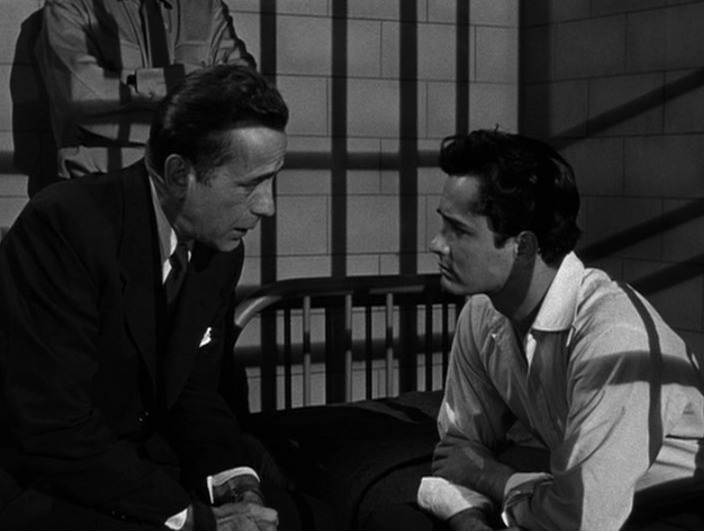
Bogart and Derek

The screenplay for Knock on Any Door, by Daniel Taradash and John Monks Jr., was based on the best-selling 1947 novel by Willard Motley, an African-American writer from Chicago.

Motley’s novel is the story of a young Italian-American named Nick Romano who went from being an altar boy to a career criminal after growing up in a crime-ridden neighborhood and being cycled through the juvenile justice system.

In the film, “Pretty Boy” Nick Romano is played by John Derek. It was Derek’s first credit for a motion picture, although he’d had small roles in a few films before it. The 22-year-old actor was pretty much the perfect choice to play a young hood called “Pretty Boy.”

Much is made of Derek’s good looks. When he’s put on trial for murdering a police officer, his lawyer, Andrew Morton (Humphrey Bogart), makes sure to get as many women on the jury as he can.

Morton feels responsible for the man Romano has become, since his lackadaisical legal work for the Romano family when Nick was a young man doomed Nick’s father to prison. He wants to stack the jury with as many women as possible, since he believes they’ll be swayed by his cherubic face.

Morton’s argument in court is that while Nick Romano has a criminal past, he is innocent of the crime of murder. And because Morton feels partially responsible for Nick’s criminal career, he fights for him with everything he’s got.
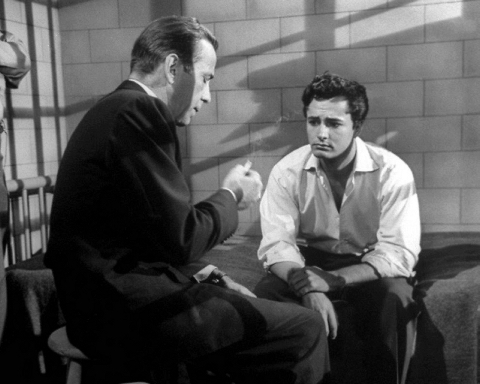
Bogart and Derek

Knock on Any Door superficially resembles Call Northside 777 (1948), another movie set in Chicago about a man on a crusade to prove that a second-generation American accused of murdering a police officer has been railroaded. But there’s a major difference between Knock on Any Door and Call Northside 777, and it’s why I put a spoiler alert at the beginning of this review. “Pretty Boy” Nick Romano is guilty.

I don’t know if this is obvious to some viewers. It wasn’t obvious to me. In fact, I felt so completely hoodwinked by Knock on Any Door that I couldn’t stop thinking about its climax after I watched it. Humphrey Bogart is such a likable protagonist, and his adversary — District Attorney Kerman (George Macready) — is so unlikable that I never once stopped to consider that Romano might actually be guilty. The film even sets up Romano as a handsome foil for the D.A., whose face is scarred. It’s strongly implied during all of the cross-examination scenes that Kerman is jealous of the young man’s good looks.

But then the film pulls the rug out from under the viewer. Not only does Romano finally break down on the stand and admit his guilt, but the last shot of the film is of Romano with the back of his head shaved, walking down a long corridor to the electric chair. I couldn’t believe it.

After Romano’s confession and before his walk to the death chamber, Bogart has a chance to speechify as only Bogart could. It’s a well-delivered speech about how crime is everyone’s fault when it’s grown in the Petri dish of the slums, but in the decades since Knock on Any Door was made, “Don’t blame me, blame society” has become a cliché.

The shouted message of the film didn’t have the same impact as the simple fact that I had grown to like Romano and was looking forward to seeing him found not guilty. When the film ended I felt betrayed and devastated.
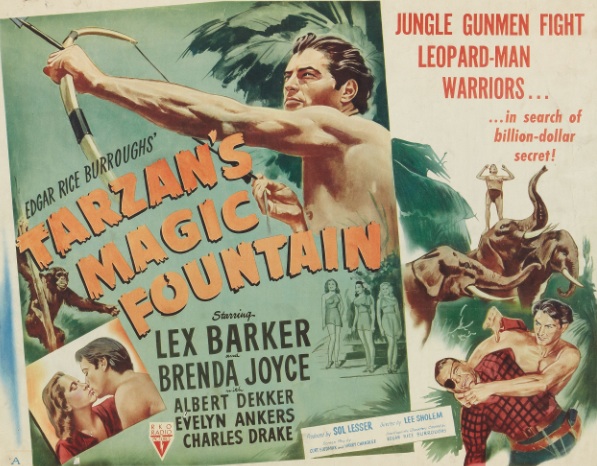
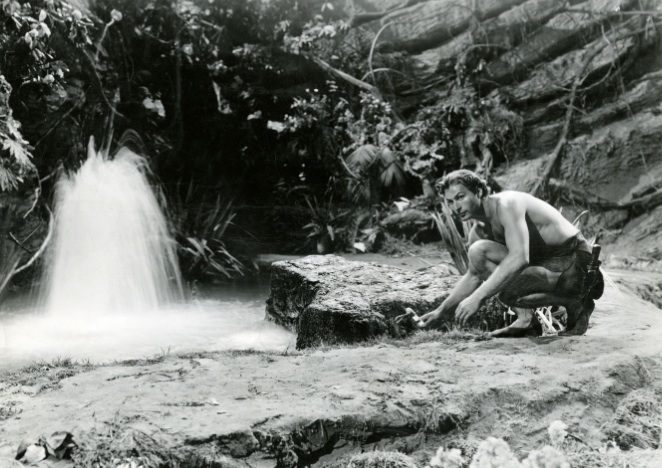
Tarzan’s Magic Fountain (Feb. 5, 1949)

Tarzans Magic Fountain
Tarzan’s Magic Fountain (1949)
Directed by Lee Sholem
Sol Lesser Productions / RKO Radio Pictures

Tarzan’s Magic Fountain marked the beginning of a new era for Tarzan movies.

Johnny Weissmuller, the Olympic swimmer turned actor who first played Edgar Rice Burroughs’s lord of the jungle in Tarzan the Ape Man (1932), left the series after appearing in Tarzan and the Mermaids (1948).

The hunt was on for a hot young male actor to take his place, and producer Sol Lesser reportedly interviewed more than a thousand of them. He and RKO Radio Pictures eventually settled on 29-year-old hunk Lex Barker.

Barker was a native of Rye, New York, a member of a prominent family who disowned him when he went into acting, and a veteran of World War II. He had chiseled features and an even more chiseled physique. The only thing he needed to do to play Tarzan was shave his chest and learn to speak in the clipped, pidgin English that Weissmuller had made famous.

Barker 1949

The script for Tarzan’s Magic Fountain, by Curt Siodmak and Harry Chandlee, tells a story that will be familiar to fans of the film series. Greedy outsiders become aware of something very valuable hidden deep within the jungle, and Tarzan must act as a buffer between the tribe who guard it and the outside world.

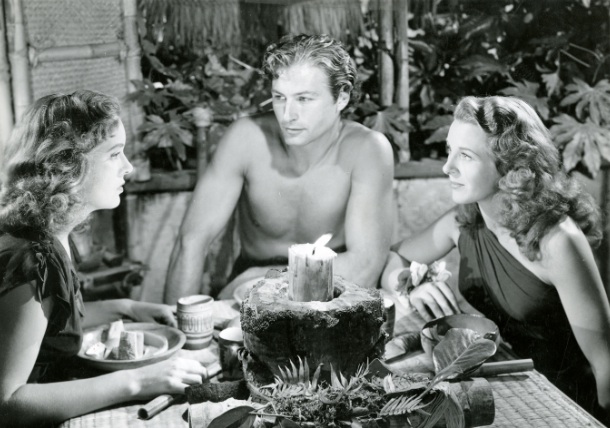
An aviatrix named Gloria James Jessup (Evelyn Ankers), who was lost and presumed dead (à la Amelia Earhart), walks out of the jungle one day. She doesn’t appear to have aged a day since she disappeared. Her reasons for resurfacing are purely altruistic, but the evil Mr. Trask (Albert Dekker) realizes that if she’s telling the truth — and there really is a fountain of youth — that he could stand to make millions selling the water.

The beautiful and shapely Brenda Joyce returns in the role of Jane. She appeared in four Tarzan films opposite Weissmuller, and her presence in Tarzan’s Magic Fountain helps to make the transition from Weissmuller to Barker a smooth one.

She also plays a pivotal role in the film’s story, as she becomes close friends with Gloria and decides she will do anything to help Gloria be happy — even if it means doing exactly what Tarzan warns her not to do.

Joyce Barker Ankers

Tarzan’s Magic Fountain is a fun entry in the series. It’s full of excitement, fantasy, and amusing animal action. Elmo Lincoln, who played Tarzan in the first film adaptation of Burroughs’s novel, Tarzan of the Apes (1918), has an uncredited cameo as a fisherman repairing his net.

Barker makes for a fine Tarzan, but he’s lacking that special something that Weissmuller had. Even in his later years, Weissmuller moved like a panther and cut through the water like a fish. Barker is a beautiful physical specimen, and he moves well, but he lacks Weissmuller’s unique, leonine grace.

Shockproof (Jan. 25, 1949)

Shockproof
Shockproof (1949)
Directed by Douglas Sirk
Columbia Pictures

This review originally appeared earlier this year at Film Noir of the Week.

Real-life married couples can have strange chemistry when they appear together in a film. For every Bogie and Bacall there’s also a Cruise and Kidman. Just because two actors want to tie the knot and spend the rest of their lives together (or in most cases, several years of their lives together before separating), it doesn’t mean their real-life chemistry will translate to the big screen.

When Patricia Knight and Cornel Wilde starred together in Shockproof, they had been married 11 years. It was the only film they made together.

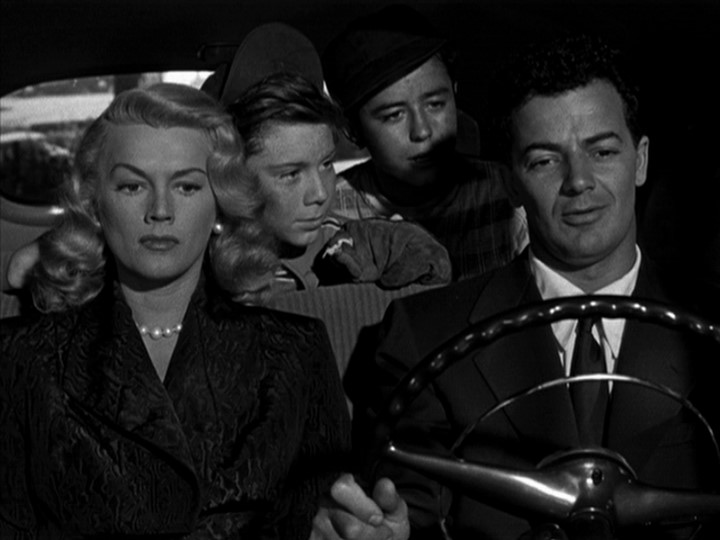
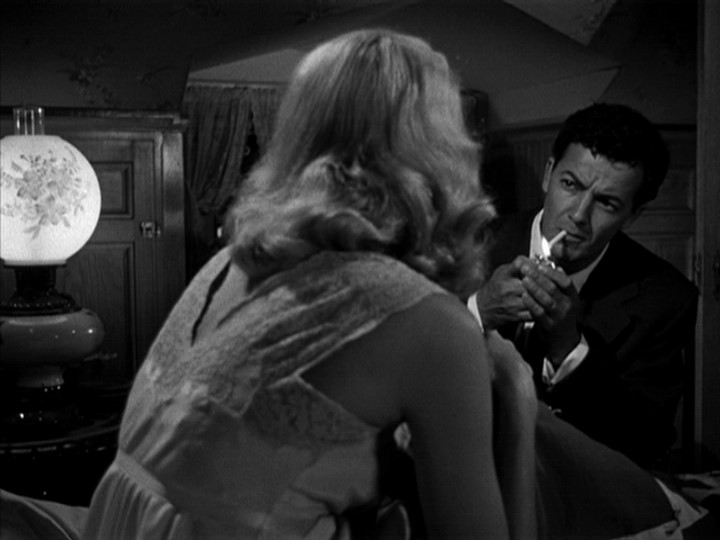
In Shockproof, Knight plays a woman named Jenny Marsh who has been paroled after a five-year stint in prison for murder. She committed the murder to protect her lover, Harry Wesson (John Baragrey). Jenny grew up in poverty, neglected by her parents, and the smooth-talking, wealthy Wesson swept her off her feet. The problem is, he’s a criminal through and through.

Jenny’s parole officer, Griff Marat (Wilde), believes that all she needs is to spend time with normal, decent people, and she’ll straighten out her life. Griff is a “hands-on” parole officer, and he nominates himself (along with his mother and adorable kid brother) as the most suitable decent people for Jenny to spend time with, and his romantic notions carry the force of the law.

As an actor, Wilde’s line delivery was never as impressive as his physique, but in his scenes with Knight he still comes off as the more seasoned thespian. Knight’s face is lovely in an angular sort of way, but her performance is the stuff of high camp. Whatever sparks existed in their real-life relationship, they’re hard to see in Shockproof.

Knight and Wilde

Shockproof was also an intersection for two men whose best work lay ahead of them: Samuel Fuller and Douglas Sirk.

Sirk, the director of Shockproof, was born in Europe and made several films there before immigrating to the U.S. in 1941. He would go on to direct some of the most acclaimed American films of all time — the lush Technicolor melodramas Magnificent Obsession (1954), All That Heaven Allows (1955), Written on the Wind (1956), and Imitation of Life (1959) (which, to be technically nitpicky, was filmed in Eastmancolor, not Technicolor).

At the time he made Shockproof, however, his Hollywood filmography amounted to a number of well-made potboilers that had a gloss of European sophistication; Hitler’s Madman (1943), Summer Storm (1944), A Scandal in Paris (1946), The Strange Woman (1946) (The Strange Woman was directed by Edgar G. Ulmer, but Sirk also did some uncredited directorial work on the film), Lured (1947), and Sleep, My Love (1948).

Samuel Fuller, the screenwriter of Shockproof, was a newspaperman (he got his start as a copy boy at the age of 12), a pulp novelist, a screenwriter, a ghostwriter, and a veteran of World War II who had served with the 16th Infantry Regiment, 1st Infantry Division. Fuller would go on to become an acclaimed screenwriter and director of cult films like Pickup on South Street (1953), Shock Corridor (1963), and The Naked Kiss (1964).

Shockproof is the only collaboration between Sirk and Fuller. Fuller’s screenplay was originally called The Lovers, and it told the story of a man and woman doomed by their love for each other.

Knight and Wilde

Fuller’s screenplay for The Lovers was the film Sirk signed on to make, but it wasn’t the film that ended up being released into theaters. Co-producer Helen Deutsch rewrote the script and tacked on a ridiculous happy ending. (If you’re a connoisseur of trashy cinema, Deutsch’s best work also lay ahead of her, since her last film credit was the screenplay for Valley of the Dolls, which she co-wrote with Dorothy Kingsley.)

Deutsch’s rewrite makes the entire film feel pointless, since it undercuts all of the ethical lines that Griff crosses because of his love for Jenny. It also neuters any sense of doom or tragedy that was present in Fuller’s original script. Even the change of title from The Lovers to Shockproof feels wrong. The term “The Lovers” recurs throughout the film, and it’s what Griff and Jenny are dubbed by the tabloid press. What does “Shockproof” even mean in the context of this film?

Even though Sirk and Fuller never met, Shockproof has Fuller’s fingerprints all over it. It’s a choppy, uneven film, but like everything that Fuller wrote, there’s a nasty passion always bubbling beneath the surface. It doesn’t matter so much why people are doing things, just that they’re doing them and going for broke, pedal to the metal, damned and proud, racing toward oblivion.

Of course, to pull this off successfully a film needs to have actors who are utterly convincing no matter how contrived their actions are, as well as a script that has the courage of its convictions. Unfortunately, Shockproof has neither of these things, and while there is much that’s good about it, ultimately it’s an interesting failure.

A Letter to Three Wives (Jan. 20, 1949)

A Letter to Three Wives
A Letter to Three Wives (1949)
Directed by Joseph L. Mankiewicz
20th Century-Fox

At the 22nd Academy Awards in 1950, Joseph L. Mankiewicz received two Oscars for A Letter to Three Wives. One was for best director and the other was for best screenplay. (A Letter to Three Wives was also nominated for best picture, but didn’t win.)

The film was based on a novel by John Klempner originally published in Cosmopolitan magazine in 1945. The novel was called Letter to Five Wives, but the original script for the film version omitted one of the wives and was called A Letter to Four Wives.

Mankiewicz felt the shooting script was still too long, so he cut out one of the four wives. (Sorry, Anne Baxter.)

A Letter to Three Wives is divided into three sections, each dominated by a flashback sequence.

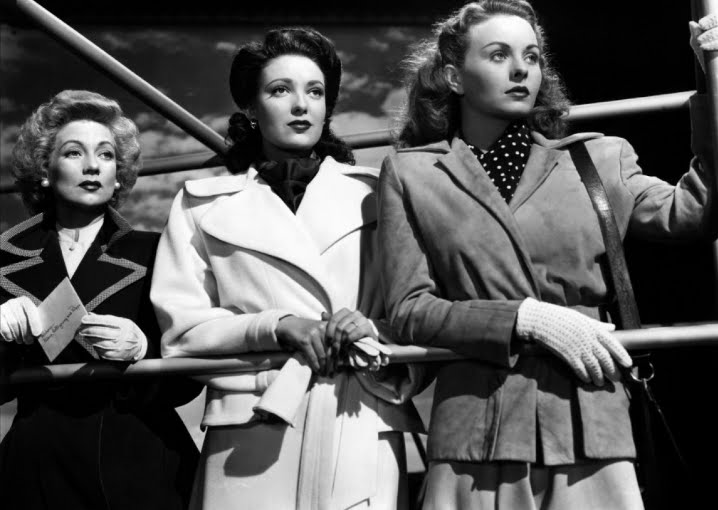
The first section focuses on Deborah Bishop (Jeanne Crain) and her husband Brad (Jeffrey Lynn), who met when they were both serving in the Navy.

The second section focuses on Rita Phipps (Ann Sothern), a writer of radio dramas, and her husband George (Kirk Douglas), a schoolteacher.

The final section of the film focuses on Lora Mae Hollingsway (Linda Darnell) and her husband Porter Hollingsway (Paul Douglas), an appliance-store magnate.

While each section focuses on a different couple, this is not an anthology film. The viewer meets all the characters in the early going, but sometimes just for a moment. Watching A Letter to Three Wives is a little like being introduced to a rush of people at a party. As the evening wears on, you become better acquainted with everyone and you learn how their lives intersect in often messy and hilarious ways.

A Letter to Three Wives takes place in an upper-middle-class Eastern community that’s 28 minutes from the big city, or “23 if you catch the morning express,” as Addie Ross tells the viewer. Addie Ross is the most beautiful and alluring woman in town, and although her presence dominates the film, we never see her. We only hear her voice as she cuts in to narrate and comment on bits of the story. (Addie Ross is voiced by the uncredited Celeste Holm).

Rita, Lora Mae, and Deborah are on their way to help run a day trip for underprivileged children when they receive a letter from Addie informing them that she’s leaving town for good, but she’s not leaving empty-handed — she’s taking one of their husbands with her. The three friends are forced to board the boat, and all of them stare longingly at the public telephone on the dock as they drift into the water. They won’t be able to find out which one of their husbands is missing in action until the day is done.

Sothern Darnell and Crain

Mankiewicz directed some fine films before this one, including the Gothic thriller Dragonwyck (1946), the film noir Somewhere in the Night (1946), and the brilliant romantic comedy The Ghost and Mrs. Muir (1947), but A Letter to Three Wives is head and shoulders above all of them.

Mankiewicz was a witty, intelligent, and acerbic writer-director, and A Letter to Three Wives shows him in top form. It’s one of the smartest and funniest films I’ve seen from the ’40s about marriage and the American class structure. Deborah is a farm girl and never feels at home with the country-club set she’s married into. Rita has a demanding, high-paying job, and she makes a lot more money than her schoolteacher husband. Lora Mae is a trophy wife to a fabulously wealthy, boorish, and bullheaded man.

Kirk Douglas, who plays Rita’s schoolteacher husband, is fantastic in this film, and delivers one of the most eviscerating speeches I’ve ever heard about anti-intellectualism and the idiocy of appealing to the lowest common denominator. And Paul Douglas, who plays Lora Mae’s husband, gives a phenomenal performance as well. He was a stage actor, and this was his first appearance in a feature film, but he owns the screen, and would go on to have an interesting career.

A Letter to Three Wives is a masterpiece of scriptwriting and direction. Addie Ross is really just a plot device to tell a character-driven story, and toward the end of the film, I realized that I’d been told a very different story than the one I thought I was watching.

The 10 Best Films of 1948

Hamlet Oscar

When the 21st Academy Awards were held on March 24, 1949, it marked the first time a non-Hollywood production won best picture. Laurence Olivier’s Hamlet was nominated for seven Oscars and took home four — best motion picture, best actor, best art direction (black & white), and best costume design (black & white).

Olivier was nominated for best director, but that award went to John Huston for The Treasure of the Sierra Madre. Nevertheless, the evening represented a vindication for Olivier, whose previous film, Henry V (1944), was nominated for several Oscars, but only received a special award “for his outstanding achievement as actor, producer, and director in bringing Henry V to the screen,” which Olivier considered “a fob-off.”

In another “Oscar first,” Jane Wyman won the Academy Award for best actress for her role as a deaf-mute girl in Jean Negulesco’s Johnny Belinda, becoming the first person since the silent era to win an Oscar for a role with no spoken lines.

Whether or not you take the Academy Awards seriously, there’s no denying that 1948 was a great year for movies.

I always have trouble narrowing down my favorites from any year to just 10, but it was especially hard this year. Do you agree with my picks? Violently disagree? Leave a comment.

Ladri di biciclette1. Bicycle Thieves

Vittorio De Sica’s neorealist masterpiece is the story of a man whose livelihood depends on his bicycle. When it’s stolen, he and his son embark on a journey through Rome to find the thieves.

Rope2. Rope

Alfred Hitchcock’s film about two thrill-killers who throw a dinner party with the food served over the body of the man they’ve just murdered is a tour de force of suspense, and one of Hitchcock’s most impressive technical stunts.

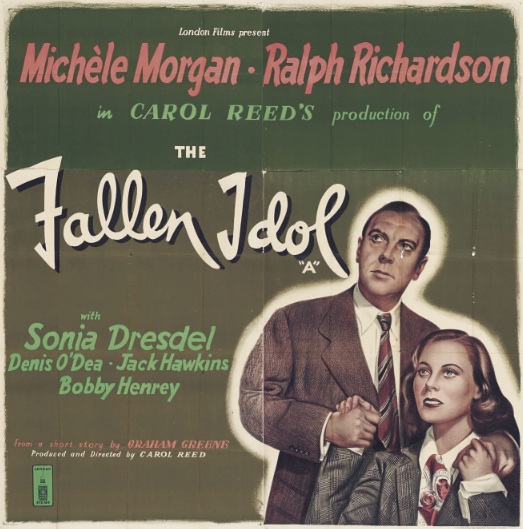
The Fallen Idol3. The Fallen Idol

Carol Reed’s adaptation of Graham Greene’s short story “The Basement Room” is a twisty tale of lies, deception, and half-truths as seen through the eyes of a young boy who lives in the French Embassy in London, and who thinks he’s seen the butler he idolizes commit a murder. It’s tragic and moving, but not without doses of humor and irony.

Force of Evil4. Force of Evil

Abraham Polonsky’s Force of Evil stars John Garfield and Thomas Gomez as brothers on opposite sides of a criminal conspiracy. It’s one of the greatest film noirs of all time, and a scathing critique of America’s financial system.

Hamlet5. Hamlet

Laurence Olivier directed and starred in this dark, macabre, and expressionistic psychodrama that owes as much to film noir and Universal horror films as it does to the traditions of the theater. Hamlet is a deeply satisfying cinematic achievement, and one of the best versions of a Shakespeare play ever filmed.

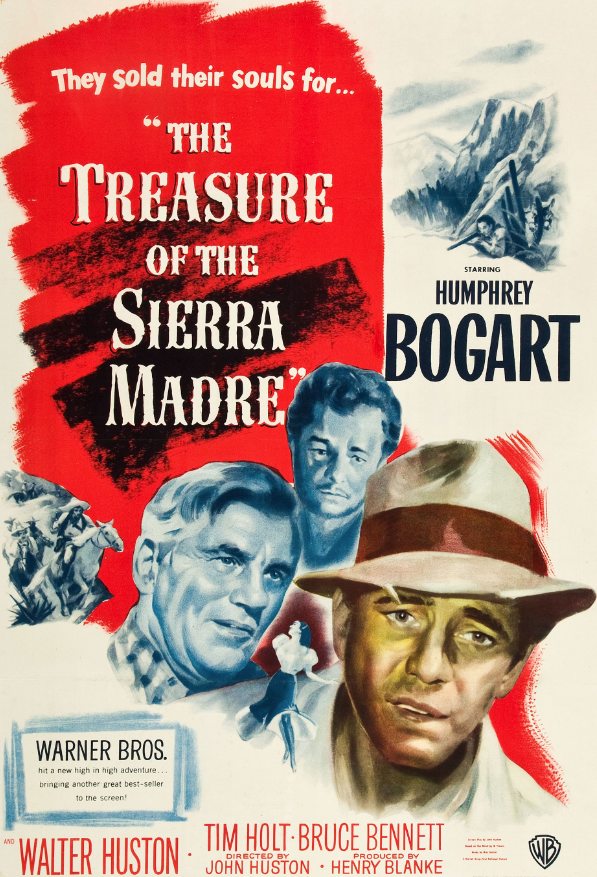
The Treasure of the Sierra Madre6. The Treasure of the Sierra Madre

The search for gold in John Huston’s The Treasure of the Sierra Madre brings out the best and the worst in the men who seek it. Humphrey Bogart turns in one of the best performances of his career as a treasure hunter who succumbs to greed and paranoia. It’s a film with excellent pacing, an involving story, believable characters, and great location shooting.

Drunken Angel7. Drunken Angel

Akira Kurosawa’s Drunken Angel stars Takashi Shimura as an alcoholic physician with good intentions but a terrible bedside manner and Toshirô Mifune as a cocky young gangster dying of tuberculosis. Drunken Angel is Kurosawa’s first really great film; a brilliantly acted and mesmerizing portrait of a filthy, decimated, and recently defeated nation.

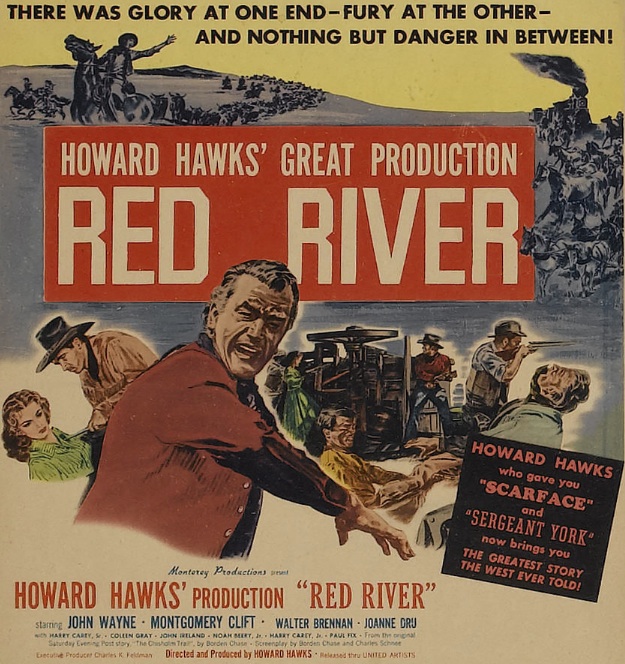
Red River8. Red River

Howard Hawks’s Red River is the story of a cattle drive along the Chisholm Trail up from Texas. It features Montgomery Clift in a star-making turn and John Wayne in one of the best performances of his career. It’s a rousing adventure film about men on a dangerous mission, as well as a timeless story of fathers and sons.

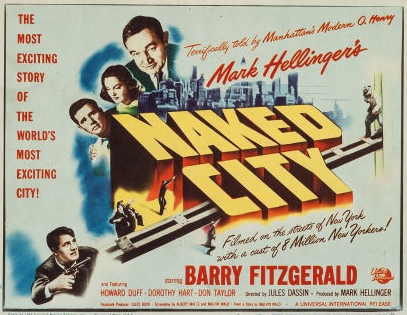
The Naked City lobby card9. The Naked City

The second and final collaboration between producer Mark Hellinger and director Jules Dassin defined the genre of the police procedural. It’s a tremendously entertaining, well-made picture, and a love letter to New York City.

He Walked by Night10. He Walked by Night

What The Naked City did for New York, Alfred L. Werker’s He Walked by Night does for Los Angeles. It’s a stylish, suspenseful police procedural that helped give birth to the genre-defining radio and TV show Dragnet.

Honorable Mentions:

Act of Violence, Anna Karenina, The Big Clock, Blanche Fury, Call Northside 777, Canon City, Fort Apache, Fury at Furnace Creek, I Remember Mama, Johnny Belinda, Key Largo, Letter From an Unknown Woman, Louisiana Story, Moonrise, Music in Darkness (Musik i mörker), Pitfall, Portrait of Jennie, Raw Deal, The Red Shoes, The Search, The Snake Pit, Spring in a Small Town, State of the Union, They Live by Night.

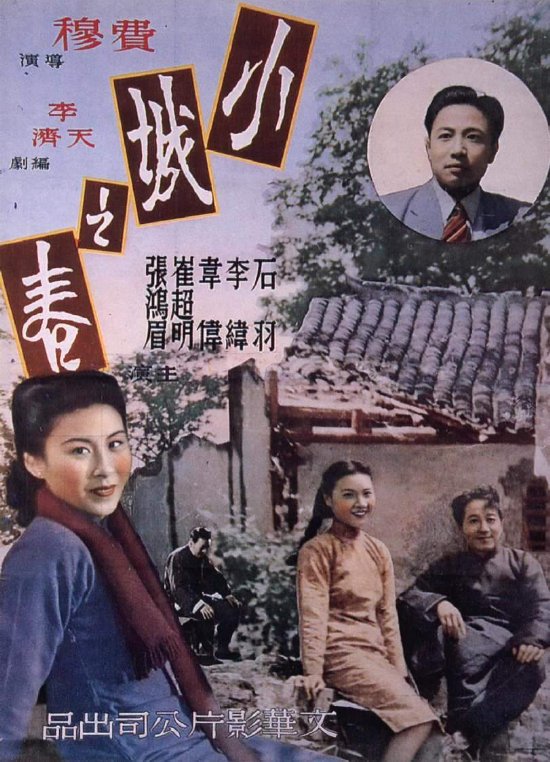
Spring in a Small Town (1948)

Spring in a Small Town

Xiao cheng zhi chun (1948)
Directed by Fei Mu
Wenhua Film Company

Like every good story about a love triangle, Fei Mu’s Spring in a Small Town is more about desperate longing and the subterranean passions that threaten social order than it is about the tawdry mechanics of infidelity.

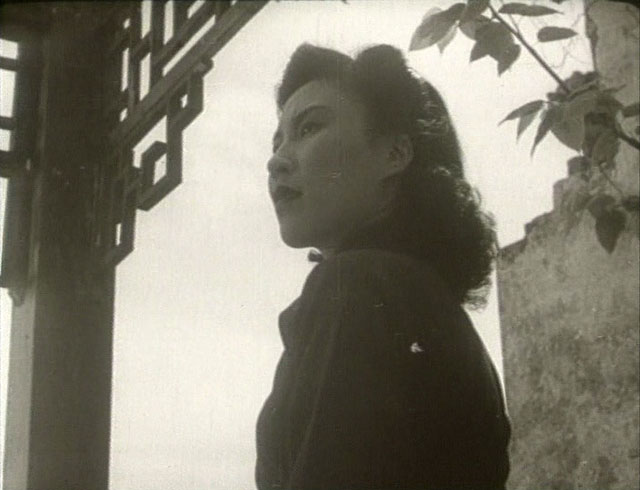
Based on a short story by Li Tianji, Spring in a Small Town stars Wei Wei as Zhou Yuwen, a 26-year-old woman living in the ruins of post-war China. Her husband, Dai Liyan (Shi Yu), comes from a family that was once prosperous, but is now penniless. Parts of their home are uninhabitable following the ravages of war, and Liyan is stricken with a vague but consuming ailment. Their marriage is passionless. Yuwen performs her wifely duties — shopping for groceries, giving her husband his medicine — but they barely speak to each other and do not sleep in the same bed. They share their house with the elderly servant Lao Huang (Cui Chaoming) and Liyan’s teenaged sister, Dai Xiu (Zhang Hongmei).

One day, the couple’s childhood friend Zhang Zhichen (Li Wei) appears at their home in a brazen but friendly manner. He has been gone for the past 10 years, and is now a well-traveled doctor. He brings joy to all the members of the household, although Lao Huang, the servant, is mystified by his nontraditional habits (he doesn’t drink tea, and he doesn’t wash before going to bed; not even his face).

But before long, Liyan can’t help noticing that his wife is happier around Zhichen than she has been in years. And Yuwen herself is torn between loyalty to her husband and the happiness and passion that Zhichen could offer her.

Wei Wei

After the Chinese Communists declared victory in 1949, this film was rejected because of its apolitical story, but its reputation has grown since the China Film Archive struck a new print in the early 1980s. In 2002, Zhuangzhuang Tian produced a remake, called Springtime in a Small Town, and in 2005, the Hong Kong Film Awards Association named the original Spring in a Small Town the greatest Chinese-language film of all time.

It’s an intimate film without a lot of overt symbolism, but it’s hard not to notice that the members of the Dai household wear more traditional clothing than Zhang Zhichen, who wears a western suit and tie, as well as a wristwatch. He is modernity incarnate, and full of life and promise, while Yuwen’s husband is a moribund symbol of the past.

Spring in a Small Town is a simple but elegant and affecting film. I especially liked Wei Wei’s dreamlike voiceover narration.

Unfortunately, I felt as if I wasn’t able to completely appreciate the film because the print I watched was lousy. The only version of the film currently available in the United States on DVD is from Cinema Epoch, and it’s plagued with problems. (It appears to be the source for the complete version of the film uploaded to YouTube that I’ve linked to below). The picture is softly focused, there are missing frames, there’s a constant background hiss on the soundtrack, some of the cuts seem jumpy, and the subtitles are poorly timed. I was still able to enjoy the film, but when you compare this DVD with the presentation of films from the same period by the great Japanese director Yasujirô Ozu that the Criterion Collection has put out on DVD and Blu-ray, well … there’s no comparison. Spring in a Small Town is a great film, and it deserves a better presentation than this.

Ladies of the Chorus (Dec. 30, 1948)

Ladies of the Chorus
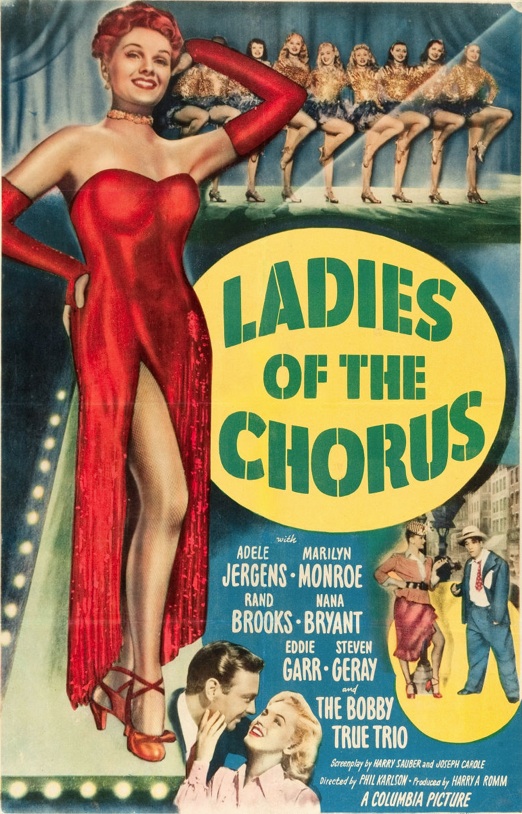
Ladies of the Chorus (1948)
Directed by Phil Karlson
Columbia Pictures

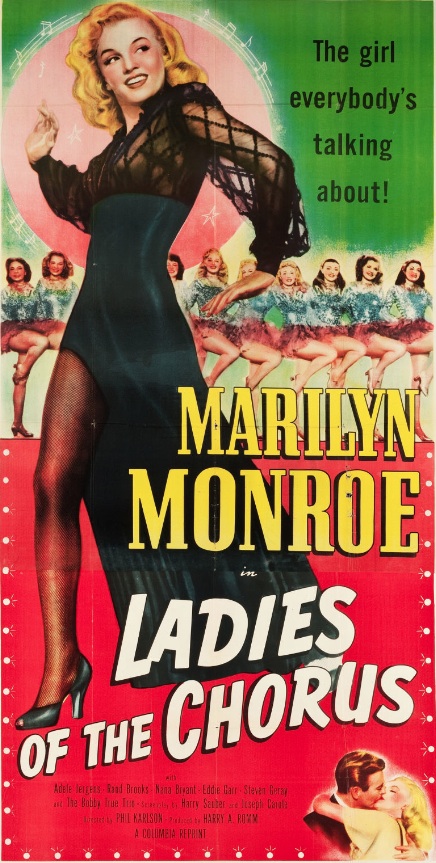
Unless you’re a massive fan of low-budget musicals and comedies from the 1940s, the only reason to watch Ladies of the Chorus is to see Marilyn Monroe in her first big role.

Well, OK. There’s one more reason. If you’re a massive film nerd like I am, it’s also worth watching because it was directed by Phil Karlson. From 1944 through 1947, Karlson directed more than a dozen B movies for Monogram Pictures (later Allied Artists). In 1948, he moved up to making B features for Columbia Pictures. After lensing two westerns for Columbia — Adventures in Silverado and Thunderhoof — he directed Ladies of the Chorus.

Karlson’s best work lay ahead of him. He would go on to direct tough, taut film noirs like Kansas City Confidential (1952), 99 River Street (1953), and The Phenix City Story (1955), as well as one of my favorite tough-guy vigilante movies of all time, Walking Tall (1973).

But Ladies of the Chorus really has nothing in common with those movies. The only connection is Karlson’s professionalism and attention to detail. It’s a fun little movie, just an hour long, with plenty of music and songs. Musicals and corny comedies aren’t really my thing, but I appreciate any well-made film. And I absolutely love Marilyn Monroe.

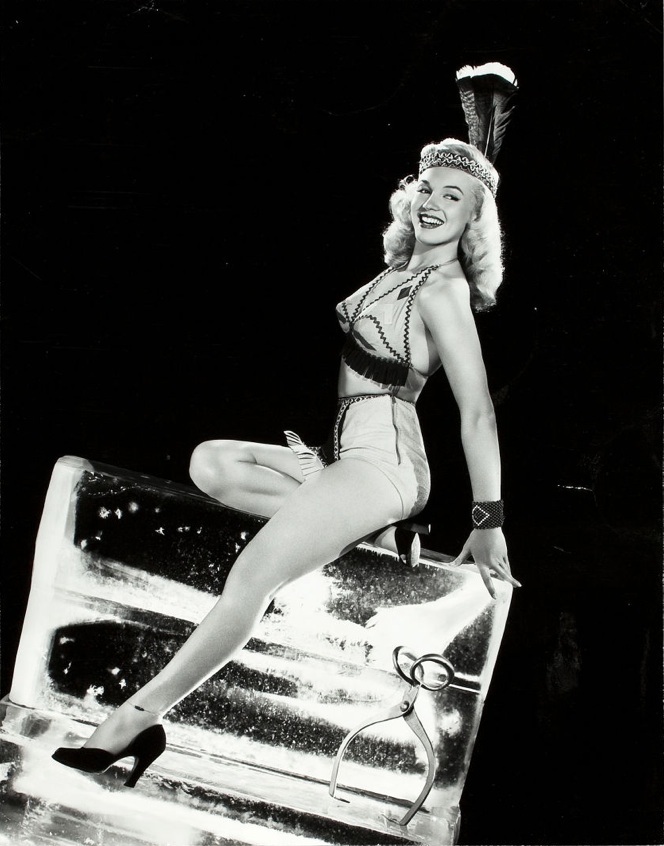
Marilyn Monroe 1948

Marilyn Monroe turned 22 years old in 1948. This movie was the first time she got her name in the credits.

She plays a girl named Peggy who was born into a life of burlesque. Her mother, Mae Martin, was a burlesque queen back in Boston. When she married a wealthy young man whom she loved, the wealthy young man’s father had him shipped off to Europe and the marriage annulled. But Mae was already pregnant with Peggy.

Mae is played by Adele Jergens, who turned 31 on November 26, 1948. She’s obviously not old enough to be Marilyn Monroe’s mother, so the makeup department put a few gray streaks in her hair.

When the star of the burlesque show, Bubbles (Marjorie Hoshelle), insults Mae’s gray hair and the wig she wears on stage, Peggy attacks her. The stage manager breaks up the fight and shouts, “Fightin’ like a couple of alley cats. What are you tryin’ to do, give burlesque a bad name?”

He sends Mae in to replace Bubbles, but Mae pulls a switcheroo and sends in Peggy instead. Naturally, she kills on stage and becomes a new queen of burlesque. And of course history repeats itself when a young man from a blue-blooded family falls for her.

Peggy’s wealthy suitor is played by Rand Brooks, who’s a bit of a drip. He doesn’t have any chemistry with Monroe, but like I said, she’s the main reason to see this movie. (Although I really like Adele Jergens, too.) Monroe doesn’t quite have the breathy, “baby doll” voice she developed later in her career, but every bit of her megawatt star power is in evidence here. She does a bunch of song and dance numbers, and they’re all wonderful. Well, maybe all of them except “Every Baby Needs a Da Da Daddy,” which has to be seen to be believed.

When Ladies of the Chorus first came out, Adele Jergens got top billing, but Columbia re-released the film in November 1952 to capitalize on Marilyn Monroe’s growing fame. A lot of times when studios do this, the newly minted star whose name gets top billing actually only has a little bit of screen time, but that’s not the case here. This was a star-making turn for Marilyn Monroe, and it’s a lot of fun to watch if you’re a fan.

Ladies of the Chorus 1952

Force of Evil (Dec. 25, 1948)

Force of Evil
Force of Evil (1948)
Directed by Abraham Polonsky
Enterprise Productions / Metro-Goldwyn-Mayer

Force of Evil was the first film Abraham Polonsky directed. It was also the last film he would direct for a long, long time.

Polonsky was blacklisted after he refused to testify before HUAC in 1951. He went on to write screenplays under a variety of pseudonyms, but he didn’t receive another directorial credit until he made the Robert Redford film Tell Them Willie Boy Is Here (1969).

A lot of great directors were blacklisted in the 1950s, but Polonsky’s inability to make more films seems especially tragic. Force of Evil is not only a great film, but it’s the kind of scathing critique of the foundations of America’s financial system that’s lacking from most crime films in the 1950s.

Polonsky wrote the screenplay for Robert Rossen’s boxing masterpiece Body and Soul (1947), which starred John Garfield. Body and Soul was a big hit, and it’s alluded to on the poster for Force of Evil above.

Force of Evil wasn’t as big a hit for John Garfield. There’s even some dispute over the original running time of this film, since M-G-M treated it as a B picture, and wanted it under 90 minutes so it could fit comfortably on the bottom half of a double bill.

Despite all that, it’s a film that’s aged remarkably well. It’s one of the best films Garfield ever starred in, and it’s one of the greatest film noirs ever made.

Garfield upstairs

Force of Evil is based on Ira Wolfert’s 1943 novel Tucker’s People. Polonsky collaborated with Wolfert on the screenplay.

Garfield plays Joe Morse, a lawyer for the powerful mobster Ben Tucker (Roy Roberts). The film begins with a montage of Wall Street and Joe telling the viewer, in voiceover, that he’s about to make his first million dollars.

On the Fourth of July, most of the suckers who play the numbers play “776” as a superstitious form of patriotism. Tucker has a complicated plan that will force 776 to hit on July 4th, which will put all of the smaller numbers operations out of business when they’re forced to pay out. He’ll swoop in and take control of all the numbers rackets, just like he took control of beer during Prohibition.

Joe Morse is young, slick, and on the verge of being fabulously wealthy. His older brother Leo Morse (Thomas Gomez) is old, overweight, and will never be well-to-do. He runs a small, neighborhood numbers racket (or “bank,” as they are known in the film). He may be taking suckers’ money, but the stakes are small, he pays out what he promises, and he cares about the people he employs.

Joe knows what the Fourth of July has in store for Leo and everyone like him. As Tucker’s lawyer, he’s not able to tell Leo exactly what’s going to happen, but he tries to warn him. When that doesn’t work, he tries to pull strings that will force his brother out of the numbers racket before it’s too late, but it only makes things worse.

Gomez and Garfield

Polonsky showed his cinematographer, George Barnes, some of Edward Hopper’s Third Avenue paintings to give him an idea of how he wanted the film to look. Force of Evil uses a lot of single-source lighting and sharp focus, and it’s full of simple but beautiful compositions.

All of the actors in the film give good performances, including Beatrice Pearson as a girl who works for Leo, and whom he considers a daughter, and Marie Windsor in full femme fatale mode as Tucker’s wife Edna.

Thomas Gomez’s scenes with Garfield are especially powerful. Their dialogue wouldn’t be out of place in a stage play, since Polonsky isn’t afraid to elevate their language to poetic, mythic heights.

There’s not a lot of violence in Force of Evil, but what there is makes a tremendous impact. One sequence toward the end of the film is as good as anything Francis Ford Coppola or Martin Scorsese did in any of their gangster films. (Incidentally, Scorsese is a great admirer of Force of Evil. His video introduction to the film is the sole special feature on the gorgeous-looking Blu-ray from Olive Films.)

Portrait of Jennie (Dec. 25, 1948)

Portrait of Jennie
Portrait of Jennie (1948)
Directed by William Dieterle
Vanguard Films / The Selznick Studio

William Dieterle directed one of my favorite romances of the 1940s, I’ll Be Seeing You (1944), which starred Joseph Cotten and Ginger Rogers.

Cotten also starred for Dieterle in his film Love Letters (1945), and again in Portrait of Jennie, a romance with elements of magical realism.

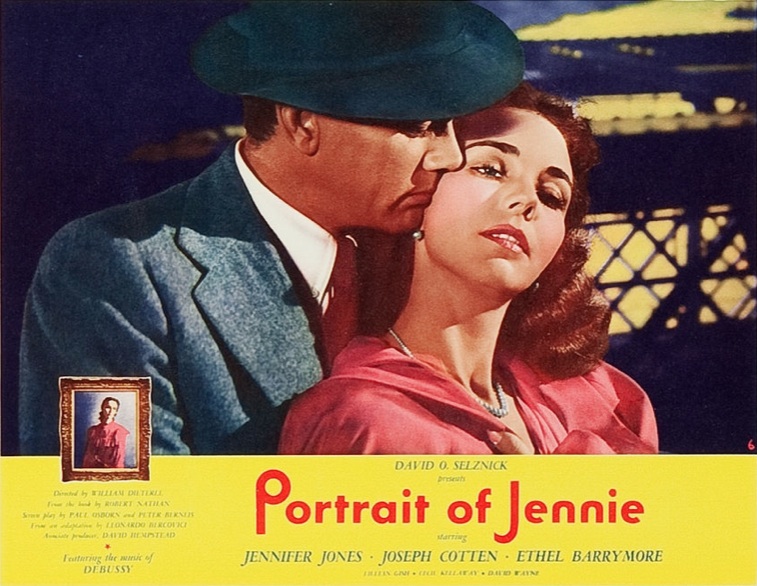
Portrait of Jennie is based on Robert Nathan’s 1940 novel, and takes place in New York in 1934. Cotten plays an artist named Eben Adams who is cold, hungry, and poor. Worst of all, he is only painting competent but uninspired still lifes. He is desperate to paint something truly meaningful.

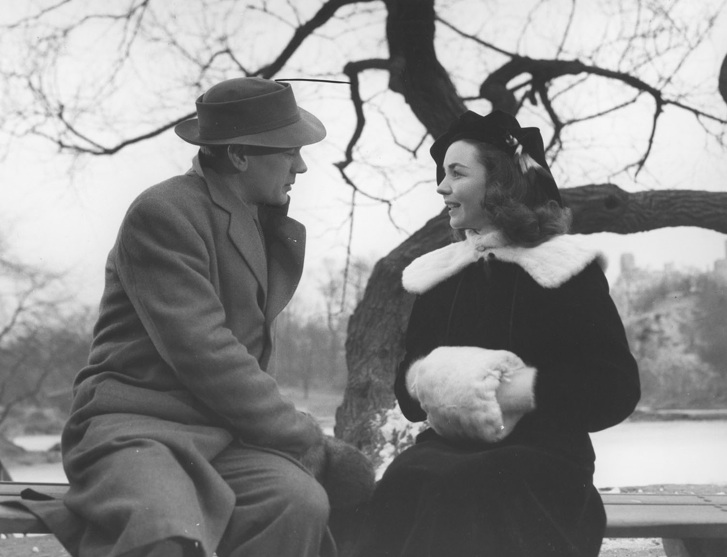
One wintry evening in Central Park, he meets a strange young girl named Jennie Appleton (Jennifer Jones). She wears old-fashioned clothes and speaks of things that happened decades ago as if they were current events.

Jennie inspires Eben to create a sketch of her. The sketch impresses an art dealer, Miss Spinney (Ethel Barrymore). Her partner, Matthews (Cecil Kellaway), tells her they won’t turn a profit at the price she paid Eben, and Miss Spinney informs him that she didn’t buy it for the gallery, she bought it for herself.

Eben investigates the mystery of Jennie Appleton while working on his portrait of her. She appears to him at various times, and is years older each time, even though only days or weeks have passed.

Cotten and Jones

I liked Portrait of Jennie, especially the first half, which is one of the most darkly magical lensings of Central Park in winter that I’ve ever seen. Cinematographer Joseph H. August, who died shortly after completing work on the film, was nominated for an Academy Award for his black and white cinematography. The film was also nominated for an Oscar for best visual effects, which it won.

Cotten was 44 when he made this picture, which is a little old to be playing a “young artist,” as he’s described by Ethel Barrymore, but he’s a great actor, so I didn’t mind so much.

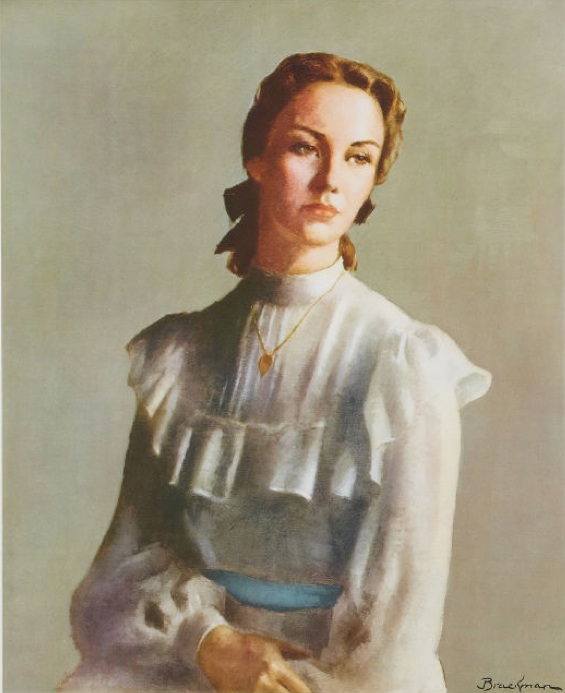
Eben’s portrait of Jennie Appleton, which appears in full Technicolor at the end of the film, was a commissioned piece by Ukrainian-American artist Robert Brackman. It became one of David O. Selznick’s most prized possessions, and hung in his home after he married Jennifer Jones in 1949. (They remained married until his death in 1965.)

In my recent review of Act of Violence (1948), I mentioned how rare films from the 1940s were that didn’t open with a full set of credits. Portrait of Jennie goes one step further by not even putting a title card at the beginning of the film, which contributes to its sense of dreamlike fantasy.

Robert Brackman

Whiplash (Dec. 24, 1948)

Whiplash
Whiplash (1948)
Directed by Lewis Seiler
Warner Bros.

Sometimes a good ending is all I need.

I enjoyed Whiplash, and there’s plenty of entertainment packed into its briskly paced 91 minutes, but it’s the ending that really got me. It was a mixture of gallows humor and farce that I didn’t see coming. I don’t want to spoil it if you haven’t seen it, but it had me laughing like I haven’t laughed in a long time, and then chuckling and shaking my head at what I’d just laughed at.

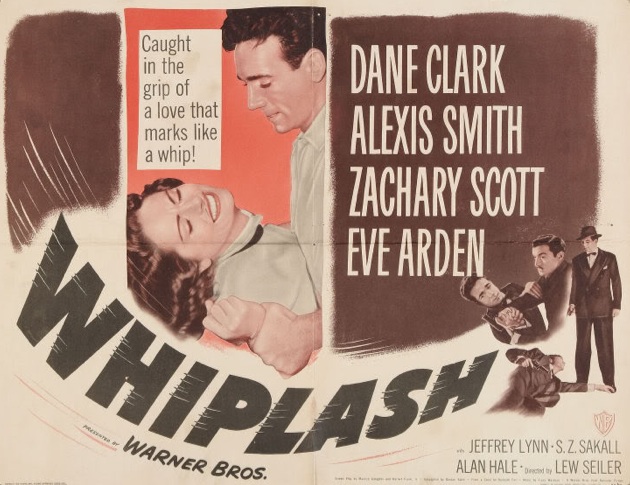
Whiplash is a B noir that stars Dane Clark as a soulful, romantic artist named Michael Gordon who also happens to be pretty handy with his fists. If you think that’s a role that sounds tailor-made for John Garfield, you’re right. Michael Gordon is in many ways an amalgam of a couple of characters John Garfield played not long before this film; the rough-hewn but sensitive concert violinist in Humoresque (1946) and the tortured boxer in Body and Soul (1947).

Since this project wasn’t prestigious enough for an actor like Garfield at this point in his career, the producers and the studio went with the next best thing: Dane Clark. Like Garfield, Clark was a native New Yorker with an appealing mix of street smarts, physical toughness, and soft-eyed sensitivity.

The film co-stars several dependable performers from the Warner Bros. stable; Alexis Smith as the beautiful and mysterious woman who captures Michael Gordon’s heart, Eve Arden as Michael’s wise and acerbic gal-pal, Zachary Scott as the shifty-eyed and power-mad villain, Jeffrey Lynn as an alcoholic doctor haunted by his past, and S.Z. Sakall as the avuncular shopkeeper who proudly displays Michael’s paintings.

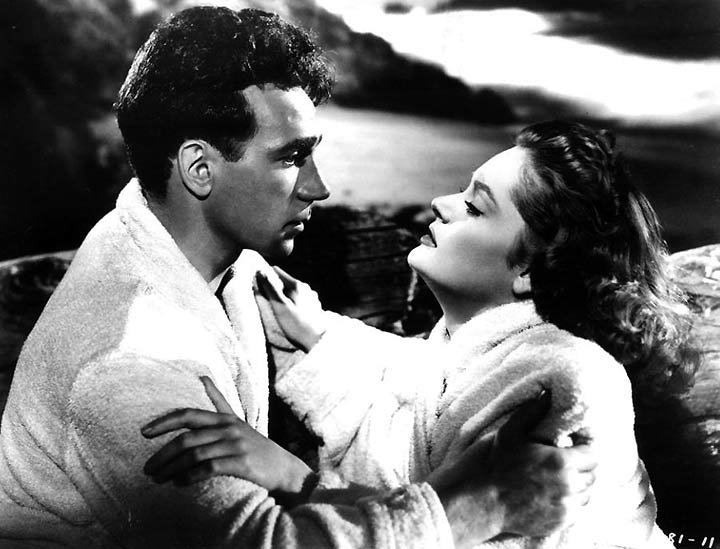
Dane Clark and Alexis Smith

The first act of the film takes place in California. Michael falls for a woman named Laurie Durant (Alexis Smith) after she buys one of his paintings. Their love affair burns hot, but she runs off one day without explaining what spooked her.

In the second act of the film, he follows her to New York City and eventually finds her singing in a nightclub. He soon discovers that she is married to a wheelchair-bound man named Rex Durant (Zachary Scott). Rex was a boxer before he was paralyzed, and he still has the sweet science in his blood. If he can’t compete in the ring, he’ll do the next best thing and manage fighters.

When Michael Gordon knocks out one of Rex’s bodyguards, he proves that he’s handy with more than just a paintbrush. Rex sees potential in the young man, and he and his crew rename him “Mike Angelo” to exploit the artistic angle, and they put him on the fight circuit.

There’s a lot of interesting stuff going on in Whiplash that’s never explored to its full potential, perhaps because of the Hays Code. Rex wants to use Mike’s body for his own purposes; as a surrogate fighter. His wife wants to use Mike’s body as a surrogate for Rex. This dichotomy of sex and violence could have made for a lurid and memorable film, but the sex stuff never really gets off the ground, especially after Laurie’s marital status is revealed. I also thought that splitting the action of the film between California and New York unnecessarily complicated the story.

Whiplash was more than lurid enough for the NY Times, however. In their review of the film, published December 27, 1948, they called it “a pointless exposition of brutality,” and went on to say that “if it’s plain, old fashioned mayhem that you desire, ‘Whiplash’ most likely will be to your liking. Otherwise proceed with caution.”

Modern viewers will probably find the brutality in Whiplash pretty ho-hum, but it’s a solid little B movie with a nice, noirish score by Franz Waxman and crisp black & white cinematography by J. Peverell Marley.

And, as I said, the ending is great.